

Audio Guide: Roman Forum and Imperial Forums Walking Tour (Self Guided), Rome
t's a known fact that Rome wasn't built in a day. But since it was built, the city has stood the test of time and become "eternal." A popular proverb says, "all roads lead to Rome," but very few realize that, inside Rome itself, all roads lead to the Forum.
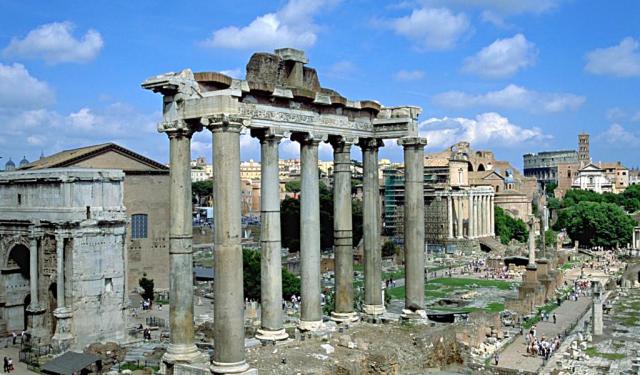
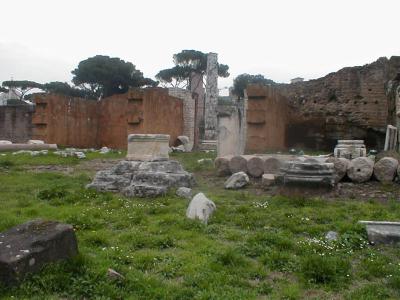
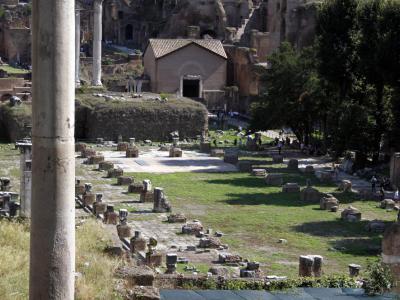
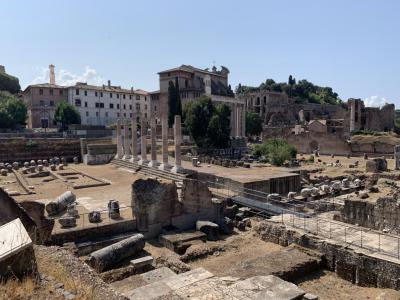
Indeed, the central hub of ancient Rome, the Roman Forum and the Imperial Forums once served as the city's commercial, civic, and religious core for over a thousand years.
The area's development is believed to have started around the 7th century BC, during the Roman Kingdom. Under the Roman Republic, the Forum became a heart of governance and a venue for public speeches, elections, and trials. As such, it contained important structures, such as the Senate House, basilicas, and temples dedicated to various gods and goddesses, as well as triumphal arches commemorating military victories.
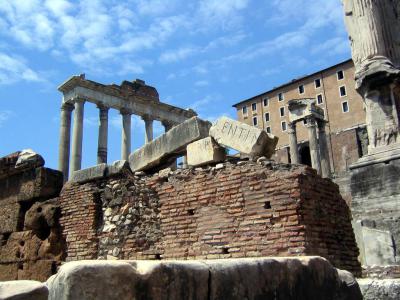
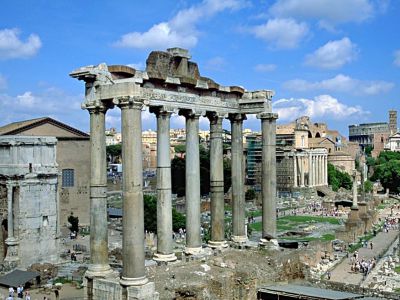
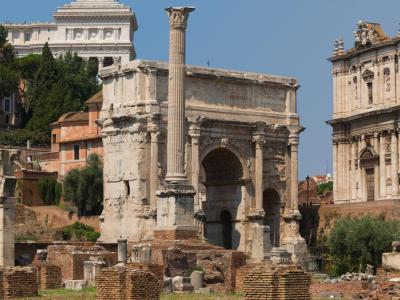
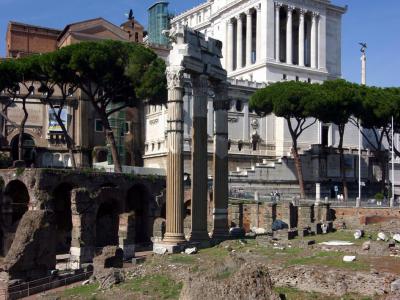
Some notable buildings within the Forum include the Temple of Saturn, the Temple of Vesta, the Arch of Septimius Severus, and the Rostra platform for public orations. Over the centuries, the Forum witnessed numerous historic events, such as the funeral of Julius Caesar and the triumphal processions of victorious Roman generals.
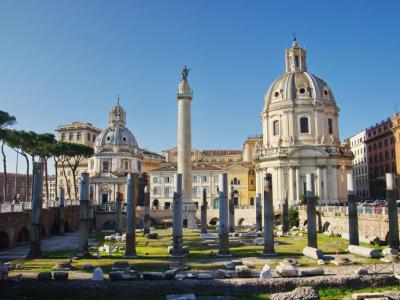
During the late republican and subsequent imperial periods, a series of new squares (known as forums) were added. The first of them was that of Julius Caesar, an ambitious general, who ultimately became the dictator of Rome. The successive emperors, such as Augustus and Nerva, followed suit by glorifying themselves and their achievements in the forums of their own. These came to be known as Imperial Forums. The most grandiose of them was the Forum of Trajan.
Both the Roman and the Imperial Forums were gradually abandoned and fell into disrepair following the decline of the Roman Empire. Still, today their ruins serve as popular tourist sights, topping the list of must-see attractions that offer a glimpse into the grandeur and splendor of ancient Rome.
"The Forum speaks," they say, meaning that the ruins of the Roman Forum have a story to tell anyone who seeks insights into the past. Nonetheless, albeit a highlight on the tourist trail of Rome, the Forum can be a baffling disappointment for visitors as it lacks due signage and information. In this respect, you'll be much better off if visit it armed with a GPSmyCity self-guided mobile app.
Indeed, the central hub of ancient Rome, the Roman Forum and the Imperial Forums once served as the city's commercial, civic, and religious core for over a thousand years.
The area's development is believed to have started around the 7th century BC, during the Roman Kingdom. Under the Roman Republic, the Forum became a heart of governance and a venue for public speeches, elections, and trials. As such, it contained important structures, such as the Senate House, basilicas, and temples dedicated to various gods and goddesses, as well as triumphal arches commemorating military victories.
Some notable buildings within the Forum include the Temple of Saturn, the Temple of Vesta, the Arch of Septimius Severus, and the Rostra platform for public orations. Over the centuries, the Forum witnessed numerous historic events, such as the funeral of Julius Caesar and the triumphal processions of victorious Roman generals.
During the late republican and subsequent imperial periods, a series of new squares (known as forums) were added. The first of them was that of Julius Caesar, an ambitious general, who ultimately became the dictator of Rome. The successive emperors, such as Augustus and Nerva, followed suit by glorifying themselves and their achievements in the forums of their own. These came to be known as Imperial Forums. The most grandiose of them was the Forum of Trajan.
Both the Roman and the Imperial Forums were gradually abandoned and fell into disrepair following the decline of the Roman Empire. Still, today their ruins serve as popular tourist sights, topping the list of must-see attractions that offer a glimpse into the grandeur and splendor of ancient Rome.
"The Forum speaks," they say, meaning that the ruins of the Roman Forum have a story to tell anyone who seeks insights into the past. Nonetheless, albeit a highlight on the tourist trail of Rome, the Forum can be a baffling disappointment for visitors as it lacks due signage and information. In this respect, you'll be much better off if visit it armed with a GPSmyCity self-guided mobile app.
How it works: Download the app "GPSmyCity: Walks in 1K+ Cities" from Apple App Store or Google Play Store to your mobile phone or tablet. The app turns your mobile device into a personal tour guide and its built-in GPS navigation functions guide you from one tour stop to next. The app works offline, so no data plan is needed when traveling abroad.
Download The GPSmyCity App



Roman Forum and Imperial Forums Walking Tour Map
Guide Name: Roman Forum and Imperial Forums Walking Tour
Guide Location: Italy » Rome (See other walking tours in Rome)
Guide Type: Self-guided Walking Tour (Sightseeing)
Tour Duration: 2 Hour(s)
Travel Distance: 2.0 Km or 1.2 Miles
Guide Location: Italy » Rome (See other walking tours in Rome)
Guide Type: Self-guided Walking Tour (Sightseeing)
Tour Duration: 2 Hour(s)
Travel Distance: 2.0 Km or 1.2 Miles
Sights Featured in This Walk
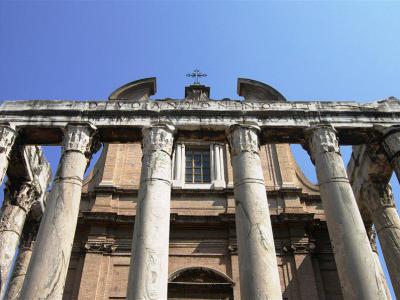
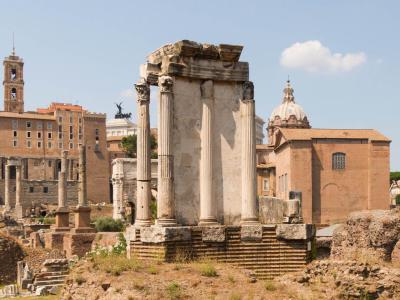
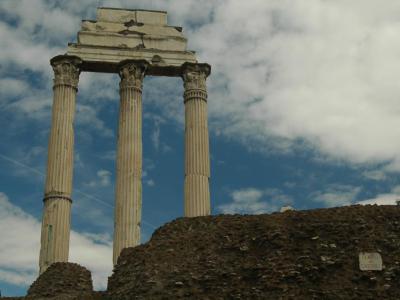
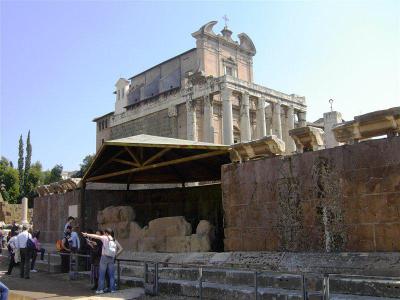
Walking Tours in Rome, Italy

Create Your Own Walk in Rome
Creating your own self-guided walk in Rome is easy and fun. Choose the city attractions that you want to see and a walk route map will be created just for you. You can even set your hotel as the start point of the walk.
Spanish Steps to Trevi Fountain
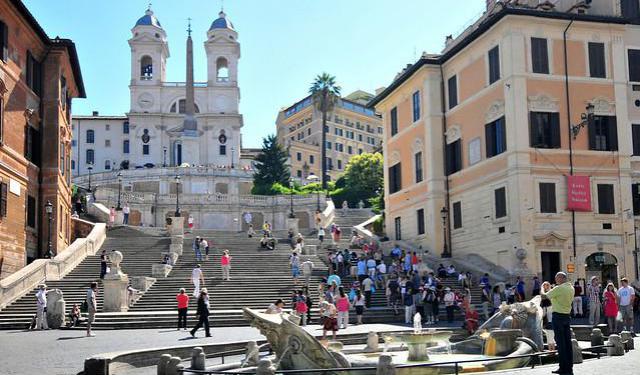
An established tourist mecca, today's Rome is hardly imaginable without two of its much loved attractions – the Spanish Steps and the Trevi Fountain. Magnets for tourists as they are, these two sights are connected to a number of other, not less worthy of attention locations, such as the Fountain of the Longboat or Piazza Colonna and its centerpiece, the Column of Marcus Aurelius, to... view more
Tour Duration: 1 Hour(s)
Travel Distance: 2.0 Km or 1.2 Miles
Tour Duration: 1 Hour(s)
Travel Distance: 2.0 Km or 1.2 Miles
Rome Introduction Walking Tour II
Rome, the Eternal City, carries a legacy shaped by centuries of resilience, transformation, and cultural flourishing. The fall of the Roman Empire in 476 AD marked the end of an era, plunging Western Europe into the dark Middle Ages. Yet, even amid the disarray, Rome endured as a beacon of unity, largely due to its status as the center of Catholicism. The papacy wielded spiritual influence,... view more
Tour Duration: 2 Hour(s)
Travel Distance: 3.4 Km or 2.1 Miles
Tour Duration: 2 Hour(s)
Travel Distance: 3.4 Km or 2.1 Miles
Hidden Art Treasures in Rome
Rome is one of the world's top living museums, replete with some of the most iconic pieces of art on the face of the planet. Famous artists, such as Michelangelo, Caravaggio, Raphael, Bernini, to mention but a few, had lived and worked here and left indelible marks in the city.
Needless to say that the abundance of masterpieces makes Rome crowded with tourists anxious to see them, causing... view more
Tour Duration: 1 Hour(s)
Travel Distance: 2.6 Km or 1.6 Miles
Needless to say that the abundance of masterpieces makes Rome crowded with tourists anxious to see them, causing... view more
Tour Duration: 1 Hour(s)
Travel Distance: 2.6 Km or 1.6 Miles
Palatine Hill Walking Tour
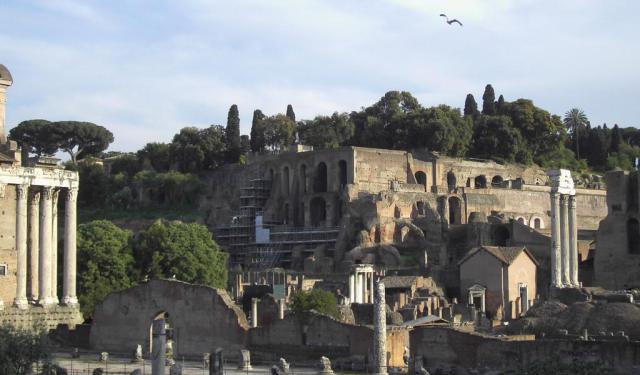
Palatine Hill - one of Rome’s legendary Seven Hills - is the most ancient part of the city. According to mythology (and a fair bit of archaeology backing it up), this is where the whole Roman saga began to unfold in the year 753 BC when young Romulus pointed dramatically at the hill and probably thought to himself: “Yes, this is the spot.” And just like that, a city that would eventually... view more
Tour Duration: 2 Hour(s)
Travel Distance: 2.6 Km or 1.6 Miles
Tour Duration: 2 Hour(s)
Travel Distance: 2.6 Km or 1.6 Miles
Holy Sites Walking Tour
As the cradle of the Catholic Church, one of the world's largest organizations, Rome has a large number of valuable, sacred places of worship. Crowded with architectural splendors from different periods of time, each of its churches and basilicas represent a significant part of culture and history.
Take this self-guided walking tour to discover Rome's magnificent religious heritage,... view more
Tour Duration: 3 Hour(s)
Travel Distance: 6.9 Km or 4.3 Miles
Take this self-guided walking tour to discover Rome's magnificent religious heritage,... view more
Tour Duration: 3 Hour(s)
Travel Distance: 6.9 Km or 4.3 Miles
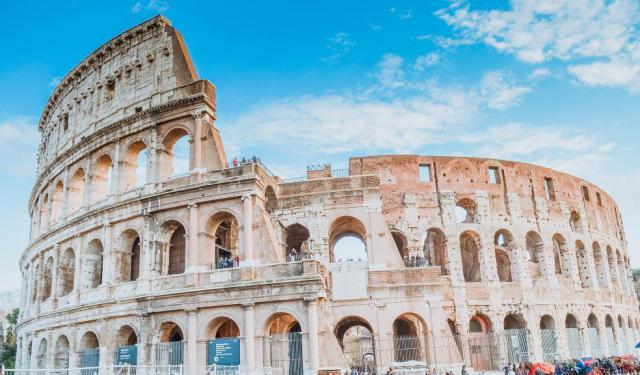
Rome Introduction Walking Tour I
Often referred to as the Eternal City, Rome holds a unique place in the story of Western civilization. Its influence shaped European culture through language, governance, and monumental architecture.
The name “Rome” originates from Romulus, the mythical founder of the city, who, according to legend, was the son of the war god Mars and Rhea Silvia, the priestess of goddess Vesta. Both... view more
Tour Duration: 2 Hour(s)
Travel Distance: 3.7 Km or 2.3 Miles
The name “Rome” originates from Romulus, the mythical founder of the city, who, according to legend, was the son of the war god Mars and Rhea Silvia, the priestess of goddess Vesta. Both... view more
Tour Duration: 2 Hour(s)
Travel Distance: 3.7 Km or 2.3 Miles
Useful Travel Guides for Planning Your Trip
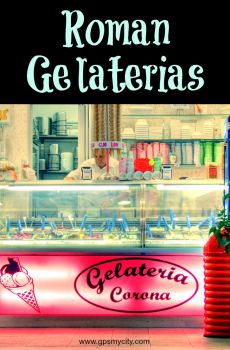
17 Best Gelaterias in Rome Italy
For ice cream lovers and dabblers this guide is a treasure chest of Rome’s best gelato shops. There are gelaterias everywhere. Many visitors to Rome only have a few days to explore the city. You owe it to yourself to make the most of your time and find the gelato locals eat. Often the authentic...
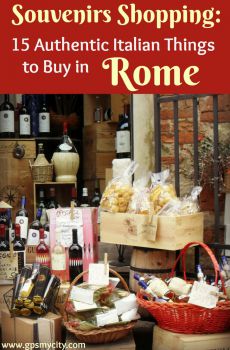
Souvenirs Shopping: 15 Authentic Italian Things To Buy in Rome
Rome is the Eternal City and, as such, the list of gift options available here is countless. Whether it's something edible, drinkable, wearable or pleasing to the eye that you want - you will find it all here in abundance. However, if time or budget is the factor, perhaps you might want to...
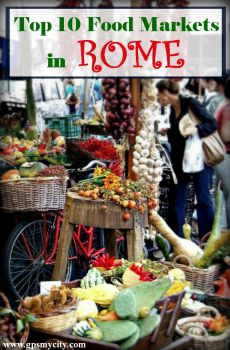
10 Best Food Markets in Rome Italy
Of all the things Italy is most famous for (cars, music, fashion, movies, etc.), food is, undoubtedly, top of the list. Rome may well not be the whole Italy, but no Italy is whole without Rome... And the Romans, much as all their fellow-Italians, like it "fresco", hence the abundance of...
The Most Popular Cities
/ view all