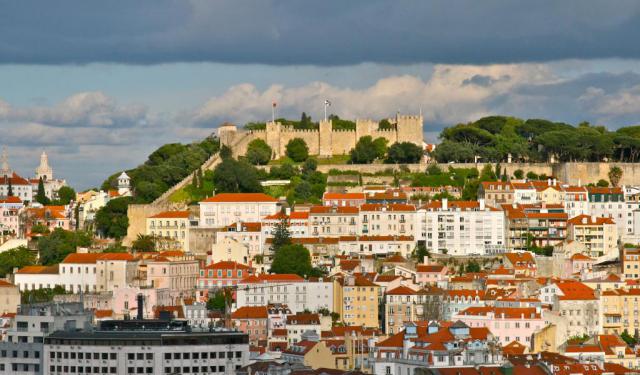
Sao Jorge Castle to Lisbon Cathedral Walking Tour (Self Guided), Lisbon
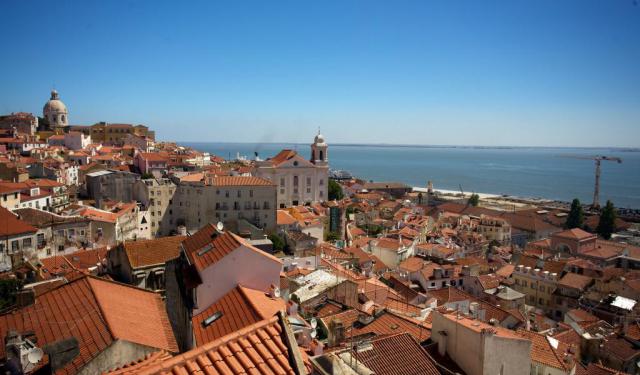
Spreading on the slope between Saint George's Castle (Castelo de Sao Jorge) and the Tagus River, the oldest neighborhood of the Portuguese capital, Alfama, captivates visitors with its rich cultural heritage and picturesque ambiance. The area is home to numerous historical attractions and as such makes a perfect destination for a classic Lisbon walk!
Perhaps the best starting point for it is the Castle of Saint George, an iconic medieval fortress perched atop one of Lisbon's hills – a definite must-visit spot!
Rolling downhill we arrive at the Museum of Portuguese Decorative Arts (Museu de Artes Decorativas Portuguesas), showcasing exquisite Portuguese craftsmanship, including ceramics, textiles, and furniture, providing insight into the country's artistic traditions.
For stunning vistas of Lisbon, head to the Sun Gates Viewpoint (Miradouro das Portas do Sol) and the Saint Lucia Viewpoint (Miradouro de Santa Luzia). The two offer a serene escape where you can appreciate the city's beauty while savoring the Portuguese sunshine.
History enthusiasts will be drawn to the Ancient Roman Theatre Museum (Teatro Romano de Lisboa) showcasing the remains of a Roman theater dating back to the 1st century BC.
Amidst this historical backdrop, you'll find the Cathedral of Saint Mary Major (Santa Maria Maior), an imposing church with Moorish elements. The nearby Saint Anthony's Church (Igreja de Santo Antonio de Lisboa) is dedicated to the city's patron saint.
Visiting Alfama, with its narrow alleys, colorful facades, and the sound of traditional Fado music filling the air, is an adventure in its own right. Without having explored it on foot, you can hardly immerse yourself in Lisbon's cultural tapestry. So, plan your journey to Alfama today, and discover the captivating blend of history, art, and breathtaking views that await you in this enchanting district.
Perhaps the best starting point for it is the Castle of Saint George, an iconic medieval fortress perched atop one of Lisbon's hills – a definite must-visit spot!
Rolling downhill we arrive at the Museum of Portuguese Decorative Arts (Museu de Artes Decorativas Portuguesas), showcasing exquisite Portuguese craftsmanship, including ceramics, textiles, and furniture, providing insight into the country's artistic traditions.
For stunning vistas of Lisbon, head to the Sun Gates Viewpoint (Miradouro das Portas do Sol) and the Saint Lucia Viewpoint (Miradouro de Santa Luzia). The two offer a serene escape where you can appreciate the city's beauty while savoring the Portuguese sunshine.
History enthusiasts will be drawn to the Ancient Roman Theatre Museum (Teatro Romano de Lisboa) showcasing the remains of a Roman theater dating back to the 1st century BC.
Amidst this historical backdrop, you'll find the Cathedral of Saint Mary Major (Santa Maria Maior), an imposing church with Moorish elements. The nearby Saint Anthony's Church (Igreja de Santo Antonio de Lisboa) is dedicated to the city's patron saint.
Visiting Alfama, with its narrow alleys, colorful facades, and the sound of traditional Fado music filling the air, is an adventure in its own right. Without having explored it on foot, you can hardly immerse yourself in Lisbon's cultural tapestry. So, plan your journey to Alfama today, and discover the captivating blend of history, art, and breathtaking views that await you in this enchanting district.
How it works: Download the app "GPSmyCity: Walks in 1K+ Cities" from Apple App Store or Google Play Store to your mobile phone or tablet. The app turns your mobile device into a personal tour guide and its built-in GPS navigation functions guide you from one tour stop to next. The app works offline, so no data plan is needed when traveling abroad.
Download The GPSmyCity App



Sao Jorge Castle to Lisbon Cathedral Walking Tour Map
Guide Name: Sao Jorge Castle to Lisbon Cathedral Walking Tour
Guide Location: Portugal » Lisbon (See other walking tours in Lisbon)
Guide Type: Self-guided Walking Tour (Sightseeing)
# of Attractions: 7
Tour Duration: 1 Hour(s)
Travel Distance: 1.1 Km or 0.7 Miles
Author: ann
Sight(s) Featured in This Guide:
Guide Location: Portugal » Lisbon (See other walking tours in Lisbon)
Guide Type: Self-guided Walking Tour (Sightseeing)
# of Attractions: 7
Tour Duration: 1 Hour(s)
Travel Distance: 1.1 Km or 0.7 Miles
Author: ann
Sight(s) Featured in This Guide:
- Castelo de Sao Jorge (Saint George's Castle)
- Museu de Artes Decorativas Portuguesas (Museum of Portuguese Decorative Arts)
- Miradouro das Portas do Sol (Portas do Sol Viewpoint)
- Miradouro de Santa Luzia (Santa Luzia Viewpoint)
- Teatro Romano de Lisboa (Ancient Roman Theatre Museum)
- Santa Maria Maior (Cathedral of St. Mary Major)
- Igreja de Santo Antonio de Lisboa (St. Anthony's Church)
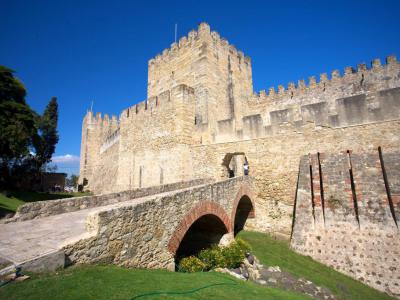
1) Castelo de Sao Jorge (Saint George's Castle) (must see)
Saint George's Castle commands a prominent position, affording captivating vistas over Lisbon and the expansive Tagus River. This fortified stronghold, in its current form, traces its origins to the medieval era and is perched atop the highest hill in the city's historic heart. Its layout is approximately square, and it was initially encircled by a protective wall.
Within this complex, you'll find the central castle ('castelejo'), alongside auxiliary structures, including the remnants of the royal palace, well-tended gardens, and an expansive terraced square that offers breathtaking panoramic views of Lisbon. The citadel's primary entrance features a 19th-century gate adorned with Portugal's coat of arms, Queen Maria II's name, and the date 1846.
Once inside, visitors can enjoy a range of amenities, including restaurants, cafes, a wine bar, an ice cream stand, and public restrooms. Peacocks roam freely throughout the grounds, particularly in one of the primary dining areas. While dining within the castle walls may be slightly pricier than in the surrounding areas, it is not excessively so. Alternatively, you have the option to bring your own food and beverages and explore the grounds with open containers. Admission is €10 per adult, and children enter for free, making it an excellent attraction for international guests.
Why You Should Visit:
The castle certainly offers sweeping views of the entire city and can be a tranquil oasis in the early morning and a magical setting during sunset. Additionally, there is a permanent exhibition worth exploring, as well as an exceptional 'camera obscura' located in one of the Moorish towers, offering shows every 20 minutes in various languages, including English, Portuguese, and Spanish.
Tip:
Although the journey to the castle involves a steep uphill climb, it provides a delightful stroll through the narrow streets of historic Lisbon, with numerous opportunities to stop and savor local cuisine. Alternatively, you can take cable car #28 to admire the neighborhood's charming and diverse architecture, providing excellent photo opportunities.
Within this complex, you'll find the central castle ('castelejo'), alongside auxiliary structures, including the remnants of the royal palace, well-tended gardens, and an expansive terraced square that offers breathtaking panoramic views of Lisbon. The citadel's primary entrance features a 19th-century gate adorned with Portugal's coat of arms, Queen Maria II's name, and the date 1846.
Once inside, visitors can enjoy a range of amenities, including restaurants, cafes, a wine bar, an ice cream stand, and public restrooms. Peacocks roam freely throughout the grounds, particularly in one of the primary dining areas. While dining within the castle walls may be slightly pricier than in the surrounding areas, it is not excessively so. Alternatively, you have the option to bring your own food and beverages and explore the grounds with open containers. Admission is €10 per adult, and children enter for free, making it an excellent attraction for international guests.
Why You Should Visit:
The castle certainly offers sweeping views of the entire city and can be a tranquil oasis in the early morning and a magical setting during sunset. Additionally, there is a permanent exhibition worth exploring, as well as an exceptional 'camera obscura' located in one of the Moorish towers, offering shows every 20 minutes in various languages, including English, Portuguese, and Spanish.
Tip:
Although the journey to the castle involves a steep uphill climb, it provides a delightful stroll through the narrow streets of historic Lisbon, with numerous opportunities to stop and savor local cuisine. Alternatively, you can take cable car #28 to admire the neighborhood's charming and diverse architecture, providing excellent photo opportunities.

2) Museu de Artes Decorativas Portuguesas (Museum of Portuguese Decorative Arts)
Housed within a grand 17th-century palace that once served as the urban residence of the Count of Azurara, the Portuguese Decorative Arts Museum offers a captivating glimpse into the lifestyles of affluent Lisbon citizens during the 18th and 19th centuries. The palace's splendid interiors have retained their original 17th-century wooden floors, painted ceilings, and the distinctive 'azulejos', a characteristic form of Portuguese painted tin-glazed tile work. While some of the azulejos were an integral part of the palace's history, others were added during the building's restoration.
The museum thoughtfully presents an array of collections, including Indo-Portuguese, Portuguese, English, and French furniture, an extensive assortment of silver artifacts, faience tin-glazed pottery, authentic Chinese porcelain, Flemish tapestries dating from the 16th to the 18th centuries, an antique grandfather clock, and even a horse-drawn carriage. Among its treasures are unique items originating from nearly every country formerly under Portuguese colonial rule, showcasing remarkable pieces from regions like Goa, Brazil, Macao, and more. Ultimately, a visit here offers a profound and enduring appreciation for Portugal's distinctive aesthetic sensibility.
Tip:
In the vicinity of this spot, you'll find two lookout points (Miradouro das Portas do Sol / Miradouro de Santa Luzia) that offer stunning vistas, perfect for capturing memorable photographs.
The museum thoughtfully presents an array of collections, including Indo-Portuguese, Portuguese, English, and French furniture, an extensive assortment of silver artifacts, faience tin-glazed pottery, authentic Chinese porcelain, Flemish tapestries dating from the 16th to the 18th centuries, an antique grandfather clock, and even a horse-drawn carriage. Among its treasures are unique items originating from nearly every country formerly under Portuguese colonial rule, showcasing remarkable pieces from regions like Goa, Brazil, Macao, and more. Ultimately, a visit here offers a profound and enduring appreciation for Portugal's distinctive aesthetic sensibility.
Tip:
In the vicinity of this spot, you'll find two lookout points (Miradouro das Portas do Sol / Miradouro de Santa Luzia) that offer stunning vistas, perfect for capturing memorable photographs.
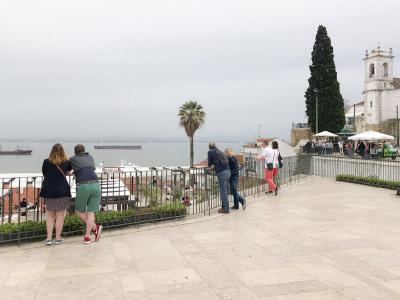
3) Miradouro das Portas do Sol (Portas do Sol Viewpoint)
The name of Largo das Portas do Sol street in Lisbon has its origins in the ancient Porta do Sol ("Gate of the Sun"), which was a part of the city's Moorish fortifications that existed before being devastated by the 1755 earthquake.
This gate was located next to the Church of São Brás, now commonly known as Santa Luzia. The church's bell tower was constructed on the wall that ran along the Adiça to São Pedro, positioned between two ancient towers. The gate's wall, which was destroyed during the earthquake, was intended to be integrated into Saint George's Castle, adjacent to the Gate of Dom Fradique.
In the mid-18th century, a significant historical artifact was discovered inside the churchyard of São Brás: a large stone cannonball, fired by the Moors at the defenders of Lisbon, led by D. Afonso Henriques, during the city's conquest.
From the Portas do Sol area, among other notable sights, you can enjoy views of the Church of São Vicente de Fora and the entire Alfama neighborhood, stretching all the way down to the Tagus River. The viewpoint itself resembles a balcony. In 1949, a statue of São Vicente (Saint Vincent) created by the sculptor Raul Xavier, was placed here.
Tip:
For a unique and enjoyable experience, seek out a flight of stairs and follow the WC (restroom) sign. Descend the stairs and pass under an arch to discover a mural depicting Lisbon's history in a comic-book style. Nearby, you'll also find the Museum of Decorative Arts.
This gate was located next to the Church of São Brás, now commonly known as Santa Luzia. The church's bell tower was constructed on the wall that ran along the Adiça to São Pedro, positioned between two ancient towers. The gate's wall, which was destroyed during the earthquake, was intended to be integrated into Saint George's Castle, adjacent to the Gate of Dom Fradique.
In the mid-18th century, a significant historical artifact was discovered inside the churchyard of São Brás: a large stone cannonball, fired by the Moors at the defenders of Lisbon, led by D. Afonso Henriques, during the city's conquest.
From the Portas do Sol area, among other notable sights, you can enjoy views of the Church of São Vicente de Fora and the entire Alfama neighborhood, stretching all the way down to the Tagus River. The viewpoint itself resembles a balcony. In 1949, a statue of São Vicente (Saint Vincent) created by the sculptor Raul Xavier, was placed here.
Tip:
For a unique and enjoyable experience, seek out a flight of stairs and follow the WC (restroom) sign. Descend the stairs and pass under an arch to discover a mural depicting Lisbon's history in a comic-book style. Nearby, you'll also find the Museum of Decorative Arts.
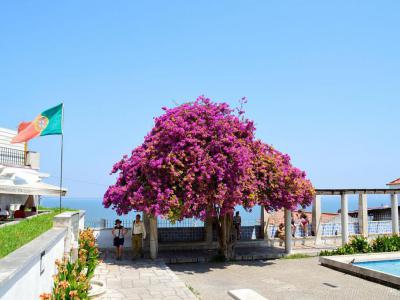
4) Miradouro de Santa Luzia (Santa Luzia Viewpoint)
The Santa Luzia Viewpoint sits in close proximity to the Portas do Sol Viewpoint, offering the same iconic view over Alfama's tiled roofs and churches, extending to the Tagus estuary. Although this vantage point may be slightly less advantageous, it compensates with its cozy and inviting atmosphere, featuring a beautifully landscaped garden spread across multiple levels, azalea trees, ample seating arrangements (some protected by pergola-like roofs), and captivating wall panels adorned with the traditional "azulejo" blue tiles.
One of these tiled panels depicts a crucial milestone in Portuguese history, the "Reconquista" (the liberation of the Iberian Peninsula from Moorish occupation), displayed on the exterior wall of the Santa Luzia church. Meanwhile, the second "azulejo" mural showcases the Commerce Square ("Praça do Comércio") as it appeared before the devastating 1755 earthquake, positioned on the opposite boundary of the observation terrace, further down the hill.
There's a small café on the premises, as well as restrooms (to locate the latter, simply ascend a few steps up the hill, turn the corner at the church, and follow the steps downward). Fortunately, the Santa Luzia and Portas do Sol lookout points are just a minute's stroll away from each other, so there's no need to choose between them; you can delight in both during the same sightseeing excursion.
Tip:
Be sure to keep an eye out for the small market on the left, offering various cork products and textiles if you're considering souvenirs. With a bit of bargaining, you'll discover that the prices here are much more favorable than other places.
One of these tiled panels depicts a crucial milestone in Portuguese history, the "Reconquista" (the liberation of the Iberian Peninsula from Moorish occupation), displayed on the exterior wall of the Santa Luzia church. Meanwhile, the second "azulejo" mural showcases the Commerce Square ("Praça do Comércio") as it appeared before the devastating 1755 earthquake, positioned on the opposite boundary of the observation terrace, further down the hill.
There's a small café on the premises, as well as restrooms (to locate the latter, simply ascend a few steps up the hill, turn the corner at the church, and follow the steps downward). Fortunately, the Santa Luzia and Portas do Sol lookout points are just a minute's stroll away from each other, so there's no need to choose between them; you can delight in both during the same sightseeing excursion.
Tip:
Be sure to keep an eye out for the small market on the left, offering various cork products and textiles if you're considering souvenirs. With a bit of bargaining, you'll discover that the prices here are much more favorable than other places.

5) Teatro Romano de Lisboa (Ancient Roman Theatre Museum)
The Romans, they seem to have left their mark everywhere! Roman theaters, in a broader sense, serve as symbols of power and bear witness to the process of Romanization. This holds true for the Felicitas Iulia Olisipo theater, the name associated with the city of Lisbon during the Roman era. As theaters began to encompass both political and religious roles, particularly during the reign of Emperor Augustus, they became primary locations for the Imperial cult.
The Roman Theater of Olisipo was of considerable size, seating ~4,000 spectators; however, during the Middle Ages, it gradually vanished beneath the earth's surface due to neglect, natural forces like wind, and soil erosion. It was only after the 1755 earthquake that sections of it reemerged, rekindling interest in Lisbon's Roman history. Subsequent excavations unearthed a treasure trove of artifacts that now comprise the museum's permanent displays. Among these discoveries are numerous columns, stone statues, and a modest collection of archaeological finds.
The museum's most captivating feature for visitors is the installation of multimedia presentations and touch screens, which vividly recount the story of Lisbon during the Roman period. Although relatively compact and possessing a smaller collection compared to other Roman archaeological museums in Europe, the museum is thoughtfully organized and presented through these interactive displays. So, take your time and explore at your leisure!
The Roman Theater of Olisipo was of considerable size, seating ~4,000 spectators; however, during the Middle Ages, it gradually vanished beneath the earth's surface due to neglect, natural forces like wind, and soil erosion. It was only after the 1755 earthquake that sections of it reemerged, rekindling interest in Lisbon's Roman history. Subsequent excavations unearthed a treasure trove of artifacts that now comprise the museum's permanent displays. Among these discoveries are numerous columns, stone statues, and a modest collection of archaeological finds.
The museum's most captivating feature for visitors is the installation of multimedia presentations and touch screens, which vividly recount the story of Lisbon during the Roman period. Although relatively compact and possessing a smaller collection compared to other Roman archaeological museums in Europe, the museum is thoughtfully organized and presented through these interactive displays. So, take your time and explore at your leisure!
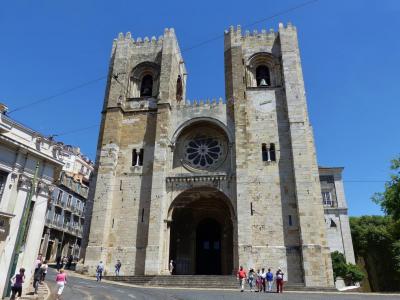
6) Santa Maria Maior (Cathedral of St. Mary Major)
Santa Maria Maior, the city's oldest church, originally erected in 1147, stands as a testament to Lisbon's rich history. It was constructed on the former site of a Moorish mosque following the conquest of Lisbon by Christian forces led by King Afonso Henriquez. During this pivotal period, the relics of St. Vincent of Saragossa, the city's patron saint, were transported from Southern Portugal and enshrined here, where they have remained undisturbed.
Enduring substantial damage from the numerous destructive earthquakes that plagued Lisbon, the present-day Cathedral underwent reconstruction in the 20th century. This renovation imbued the structure with a predominantly medieval aesthetic, characterized by robust stone walls and fortress-like towers. This architectural style is a common feature among many Portuguese churches from the Christian conquest era, often used as strategic military bases for launching assaults against enemy forces.
Although the interior may appear somewhat 'plain' when compared to churches in other countries, it remains remarkably impressive, featuring Gothic arches, vaulted ceilings, and sections adorned with stained glass. Notable among its chapels is the Chapel of Saint Ildefonso, housing a carved sculpture of one of the first Portuguese Ambassadors, Lopo Pacheco, depicted with a loyal dog at his side. Additionally, the Cathedral includes a chapel dedicated to Saint Anthony of Padua, a celebrated figure born in Lisbon. Excavations in the courtyard have unearthed various artifacts dating back to the Visigothic, Roman, and Moorish periods.
Tip:
Admission to the Cathedral is free, and for a modest fee, you can also ascend partway up the tower to the Treasury between 10am and 5pm (please note that it is closed on Sundays).
Enduring substantial damage from the numerous destructive earthquakes that plagued Lisbon, the present-day Cathedral underwent reconstruction in the 20th century. This renovation imbued the structure with a predominantly medieval aesthetic, characterized by robust stone walls and fortress-like towers. This architectural style is a common feature among many Portuguese churches from the Christian conquest era, often used as strategic military bases for launching assaults against enemy forces.
Although the interior may appear somewhat 'plain' when compared to churches in other countries, it remains remarkably impressive, featuring Gothic arches, vaulted ceilings, and sections adorned with stained glass. Notable among its chapels is the Chapel of Saint Ildefonso, housing a carved sculpture of one of the first Portuguese Ambassadors, Lopo Pacheco, depicted with a loyal dog at his side. Additionally, the Cathedral includes a chapel dedicated to Saint Anthony of Padua, a celebrated figure born in Lisbon. Excavations in the courtyard have unearthed various artifacts dating back to the Visigothic, Roman, and Moorish periods.
Tip:
Admission to the Cathedral is free, and for a modest fee, you can also ascend partway up the tower to the Treasury between 10am and 5pm (please note that it is closed on Sundays).
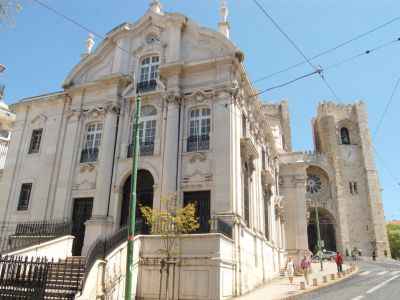
7) Igreja de Santo Antonio de Lisboa (St. Anthony's Church)
Were you aware that Saint Anthony was actually born in Lisbon? It's believed that he came into the world and lived here before embarking on his journey as a preacher. Don't miss the opportunity to visit the church situated at the site believed to be his birthplace.
The crypt, accessible through the sacristy on the left, is the sole remaining vestige of the original 1195 church, which succumbed to the devastating 1755 earthquake. Within this crypt, you'll encounter a tile panel commemorating Pope John Paul II's visit to the site in 1982.
Following the earthquake, a new church was constructed in Baroque and Pombaline architectural styles. This ambitious project was overseen by Mateus Vicente, the same architect responsible for the magnificent Basilica of the Star ("Basílica da Estrela"). Funding for the endeavor was partly derived from contributions gathered by the city's children, who would solicit "a small coin for Saint Anthony". Even today, the chapel's crypt floor remains adorned with coins and messages left by devotees.
During the same period, a tradition emerged in Lisbon neighborhoods of crafting thrones dedicated to Saint Anthony. These thrones replicated the church's altar and served as additional sources for collecting funds to rebuild the edifice. The tradition of constructing altars endures to this day, especially during Lisbon's popular festivals throughout the month of June, which are dedicated to Saint Anthony, the most venerated saint among Lisboetas.
Just like in Brazil, Saint Anthony also enjoys a reputation here as a matchmaker, and people seek his intervention to find suitable spouses. Furthermore, it is customary for young couples to visit the Saint Anthony's Church on their wedding day, where they leave flowers and offer prayers to the saint, beseeching his protection for their marriages.
Tip:
Adjacent to the church, you'll find a small museum housing paintings, sculptures, and manuscripts associated with Saint Anthony. Museum admission is €3, with free entry on Sundays until 2pm and when using the Lisboa Card. If you have a penchant for acquiring religious souvenirs during your travels, you'll discover a selection of medals, statues, and other items available at the church as well.
The crypt, accessible through the sacristy on the left, is the sole remaining vestige of the original 1195 church, which succumbed to the devastating 1755 earthquake. Within this crypt, you'll encounter a tile panel commemorating Pope John Paul II's visit to the site in 1982.
Following the earthquake, a new church was constructed in Baroque and Pombaline architectural styles. This ambitious project was overseen by Mateus Vicente, the same architect responsible for the magnificent Basilica of the Star ("Basílica da Estrela"). Funding for the endeavor was partly derived from contributions gathered by the city's children, who would solicit "a small coin for Saint Anthony". Even today, the chapel's crypt floor remains adorned with coins and messages left by devotees.
During the same period, a tradition emerged in Lisbon neighborhoods of crafting thrones dedicated to Saint Anthony. These thrones replicated the church's altar and served as additional sources for collecting funds to rebuild the edifice. The tradition of constructing altars endures to this day, especially during Lisbon's popular festivals throughout the month of June, which are dedicated to Saint Anthony, the most venerated saint among Lisboetas.
Just like in Brazil, Saint Anthony also enjoys a reputation here as a matchmaker, and people seek his intervention to find suitable spouses. Furthermore, it is customary for young couples to visit the Saint Anthony's Church on their wedding day, where they leave flowers and offer prayers to the saint, beseeching his protection for their marriages.
Tip:
Adjacent to the church, you'll find a small museum housing paintings, sculptures, and manuscripts associated with Saint Anthony. Museum admission is €3, with free entry on Sundays until 2pm and when using the Lisboa Card. If you have a penchant for acquiring religious souvenirs during your travels, you'll discover a selection of medals, statues, and other items available at the church as well.
Walking Tours in Lisbon, Portugal

Create Your Own Walk in Lisbon
Creating your own self-guided walk in Lisbon is easy and fun. Choose the city attractions that you want to see and a walk route map will be created just for you. You can even set your hotel as the start point of the walk.
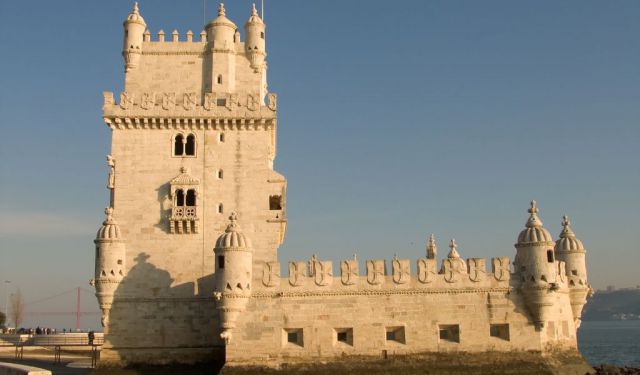
Belem Walking Tour
Also known as Santa Maria de Belem, the district of Belem is one of the most visited in Lisbon. Situated not far from the city center, it lines the Tagus River and is the original location of Lisbon's port – the starting point of the many great voyages of discovery by Portuguese explorers, such as Vasco da Gama – departed from here for India in 1497, and Pedro Alvares Cabral – for... view more
Tour Duration: 2 Hour(s)
Travel Distance: 3.0 Km or 1.9 Miles
Tour Duration: 2 Hour(s)
Travel Distance: 3.0 Km or 1.9 Miles
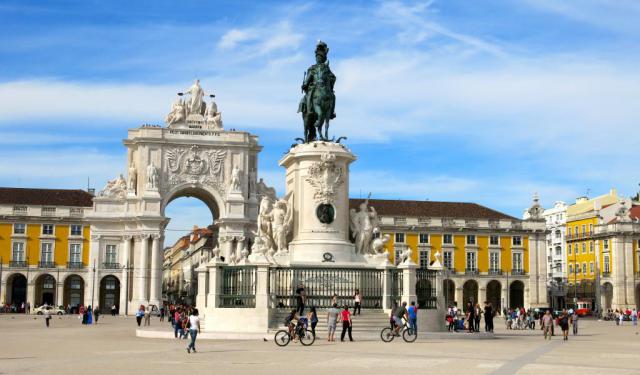
Lisbon Introduction Walking Tour
Legend goes that Lisbon's name has derived either from Allis Ubbo, meaning "safe harbor" in Phoenician, or from the pre-Roman name of the River Tagus, Lisso. Nestled at Europe's western edge and featuring numerous architectural styles, it ranks as the world's 10th oldest city and traces its roots back to the Phoenician Civilization, who settled it approximately three... view more
Tour Duration: 2 Hour(s)
Travel Distance: 3.3 Km or 2.1 Miles
Tour Duration: 2 Hour(s)
Travel Distance: 3.3 Km or 2.1 Miles
Alfama Walking Tour
Alfama is the oldest neighborhood in Lisbon, spreading downhill between the medieval former royal Castle of São Jorge and the Tagus river. Under the Islamic rule, Alfama constituted the largest part of the city, and was increasingly inhabited by fishermen and the poor. The reputation of being a poor area still lives on. The name Alfama derives from the Arabic al-ḥamma, which means "hot... view more
Tour Duration: 2 Hour(s)
Travel Distance: 3.0 Km or 1.9 Miles
Tour Duration: 2 Hour(s)
Travel Distance: 3.0 Km or 1.9 Miles
Useful Travel Guides for Planning Your Trip

17 Uniquely Portuguese Things to Buy in Lisbon
Formerly a major colonial power, Portugal has accumulated great knowledge in craftsmanship. While in Lisbon, you can treat yourself to a vast variety of quality things: wines, ceramics, jewellery, leather goods, books and many more. Most shops in Lisbon open at 9 or 10am, and close in the evening at...

Top 10 Cafes and Restaurants in Lisbon
Experience Lisbon as a local by enjoying typical Portuguese dishes at the best restaurants throughout the city at a price you can afford. Take away the overwhelming pressure of deciding where to eat in a city as dynamic and riveting as Lisbon by allowing this guide to suggest local restaurants with...
The Most Popular Cities
/ view all