


Shopping Streets Tour (Self Guided), Xian
Back in the day, Xian was the starting point of the ancient Silk Road. Foreign traders used to come here to procure local merchandise such as tea, silk, and porcelain that were in high demand internationally throughout centuries.
In recent years, although the commercial center in China has shifted to the coastline area, Xian remains a major destination for quality shopping, especially when it comes to Chinese arts like paintings and calligraphy, calligraphy accessories, handcraft items, antiques, and traditional artifacts. There are several bustling shopping areas in town where you can find all of these and more.
First up is Huajue Xiang Souvenir Street, a firm favorite among tourists looking for mementos of their trip. This street is lined with shops selling traditional Chinese handicrafts, souvenirs, and trinkets. It's a great place to pick up gifts for friends and family back home.
Next in line is Muslim Street, a lively historic area that represents a unique blend of Chinese and Islamic cultures. Here, you can savor delicious street food, such as lamb kebabs and flatbreads, as well as shop for Middle Eastern spices, textiles, and Islamic attire. The vibrant atmosphere and rich cultural experience make this street a fun place to visit.
If you're interested in the arts, head over to Arts Street, also known as Shu Yuan Men. Here, you can explore a wide range of art galleries, studios, and shops selling traditional Chinese art and crafts. It's a great place to appreciate and purchase Chinese paintings, sculptures, and ceramics.
Lastly, Painting and Calligraphy Street is a haven for art enthusiasts. This street is dedicated to the world of traditional Chinese painting and calligraphy. As you can imagine, here you will find everything, from brushes and ink to beautifully crafted artworks. An ideal place to immerse yourself in the beauty of Chinese artistic traditions!
So, the next time you visit Xian, make sure to explore these vibrant shopping districts for a taste of local cuisine, unique artwork, or memorable keepsakes. Enjoy your shopping!
In recent years, although the commercial center in China has shifted to the coastline area, Xian remains a major destination for quality shopping, especially when it comes to Chinese arts like paintings and calligraphy, calligraphy accessories, handcraft items, antiques, and traditional artifacts. There are several bustling shopping areas in town where you can find all of these and more.
First up is Huajue Xiang Souvenir Street, a firm favorite among tourists looking for mementos of their trip. This street is lined with shops selling traditional Chinese handicrafts, souvenirs, and trinkets. It's a great place to pick up gifts for friends and family back home.
Next in line is Muslim Street, a lively historic area that represents a unique blend of Chinese and Islamic cultures. Here, you can savor delicious street food, such as lamb kebabs and flatbreads, as well as shop for Middle Eastern spices, textiles, and Islamic attire. The vibrant atmosphere and rich cultural experience make this street a fun place to visit.
If you're interested in the arts, head over to Arts Street, also known as Shu Yuan Men. Here, you can explore a wide range of art galleries, studios, and shops selling traditional Chinese art and crafts. It's a great place to appreciate and purchase Chinese paintings, sculptures, and ceramics.
Lastly, Painting and Calligraphy Street is a haven for art enthusiasts. This street is dedicated to the world of traditional Chinese painting and calligraphy. As you can imagine, here you will find everything, from brushes and ink to beautifully crafted artworks. An ideal place to immerse yourself in the beauty of Chinese artistic traditions!
So, the next time you visit Xian, make sure to explore these vibrant shopping districts for a taste of local cuisine, unique artwork, or memorable keepsakes. Enjoy your shopping!
How it works: Download the app "GPSmyCity: Walks in 1K+ Cities" from Apple App Store or Google Play Store to your mobile phone or tablet. The app turns your mobile device into a personal tour guide and its built-in GPS navigation functions guide you from one tour stop to next. The app works offline, so no data plan is needed when traveling abroad.
Download The GPSmyCity App



Shopping Streets Tour Map
Guide Name: Shopping Streets Tour
Guide Location: China » Xian (See other walking tours in Xian)
Guide Type: Self-guided Walking Tour (Sightseeing)
Tour Duration: 1 Hour(s)
Travel Distance: 2.0 Km or 1.2 Miles
Guide Location: China » Xian (See other walking tours in Xian)
Guide Type: Self-guided Walking Tour (Sightseeing)
Tour Duration: 1 Hour(s)
Travel Distance: 2.0 Km or 1.2 Miles
Sights Featured in This Walk
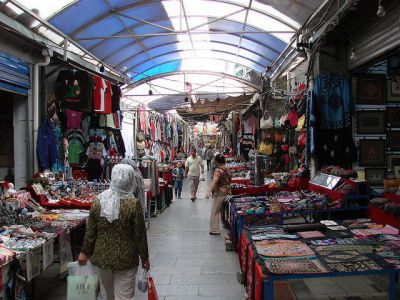

2) Muslim Street (must see)


Walking Tours in Xian, China

Create Your Own Walk in Xian
Creating your own self-guided walk in Xian is easy and fun. Choose the city attractions that you want to see and a walk route map will be created just for you. You can even set your hotel as the start point of the walk.

Xian Introduction Walking Tour
Xian became a cultural and political center of China in the 11th century BC and was the capital city of eleven imperial Chinese dynasties.
For a western comparison, Xian closely resembles Rome. At the beginning of the first millennium, there were two major powers sitting at the ends of the civilized world, the Roman Empire in the west and the Han Dynasty in the east, each commanding roughly the... view more
Tour Duration: 2 Hour(s)
Travel Distance: 4.4 Km or 2.7 Miles
For a western comparison, Xian closely resembles Rome. At the beginning of the first millennium, there were two major powers sitting at the ends of the civilized world, the Roman Empire in the west and the Han Dynasty in the east, each commanding roughly the... view more
Tour Duration: 2 Hour(s)
Travel Distance: 4.4 Km or 2.7 Miles

Historical Religious Sites
A melting pot of different cultures and faiths, Xian, once the start of the historical Silk Road, for centuries had seen traders from far and wide come to do business. Many a foreigner eventually settled in Xian, bringing along their cuisine, customs, and religious practices. Hence the number of pagodas, Buddhist and Taoist temples, as well as mosques found in the city, some of which trace back... view more
Tour Duration: 1 Hour(s)
Travel Distance: 2.9 Km or 1.8 Miles
Tour Duration: 1 Hour(s)
Travel Distance: 2.9 Km or 1.8 Miles
The Most Popular Cities
/ view all