
Sound of Music Tour (Self Guided), Salzburg
As the hometown of Mozart, Salzburg is a true mecca for music fans, with no shortage of visitors. In the past few decades, though, Salzburg's Old Town has gained international fame thanks to the Hollywood film "The Sound of Music," shot in 1965. Set on the eve of World War II, the movie follows the lead characters, the Von Trapp family and their nanny played by Julie Andrews, all around the city, capturing the idyllic locations and the disturbing political changes that are about to engulf Europe. More than half a century later, the legacy of The Sound of Music is still strong.
For those keen on cinema, no trip to Salzburg is complete without exploring the locations shown in this film. Let's take a quick look at some of them and the places associated with the real-life Von Trapps.
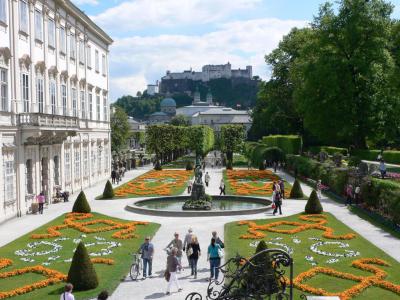
Mirabell Palace and its beautifully manicured gardens with fountains were featured in the film's "Do-Re-Mi" sequence which starts at Winkler Terrace.
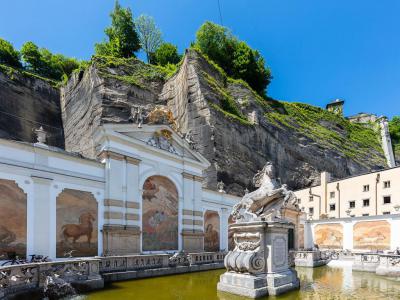
The historic Horse Bath (Pferdeschwemme) fountain served as the backdrop for the scene in which the children play in the water and sing "My Favorite Things."
The Salzburg Festival Halls Complex provided the setting for the Von Trapp kids' rehearsal for the festival and where, later on, Captain Georg von Trapp himself performed "Edelweiss" and "So Long, Farewell".
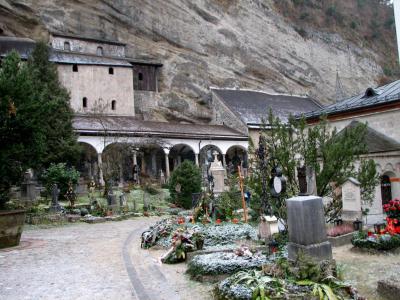
Toward the end of the film, the Von Trapps hide from the Nazis in a picturesque cemetery, presented in the movie by that of Saint Peter's Abbey (Petersfriedhof).
The Domplatz and Residenzplatz squares also made appearances in The Sound of Music – during the "My Favorite Things" and "I Have Confidence in Me" scenes. The former song montage also features Mozart Bridge (Mozartsteg).
As for the convent shown in the film, it was inspired by the Nonnberg Convent in which the real-life Maria spent a few years in the 1920s.
Finally, Leopoldskron Castle served as the primary location for all lake terrace scenes presented in this motion picture.
To experience the magic of "The Sound of Music" in Salzburg, consider taking this self-guided walk to explore the locations in question at your own pace. It may be a good idea also to sing a few of your favorite tunes from the movie along the way while capturing the memories with some photos on your camera!
For those keen on cinema, no trip to Salzburg is complete without exploring the locations shown in this film. Let's take a quick look at some of them and the places associated with the real-life Von Trapps.
Mirabell Palace and its beautifully manicured gardens with fountains were featured in the film's "Do-Re-Mi" sequence which starts at Winkler Terrace.
The historic Horse Bath (Pferdeschwemme) fountain served as the backdrop for the scene in which the children play in the water and sing "My Favorite Things."
The Salzburg Festival Halls Complex provided the setting for the Von Trapp kids' rehearsal for the festival and where, later on, Captain Georg von Trapp himself performed "Edelweiss" and "So Long, Farewell".
Toward the end of the film, the Von Trapps hide from the Nazis in a picturesque cemetery, presented in the movie by that of Saint Peter's Abbey (Petersfriedhof).
The Domplatz and Residenzplatz squares also made appearances in The Sound of Music – during the "My Favorite Things" and "I Have Confidence in Me" scenes. The former song montage also features Mozart Bridge (Mozartsteg).
As for the convent shown in the film, it was inspired by the Nonnberg Convent in which the real-life Maria spent a few years in the 1920s.
Finally, Leopoldskron Castle served as the primary location for all lake terrace scenes presented in this motion picture.
To experience the magic of "The Sound of Music" in Salzburg, consider taking this self-guided walk to explore the locations in question at your own pace. It may be a good idea also to sing a few of your favorite tunes from the movie along the way while capturing the memories with some photos on your camera!
How it works: Download the app "GPSmyCity: Walks in 1K+ Cities" from Apple App Store or Google Play Store to your mobile phone or tablet. The app turns your mobile device into a personal tour guide and its built-in GPS navigation functions guide you from one tour stop to next. The app works offline, so no data plan is needed when traveling abroad.
Download The GPSmyCity App



Sound of Music Tour Map
Guide Name: Sound of Music Tour
Guide Location: Austria » Salzburg (See other walking tours in Salzburg)
Guide Type: Self-guided Walking Tour (Sightseeing)
# of Attractions: 10
Tour Duration: 2 Hour(s)
Travel Distance: 4.2 Km or 2.6 Miles
Author: julian
Sight(s) Featured in This Guide:
Guide Location: Austria » Salzburg (See other walking tours in Salzburg)
Guide Type: Self-guided Walking Tour (Sightseeing)
# of Attractions: 10
Tour Duration: 2 Hour(s)
Travel Distance: 4.2 Km or 2.6 Miles
Author: julian
Sight(s) Featured in This Guide:
- Mirabell Palace and Gardens
- Winkler Terrace
- Horse Bath (Pferdeschwemme)
- Salzburg Festival Halls Complex
- St. Peter's Abbey and Cemetery
- Domplatz
- Residenzplatz
- Mozartsteg (Mozart Bridge)
- Nonnberg Convent
- Leopoldskron Castle
1) Mirabell Palace and Gardens (must see)
Mirabell Palace is a structure with incredible presence and architecture. Upon entry, you will be stunned by its 'staircase of thunder' – an elaborate, curved, shiny affair that leads up to the Marble Hall, full of angel sculptures and excessive stucco work. Aside from enjoying a reputation as one of the most romantic wedding halls in the world (bookable up to two years in advance), the Marble Hall hosts frequent nightly Mozart concerts and the master himself has tickled the ivories there. Off to the side, you'll find a striking chapel with a vaulted ceiling and baroque statues of St. Augustine and others.
Head for the gardens to admire the stunning scenery created by geometrically-structured garden beds. Multi-coloured flowers blast your eyeballs from every perspective, with an added mixture of mythology-themed statues dating from 1730 and four groups of sculpture (Aeneas, Hercules, Paris and Pluto), created by Italian sculptor Ottavio Mosto from 1690. In the middle of it all is the Pegasus Fountain that makes a memorable 'Sound of Music' shooting location. Nearest the horse, stairs lead to the creepy Dwarf Park, where a herd of misshapen, sizable dwarfs sculptured in marble are all lined up in military formation. As a dramatic finale, a view of the Hobensalzburg Fortress, framed by the Mirabell Garden, is spectacular.
***SOUND OF MUSIC TOUR***
Perhaps the best place to start the Sound of Music tour of Salzburg are the open grounds of the Mirabell Palace Gardens, the location where the 'Do Re Mi' song was filmed for the movie. Entering the gardens from the south, you will recognize the two pairs of impressive Greek statues of fencing warriors whose playful poses the Von Trapp children mimicked in the film. Wandering further in, you will also remember the central spouting Pegasus Fountain (opposite the Palace and guarded by lion statues) around which they danced. From here you can turn around and check out the fantastic views of the High Salzburg Fortress (Hohensalzburg) towering over the city, and then follow the steps that the kids hopped up like musical notes in the dramatic finale of the song. As you leave the Dwarf Park to exit the palace grounds, make sure to visit the long pergola vine tunnel and the hedge maze through which Maria and the Trapp children ran while singing the song.
Why You Should Visit:
The palace, which is also the venue for many classical concerts (pre-booking required) makes a nice backdrop to the marvelous gardens. Standing next to the palace and gazing towards the garden, you get a spectacular view of the Hohensalzburg Fortress as well.
Head for the gardens to admire the stunning scenery created by geometrically-structured garden beds. Multi-coloured flowers blast your eyeballs from every perspective, with an added mixture of mythology-themed statues dating from 1730 and four groups of sculpture (Aeneas, Hercules, Paris and Pluto), created by Italian sculptor Ottavio Mosto from 1690. In the middle of it all is the Pegasus Fountain that makes a memorable 'Sound of Music' shooting location. Nearest the horse, stairs lead to the creepy Dwarf Park, where a herd of misshapen, sizable dwarfs sculptured in marble are all lined up in military formation. As a dramatic finale, a view of the Hobensalzburg Fortress, framed by the Mirabell Garden, is spectacular.
***SOUND OF MUSIC TOUR***
Perhaps the best place to start the Sound of Music tour of Salzburg are the open grounds of the Mirabell Palace Gardens, the location where the 'Do Re Mi' song was filmed for the movie. Entering the gardens from the south, you will recognize the two pairs of impressive Greek statues of fencing warriors whose playful poses the Von Trapp children mimicked in the film. Wandering further in, you will also remember the central spouting Pegasus Fountain (opposite the Palace and guarded by lion statues) around which they danced. From here you can turn around and check out the fantastic views of the High Salzburg Fortress (Hohensalzburg) towering over the city, and then follow the steps that the kids hopped up like musical notes in the dramatic finale of the song. As you leave the Dwarf Park to exit the palace grounds, make sure to visit the long pergola vine tunnel and the hedge maze through which Maria and the Trapp children ran while singing the song.
Why You Should Visit:
The palace, which is also the venue for many classical concerts (pre-booking required) makes a nice backdrop to the marvelous gardens. Standing next to the palace and gazing towards the garden, you get a spectacular view of the Hohensalzburg Fortress as well.
2) Winkler Terrace
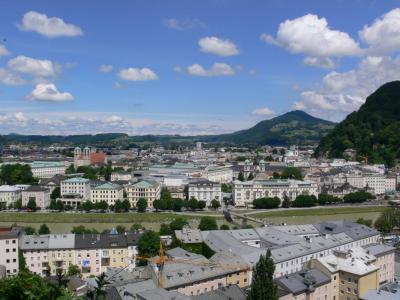
Sitting high up on the Monk's Hill (Mönchsberg) overlooking the west side of Old Town Salzburg from a steep cliff, Winkler Terrace is where the 'Do Re Mi' song begins in "The Sound of Music" as Maria has the children mix up the order of the musical notes, just for practice, while bringing the song into the city from a meadow. Earlier in the film, Maria also appears on this terrace when leaving the convent on her way to the Von Trapps for the first time.
Back in 1965, this terrace housed the historic Café Winkler offering a stunning panorama of Salzburg; now that café has been replaced by another one – called M32 – and the Modern Art Museum, but the view is still there. From the terrace, you can observe the entire city center and the Salzach River down below, plus the High Fortress and the red Nonnberg Abbey spire straight across the Old Town.
Tip:
To go up the terrace you have two possibilities: 1) on foot: around 15-20 minutes; 2) via the electric Mönchsberg lift, in a matter of seconds, for a fee.
Back in 1965, this terrace housed the historic Café Winkler offering a stunning panorama of Salzburg; now that café has been replaced by another one – called M32 – and the Modern Art Museum, but the view is still there. From the terrace, you can observe the entire city center and the Salzach River down below, plus the High Fortress and the red Nonnberg Abbey spire straight across the Old Town.
Tip:
To go up the terrace you have two possibilities: 1) on foot: around 15-20 minutes; 2) via the electric Mönchsberg lift, in a matter of seconds, for a fee.
3) Horse Bath (Pferdeschwemme)
Underneath the cliff-side of Monk's Hill (Mönchsberg) sits the largest of the two surviving Medieval horse baths in Salzburg which, back in the Middle Ages, were analogues to today's car washes. In the Sound of Music movie, this long fountain is the one that Maria and the Von Trapp kids dance around and splash in water during the instrumental ending to "My Favorite Things". Additional scenes for the movie were also shot at the fountain but were later cut out from the end version.
Both of Salzburg's horse bath fountains are fed by ancient underground canals that have been in use since Roman times and revamped repeatedly during the 700s and 1200s. This magnificent high baroque watering pond makes for a fabulous attraction nearby the former royal stables, located in what is now the Großes Festspielhaus (Large Festival House) just across the street on Hofstallgasse. The Prince Archbishop's horses were cooled, washed off and watered here after their ceremonial parades. At the center of the pond, a dramatic sculpture of a dynamic horse being restrained by its handler is backed by a great sequence of frescoes portraying horses in various states of dynamic activity.
Both of Salzburg's horse bath fountains are fed by ancient underground canals that have been in use since Roman times and revamped repeatedly during the 700s and 1200s. This magnificent high baroque watering pond makes for a fabulous attraction nearby the former royal stables, located in what is now the Großes Festspielhaus (Large Festival House) just across the street on Hofstallgasse. The Prince Archbishop's horses were cooled, washed off and watered here after their ceremonial parades. At the center of the pond, a dramatic sculpture of a dynamic horse being restrained by its handler is backed by a great sequence of frescoes portraying horses in various states of dynamic activity.

4) Salzburg Festival Halls Complex
The main stages for the world famous Salzburg Festival are comprised of two festival halls and the Felsenreitschule (literally "Rock Riding School"). Commissioned in the early 1600s, the former were once the riding stables of Salzburg's Prince Archbishops, while the latter, erected in the 1690s, was originally used as a summer riding school and for animal hunts. The complex took on many other uses before famous Austrian-American theater director, Max Reinhardt, took on the venue for the Salzburg Festival in 1926.
The Großes Festspielhaus (Large Festival House), in its current form, was designed specifically for the Salzburg Festival, having been inaugurated in July 1960 with a performance of Richard Strauss' "Der Rosenkavalier" conducted by Herbert von Karajan, who also worked with the main architect, Holzmeister, on aspects of the building's design. The building includes office space and tunneling into the Mönchsberg as well as a 2,179-seat performance space adaptable for both scenic and non-scenic events and acoustically scalable down for piano and song recitals. The stage is one of the widest in the world, at 100 metres (330 ft). Access from the street to the lobby is through five bronze doors, above which is inscribed a Latin motto by Thomas Michels: SACRA CAMENAE DOMUS / CONCITIS CARMINE PATET / QUO NOS ATTONITOS / NUMEN AD AURAS FERAT ("The Muse's holy house is open to those moved by song / divine power bears us up who are inspired").
***SOUND OF MUSIC TOUR***
Stretching for more than a city block, tucked against Mönchsberg's steep cliff, the massive Rock Riding School is an iconic location that hosted some of the most powerful scenes in the movie. It is here that the Von Trapp children rehearse for the festival and where, later on, Captain Georg von Trapp performs "Edelweiss" with the help of the audience, at first, and then of his family who joined him on stage to sing "So Long, Farewell", prior to fleeing Salzburg to escape the Nazis.
In real life, though, the Von Trapps' performance at the Festspiele happened somewhat differently. The family did perform at the Festival, in 1935, and then in 1936, when after officially forming their choir, they won the first place there. Only that was almost two years before the Anschluss (Nazi annexation) of Austria. After their refusal to sing for Hitler on his birthday in April of 1938, the family fled to Italy a couple of months later, ahead that year's Festival depicted in the movie.
Why You Should Visit:
A backstage tour of the Festival Halls is well worth doing, especially to see the Rock Riding School, converted to a theatre now with a retractable roof. Conducted in both German and English, tours run for about one hour, which is time worth spending to understand the architecture, artwork, as well as theatrical and technical feats.
The Großes Festspielhaus (Large Festival House), in its current form, was designed specifically for the Salzburg Festival, having been inaugurated in July 1960 with a performance of Richard Strauss' "Der Rosenkavalier" conducted by Herbert von Karajan, who also worked with the main architect, Holzmeister, on aspects of the building's design. The building includes office space and tunneling into the Mönchsberg as well as a 2,179-seat performance space adaptable for both scenic and non-scenic events and acoustically scalable down for piano and song recitals. The stage is one of the widest in the world, at 100 metres (330 ft). Access from the street to the lobby is through five bronze doors, above which is inscribed a Latin motto by Thomas Michels: SACRA CAMENAE DOMUS / CONCITIS CARMINE PATET / QUO NOS ATTONITOS / NUMEN AD AURAS FERAT ("The Muse's holy house is open to those moved by song / divine power bears us up who are inspired").
***SOUND OF MUSIC TOUR***
Stretching for more than a city block, tucked against Mönchsberg's steep cliff, the massive Rock Riding School is an iconic location that hosted some of the most powerful scenes in the movie. It is here that the Von Trapp children rehearse for the festival and where, later on, Captain Georg von Trapp performs "Edelweiss" with the help of the audience, at first, and then of his family who joined him on stage to sing "So Long, Farewell", prior to fleeing Salzburg to escape the Nazis.
In real life, though, the Von Trapps' performance at the Festspiele happened somewhat differently. The family did perform at the Festival, in 1935, and then in 1936, when after officially forming their choir, they won the first place there. Only that was almost two years before the Anschluss (Nazi annexation) of Austria. After their refusal to sing for Hitler on his birthday in April of 1938, the family fled to Italy a couple of months later, ahead that year's Festival depicted in the movie.
Why You Should Visit:
A backstage tour of the Festival Halls is well worth doing, especially to see the Rock Riding School, converted to a theatre now with a retractable roof. Conducted in both German and English, tours run for about one hour, which is time worth spending to understand the architecture, artwork, as well as theatrical and technical feats.
5) St. Peter's Abbey and Cemetery (must see)
Dating from the late 690s and still extant, St. Peter's offers much to view and contemplate. Forming part of the oldest functioning monastery in Austria, it also houses the country's oldest library and oldest restaurant, the entrance to which is adjacent to the church on the voluminous square that houses the Abbey monks and the administrative offices. "Community", a terrific wooden sculpture by Tyrolean artist Lackner Ferdinand is adjacent to the energetic water mill wheel.
A marvelous steeple crowned with an onion dome gives an admirable facade to the Abbey Church. Inside is a harmony of Rococo adornment, with a breathtaking vista through the nave. Decorative columns and arches take the view to the glorious altar area which should not be missed. It has been said that this Abbey was the birth of Christianity, being established just two centuries after the fall of the Roman Empire. You can certainly feel the history inside.
The abbey complex also contains a very old but interesting (and beautifully maintained) cemetery that features decorative gravestones and vaults keeping the remains and memories of many famous personages, including the architect Santino Solari who designed the nearby Dom/Cathedral, Mozart's sister Nannerl (an accomplished musician in her own right), and Joseph Haydn's brother, Michael.A steep stone stairway leads to early Christian catacombs incorporating two stone churches rendered from caves on the berg. Wonderful to visit, they are filled with early altars, faded murals and inscriptions.
***MOZART WALKING TOUR***
During Wolfgang's early years in Salzburg, Abbot Dominikus Hagenauer administrated St. Peter's church and monastery. Hagenauer celebrated his first mass here in October 1769, and Mozart composed the Dominikus Mass, KV 66 for this festive occasion. Hagenauer wrote in his diary, "Music for the Mass composed by Wolfgang Mozart, 14 years of age, which in every one's opinion was most elegant. Wolfgang Mozart played on the great organ for half an hour to the astonishment of all." The youngster would soon venture out to conquer the musical world; however, he specifically returned to St. Peter's fourteen years later, in October 1783, to conduct a performance of his monumental "Mass in C minor". Though it was the sole performance during his lifetime, the Salzburg Festival now performs the mass here every summer.
***SOUND OF MUSIC TOUR***
Toward the end of "The Sound of Music" film, the Von Trapps hide from the Nazis that wield flashlights behind the tombs in Nonnburg Convent's cemetery. The real Nonnburg cemetery, however, is extremely small and modest, so the filmmakers instead decided to use the Saint Peter's picturesque cemetery (Petersfriedhof) for the inspiration to build a Hollywood set where the actual filming took place. Ringing the edges of the flower-filled cemetery are large crypts for the local wealthy families enclosed within elegant wrought iron gates which are expertly reproduced in the movie.
While the real-life Von Trapps never hid in a cemetery, the scene and the confrontation with Rolf adds a great deal of drama to the plot, which is somewhat different from the original Broadway play produced in 1959.
Why You Should Visit:
Everything is free to visit except for the catacombs which cost not very much at all.
A marvelous steeple crowned with an onion dome gives an admirable facade to the Abbey Church. Inside is a harmony of Rococo adornment, with a breathtaking vista through the nave. Decorative columns and arches take the view to the glorious altar area which should not be missed. It has been said that this Abbey was the birth of Christianity, being established just two centuries after the fall of the Roman Empire. You can certainly feel the history inside.
The abbey complex also contains a very old but interesting (and beautifully maintained) cemetery that features decorative gravestones and vaults keeping the remains and memories of many famous personages, including the architect Santino Solari who designed the nearby Dom/Cathedral, Mozart's sister Nannerl (an accomplished musician in her own right), and Joseph Haydn's brother, Michael.A steep stone stairway leads to early Christian catacombs incorporating two stone churches rendered from caves on the berg. Wonderful to visit, they are filled with early altars, faded murals and inscriptions.
***MOZART WALKING TOUR***
During Wolfgang's early years in Salzburg, Abbot Dominikus Hagenauer administrated St. Peter's church and monastery. Hagenauer celebrated his first mass here in October 1769, and Mozart composed the Dominikus Mass, KV 66 for this festive occasion. Hagenauer wrote in his diary, "Music for the Mass composed by Wolfgang Mozart, 14 years of age, which in every one's opinion was most elegant. Wolfgang Mozart played on the great organ for half an hour to the astonishment of all." The youngster would soon venture out to conquer the musical world; however, he specifically returned to St. Peter's fourteen years later, in October 1783, to conduct a performance of his monumental "Mass in C minor". Though it was the sole performance during his lifetime, the Salzburg Festival now performs the mass here every summer.
***SOUND OF MUSIC TOUR***
Toward the end of "The Sound of Music" film, the Von Trapps hide from the Nazis that wield flashlights behind the tombs in Nonnburg Convent's cemetery. The real Nonnburg cemetery, however, is extremely small and modest, so the filmmakers instead decided to use the Saint Peter's picturesque cemetery (Petersfriedhof) for the inspiration to build a Hollywood set where the actual filming took place. Ringing the edges of the flower-filled cemetery are large crypts for the local wealthy families enclosed within elegant wrought iron gates which are expertly reproduced in the movie.
While the real-life Von Trapps never hid in a cemetery, the scene and the confrontation with Rolf adds a great deal of drama to the plot, which is somewhat different from the original Broadway play produced in 1959.
Why You Should Visit:
Everything is free to visit except for the catacombs which cost not very much at all.
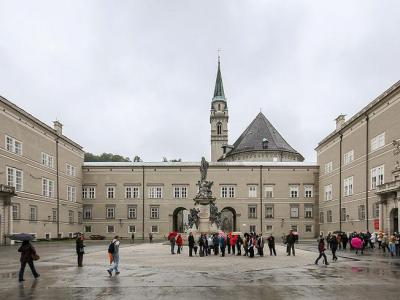
6) Domplatz
Flanked by the Salzburg Cathedral and other buildings belonging to the church, this square is used today as a venue for performances and as the site of the annual Christmas market which has taken place here annually for the last 500 years. Temporary traditional wooden huts are erected, and visitors can buy trinkets, rural crafts, and typical Austrian food/drinks like hot mulled wine and roasted chestnuts. If you visit during Christmas Eve, don't miss the 'Turmblasen' which is a traditional feature with brass instruments playing chorale music from the city tower or the steeple of the church.
Interestingly, the Domplatz is accessed by three open arcade arches in the north, south, and west. These "cathedral arches" unite the cathedral with the Salzburg Residenz and St. Peter's Abbey to form a unique enclosed square measuring 101 meters long and 69 meters wide, with walls 81 meters high.
The square is dominated by the Maria Immaculata (Immaculate Mary) column, commissioned by Archbishop Sigismund von Schrattenbach and executed by the brothers Wolfgang and Johann Hagenauer between 1766-71. Modeled after similar columns in Vienna and Munich and constructed of marble and cast iron, the Maria Immaculata depicts the Virgin Mary enthroned on a mountain of clouds made of Untersberg marble and a globe. The central Marian figure is surrounded on four sides by allegoric figures representing angels, the devil, wisdom, and the Church. According to a plaque on the cathedral, the figure group shows reactions to the mystery of the Immaculate Conception—the angels are delighted, human wisdom vanishes, the envious devil growls, and the triumphant Church rejoices. When viewed from the center of the arcades at the back of Domplatz, the classicist column is positioned in the central axis of the cathedral and shows the central Marian figure surrounded by the angels on the cathedral façade and seems to wear the crown mounted on the building.
***SOUND OF MUSIC TOUR***
The Domplatz first appears in The Sound of Music when Maria exits it through the arches. It can further be seen during the "My Favorite Things" montage when Maria and the children scurry across the square in their picnic clothes.
Interestingly, the Domplatz is accessed by three open arcade arches in the north, south, and west. These "cathedral arches" unite the cathedral with the Salzburg Residenz and St. Peter's Abbey to form a unique enclosed square measuring 101 meters long and 69 meters wide, with walls 81 meters high.
The square is dominated by the Maria Immaculata (Immaculate Mary) column, commissioned by Archbishop Sigismund von Schrattenbach and executed by the brothers Wolfgang and Johann Hagenauer between 1766-71. Modeled after similar columns in Vienna and Munich and constructed of marble and cast iron, the Maria Immaculata depicts the Virgin Mary enthroned on a mountain of clouds made of Untersberg marble and a globe. The central Marian figure is surrounded on four sides by allegoric figures representing angels, the devil, wisdom, and the Church. According to a plaque on the cathedral, the figure group shows reactions to the mystery of the Immaculate Conception—the angels are delighted, human wisdom vanishes, the envious devil growls, and the triumphant Church rejoices. When viewed from the center of the arcades at the back of Domplatz, the classicist column is positioned in the central axis of the cathedral and shows the central Marian figure surrounded by the angels on the cathedral façade and seems to wear the crown mounted on the building.
***SOUND OF MUSIC TOUR***
The Domplatz first appears in The Sound of Music when Maria exits it through the arches. It can further be seen during the "My Favorite Things" montage when Maria and the children scurry across the square in their picnic clothes.
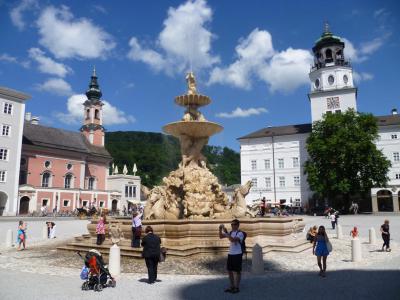
7) Residenzplatz (must see)
As Salzburg's center of government, Residenzplatz has long been flanked by important buildings: the Cathedral (to the south), the old Residence Palace of the city's rulers (to the right when facing the Cathedral), and the New Residence, with its bell tower – now housing the Salzburg Museum (to the left).
In the 1600s, during initial construction years, the surrounding medieval homes as well as the cemetery above the ancient Roman Forum all had to be leveled, as part of Prince-Archbishop Wolf Dietrich's grand vision to make Salzburg the new "Rome of the North." The square's focal point – Residenzbrunnen – is as Italian as can be, an over-the-top version of Bernini's famous Triton Fountain in Rome, said to be the largest and most beautiful baroque fountain outside of Italy.
Notice that Salzburg's buildings are made from three distinctly different types of stone. Most common is the chunky gray conglomerate (like the cathedral's side walls) quarried from the nearby cliffs. There's also white marble (like the cathedral's towers and windows) and red marble (best seen in monuments inside buildings), both from the Alps near Berchtesgaden.
***SOUND OF MUSIC TOUR***
Set on the site of a former ancient Roman Forum, this large square is the location where Maria belts out "I Have Confidence in Me" while crossing the square by bus on her way to the Trapp villa, after leaving the convent. The focal point of this square – and one of the main filming sets – is the massive central 45-foot-tall Horse Fountain (Residenzbrunnen) in which Maria playfully splashes the spouting horses.
Later in the film, Nazi soldiers march through the square against the backdrop of their flag draped over the entrance to the Old Residenz Palace on the west side. The dreary scene symbolizes German annexation of Austria, the so-called Anschluss, in March of 1938. Because of the disdain for Nazi symbols in Salzburg, filming this scene took a lot of effort.
Why You Should Visit:
Has a very beautiful fountain from the 17th century in the middle (considered one of the most significant Baroque monuments in Europe), and a perfect view of the Salzburger Dom.
Tip:
Grab some lunch from bakeries/shops nearby and sit on one of the benches near the fountain, enjoying the view.
In the 1600s, during initial construction years, the surrounding medieval homes as well as the cemetery above the ancient Roman Forum all had to be leveled, as part of Prince-Archbishop Wolf Dietrich's grand vision to make Salzburg the new "Rome of the North." The square's focal point – Residenzbrunnen – is as Italian as can be, an over-the-top version of Bernini's famous Triton Fountain in Rome, said to be the largest and most beautiful baroque fountain outside of Italy.
Notice that Salzburg's buildings are made from three distinctly different types of stone. Most common is the chunky gray conglomerate (like the cathedral's side walls) quarried from the nearby cliffs. There's also white marble (like the cathedral's towers and windows) and red marble (best seen in monuments inside buildings), both from the Alps near Berchtesgaden.
***SOUND OF MUSIC TOUR***
Set on the site of a former ancient Roman Forum, this large square is the location where Maria belts out "I Have Confidence in Me" while crossing the square by bus on her way to the Trapp villa, after leaving the convent. The focal point of this square – and one of the main filming sets – is the massive central 45-foot-tall Horse Fountain (Residenzbrunnen) in which Maria playfully splashes the spouting horses.
Later in the film, Nazi soldiers march through the square against the backdrop of their flag draped over the entrance to the Old Residenz Palace on the west side. The dreary scene symbolizes German annexation of Austria, the so-called Anschluss, in March of 1938. Because of the disdain for Nazi symbols in Salzburg, filming this scene took a lot of effort.
Why You Should Visit:
Has a very beautiful fountain from the 17th century in the middle (considered one of the most significant Baroque monuments in Europe), and a perfect view of the Salzburger Dom.
Tip:
Grab some lunch from bakeries/shops nearby and sit on one of the benches near the fountain, enjoying the view.
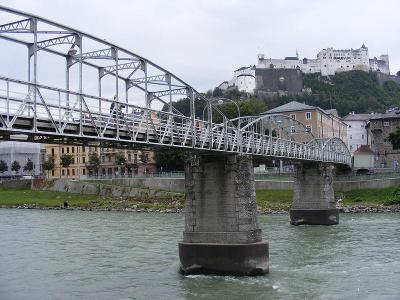
8) Mozartsteg (Mozart Bridge)
The famous Mozartsteg is a filigree Art Nouveau footbridge over the Salzach River linking the Old Town and Stone Lane (Steingasse). Built in 1903, it was the result of efforts by a wealthy local businessman who lobbied and donated the funds for construction in order to increase customer traffic to his café. Today, the picturesque Mozartsteg is a spot for photographs by tourists and part of the tours that take visitors around locations where The Sound of Music was filmed.
Take in the charming, historic core of Salzburg's Old Town while the milky-green Salzach thunders under your feet. Although the river has not salty but fresh water, its name comes from the precious cargo it once carried. The major salt mines of Hallein are just 12 miles (~20 km) upstream. For two millenia, hundreds of barges carried salt from here to the wider world: the Danube, the Black Sea, and on to the Mediterranean. As barges passed through, they had to pay a toll on their "white gold". The city was made great from the trading of salt (Salz) defended by a castle (Burg)—"Salz-burg."
***SOUND OF MUSIC TOUR***
In the film, it is across this bridge and along the grassy riverbank nearby that Maria and the kids cheerfully skip while pointing at the sights during the instrumental ending of the song "My Favorite Things".
Take in the charming, historic core of Salzburg's Old Town while the milky-green Salzach thunders under your feet. Although the river has not salty but fresh water, its name comes from the precious cargo it once carried. The major salt mines of Hallein are just 12 miles (~20 km) upstream. For two millenia, hundreds of barges carried salt from here to the wider world: the Danube, the Black Sea, and on to the Mediterranean. As barges passed through, they had to pay a toll on their "white gold". The city was made great from the trading of salt (Salz) defended by a castle (Burg)—"Salz-burg."
***SOUND OF MUSIC TOUR***
In the film, it is across this bridge and along the grassy riverbank nearby that Maria and the kids cheerfully skip while pointing at the sights during the instrumental ending of the song "My Favorite Things".

9) Nonnberg Convent
Nonberg Convent (Stift Nonnberg) is probably the most famous of all The Sound of Music sites in Salzburg. Founded by Saint Erentrudis, the niece of Saint Rupert (Bishop of Worms) in 712-715, this historic Benedictine Convent is the oldest continuously existing abbey in the German-speaking world. Perched high over the east side of Salzburg, it made an excellent location for many powerful scenes in the famous musical.
The complex that makes up the convent includes the Maria Himmelfahrt church, the cloisters, a pillar hall, the abbey, the kitchen court, the dining hall, the St. John's Chapel, the Pieta Chapel, and other small buildings. With impressive Gothic-type architecture, beautifully maintained headstones, and a very tranquil ambiance, it is a marvelous sight to see.
***SOUND OF MUSIC TOUR***
It was here that the real-life Maria (Maria Augusta Kutschera), aged 19, came to live in 1924, stayed for two years as a nun apprentice, became a tutor for one of the widowed Captain Von Trapp's sick children, and then married him on November 26th, 1927, 11 years before the Nazis took over the city. At the time of her marriage, Maria was 22 and Georg – 47.
The scene of their wedding was filmed at Collegiate Church in Mondsee, Austria, while the majority of the indoor scenes – as well as that with the nuns singing "Maria" in the convent courtyard – were shot in a California studio. Filming inside the courtyard was not allowed, so they had to do it at a re-created set in Hollywood and a small studio in Salzburg. Still, there were four iconic scenes shot on the actual grounds, near the gate, including those in which Maria leaves the abbey wondering "What will this day be like?". The nuns talk about Maria, the children come to visit, and the Nazis go on the hunt for the Von Trapps after their escape, upon which the nuns disable their car.
At the time of the filming, there were 50 nuns residing in the convent; now there are only 14 left (as at 2017). Each morning at 6:45am the resident nuns gather to sing Gregorian chants in Latin which is a real treat.
Why You Should Visit:
If you want to get off the beaten path and see a church that seems unaffected by the passing of time, this is a great stop!
Tip:
For some of the finest Romanesque and Gothic artwork in Austria and Europe, go to the Convent's museum ("Stiftsmuseum"). Make sure you also have some 50-cent coins to light up the area at the back of the church and see Roman frescoes (painted around 1140) or the baroque altar and side altars (dating back to 1515).
The complex that makes up the convent includes the Maria Himmelfahrt church, the cloisters, a pillar hall, the abbey, the kitchen court, the dining hall, the St. John's Chapel, the Pieta Chapel, and other small buildings. With impressive Gothic-type architecture, beautifully maintained headstones, and a very tranquil ambiance, it is a marvelous sight to see.
***SOUND OF MUSIC TOUR***
It was here that the real-life Maria (Maria Augusta Kutschera), aged 19, came to live in 1924, stayed for two years as a nun apprentice, became a tutor for one of the widowed Captain Von Trapp's sick children, and then married him on November 26th, 1927, 11 years before the Nazis took over the city. At the time of her marriage, Maria was 22 and Georg – 47.
The scene of their wedding was filmed at Collegiate Church in Mondsee, Austria, while the majority of the indoor scenes – as well as that with the nuns singing "Maria" in the convent courtyard – were shot in a California studio. Filming inside the courtyard was not allowed, so they had to do it at a re-created set in Hollywood and a small studio in Salzburg. Still, there were four iconic scenes shot on the actual grounds, near the gate, including those in which Maria leaves the abbey wondering "What will this day be like?". The nuns talk about Maria, the children come to visit, and the Nazis go on the hunt for the Von Trapps after their escape, upon which the nuns disable their car.
At the time of the filming, there were 50 nuns residing in the convent; now there are only 14 left (as at 2017). Each morning at 6:45am the resident nuns gather to sing Gregorian chants in Latin which is a real treat.
Why You Should Visit:
If you want to get off the beaten path and see a church that seems unaffected by the passing of time, this is a great stop!
Tip:
For some of the finest Romanesque and Gothic artwork in Austria and Europe, go to the Convent's museum ("Stiftsmuseum"). Make sure you also have some 50-cent coins to light up the area at the back of the church and see Roman frescoes (painted around 1140) or the baroque altar and side altars (dating back to 1515).

10) Leopoldskron Castle
With a fascinating history beginning in the 1730s courtesy of the then Prince-Archbishop, Count Leopold Anton Eleutherius von Firmian, this rococo mansion is beautifully located at lake edge and with terrific vistas of the mountains. A further contribution to the cultural life of the city was the founding of the Salzburg Festival here by Max Reinhardt and others. You will very much enjoy your time here, admiring the beauty and strolling around the grand surrounds. An on-site hotel offers bicycles for the guests to take into the city, which is also a fantastic way to get around in the beautiful countryside.
***SOUND OF MUSIC TOUR***
Located about 4 miles away from the real-life Von Trapp Villa (which didn't itself appear in the film), this castle served as the primary location for all the lake terrace scenes at the Von Trapp family house in The Sound of Music.
Overlooking a small lake, the castle's façade provided backdrop for the most iconic outdoor scenes including those of drinking pink lemonade on the terrace, Captain Von Trapp hearing his kids sing for the first time, the children and Maria falling off the boat into the lake, as well as numerous shots of the lakeside horse statues framing up Untersberg Mountain.
The castle was also the original home to the gazebo from the movie, which was later moved to the nearby, more tourist-friendly Hellbrunn Palace Gardens after the fans started climbing the palace gates to see it. The second and much larger gazebo was built at Fox Studios in Hollywood for all of the scenes set inside the family home – the bedroom, the grand foyer and the staircase, as well as the lavish golden Venetian ballroom. These re-created spaces are featured when Maria is introduced to the children, when they sing at the party, performing "Lonely Goatherd" with carved puppets, as well as when they dance to the song "16 Going on 17" and bid their farewells.
Why You Should Visit:
There isn't an angle of the building to look at that isn't absolutely incredible; inside or out.
Tip:
Don't miss the fantastic water park (Freibad Leopoldskron) right opposite the castle!
***SOUND OF MUSIC TOUR***
Located about 4 miles away from the real-life Von Trapp Villa (which didn't itself appear in the film), this castle served as the primary location for all the lake terrace scenes at the Von Trapp family house in The Sound of Music.
Overlooking a small lake, the castle's façade provided backdrop for the most iconic outdoor scenes including those of drinking pink lemonade on the terrace, Captain Von Trapp hearing his kids sing for the first time, the children and Maria falling off the boat into the lake, as well as numerous shots of the lakeside horse statues framing up Untersberg Mountain.
The castle was also the original home to the gazebo from the movie, which was later moved to the nearby, more tourist-friendly Hellbrunn Palace Gardens after the fans started climbing the palace gates to see it. The second and much larger gazebo was built at Fox Studios in Hollywood for all of the scenes set inside the family home – the bedroom, the grand foyer and the staircase, as well as the lavish golden Venetian ballroom. These re-created spaces are featured when Maria is introduced to the children, when they sing at the party, performing "Lonely Goatherd" with carved puppets, as well as when they dance to the song "16 Going on 17" and bid their farewells.
Why You Should Visit:
There isn't an angle of the building to look at that isn't absolutely incredible; inside or out.
Tip:
Don't miss the fantastic water park (Freibad Leopoldskron) right opposite the castle!
Walking Tours in Salzburg, Austria

Create Your Own Walk in Salzburg
Creating your own self-guided walk in Salzburg is easy and fun. Choose the city attractions that you want to see and a walk route map will be created just for you. You can even set your hotel as the start point of the walk.

Mozart Walking Tour
Salzburg was Mozart's home throughout most of his short life. For those who wish to immerse themselves in the Mozart world, there are several locations in the city well worth exploring.
Born on Grain Street (Getreidegasse) and baptized in the nearby Cathedral, Mozart played his first big concert, at age 6, at the Residence Palace.
Later, he served as an organist for the Cathedral,... view more
Tour Duration: 2 Hour(s)
Travel Distance: 2.4 Km or 1.5 Miles
Born on Grain Street (Getreidegasse) and baptized in the nearby Cathedral, Mozart played his first big concert, at age 6, at the Residence Palace.
Later, he served as an organist for the Cathedral,... view more
Tour Duration: 2 Hour(s)
Travel Distance: 2.4 Km or 1.5 Miles

Salzburg Introduction Walking Tour
Dubbed the "City of Mozart", the enchanting Austrian city of Salzburg has gone down in history primarily as the hometown of its greatest son, Wolfgang Amadeus Mozart. His birthplace on Getreidegasse, a busy shopping street, is now a museum, much like the Mozart Residence, a place where the 18th-century composer spent much of his early life.
Apart from Mozart, however, Salzburg is also... view more
Tour Duration: 2 Hour(s)
Travel Distance: 2.8 Km or 1.7 Miles
Apart from Mozart, however, Salzburg is also... view more
Tour Duration: 2 Hour(s)
Travel Distance: 2.8 Km or 1.7 Miles

Historical Religious Buildings Walking Tour
The historic center of Salzburg, a UNESCO World Heritage Site since 1996, is home to numerous landmarks, including religious sites. Collectively, these historical sanctuaries, from small churches to the impressive Baroque-style Salzburg Cathedral, bear witness to the city's fascinating past and contribute a great deal of charm to its alluring present.
The local Saint Peter's Abbey is... view more
Tour Duration: 1 Hour(s)
Travel Distance: 1.4 Km or 0.9 Miles
The local Saint Peter's Abbey is... view more
Tour Duration: 1 Hour(s)
Travel Distance: 1.4 Km or 0.9 Miles

Old Town Gift Shops
Specialty shops make up an integral part of tourist life in Salzburg. The picturesque Old Town of Salzburg boasts a delightful array of gift shops, all within a pleasant walking distance, offering a diverse range of souvenirs and local treasures. Let's take a stroll through some of the notable establishments in this historic area.
We start at Kirchtag, a quaint gift shop known for its... view more
Tour Duration: 1 Hour(s)
Travel Distance: 0.9 Km or 0.6 Miles
We start at Kirchtag, a quaint gift shop known for its... view more
Tour Duration: 1 Hour(s)
Travel Distance: 0.9 Km or 0.6 Miles
The Most Popular Cities
/ view all