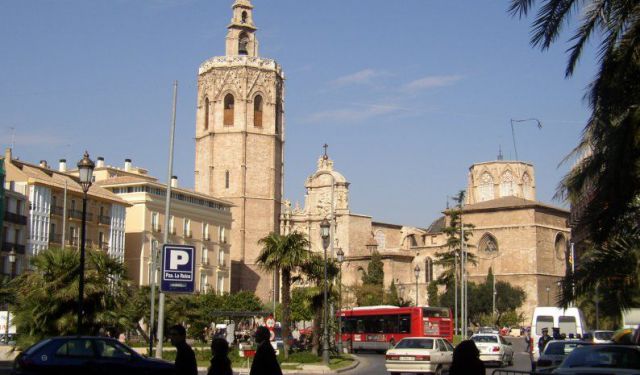
Old Town Walking Tour (Self Guided), Valencia
Home to most of Valencia's main tourist attractions, the Ciutat Vella (Old Town) is undoubtedly the most charming part of the city, reflecting its history and retaining its star-shaped medieval layout. Formerly a walled town from the Roman period, this area saw its major development commence in the 14th-15th centuries, the most tangible remains of which now are Torres de Serranos (Serranos Towers).
Still, it is the construction of Mercado Central (Central Market) here in the early 20th century that gave the neighborhood a definitive commercial configuration with subsequent radical urbanization, making it a top tourist destination buzzing with life. The display of Valencian modernist architecture, this market greets visitors with a striking Art Nouveau hall packed with food and produce stalls.
Another unmissable sight here is La Lonja de la Seda, the grandiose, late-Gothic former Silk Exchange, listed as a World Heritage Site by UNESCO. Also you would want to visit the Valencian Sistine Chapel: Church of San Nicolás, erected in 1242.
Perhaps the city’s most famous, and stunning, landmark is La Catedral (Valencia Cathedral), filled with treasures including a chalice that is believed to be the Holy Grail itself.
Plaza de la Reina (Queen Square) is, without a doubt, one of the hottest and liveliest spots in the city. Nearby are several stunning buildings, such as Santa Catalina church and its beautiful 17th century Baroque bell tower.
The historic center of Valencia is easily walkable, yet if you don't keep your wits about you, it is quite easy to get lost in the maze of alleyways. For a comfortable wandering the cobbled streets and soaking up Valencia’s lively atmosphere, whilst discovering the best the city has to offer, check out this self-guided walking tour and enjoy yourself!
Still, it is the construction of Mercado Central (Central Market) here in the early 20th century that gave the neighborhood a definitive commercial configuration with subsequent radical urbanization, making it a top tourist destination buzzing with life. The display of Valencian modernist architecture, this market greets visitors with a striking Art Nouveau hall packed with food and produce stalls.
Another unmissable sight here is La Lonja de la Seda, the grandiose, late-Gothic former Silk Exchange, listed as a World Heritage Site by UNESCO. Also you would want to visit the Valencian Sistine Chapel: Church of San Nicolás, erected in 1242.
Perhaps the city’s most famous, and stunning, landmark is La Catedral (Valencia Cathedral), filled with treasures including a chalice that is believed to be the Holy Grail itself.
Plaza de la Reina (Queen Square) is, without a doubt, one of the hottest and liveliest spots in the city. Nearby are several stunning buildings, such as Santa Catalina church and its beautiful 17th century Baroque bell tower.
The historic center of Valencia is easily walkable, yet if you don't keep your wits about you, it is quite easy to get lost in the maze of alleyways. For a comfortable wandering the cobbled streets and soaking up Valencia’s lively atmosphere, whilst discovering the best the city has to offer, check out this self-guided walking tour and enjoy yourself!
How it works: Download the app "GPSmyCity: Walks in 1K+ Cities" from Apple App Store or Google Play Store to your mobile phone or tablet. The app turns your mobile device into a personal tour guide and its built-in GPS navigation functions guide you from one tour stop to next. The app works offline, so no data plan is needed when traveling abroad.
Download The GPSmyCity App



Old Town Walking Tour Map
Guide Name: Old Town Walking Tour
Guide Location: Spain » Valencia (See other walking tours in Valencia)
Guide Type: Self-guided Walking Tour (Sightseeing)
# of Attractions: 14
Tour Duration: 2 Hour(s)
Travel Distance: 3.0 Km or 1.9 Miles
Author: kane
Sight(s) Featured in This Guide:
Guide Location: Spain » Valencia (See other walking tours in Valencia)
Guide Type: Self-guided Walking Tour (Sightseeing)
# of Attractions: 14
Tour Duration: 2 Hour(s)
Travel Distance: 3.0 Km or 1.9 Miles
Author: kane
Sight(s) Featured in This Guide:
- La Catedral (Valencia Cathedral)
- Plaza de la Reina (Queen Square)
- Iglesia y Torre de Santa Catalina (Santa Catalina Church and Tower)
- Casa Francisco Ordeig (Francisco Ordeig House)
- Mercado Central (Central Market)
- La Lonja de la Seda (Silk Exchange)
- Parroquia de San Nicolás de Bari y San Pedro Mártir (Church of San Nicolas)
- Casa-Museo de las Rocas (House Museum of Las Rocas)
- Torres de Serranos (Serranos Towers)
- Iglesia de San Lorenzo (San Lorenzo Church)
- Archaeological Crypt of the San Vicente Mártir Prison
- Almudin Museum
- Iglesia de San Juan del Hospital (Church of San Juan del Hospital)
- Iglesia de Santo Tomas y San Felipe Neri (Church of Santo Tomás and San Felipe Neri)
1) La Catedral (Valencia Cathedral) (must see)
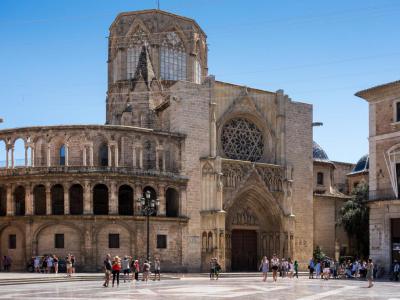
La Catedral is often referred to as Valencia Cathedral by tourists who are captivated by its rich history and beautiful Valencian Gothic architecture. However, the cathedral goes by many other names. It is officially the Metropolitan Cathedral-Basilica of the Assumption of Our Lady of Valencia. It is also referred to as Saint Mary's Cathedral.
Whatever you call it, Valencia Catedral is a must-see spot in Valencia. Construction began on the cathedral in 1262 but wasn't completed until around 1459. Still, additions and improvements continued on the cathedral for hundreds of years. A building was added to the church as late as 1970.
Thanks to many additions and renovations over the years, the cathedral features a variety of architectural styles. Valencian Gothic is largely represented, but architecture-lovers will find French Gothic, Romanesque, Renaissance, Baroque and Neoclassical influences. It also has numerous paintings from Spanish and Italian artists. Most of these paintings date to the 15th century.
Along with the beauty of the architecture and the decorative interior, the cathedral holds many secrets and mysteries. During excavations, remnants of Roman buildings were found within the cathedral. Likewise, a number of artifacts and relics are held inside. One of these relics is the Holy Chalice, which is thought by many to be the true Holy Grail. It can be seen in the Chapel of the Holy Chalice.
Tours are available from 10:30 AM to 5:30 PM Monday through Saturday. Visitors can tour the interior, the museum and the bell tower.
Why You Should Visit:
Valencia Cathedral is the most important religious building in the city. One can admire its numerous architectural styles and have a chance to see Holy Chalice.
Tips:
The cathedral is not open for tours on Sundays. Those visiting Valencia in the summer may find the tour hours extended through 6:30 on weekdays.
Whatever you call it, Valencia Catedral is a must-see spot in Valencia. Construction began on the cathedral in 1262 but wasn't completed until around 1459. Still, additions and improvements continued on the cathedral for hundreds of years. A building was added to the church as late as 1970.
Thanks to many additions and renovations over the years, the cathedral features a variety of architectural styles. Valencian Gothic is largely represented, but architecture-lovers will find French Gothic, Romanesque, Renaissance, Baroque and Neoclassical influences. It also has numerous paintings from Spanish and Italian artists. Most of these paintings date to the 15th century.
Along with the beauty of the architecture and the decorative interior, the cathedral holds many secrets and mysteries. During excavations, remnants of Roman buildings were found within the cathedral. Likewise, a number of artifacts and relics are held inside. One of these relics is the Holy Chalice, which is thought by many to be the true Holy Grail. It can be seen in the Chapel of the Holy Chalice.
Tours are available from 10:30 AM to 5:30 PM Monday through Saturday. Visitors can tour the interior, the museum and the bell tower.
Why You Should Visit:
Valencia Cathedral is the most important religious building in the city. One can admire its numerous architectural styles and have a chance to see Holy Chalice.
Tips:
The cathedral is not open for tours on Sundays. Those visiting Valencia in the summer may find the tour hours extended through 6:30 on weekdays.
2) Plaza de la Reina (Queen Square)
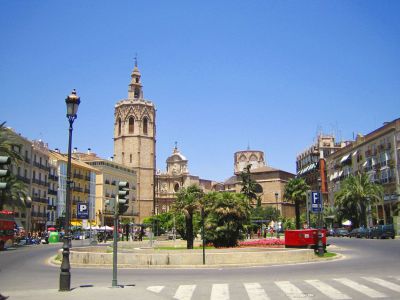
Queen Square is one of the oldest and busiest squares in Valencia. The square was founded in 1878 on the wedding day of King Alfonso XII and Maria de la Mercedes. The square was named in honor of the new queen.
The square took many decades to complete. Though groundbreaking took place in 1878, the construction continued through the mid-20th century. Today, visitors will see green grass, flower gardens, palm trees and benches. They will also see easy access to many interesting spots to eat and shop while in the city.
The square is surrounded by cafes, restaurants, shops and historic buildings. Among the most notable is the Cathedral of Valencia which is accessible via the Door of the Irons located on the square.
Queen Square is a good place to stop on the way to the Valencia Cathedral. It is only a short walk from the Silk Exchange.
The square took many decades to complete. Though groundbreaking took place in 1878, the construction continued through the mid-20th century. Today, visitors will see green grass, flower gardens, palm trees and benches. They will also see easy access to many interesting spots to eat and shop while in the city.
The square is surrounded by cafes, restaurants, shops and historic buildings. Among the most notable is the Cathedral of Valencia which is accessible via the Door of the Irons located on the square.
Queen Square is a good place to stop on the way to the Valencia Cathedral. It is only a short walk from the Silk Exchange.
3) Iglesia y Torre de Santa Catalina (Santa Catalina Church and Tower)
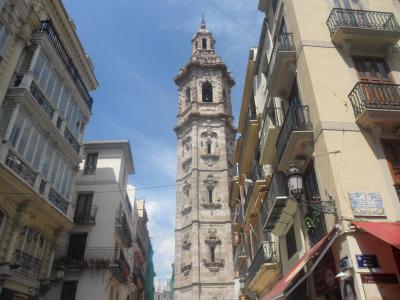
The Santa Catalina Church is located in a very architecturally beautiful part of Valencia, which is known as La Paz Street. Located very close to Queen Square, it is a rather stunning church that is beautiful both inside and out. Standing outside of the building, you will note the Baroque bell towers. These were not added to the church until 400 years after the construction of its original part was complete, so the style is quite different than the primarily Gothic style of the main building.
This church was built in the 14th Century, and the twin bell towers were added in the 18th Century. The towers, according to local legend, are called "husband and wife".
The inside of the church is very ornate, and shows some of the best religious art in the city. Much of the church construction was due to King Jaime I. With his approval, many similar churches were built across the city to prove to the world that the Christian church could dominate the Muslim Moors. At the time when the bell towers were added, the old Gothic church had also been renovated with Baroque elements.
This church was built in the 14th Century, and the twin bell towers were added in the 18th Century. The towers, according to local legend, are called "husband and wife".
The inside of the church is very ornate, and shows some of the best religious art in the city. Much of the church construction was due to King Jaime I. With his approval, many similar churches were built across the city to prove to the world that the Christian church could dominate the Muslim Moors. At the time when the bell towers were added, the old Gothic church had also been renovated with Baroque elements.
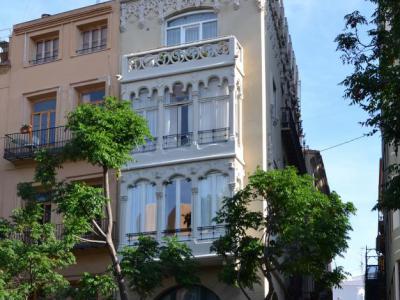
4) Casa Francisco Ordeig (Francisco Ordeig House)
The Francisco Ordeig House is a residential building situated in the heart of Valencia, specifically on the Market Square. Constructed in 1907, this Valencian Modernist-style structure was designed by the renowned architect Francisco Mora Berenguer.
Originally commissioned by Francisco Ordeig as his private residence, the initial plans for the house were drafted in 1907. However, a year later, a neo-Gothic revival replaced the original design.
Comprising a ground floor and four upper levels, including a mezzanine, the building showcases distinctive features on its main facade. Notably, the second and third floors exhibit tripartite windows adorned with columns and decorative elements at the top. The third floor boasts an intricately adorned balcony. Crowned by a neo-Gothic tower, embellished with battlement-like pillars, modernist-style sgraffito, rose windows, and an ornate wrought iron railing adorned with plant motifs, the structure stands as a testament to its architectural magnificence.
Additionally, the side of the building features modernist sgraffito at various heights, culminating in neo-Gothic battlements.
Originally commissioned by Francisco Ordeig as his private residence, the initial plans for the house were drafted in 1907. However, a year later, a neo-Gothic revival replaced the original design.
Comprising a ground floor and four upper levels, including a mezzanine, the building showcases distinctive features on its main facade. Notably, the second and third floors exhibit tripartite windows adorned with columns and decorative elements at the top. The third floor boasts an intricately adorned balcony. Crowned by a neo-Gothic tower, embellished with battlement-like pillars, modernist-style sgraffito, rose windows, and an ornate wrought iron railing adorned with plant motifs, the structure stands as a testament to its architectural magnificence.
Additionally, the side of the building features modernist sgraffito at various heights, culminating in neo-Gothic battlements.
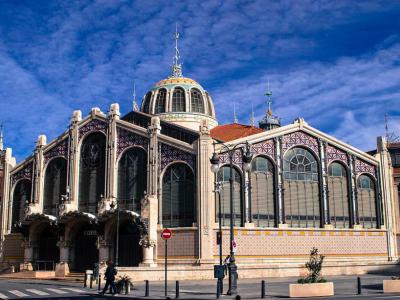
5) Mercado Central (Central Market) (must see)
The Central Market, or Mercado Central, is a historic public market in the center of Valencia. This market is notable for being one of the largest in Europe. It also has an unusual design with a multi-layered roof and colorful window panels.
The location of the building was originally an open-air market called Mercat Nou. It dated to 1839. However, the city decided to enclose the market and used a contest to find an architect. The city chose a Valencian Art Nouveau design by Alexandre Soler March and Francesc Guàrdia Vidal to create the space. Groundbreaking on the building began in 1914. It was completed in 1928.
Most of the vendors at the Central Market sell food. Butchers might offer cuts of pork, mutton, beef, oxen and freshly prepared sausage. They also sell prepared foods like burgers and steak. Those wanting to find something less common can search for vendors who sell snails, sweetbreads and tripe.
Other foods available at the Mercado Central include cheeses, spices, fruits, vegetables, nuts, pastries and shellfish. Gourmet offerings include wine, beer, spirits, olive oil, honey, jams and much more.
There are a few vendors who sell souvenirs and non-food gift items. A lucky shopper may be able to find clothing, perfume, jewelry, accessories and ceramics at reasonable prices.
Mercado Central is a popular spot for locals to do their grocery shopping. It is also very popular with tourists who want to try local cuisine, have the experience of shopping in a historic market and find souvenirs to take home.
Why You Should Visit:
- To enjoy a few hours of shopping with locals
- To try local food you may not see anywhere else
- To pick up souvenirs to take home
Tips:
The market is open Monday through Saturday from 7:30 AM to 3 PM. A few vendors may be willing to negotiate prices, but most products are already marked at a reasonable rate.
The location of the building was originally an open-air market called Mercat Nou. It dated to 1839. However, the city decided to enclose the market and used a contest to find an architect. The city chose a Valencian Art Nouveau design by Alexandre Soler March and Francesc Guàrdia Vidal to create the space. Groundbreaking on the building began in 1914. It was completed in 1928.
Most of the vendors at the Central Market sell food. Butchers might offer cuts of pork, mutton, beef, oxen and freshly prepared sausage. They also sell prepared foods like burgers and steak. Those wanting to find something less common can search for vendors who sell snails, sweetbreads and tripe.
Other foods available at the Mercado Central include cheeses, spices, fruits, vegetables, nuts, pastries and shellfish. Gourmet offerings include wine, beer, spirits, olive oil, honey, jams and much more.
There are a few vendors who sell souvenirs and non-food gift items. A lucky shopper may be able to find clothing, perfume, jewelry, accessories and ceramics at reasonable prices.
Mercado Central is a popular spot for locals to do their grocery shopping. It is also very popular with tourists who want to try local cuisine, have the experience of shopping in a historic market and find souvenirs to take home.
Why You Should Visit:
- To enjoy a few hours of shopping with locals
- To try local food you may not see anywhere else
- To pick up souvenirs to take home
Tips:
The market is open Monday through Saturday from 7:30 AM to 3 PM. A few vendors may be willing to negotiate prices, but most products are already marked at a reasonable rate.
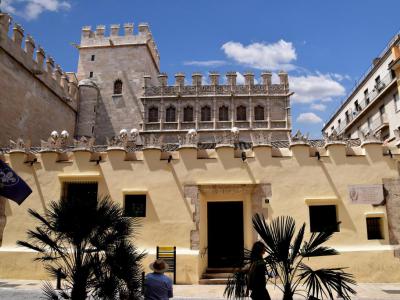
6) La Lonja de la Seda (Silk Exchange) (must see)
The Silk Exchange was built between 1482 and 1533 in Gothic style. There are incredible gargoyles both inside and outside the building. Some are fairly grotesque but still interesting. There are also coats of arms and other adornments throughout the building. Valencia was a prosperous commercial trading hub in the 14th century. This large building was utilized for trading, and stands as a testament to that fact, although it looks more like a garrison than a building for luxurious silks.
The inside of the building is just as impressive as the outside. The hall of columns is where the actual trading took place. Around the walls, an inscription announces the honesty of those who trade here, as well as welcoming traders of various religions and ethnicities. The columns themselves are a delight for the eye with their massive, twisting, yet graceful styling, reaching high to the roof. Chandeliers also add a touch of beauty, and rather counteract the imposing gargoyles.
The building is a beautiful representation of Gothic style and should not be missed. It is, in fact, a UNESCO world heritage site.
Why You Should Visit:
One of the best examples of Gothic civil architecture in Europe and it's worth going in just to see the ceilings! The courtyard with the orange trees is a pleasant place to sit in the shade and rest for a few minutes.
Tip:
The audio commentary is really worth getting – inexpensive and gives a great insight into the outside & inside of the building. On Sundays, you can take a look at the coins & stamps market right outside and get inside the building for free.
The inside of the building is just as impressive as the outside. The hall of columns is where the actual trading took place. Around the walls, an inscription announces the honesty of those who trade here, as well as welcoming traders of various religions and ethnicities. The columns themselves are a delight for the eye with their massive, twisting, yet graceful styling, reaching high to the roof. Chandeliers also add a touch of beauty, and rather counteract the imposing gargoyles.
The building is a beautiful representation of Gothic style and should not be missed. It is, in fact, a UNESCO world heritage site.
Why You Should Visit:
One of the best examples of Gothic civil architecture in Europe and it's worth going in just to see the ceilings! The courtyard with the orange trees is a pleasant place to sit in the shade and rest for a few minutes.
Tip:
The audio commentary is really worth getting – inexpensive and gives a great insight into the outside & inside of the building. On Sundays, you can take a look at the coins & stamps market right outside and get inside the building for free.
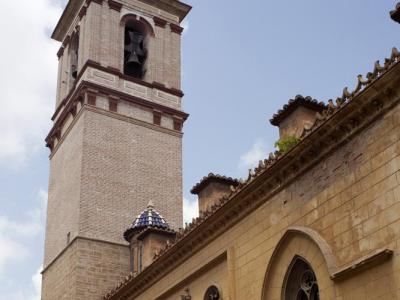
7) Parroquia de San Nicolás de Bari y San Pedro Mártir (Church of San Nicolas) (must see)
The Church of San Nicolas is a Roman Catholic parish church. It was erected in 1242 and remodeled in the mid-15th century at the behest of the Borja family. The interior was completed in 1693. Some architectural aspects of the church were added as late as the 19th century.
Because of the expansive refurbishments and additions over the years, visitors at the Church of San Nicolas are greeted with many different architectural styles. These styles include Valencian Gothic, Neo-Gothic and Baroque. A recent restoration of the church has revealed a massive pictorial display that rivals the Sistine Chapel for its size and intricacy.
Visitors may take guided tours or can explore the church on their own. The church is open from Tuesday through Sunday. On weekdays, visitors are welcome from 10:30 am to 7 pm, from 10 AM to 6:30 PM on Saturdays, and from 1 pm to 7 pm on Sundays.
Because of the expansive refurbishments and additions over the years, visitors at the Church of San Nicolas are greeted with many different architectural styles. These styles include Valencian Gothic, Neo-Gothic and Baroque. A recent restoration of the church has revealed a massive pictorial display that rivals the Sistine Chapel for its size and intricacy.
Visitors may take guided tours or can explore the church on their own. The church is open from Tuesday through Sunday. On weekdays, visitors are welcome from 10:30 am to 7 pm, from 10 AM to 6:30 PM on Saturdays, and from 1 pm to 7 pm on Sundays.
8) Casa-Museo de las Rocas (House Museum of Las Rocas)
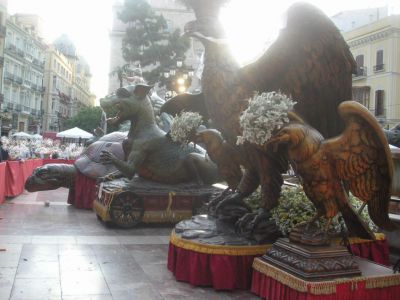
This house museum is for displaying the famous “rocas” of Valencia. A Roca is a very special kind of carriage that is used like a modern day float for parades. They are of particular importance during the religious festivals of the area. Those events include parades for Easter, Christmas, and the annual “Mysteries of Christ” plays. The items on display tell stories about the history and culture of Valencia. For that reason, this museum is a very popular tourist attraction.
The building was first constructed in the 1400s. Upon entering the building, you will notice the downward slope from inside the building to the street. This was done to make it easy to get the carriages out of the building.
You will want to see the giant eagles on display here. There is a local myth surrounding the eagles and their connection to Saint John the Evangelist. Make sure to check out the famous wooden sculptures.
The building was first constructed in the 1400s. Upon entering the building, you will notice the downward slope from inside the building to the street. This was done to make it easy to get the carriages out of the building.
You will want to see the giant eagles on display here. There is a local myth surrounding the eagles and their connection to Saint John the Evangelist. Make sure to check out the famous wooden sculptures.
9) Torres de Serranos (Serranos Towers) (must see)
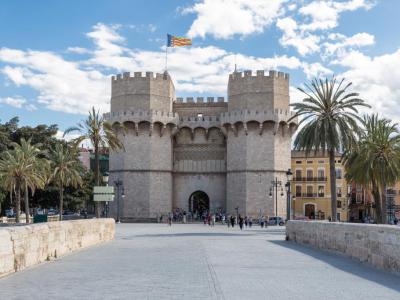
The Serranos Towers are one of two sets of towers along the gateway into the old city section of Valencia, with the Quart Towers being the other smaller and younger pair of towers. This particular gateway is the largest of its kind in Europe. They were constructed during the 14th century, a full 100 years before its younger brother. Construction was completed in 1391. The towers was part of the defensive structure protecting the city. At one point in time, prisoners were also housed here.
The towers are reasonably high so you can see over the city rooftops towards the Valencia Cathedral, while on the other side you can walk part of the old ramparts which give you a view of the Turia River. The towers have often been used for festivities and important occasions. Parades would be led through the archway.
The structure is pentagon-shaped and has a common gallery that connects the two sections. The design is classic gothic. When you climb to the top of the tower, you can also see the outlines of the old moat down below.
Why You Should Visit:
A nice part of Valencia history, still well maintained and preserved, and seeming to have some kind of friendly spirit.
Tip:
It is well worth paying to go inside. It takes less than 30 minutes to walk in and climb. In the square at the base of the tower, there is a good cafe/bar to refresh afterwards.
The towers are reasonably high so you can see over the city rooftops towards the Valencia Cathedral, while on the other side you can walk part of the old ramparts which give you a view of the Turia River. The towers have often been used for festivities and important occasions. Parades would be led through the archway.
The structure is pentagon-shaped and has a common gallery that connects the two sections. The design is classic gothic. When you climb to the top of the tower, you can also see the outlines of the old moat down below.
Why You Should Visit:
A nice part of Valencia history, still well maintained and preserved, and seeming to have some kind of friendly spirit.
Tip:
It is well worth paying to go inside. It takes less than 30 minutes to walk in and climb. In the square at the base of the tower, there is a good cafe/bar to refresh afterwards.
10) Iglesia de San Lorenzo (San Lorenzo Church)
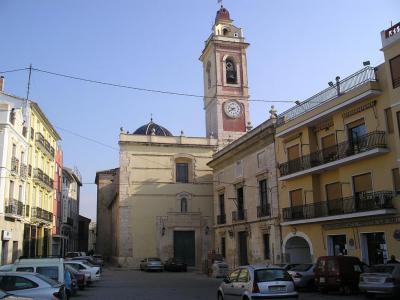
San Lorenzo Church was one of the first churches erected in Valencia. The original structure was built in 1238 with an additional temple added in 1684. The first bell tower was destroyed at the end of the 17th century and replaced in 1746.
The church has two naves and four chapels that can be visited on a tour. Visitors will notice that the church is adorned in Gothic, Corinthian and Baroque architecture and furnishings. The church is also home to a large number of carvings, such as those of Santa Clara de Asis and Santa Ines de Asis. These two carvings were replaced after the destruction of the Spanish Civil War.
Visitors who enter the chapel will find a series of paintings, murals and frescoes. However, those who simply enjoy the exterior will take note of the hexagonal bell tower and a stone sculpted tombstone with the date 1489.
The church has two naves and four chapels that can be visited on a tour. Visitors will notice that the church is adorned in Gothic, Corinthian and Baroque architecture and furnishings. The church is also home to a large number of carvings, such as those of Santa Clara de Asis and Santa Ines de Asis. These two carvings were replaced after the destruction of the Spanish Civil War.
Visitors who enter the chapel will find a series of paintings, murals and frescoes. However, those who simply enjoy the exterior will take note of the hexagonal bell tower and a stone sculpted tombstone with the date 1489.
11) Archaeological Crypt of the San Vicente Mártir Prison
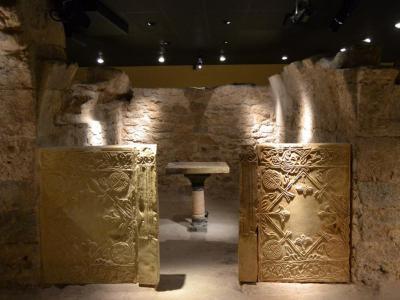
The Archaeological Crypt of the San Vicente Martir Prison is a fascinating, underground crypt with a sculpture of San Vicente Martir, a Visigoth altar, Muslim artifacts and a Roman mural. The chapel was previously part of the Visigothic Cathedral. All that remains of that cathedral is the crypt and the apse.
Visitors can access the crypt near the La Almoina Archaeological Museum. They will walk through the main Visigothic tomb room before they reach the altar. There are two other Visigothic tombs located inside the crypt.
Through each day, except Sunday, an audiovisual presentation is projected onto the walls. This projection shows the history of the crypt and Saint Vincent the Martyr. The 20-minute broadcast is narrated in Catalan, English and Spanish.
The crypt is open from Monday through Saturday from 9:30 AM to 7 PM. It is open Sundays from 9:30 AM to 3 PM. Those who wish to take an audiovisual tour must make advanced arrangements.
Visitors can access the crypt near the La Almoina Archaeological Museum. They will walk through the main Visigothic tomb room before they reach the altar. There are two other Visigothic tombs located inside the crypt.
Through each day, except Sunday, an audiovisual presentation is projected onto the walls. This projection shows the history of the crypt and Saint Vincent the Martyr. The 20-minute broadcast is narrated in Catalan, English and Spanish.
The crypt is open from Monday through Saturday from 9:30 AM to 7 PM. It is open Sundays from 9:30 AM to 3 PM. Those who wish to take an audiovisual tour must make advanced arrangements.
12) Almudin Museum
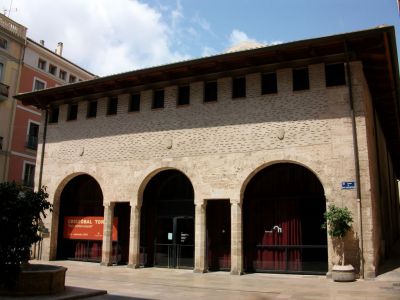
The Almudin was built in the 16th century and has been used for various functions since that time. The original purpose was to store wheat. This building also served as a distribution center for the all important grain grown in the area. There are murals on the inside of the building depicting harvests of wheat being brought into town.
When entering the location, it is easy to see that there was once an open air courtyard that has since been covered over to make the internal area larger. The archways in the building are just lovely and the murals over them are well worth coming to see. It is really these murals that are the drawing point of this old building. In fact, this structure is a national historic monument, as well as an artistic monument.
The space is now used to house temporary exhibits of archeology and art. Admission is free and it is open daily except for Mondays. Check the schedule for open hours as they vary, and the building is closed during the noon time.
When entering the location, it is easy to see that there was once an open air courtyard that has since been covered over to make the internal area larger. The archways in the building are just lovely and the murals over them are well worth coming to see. It is really these murals that are the drawing point of this old building. In fact, this structure is a national historic monument, as well as an artistic monument.
The space is now used to house temporary exhibits of archeology and art. Admission is free and it is open daily except for Mondays. Check the schedule for open hours as they vary, and the building is closed during the noon time.
13) Iglesia de San Juan del Hospital (Church of San Juan del Hospital)
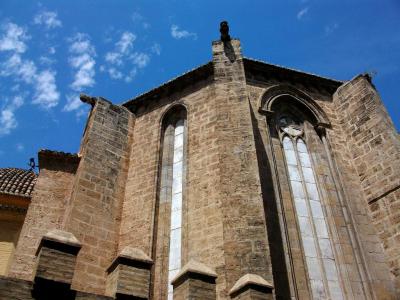
This house of worship is one of the oldest to be found anywhere in Valencia. It was built in the year 1261 A.D., located in the old quarter of the town, between Plaza San Vicente Ferrer and Plaza de Napoles y Sicilia. You can reach the church by way of La Paz Street. This religious institution is dedicated to John the Baptist.
The land for the building was donated by King Jaime I after the reclaim of Valencia and Malta from the Moors. The structure also had a hospital, convent and church cemetery.
The original church – done in the Gothic style – is almost completely gone now. In more modern times, the church is mainly Baroque, having a pointed vault. Make sure you visit the exquisite Chapel of Santa Barbara which is located here. The church is open every day of the week.
Why You Should Visit:
Modest but dignified and always worth visiting – if not for the church itself, then for the charming little patio you go through on your way to the actual church entrance.
The land for the building was donated by King Jaime I after the reclaim of Valencia and Malta from the Moors. The structure also had a hospital, convent and church cemetery.
The original church – done in the Gothic style – is almost completely gone now. In more modern times, the church is mainly Baroque, having a pointed vault. Make sure you visit the exquisite Chapel of Santa Barbara which is located here. The church is open every day of the week.
Why You Should Visit:
Modest but dignified and always worth visiting – if not for the church itself, then for the charming little patio you go through on your way to the actual church entrance.
14) Iglesia de Santo Tomas y San Felipe Neri (Church of Santo Tomás and San Felipe Neri)
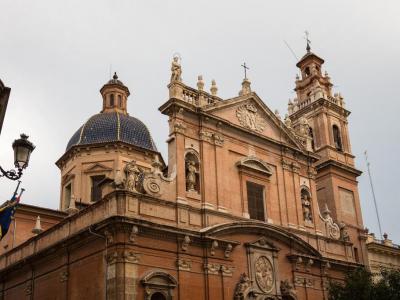
This is actually one of Valencia's newer Roman Catholic churches. It was first organized and constructed in the year 1725. Most of the other churches in the city are several hundred years older. Nevertheless, it is fine piece of architecture, as this building was modeled after the “Il Gesu” church in Rome. In 1982, the building was added to the National Historic and Artistic Monument list in order to be preserved for future generations.
In its day, the design of this structure was quite controversial, in that it broke with the conventional “cross shape” design for church buildings. Instead, it has a main nave with three parts. In addition, it also has several side chapels.
The church is also known as "the Congregation". Perhaps, this is easier than pronouncing the name each time. The church is open seven days a week for visits. Mass is conducted Monday through Saturday at 9:00 am, 10:30 am, 7:30 pm and 8:30 pm On Sunday, the main masses are at 9:00 am, 10:00 am, and noon. An afternoon and evening mass is held at 1:00 pm and 7:00 pm respectively.
In its day, the design of this structure was quite controversial, in that it broke with the conventional “cross shape” design for church buildings. Instead, it has a main nave with three parts. In addition, it also has several side chapels.
The church is also known as "the Congregation". Perhaps, this is easier than pronouncing the name each time. The church is open seven days a week for visits. Mass is conducted Monday through Saturday at 9:00 am, 10:30 am, 7:30 pm and 8:30 pm On Sunday, the main masses are at 9:00 am, 10:00 am, and noon. An afternoon and evening mass is held at 1:00 pm and 7:00 pm respectively.
Walking Tours in Valencia, Spain

Create Your Own Walk in Valencia
Creating your own self-guided walk in Valencia is easy and fun. Choose the city attractions that you want to see and a walk route map will be created just for you. You can even set your hotel as the start point of the walk.
Contemporary Architecture Walk
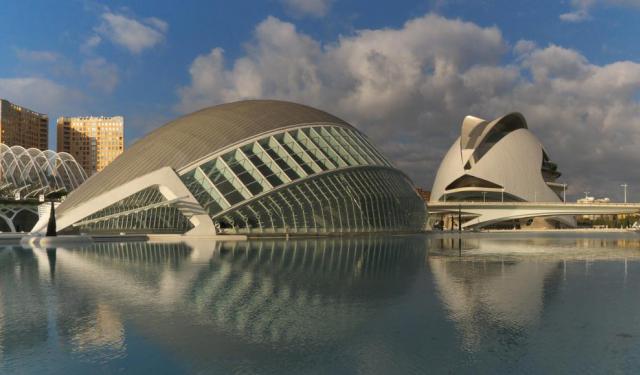
With one foot in the past and the other one in the future, it is hard to find a European city more architecturally intriguing than Valencia. Among the multitude of styles, Valencia particularly excels at the cutting-edge contemporary architecture. She owes it to her own born and bred architect, Santiago Calatrava, renowned for his hyper-modern-surreal designs.
In the course of nearly two... view more
Tour Duration: 1 Hour(s)
Travel Distance: 1.4 Km or 0.9 Miles
In the course of nearly two... view more
Tour Duration: 1 Hour(s)
Travel Distance: 1.4 Km or 0.9 Miles
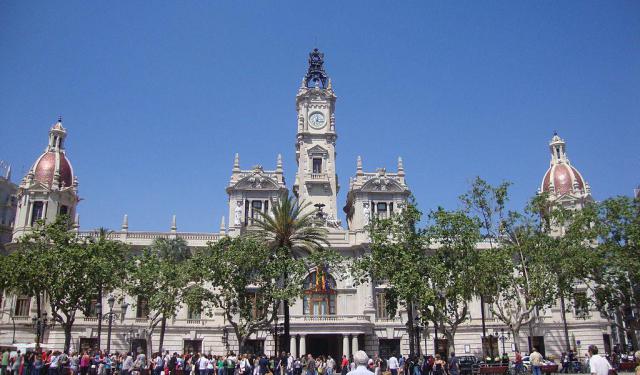
Valencia's Classical Architecture Tour
Gazing upon the multitude of styles on the facades of Valencia – Renaissance, Baroque, Modernist, Beaux-Art, Art Nouveau, and more – makes one realize that this is more than just a Mediterranean coastal destination with beautiful beaches. Colorful and diverse, the “capital of Turia” boasts a wealth of architectural treasures that make it more contrasting and delicate than any other city in... view more
Tour Duration: 2 Hour(s)
Travel Distance: 3.3 Km or 2.1 Miles
Tour Duration: 2 Hour(s)
Travel Distance: 3.3 Km or 2.1 Miles
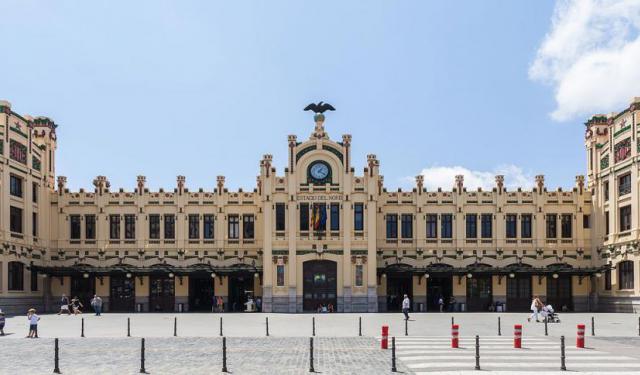
Valencia Introduction Walking Tour
Valencia, Spain's third-largest city, boasts an ancient lineage dating back to 138 BC when it was established as a colony for Roman war veterans. Originally christened "Valentia," which means valor, a tribute to the battle-hardened soldiers, it eventually evolved into Valencia through gradual phonetic changes.
In 75 BC, the city faced destruction at the hands of Pompey the Great,... view more
Tour Duration: 2 Hour(s)
Travel Distance: 3.2 Km or 2 Miles
In 75 BC, the city faced destruction at the hands of Pompey the Great,... view more
Tour Duration: 2 Hour(s)
Travel Distance: 3.2 Km or 2 Miles
The Most Popular Cities
/ view all