

Home City Search Sydney Sydney City Orientation Tour
Sydney City Orientation Tour, Sydney
Download iPhone Walking Tours Application for Sydney
iPhone Walking Tours Application for Sydney
Popular Cities in Australia and Oceania
Bookmark and Share
Sydney City Orientation Tour
Guide Location: Australia » Sydney
Guide Type: Self-guided city tour
# of Attractions: 18
Tour Duration: 5 hour(s)
Transportation Mode: by foot
Travel Distance: 9.7 km
Image Courtesy of Wikimedia and DAVID ILIFF/ Diliff
Author: nataly
Sydney is the largest city in Australia, and is the state capital of New South Wales. It is one of the most cosmopolitan and multicultural cities in the world, and each of its localities possesses its own unique character. Sydney is considered one of the most beautiful cities in the world, and it won't take long for you to discover this for yourself. Take the following tour to explore the most popular and prominent attractions in Sydney.
Tour Stops and Attractions
Luna Park
1) Luna Park
The premier amusement park of Sydney, Luna Park offers a range of enjoyable rides and activities for the entire family. It is located at Milson’s Point on the north side of the Sydney Harbour Bridge and offers spectacular views of the harbour.
Luna Park was first established at the foot of the Sydney Harbour Bridge in 1935. It was constructed by the same group of entrepreneurs and designers who built the Luna Park in Glenelg in South Australia. Initially, it was open for nine month seasons between and started functioning all year round from 1972. The park was renovated and rebuilt several times and the recent redevelopment and restoration took place in 2004.
Visitors are welcomed by a polyurethane smiling face of Old King Cole at the entrance of the park. The main thoroughfare called the Midway stretches from the face to Coney Island, the only 1930s type funhouse still running in the world. Other structures within Luna Park are the Big Top, a large auditorium where music concerts and other events take place, the Crystal Palace where weddings and social events are hosted and Maloney’s Corner where temporary rides are set up. Popular rides include a carousel, a flying saucer ride and the only HUSS ranger ride in Australia.
Image Courtesy of Wikimedia and Adam.J.W.C.
Sydney Harbour Bridge
2) Sydney Harbour Bridge
The Sydney Harbour Bridge is the world’s widest long span bridge. It connects the city’s Central Business District and the North Shore. It carries rail, vehicle, bicycle and pedestrian traffic. The arched shape of the bridge has earned it the popular name, Coat Hanger.
The Sydney Harbour Bridge and the Opera House are symbols of the city and of Australia. It was built under the supervision of Dr. J.J.C. Bradfield of the New South Wales Department of Public Works and constructed by British firm, Dorman Long and Co. It stands 440 feet high and 503 meters long. There is a pair of granite pylons at each end of the bridge designed by Scottish architect, Thomas S. Tait. The south eastern pylon has a museum and a lookout from which tourists can see beautiful views of the opera house and Sidney harbour. Today, there are 6 lanes for traffic on the main roadway, two road traffic lanes and a pedestrian pathway on the eastern side and two railway tracks and a bicycle path on the western side.
Since 1998, tourists have been permitted to climb the southern half of the Sidney Harbour Bridge. It is also the venue of spectacular New Years Day fireworks and many commemorative celebrations. It is a monument of national pride in Australia.
Image Courtesy of Wikimedia and Adam.J.W.C.
Sydney Observatory
3) Sydney Observatory
This 140 year old observatory is the oldest in Australia. The Sydney Observatory was designed to preserve the history of the science of astronomy. It is surrounded by serene gardens where visitors can sit and enjoy the view.
The Sydney observatory was first the site of a windmill. Later a fort was built to defend the city from attacks by the French and rebellious convicts. In 1825, the eastern wall of the tower was used to send signals to passing ships. In 1856, government astronomer, William Scott was commissioned to design an observatory adjacent to the signal tower. The sandstone building has an Italianate style designed by architect, Alexander Dawson. At first the main task of the observatory was to tell the time through the Time Ball Tower. At 1.00 pm, the ball at the top of the tower would drop to signal the time to the harbour and the city.
The museum has many old telescopes, sextants and other astronomical objects on display. There is a 3-D space theatre and sky viewing sessions overseen by a professional astronomer. The sessions are held at night and visitors can observe the planets through a state of the art 40cm Schmidt-Cassegrain telescope or an ancient 29 cm refractor telescope built in 1874 which is the oldest functioning telescope in Australia.
Image Courtesy of Wikimedia and Greg O'Beirne
Sydney Opera House
4) Sydney Opera House
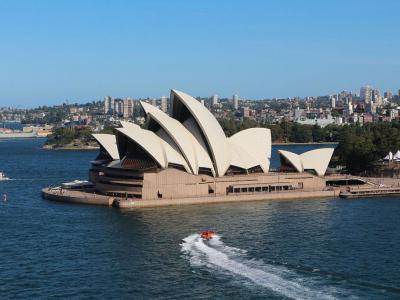
The Iconic Sydney Opera House is one of the largest and busiest performing arts venues in the world. It was declared a UNESCO World Heritage Site in 2007 and nearly 7 million tourists visit the place every year either to attend a performance or to view its architectural splendour.
The Sydney opera House was designed by Danish architect, Jorn Utzon, who won a design competition in 1957. He received the Pritzker Prize, the highest honour given to architects, in 2003. The design is modern expressionist with a series of concrete shells. It covers 4.4 acres of land and is supported by 588 sunken concrete piers. The material used was mainly from Australia except for the roof of the shells that are covered with white and cream coloured Swedish tiles. The building is surrounded on three sides by the Sidney harbour. The Sydney Opera House was opened in 1973 by Queen Elizabeth II.
The Sydney Opera house has seven halls and hosts over 1500 performances every year. It is the home of four performing arts companies, The Sydney Theatre Company, The Sydney Symphony Orchestra, Opera Australia and the Australian Ballet. Two tours, one lasting one hour and the other two hours, takes visitors around the opera house, the theatres and backstage.
Image Courtesy of Wikimedia and Matthew Field / Mfield
Old Government House
5) Old Government House
Located in 260 acres of park land, the Old Government House commands sweeping views of the Parramatta River. The building is surrounded by an undisturbed natural reserve in the midst of Australia’s biggest metropolitan area.
The Old Government House was built in 1799 and is Australia’s oldest public building. For seventy years, the house was the Governor’s rural residence. The first 10 Governors of the colony resided in the mansion. Extensions and renovations were made by Governor and Mrs. Macquarie who lived in the house from 1810 to 1821. The house became a Palladian style English mansion from a smaller and simpler structure during this time. Recently, the building has been restored and opened for visitors. The interiors have typical Anglo and Indian style furnishing, sandstone flags and a large hand cut glass chandelier that were common in fashionable houses during the 1820s.
It occupies Darug land that was home to the Burramatta Tribe. Some of the trees surrounding the house still show scars of bark stripped to make canoes by the Aborigines. It is managed by the Historic Houses Trust of New South Wales. The Trust operates tours including a haunted house tour around old Government House for tourists.
Image Courtesy of Wikimedia and Dudesleeper
Sydney Conservatorium of Music
6) Sydney Conservatorium of Music
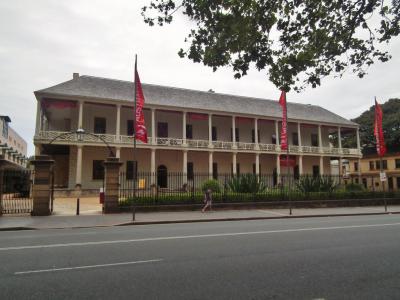
The Sydney Conservatorium of Music is the finest music school in Australia and one of the best in the world. It is housed in a building that was once the stables of the government house and incorporates the faculty of music of the University of Sydney.
The building that houses the Sydney Conservatorium of Music was constructed in 1815 and designed as a Gothic palace with turrets. It is set in the botanical gardens of the city near the harbour and close to the opera house. In 1915, the building was redesigned to make it suitable for a music school. The aim of the institution was to provide music education of a standard equal to European music schools.
The Sydney Conservatorium of Music today has 750 students. It has state of art facilities for teaching and learning music placed within a well preserved heritage building. It has five concert halls and the largest seats an audience of 600. There are recording studios and rooms for practice and performance. The school is equipped with the latest acoustic equipment to facilitate high standards of music education. All facilities are in keeping with the goal of the institution which is to educate future generations of musicians, composers and music teachers.
Image Courtesy of Flickr and Soon.
Chifley Tower
7) Chifley Tower
The Chifley Tower is the second tallest building in Sydney. Named after the former Australian Prime minister, Ben Chifley, the structure dominates the area where most of the financial and legal offices in the city are located. It commands sweeping views of Sydney city and harbour.
The Chifley Tower was designed by New York based architects, Travis McEwen and Kohn Pendersen Fox. It has been the most expensive project in Sydney till date costing over $1 billion for purchase of the site and construction costs. It was constructed between 1989 and 1992 and replaced the old Commonwealth Government offices and some smaller buildings located at the site. It combines an opulent art deco design with modern facilities that meet the demands of the tenants.
The Chifley Tower offers 90,000 square meters of commercial space with 28 elevators. Its tenants include financial institutions, headquarters of many corporations and law offices. It has 53 floors and a giant steel pendulum weighing 400 tons is held from 8x75mm wires at the top to prevent the structure from swaying in the wind. The fully air conditioned building has four electric substations and emergency backup diesel generators to provide uninterrupted power supply to computers.
Image Courtesy of Wikimedia and Paulscf
Hyde Park Barracks
8) Hyde Park Barracks
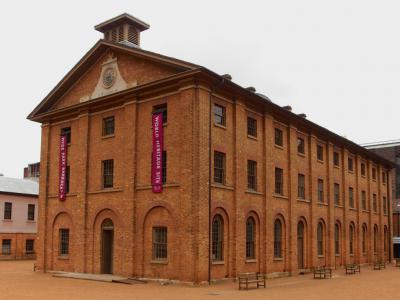
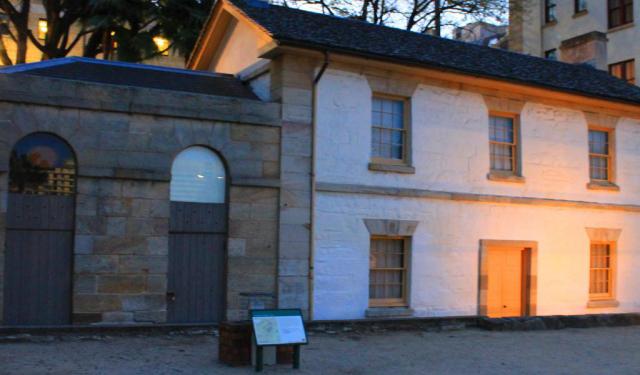
The Hyde Park Barracks served to house the large convict population who were transported to Australia from Britain. It is now a museum dedicated to the history of the building.
The Hyde Park Barracks was designed by emancipated convict architect, Francis Greenway. It was built by convict labour between 1817 and 1819 as the first permanent shelter for convicts. They roamed the streets and crime was rampant until the construction of the barracks. It is located at the centre of a walled compound covering 2.16 hectares and has three floors. Other buildings inside the walls included a cookhouse, a bakery and quarters for soldiers. It was closed in 1848 and had many uses since. It became a dormitory for emigrant women who awaited the arrival of their families, an asylum for destitute women and was later converted as government offices and law courts.
In 1981, the Hyde Park Barracks became a museum run by the Historical Houses Trust of New South Wales. The first floor recreates the arrival of the first fleet with convicts and the life and times of the early convicts including a confinement box and leg irons. The second floor recreates the history of the building after it ceased to be convict barracks. The top floor recreates barrack rooms with hammocks showing the dwelling place and conditions of convicts at the time.
Image Courtesy of Wikimedia and J Bar
Archibald Fountain
9) Archibald Fountain
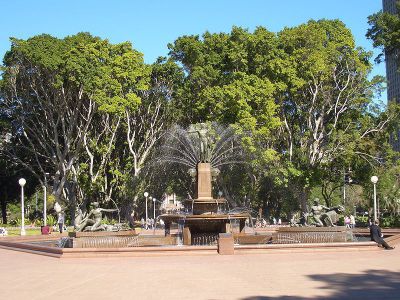
Largely regarded as the finest public fountain in Australia, the Archibald fountain has become over the years a spot for tourist photographs, political rallies, a meeting place and a spot where buskers perform. It is named in honour of J.F. Archibald, the owner and editor of the Bulletin Magazine who provided the funds for its construction.
J.F. Archibald bequeathed funds under his will for the construction of the fountain and stipulated that it should be designed by a French artist. He was both a Francophile and wanted it to be a memorial to the association of Australia and France in fighting World War I. Archibald died in 1919 but an artist was selected only in 1927 after the selection of a suitable site was made. The artist was Francois Leon Sicard born in Tours, France. It was unveiled in 1932 by the Lord Mayor of Sydney, Samuel Walder.
The Archibald Fountain consists of the central figure of the Greek God Apollo and three plinths radiating from the central figure. One plinth is dedicated to Diana the Goddess of purity, the other represents the good things on earth and the third has a sculpture of Theseus killing a Minotaur representing sacrifice for the good of humanity. Sicard never visited Sydney. The sculpture was cast in France and shipped to Australia for its installation and inauguration in the city.
Image Courtesy of Wikimedia and Greg O'Beirne
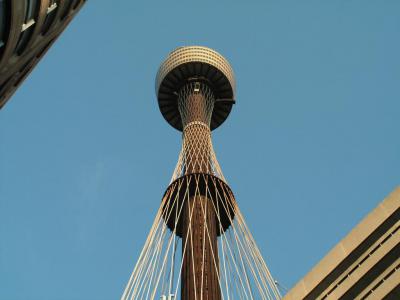
Sydney Tower
10) Sydney Tower
Sydney Tower is a 300 meter tall structure that offers 360 degree views of the city. It is the second tallest tower in the southern hemisphere and is a member of the World Federation of Great Towers.
Construction of the Sydney Tower began as a shopping complex in 1970. The tower took ten years to build and was finally completed in September 1981. It is held in place by 56 cables weighing 7 tons each to resist strong gales and earthquakes. The tower is also stabilised by an enormous water tank at the top that holds 162,000 litres of water.
The Sydney tower stands on a 3 floor base that houses a shopping centre and restaurants. Three high speed Double Decker elevators take visitors up to the top floors in less than 40 seconds. There are 2 restaurants and a coffee lounge at the top. From the enclosed observation deck, visitors can see sweeping views of Sydney harbour, the Blue Mountains and the opera house. There is also a skywalk that involves a walk on a glass bottomed platform 268 meters above sea level. Skyguides show visitors Sydney landmarks through the glass floor. Two sets of steps serve as emergency exits and an annual Tour Run Up race is held where participants climb 1304 out of 1504 steps. The event raises money for the Cancer Council.
Image Courtesy of Wikimedia and Ingolfson
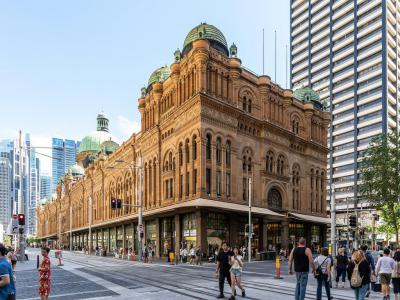
Queen Victoria Building
11) Queen Victoria Building
The Queen Victoria Building is a large air conditioned shopping mall in the heart of Sydney. The hundred year old structure has been recently restored and its ornate façade and interior displays carefully preserved.
The Queen Victoria Building was designed by architect George McRae. The architectural style is Romanesque Revival and it was built with the purpose of providing employment to jobless skilled workers during a recession. The building was opened to the public in 1898 and named after the reigning British monarch, Queen Victoria. A statue of the queen greets visitors at the entrance. At the time of its inauguration, it contained cafes, showrooms and a concert hall. Later it housed the central library and government offices. Between 1984 and 1986, the Malaysian firm, Ipoh Garden Berhad leased the run down and neglected Queen Victoria Building and restored it to its former splendour.
A notable architectural feature is the large central dome with glass on the inside and copper on the outside. There are four floors and stained glass windows allow light into the interiors, patterned floor tiles and ornate wrought iron balustrades. Today, it has over 200 shops selling high end products including fashion, jewellery and traditional Australian crafts.
Image Courtesy of Wikimedia and Adam.J.W.C.
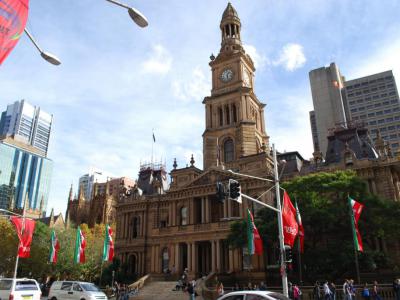
Sydney Town Hall
12) Sydney Town Hall
The offices of the Lord Mayor and Councillors of the city are located in the Sydney Town Hall. It is an ornate sandstone building constructed on the site of a former cemetery. Before the inauguration of the Opera House, it was Sydney’s Concert Hall and many notable music performances took place at the venue.
The Sydney Town Hall was built between 1868 and 1889. The foundation stone was laid by Prince Albert, the Duke of Edinburgh. When it was completed, it was the grandest public building in the British Empire. The original structure was designed by architects, Wilson, Bell and Bond. The architectural style is Grand Victorian Second Empire Italian Renaissance. The clock tower was built in 1881 and the clock was installed in 1885. The Town hall underwent extensive repairs and refurbishment to suit modern office requirements and the renovated structure was opened by Queen Elizabeth II in 1992.
The Centennial Hall at the centre of the building has the largest pipe organ that uses tubular pneumatic action in the world. The interiors have a wealth of carved figures, mosaic floors, and stained glass. A 20 minute tour takes visitors around the building explaining the history of the City.
Image Courtesy of Wikimedia and Greg O'Beirne
Saint Andrew's Cathedral
13) Saint Andrew's Cathedral
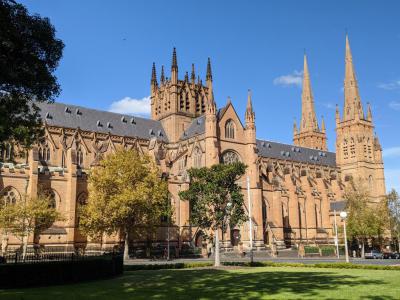
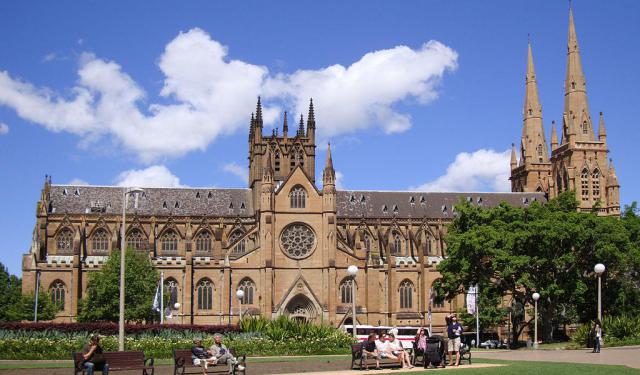
St. Andrews Cathedral is the oldest Anglican Church in Australia. It is a small Gothic style building with a red stone exterior and twin towers located next to the Town Hall in Sydney.
The St. Andrews cathedral was designed by architect Edmund T. Blacket. The style was called perpendicular Gothic that was used in many cathedrals in Britain. Construction began in 1819 and the church was consecrated in 1868. A chapter house was added to the existing structure in 1886. Major restoration and reconstruction work was undertaken between 1999 and 2000.
The interior of the church is adorned with unique tiles and marble floors. The stained glass windows depict the life and parables of Christ. The choir stalls are made of carved English oak. There are many plaques commemorating the founders of the church. The large organ was built in 1866. The lectern has a carved eagle that is the symbol of St. John. The font is a gift received by the cathedral in 1868.
A brochure is provided to help visitors find their way around the church. The main service is held at 10.30 and the Asian bible church is held at 2 pm every Sunday. Bible studies classes are held on all days of the week.
Image Courtesy of Wikimedia and Joanjoc
Chinese Garden of Friendship
14) Chinese Garden of Friendship
The Chinese Garden of Friendship is a serene oasis in the midst of the bustling city of Sydney. It was a gift from its sister city Guangzhou. The layout is based on the typical landscape of Ming Dynasty Chinese gardens.
The Chinese Garden of Friendship was opened in 1988. The inauguration formed part of the bicentennial celebrations of the city. It was called the garden of friendship forging a bond between China and Australia. It is located near Chinatown in Darling Harbour and showcases the rich heritage and culture of the Chinese people. It is the only authentic Chinese garden outside Asia.
The landscape of the garden is unique because visitors cannot see the entire garden from any point within the park. Other features include a Dragon Wall that symbolises the friendship between Sydney and Guangzhou, a water pavilion filled with lotus flowers, stone bridges, waterfalls, exotic plants and twin pavilions. A Chinese Bonsai nursery is also located in the garden. The tea house serves an array of Chinese refreshments in addition to traditional Chinese tea. It has become a popular venue for weddings and other social gatherings in Sydney. The garden remains open for visitors between 9.30 am to 5 pm daily.
Image Courtesy of Wikimedia and Barendpt
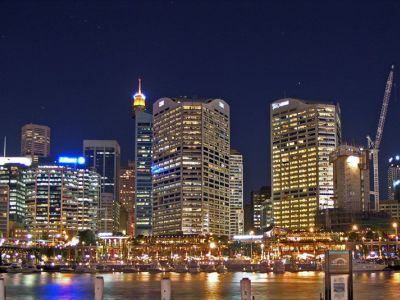
Darling Harbour
15) Darling Harbour
The Darling Harbour is a recreational area of Sydney with many interesting tourist attractions. It is also the place where visitors take hop on and off cruises around the harbour.
The Darling Harbour is named after Lieutenant General Ralph Darling, a former Governor General of New South Wales. It was once a thriving wharf and railway goods yard. Later the location was declared unfit for its original purpose and in the mid 1980s, it was decided to make it into a recreation facility. It was opened in 1988 by Queen Elizabeth II as part of the city’s bicentennial celebrations. Darling Harbour runs from Chinatown, on both sides of Cockle Bay to Kings Street Wharf and Pyrmont.
Darling Harbour is administered by the Sydney Harbour Foreshore Authority. Major public attractions include the Chinese Gardens, Tombalong Park, Sydney Convention and Exhibition Center, Australian National maritime Museum, an IMAX theater and the Sydney Aquarium. Cockle Bay Wharf has many budget eating places and high end restaurants. Events that take place here include the Darling Harbour Circus and Street Theatre, a Jazz Festival, the Darling Harbour Waiter’s Race and the World’s Longest Buffet. It is one of the most popular attractions in Sydney and over a million people visit Darling Harbour every year.
Image Courtesy of Wikimedia and SeanMack
Sydney Aquarium
16) Sydney Aquarium
Opened in 1988, the Sydney Aquarium located on the eastern part of Darling Harbour is one of the largest in the world. More than a million people visit every year to view the diverse variety of Australian aquatic creatures showcased at the aquarium.
The Sydney Aquarium was designed to look like a wave. The inauguration was part of the bicentennial celebrations of the city. New innovative exhibitions were added after the opening and today, the display consists of over 650 species including 6000 individual fish and other marine and freshwater creatures from the rivers and seas of Australia.
The aquarium is divided into several exhibit areas including the Southern Rivers, the Northern Rivers, the Mermaid lagoon, the Southern Ocean and the Northern Ocean. Visitors can view exhibits through a series of transparent underwater acrylic tunnels. They can see the unique species of fish and other animals swimming alongside or over their heads. Notable species at the aquarium are a platypus, Dugongs, Penguins, the Saltwater Crocodile and a recreation of the Great Barrier Reef. Besides being a major tourist attraction the Sydney Aquarium is also a research facility where tagging of sea turtles is performed and the effects of chemical contamination of water on aquatic life are studied.
Image Courtesy of Wikimedia and Petaholmes
Pyrmont Bridge
17) Pyrmont Bridge
The Pyrmont Bridge, connected the city of Sydney with the western suburbs. It is one of the oldest surviving electrically operated swingspan bridges in the world. Engineers Australia declared the bridge as a National Engineering Landmark.
The present Pyrmont Birdge replaced an older wooden bridge and was opened to traffic in 1902. The swingspan helped tall ships that could not go under the bridge to pass through. It was designed by engineer, Percy Allan who was known for his common sense approach in designing structures. He believed in economical use of material and ease of construction and maintenance. It had the largest swingspans in the world and the first to be powered by electricity. Most other swingspan bridges were driven by winches using steam or hydraulic power. When Pyrmont Bridge opened, it was a high traffic bridge as Darling Harbour was the main industrial area of Sydney. Warehouses, railway junctions and international ships docked at the harbour. After large container ships were introduced, Darling Harbour was found unsuitable and the area declined.
Pyrmont Bridge was restored and reopened in 1988 when Darling Harbour was converted into a recreation precinct. The Swingspan was made functional and a monorail runs above it connecting Darling Harbour with the Sydney Central Business District.
Image Courtesy of Wikimedia and Greg O'Beirne
Australian National Maritime Museum
18) Australian National Maritime Museum
The Australian National Maritime Museum is dedicated to the maritime history of the country and its continuing involvement and dependence on seas and oceans. The building looks like a ship and the roof resembles billowing sails.
The Australian National Maritime Museum is the only federally operated museum outside the capital territory. It has seven main galleries with different themes including one wholly funded by the United States of America, showcasing the maritime relationship between the two countries. The museum opened in 1989.
The galleries have permanent exhibitions depicting the discovery of Australia, the relationship and trade carried on by the Aborigines with other parts of Asia, travel to Australia by sea, the ocean as a resource and a gallery devoted to the ocean as a recreational venue. Three galleries are used for temporary exhibits. There are also three museum ships, a replica of HMS Endeavour that discovered the Australian continent, HMAS Vampire and HMS Onslow, a submarine, that are open to the public. Visitors can view life on convict ships, what emigrant ships brought to Australia and the history of the World War I naval battle of Gallipoli where an Australian fleet fought bravely and lost. The museum has many hands on exhibits to entertain children, a cinema, and ocean related computer games.
Image Courtesy of Wikimedia and Saberwyn
Attractions Map
Visitor's Comments (0)
Visitor's Gallery (0)