Tallinn Medieval Old Town (Self Guided), Tallinn
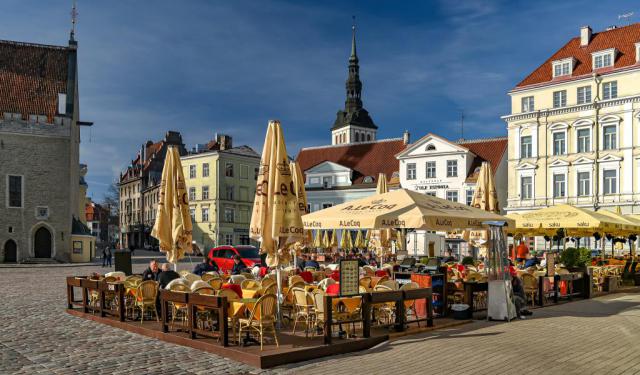
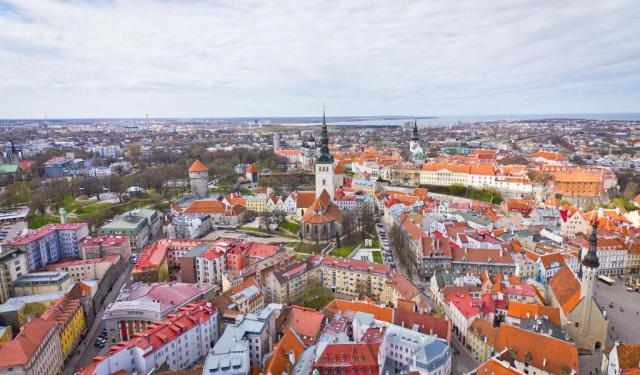
The Old Town of Tallinn is a UNESCO World Cultural Heritage site since 1997. The area emerged in the 13th-16th centuries when Tallinn was an active member of the Hanseatic trade league, slowly evolving into an enclosed district of colorful, ancient gabled houses, medieval towers and gates, half-hidden courtyards, and ostentatious churches.
Today it is one of the best preserved medieval towns in Europe, despite heavy bombardment at the end of WWII. The Old Town retains its charm and is a home to many attractions including, primarily, the Town Hall square complete with a 13th-century Gothic Town Hall crowned with the Old Thomas weather vane – a popular symbol of the city. Just behind the Town Hall is the Tallinn City Museum, covering local history from the prehistoric period until Estonia's independence in 1991.
Behind the Town Hall square is the medieval Lutheran Holy Spirit Church located opposite the Great Guild Hall. The latter houses the Estonian History Museum – one of the most visited museums in Tallinn, recounting the nation's seafaring past up until the end of the 20th century. Another ancient temple nearby is St. Nicholas' Church built in the 13th century and dedicated to Saint Nicholas – the patron of fishermen and sailors. Inside there is a museum of ecclesiastical art.
Marking the entrance to the Old Town is Viru Gate with two towers that were once part of a larger gate system. Among the remaining 26 towers in place, built in the 14th century, there are three: Nunna, Sauna, and Kuldjala, still open to the public.
The cobblestoned Old Town of Tallinn is easily explored on foot and undoubtedly worth a visit. If you wish to do it on your own and in your good time, take this self-guided walk.
Today it is one of the best preserved medieval towns in Europe, despite heavy bombardment at the end of WWII. The Old Town retains its charm and is a home to many attractions including, primarily, the Town Hall square complete with a 13th-century Gothic Town Hall crowned with the Old Thomas weather vane – a popular symbol of the city. Just behind the Town Hall is the Tallinn City Museum, covering local history from the prehistoric period until Estonia's independence in 1991.
Behind the Town Hall square is the medieval Lutheran Holy Spirit Church located opposite the Great Guild Hall. The latter houses the Estonian History Museum – one of the most visited museums in Tallinn, recounting the nation's seafaring past up until the end of the 20th century. Another ancient temple nearby is St. Nicholas' Church built in the 13th century and dedicated to Saint Nicholas – the patron of fishermen and sailors. Inside there is a museum of ecclesiastical art.
Marking the entrance to the Old Town is Viru Gate with two towers that were once part of a larger gate system. Among the remaining 26 towers in place, built in the 14th century, there are three: Nunna, Sauna, and Kuldjala, still open to the public.
The cobblestoned Old Town of Tallinn is easily explored on foot and undoubtedly worth a visit. If you wish to do it on your own and in your good time, take this self-guided walk.
How it works: Download the app "GPSmyCity: Walks in 1K+ Cities" from Apple App Store or Google Play Store to your mobile phone or tablet. The app turns your mobile device into a personal tour guide and its built-in GPS navigation functions guide you from one tour stop to next. The app works offline, so no data plan is needed when traveling abroad.
Download The GPSmyCity App



Tallinn Medieval Old Town Map
Guide Name: Tallinn Medieval Old Town
Guide Location: Estonia » Tallinn (See other walking tours in Tallinn)
Guide Type: Self-guided Walking Tour (Sightseeing)
# of Attractions: 13
Tour Duration: 2 Hour(s)
Travel Distance: 1.7 Km or 1.1 Miles
Author: leticia
Sight(s) Featured in This Guide:
Guide Location: Estonia » Tallinn (See other walking tours in Tallinn)
Guide Type: Self-guided Walking Tour (Sightseeing)
# of Attractions: 13
Tour Duration: 2 Hour(s)
Travel Distance: 1.7 Km or 1.1 Miles
Author: leticia
Sight(s) Featured in This Guide:
- Viru Gate (Viru Värav)
- Olde Hansa Krambude Restaurant and Gift Shop
- Tallinna Raekoda (Tallinn Town Hall)
- Raekoja Plats (Town Hall Square)
- Raeapteek (Town Hall Pharmacy)
- Masters’ Courtyard
- St. Catherine’s Passage (Katariina Käik)
- Dominican Monastery Claustrum
- Tallinn City Museum (Tallinna Linnamuuseum)
- St. Nicholas' Orthodox Church
- Holy Spirit Church (Puhavaimu Kirik)
- Estonian History Museum - Great Guild Hall
- Nunna, Sauna and Kuldjala Towers (Town Wall)
1) Viru Gate (Viru Värav)
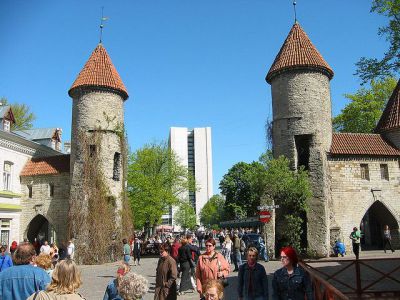
At one point in time, there were a total of 45 towers built into the walls that protected Tallinn. Twenty-six of those still remain. Two of the best preserved of the bunch are called Viru Gate. The gate dates from the 14th Century, as do most of the towers, and sits at the entrance way into the Old Town.
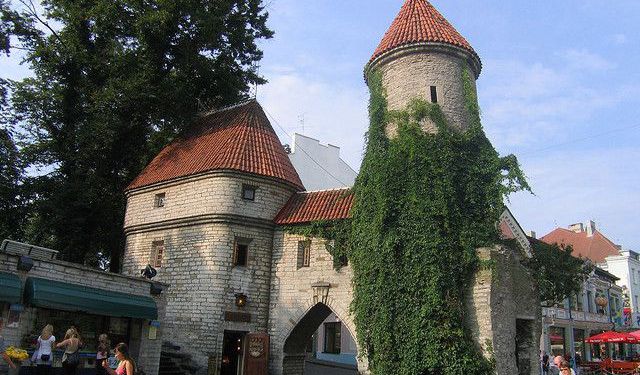
Today the two towers are quite lovely, having been covered in ivy over the years. It gives a gentle look to Viru Street. When you first enter the Old Town through the gate, it makes you feel as though you have stepped back in time.
The towers used to be the fore gates to the city, and a larger set was built a little further in, which were held up by a set of square towers. Most of the gate was pulled down in 1880, in order to make room for more street traffic. Since that time, though, the two towers have become a symbol for the Tallinn Old Town, which used to be the most fortified city in all of Europe back in the day.
Today the two towers are quite lovely, having been covered in ivy over the years. It gives a gentle look to Viru Street. When you first enter the Old Town through the gate, it makes you feel as though you have stepped back in time.
The towers used to be the fore gates to the city, and a larger set was built a little further in, which were held up by a set of square towers. Most of the gate was pulled down in 1880, in order to make room for more street traffic. Since that time, though, the two towers have become a symbol for the Tallinn Old Town, which used to be the most fortified city in all of Europe back in the day.

2) Olde Hansa Krambude Restaurant and Gift Shop
Olde Hansa Restaurant creates an authentic medieval dining experience. Olde Hansa means the old tribe. Your memorable meal is served in a medieval atmosphere complete with candlelight. Sit at a wooden table and admire the handmade tapestries and wooden ceiling beams.
Drink handcrafted brews from traditional goblets. Don't miss the delightful cinnamon-spiced mead. Enjoy fabulous dishes from 700-year-old recipes. Contrary to popular opinion, sweet potatoes weren't served until Christopher Columbus discovered them in the new world. Forks also weren't used in medieval times, so you'll use a knife and spoon.
To complete the medieval immersion experience, servers are dressed in medieval attire. Staff play 15th-century music on flues, the fiddle, and bagpipes. Appetizers include cranberries, carrots, apples, and cheese. Hunted game was a staple in medieval times, so you'll find bear, moose, and elk on the menu. Spices include saffron, cloves, black pepper, cinnamon, ginger, and cardamom. Apple pie is a popular dessert choice.
Olde Hansa Gift Shoppe seeks to recreate the craftsmanship that existed centuries ago. The Gift Shoppe sells authentic medieval shoes, silver jewelry, leatherwork, metalwork, glassware, and ceramics. You'll also find delicious handcrafted sweets.
Drink handcrafted brews from traditional goblets. Don't miss the delightful cinnamon-spiced mead. Enjoy fabulous dishes from 700-year-old recipes. Contrary to popular opinion, sweet potatoes weren't served until Christopher Columbus discovered them in the new world. Forks also weren't used in medieval times, so you'll use a knife and spoon.
To complete the medieval immersion experience, servers are dressed in medieval attire. Staff play 15th-century music on flues, the fiddle, and bagpipes. Appetizers include cranberries, carrots, apples, and cheese. Hunted game was a staple in medieval times, so you'll find bear, moose, and elk on the menu. Spices include saffron, cloves, black pepper, cinnamon, ginger, and cardamom. Apple pie is a popular dessert choice.
Olde Hansa Gift Shoppe seeks to recreate the craftsmanship that existed centuries ago. The Gift Shoppe sells authentic medieval shoes, silver jewelry, leatherwork, metalwork, glassware, and ceramics. You'll also find delicious handcrafted sweets.
3) Tallinna Raekoda (Tallinn Town Hall) (must see)
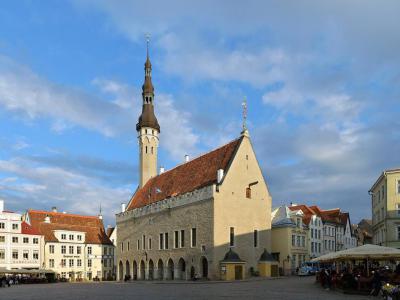
Tallinn Town Hall is the oldest and only preserved Gothic-style city hall in North Europe. In 2005, the Town Hall was awarded second prize for conservation of Architectural Heritage. Parts of the town hall date to the 13th century. The Town Hall was completed in 1404 and was the center of the town's government for almost 700 years, until 1970. Throughout the centuries, several additions, renovations, and architectural changes have been made.
Tallinn Town Hall was built with limestone. Traditional clay tiles adorn the exterior, which features a 64 meter (210 feet) tall spire that's visible from all over town. Gargoyles decorate the main facade. The Town Hall has an arcade formed with nine arcs and eight pillars. In inclement weather, merchants could gather under the shelter of the arcade. Criminals would be chained to one of the pillars so that townspeople could mock them.
The Town Hall's interior features attractive Gothic arches and works of art spanning the history of Tallinn. Benches were crafted in the 14th and 15th centuries. The largest hall in Town Hall is the Citizens Hall. It can hold up to 100 people and is often used for musical performances.
The Council Chamber features intricate wood carvings dating to 1375. Copies of 16th-century tapestries hang on interior walls. The original tapestries are on display in the Tallinn City Museum.
The Old Thomas weather vane is one of the town's most famous landmarks. The weather vane depicts a soldier who protects the city. Old Thomas was originally placed in 1530. Today, a copy stands on top of the town hall's spire, while the 1530 original is on display in the town hall's basement.
Tallinn regularly hosts concerts and receptions in this historic building. For a great view of the city, bring your camera and climb the tower.
Tallinn Town Hall was built with limestone. Traditional clay tiles adorn the exterior, which features a 64 meter (210 feet) tall spire that's visible from all over town. Gargoyles decorate the main facade. The Town Hall has an arcade formed with nine arcs and eight pillars. In inclement weather, merchants could gather under the shelter of the arcade. Criminals would be chained to one of the pillars so that townspeople could mock them.
The Town Hall's interior features attractive Gothic arches and works of art spanning the history of Tallinn. Benches were crafted in the 14th and 15th centuries. The largest hall in Town Hall is the Citizens Hall. It can hold up to 100 people and is often used for musical performances.
The Council Chamber features intricate wood carvings dating to 1375. Copies of 16th-century tapestries hang on interior walls. The original tapestries are on display in the Tallinn City Museum.
The Old Thomas weather vane is one of the town's most famous landmarks. The weather vane depicts a soldier who protects the city. Old Thomas was originally placed in 1530. Today, a copy stands on top of the town hall's spire, while the 1530 original is on display in the town hall's basement.
Tallinn regularly hosts concerts and receptions in this historic building. For a great view of the city, bring your camera and climb the tower.
4) Raekoja Plats (Town Hall Square) (must see)
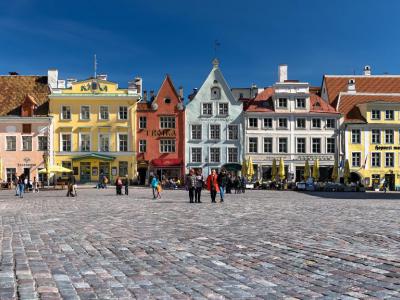
Town Hall Square is a fabulous location to soak up the long and storied history of Tallinn. It's in the center of the Old Town. Markets began opening on this site in the 11th century. Tallinn Town Hall is located in this square. Completed in 1404, it's the oldest Town Hall in Northern Europe.
Other historical buildings surround the square. There is the oldest pharmacy in Europe; it was established in approximately 1415. The pharmacy has a small museum with ancient medical instruments and medicines. The rest of the buildings are painted in attractive pastel colors and were built between the 15th and 17th centuries. Cobblestones throughout the square complete the old-world charm.
In the center of the square, visitors will find a circular stone with a compass rose. The L-shaped stone near the center of the square marks the site where a priest was executed. The priest killed a waitress who had served an overcooked omelet.
During the summer, the square is filled with open-air cafés. Enjoy alfresco dining and people-watching. There are regular outdoor markets held in Town Hall Square. Stalls feature souvenirs and traditional Estonian items.
You will find varied festivals and concerts throughout the year. Tallinn Old Town Days is a week-long festival that takes place at the beginning of summer. During this popular festival, visitors and locals are treated to exhibitions, theater plays, concerts, fairs, and non-stop entertainment.
In winter, the square becomes a winter wonderland with holiday decorations and a massive decorated fir tree. The Brotherhood of the Blackheads first erected a Christmas tree in the square in 1422. This is thought to be the world's first Christmas tree. Visitors can also enjoy a spirited Christmas market.
Why You Should Visit:
Town Hall Square is the oldest town square in Northern Europe and has been the center of Tallinn for eight centuries. Visit historic buildings and enjoy the old-world ambiance. There's no better place to get the feel of the town and nation than Town Hall Square.
Tips:
This square is incredibly festive over the winter holidays. Have a hot toddy, enjoy the holiday lights, shop for gifts, and admire the Christmas tree.
Other historical buildings surround the square. There is the oldest pharmacy in Europe; it was established in approximately 1415. The pharmacy has a small museum with ancient medical instruments and medicines. The rest of the buildings are painted in attractive pastel colors and were built between the 15th and 17th centuries. Cobblestones throughout the square complete the old-world charm.
In the center of the square, visitors will find a circular stone with a compass rose. The L-shaped stone near the center of the square marks the site where a priest was executed. The priest killed a waitress who had served an overcooked omelet.
During the summer, the square is filled with open-air cafés. Enjoy alfresco dining and people-watching. There are regular outdoor markets held in Town Hall Square. Stalls feature souvenirs and traditional Estonian items.
You will find varied festivals and concerts throughout the year. Tallinn Old Town Days is a week-long festival that takes place at the beginning of summer. During this popular festival, visitors and locals are treated to exhibitions, theater plays, concerts, fairs, and non-stop entertainment.
In winter, the square becomes a winter wonderland with holiday decorations and a massive decorated fir tree. The Brotherhood of the Blackheads first erected a Christmas tree in the square in 1422. This is thought to be the world's first Christmas tree. Visitors can also enjoy a spirited Christmas market.
Why You Should Visit:
Town Hall Square is the oldest town square in Northern Europe and has been the center of Tallinn for eight centuries. Visit historic buildings and enjoy the old-world ambiance. There's no better place to get the feel of the town and nation than Town Hall Square.
Tips:
This square is incredibly festive over the winter holidays. Have a hot toddy, enjoy the holiday lights, shop for gifts, and admire the Christmas tree.
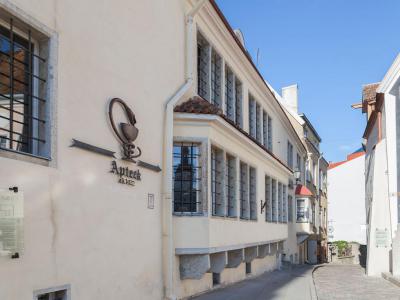
5) Raeapteek (Town Hall Pharmacy)
The Town Hall Pharmacy (Raeapteek) stands as one of Europe's oldest continuously operating pharmacies, maintaining its presence within the same historic building since the early 15th century. It holds the distinction of being both Tallinn's oldest commercial enterprise and its oldest medical institution. The earliest known visual representation of the Town-Hall Pharmacy can be traced back to an oil painting by Oldekop, depicting Tallinn's Town Hall Square in 1800. Photographs capturing the building's facade date back to 1889.
The precise founding date of the pharmacy remains uncertain among historians, but the oldest available records reveal that by 1422, the Town Hall Pharmacy had already changed hands twice. Some scholars suggest that its inception could be dated to 1415.
Within a town council's ledger, an entry by a chemist named Nuclawes mentions that the pharmacy's proprietors consisted of ten esteemed individuals, with the majority holding positions as aldermen. Subsequent documents, originating after 1422, indicate that the first pharmacist, Johann Molner, took charge, and medicinal products were already being dispensed at the pharmacy during the latter part of the 15th century.
The precise founding date of the pharmacy remains uncertain among historians, but the oldest available records reveal that by 1422, the Town Hall Pharmacy had already changed hands twice. Some scholars suggest that its inception could be dated to 1415.
Within a town council's ledger, an entry by a chemist named Nuclawes mentions that the pharmacy's proprietors consisted of ten esteemed individuals, with the majority holding positions as aldermen. Subsequent documents, originating after 1422, indicate that the first pharmacist, Johann Molner, took charge, and medicinal products were already being dispensed at the pharmacy during the latter part of the 15th century.
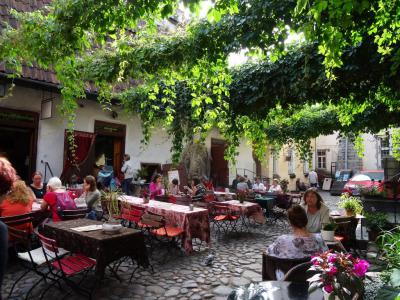
6) Masters’ Courtyard
Masters' Courtyard in Tallinn stands out as a distinctive artisan quarter, featuring more than 10 diverse shops run by local craftsmen and artisans, along with a guesthouse and a chocolate shop.
Situated at the heart of Tallinn's historic old town, this property has a rich history dating back to 1371, having changed ownership and purposes numerous times over the past seven centuries. In 1993, the Master's Courtyard Non-profit Organization was established with the primary goal of restoring and revitalizing this property, which had suffered significant deterioration. Their vision was to transform it into an artisan hub comprising workshops, galleries, and exhibition spaces.
Today, Masters' Courtyard has gained recognition as a popular attraction for both residents and tourists alike. There are 11 distinct shops that exclusively offer products created by local artisans and artists. Some of these shops allow visitors to witness the crafting techniques and even place orders for customized items. On the courtyard's premises, you'll also find the cozy Guesthouse "Villa Hortensia," featuring six rooms equipped with kitchenettes and private bathrooms.
Additionally, there's a well-regarded chocolaterie named Chocolaterie Pierre, renowned for its handcrafted truffles, cakes, and an array of excellent coffee offerings. As you explore the various buildings within the courtyard, you'll soak in the historical ambiance, and during sunny summer evenings, you can enjoy live music in the garden.
Situated at the heart of Tallinn's historic old town, this property has a rich history dating back to 1371, having changed ownership and purposes numerous times over the past seven centuries. In 1993, the Master's Courtyard Non-profit Organization was established with the primary goal of restoring and revitalizing this property, which had suffered significant deterioration. Their vision was to transform it into an artisan hub comprising workshops, galleries, and exhibition spaces.
Today, Masters' Courtyard has gained recognition as a popular attraction for both residents and tourists alike. There are 11 distinct shops that exclusively offer products created by local artisans and artists. Some of these shops allow visitors to witness the crafting techniques and even place orders for customized items. On the courtyard's premises, you'll also find the cozy Guesthouse "Villa Hortensia," featuring six rooms equipped with kitchenettes and private bathrooms.
Additionally, there's a well-regarded chocolaterie named Chocolaterie Pierre, renowned for its handcrafted truffles, cakes, and an array of excellent coffee offerings. As you explore the various buildings within the courtyard, you'll soak in the historical ambiance, and during sunny summer evenings, you can enjoy live music in the garden.
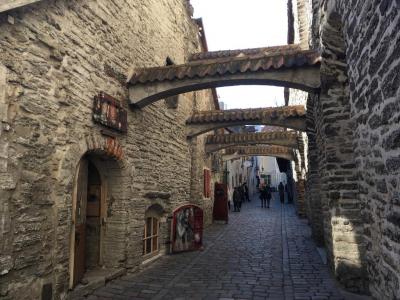
7) St. Catherine’s Passage (Katariina Käik) (must see)
If you want to get a chance to really glimpse what life was like in the Old Town of Tallinn, you will want to visit Saint Catherine’s Passage. It is located just a short distance from the Town Hall.
The old passage connects Vene and Muurivahe Streets in town. On the northern end of the passage you will find the remnants of Saint Catherine’s Dominican Monastery Church, which is one of the oldest church in the city. In fact, the passage derives its name from the church. Many people like checking out the old tombstones that are an integral part of the sanctuary there. Many famous Estonians are buried at Saint Catherine’s cemetery.
The southern end of the passage will take you past some of the best artisan shops in Tallinn. You can watch the artists at work. It’s one of the best places to get a memento of your visit to Tallinn. The whole passage is a nice morning’s hike for the exercise alone. If you want to stop for a moment, you will want to get a cup of coffee at one of the quaint little cafes that are scattered down the passage.
The old passage connects Vene and Muurivahe Streets in town. On the northern end of the passage you will find the remnants of Saint Catherine’s Dominican Monastery Church, which is one of the oldest church in the city. In fact, the passage derives its name from the church. Many people like checking out the old tombstones that are an integral part of the sanctuary there. Many famous Estonians are buried at Saint Catherine’s cemetery.
The southern end of the passage will take you past some of the best artisan shops in Tallinn. You can watch the artists at work. It’s one of the best places to get a memento of your visit to Tallinn. The whole passage is a nice morning’s hike for the exercise alone. If you want to stop for a moment, you will want to get a cup of coffee at one of the quaint little cafes that are scattered down the passage.
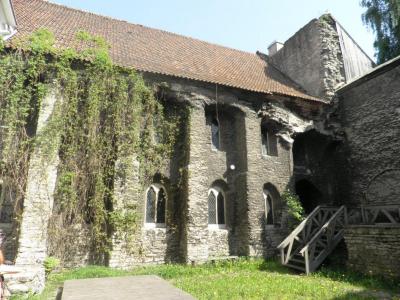
8) Dominican Monastery Claustrum
The Dominican Monastery Claustrum is located in the Old Town of Tallinn, not very far from the Viru Gates, which are the official entrance into this part of the city. The Monastery here was first formed in 1246, during a time period when the city was a thriving.
From a historical perspective, the building is one of the most important in all of Tallinn. The clausure holds the most important rooms in the old building, and they were used for many purposes during the years. During the 14th and 15th Century, the meetings of the leadership of the Hariju and Virumaa Knighthoods took place here. The Old Capital Hall used to be here also.
One of the first libraries in Tallinn was also located inside the Monastery. In addition to being able to see the old library, you can visit the old sacristy, vestry, and dormitories used by the monks and leaders of the city.
There is an extensive collection of medieval and Renaissance art and artifacts to be seen. You will especially want to check out the stone carvings, particularly those on some of the old tombstones. The relief of the angel, set in a triangle, is also quite stunning and was designed by Arendt Passer. He was a famous stone mason who did other work in the area, like the Pontus de la Gardie in the famous Tallinn Cathedral.
Just to the south of the monastery lies a narrow alley that is known as Catherine’s Passage. The wall here was from the original Monastery. There is a series of craft shops where you can watch artisans at work, just as in the days gone by.
From a historical perspective, the building is one of the most important in all of Tallinn. The clausure holds the most important rooms in the old building, and they were used for many purposes during the years. During the 14th and 15th Century, the meetings of the leadership of the Hariju and Virumaa Knighthoods took place here. The Old Capital Hall used to be here also.
One of the first libraries in Tallinn was also located inside the Monastery. In addition to being able to see the old library, you can visit the old sacristy, vestry, and dormitories used by the monks and leaders of the city.
There is an extensive collection of medieval and Renaissance art and artifacts to be seen. You will especially want to check out the stone carvings, particularly those on some of the old tombstones. The relief of the angel, set in a triangle, is also quite stunning and was designed by Arendt Passer. He was a famous stone mason who did other work in the area, like the Pontus de la Gardie in the famous Tallinn Cathedral.
Just to the south of the monastery lies a narrow alley that is known as Catherine’s Passage. The wall here was from the original Monastery. There is a series of craft shops where you can watch artisans at work, just as in the days gone by.

9) Tallinn City Museum (Tallinna Linnamuuseum)
The Tallinn City Museum is a parent organization for nine different museums across the city of Tallinn, Estonia.
The main campus is housed in a building in the Old Town that dates all the way back to the 1300’s. It is a good representation of what dwellings were like in the Medieval days, which its lancet arched portal and double windows display so well. The building was owned by many famous merchants and politicians over the years.
The permanent collections on display here are designed to give the viewer a good history of the old city, beginning with the conception of the town and ending with the Independence movement for the country of Estonia in 1991.
There is a small café located in the museum and a gift shop where you can stop and have a bite after visiting the main campus.
The main campus is housed in a building in the Old Town that dates all the way back to the 1300’s. It is a good representation of what dwellings were like in the Medieval days, which its lancet arched portal and double windows display so well. The building was owned by many famous merchants and politicians over the years.
The permanent collections on display here are designed to give the viewer a good history of the old city, beginning with the conception of the town and ending with the Independence movement for the country of Estonia in 1991.
There is a small café located in the museum and a gift shop where you can stop and have a bite after visiting the main campus.
10) St. Nicholas' Orthodox Church
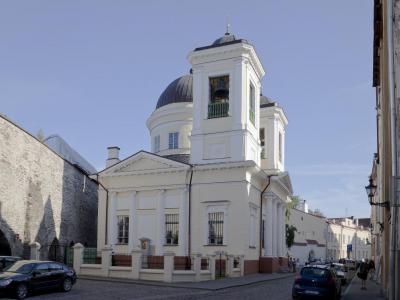
Saint Nicholas Church stands as a historic former church situated in Tallinn. It was originally devoted to Saint Nicholas, revered as the patron saint of fishermen and sailors. This architectural gem, dating back to the 13th century, endured partial destruction during the Soviet bombing of Tallinn in World War II. Subsequently, concerted efforts were made to restore it, and today, it serves as the home to the Niguliste Museum, a branch under the umbrella of the Art Museum of Estonia. The museum's primary focus is on ecclesiastical art spanning from the Middle Ages onwards.
The church's origins trace back to the years 1230 to 1275 when it was founded and constructed by Westphalian merchants who arrived from Gotland in the 13th century. At the time, Tallinn lacked fortifications, prompting the church to incorporate heavy bars to secure entrances, as well as openings and concealed areas for sheltering refugees. However, as Tallinn's fortifications were completed in the 14th century, with the town wall encompassing the church and settlement in 1310, Saint Nicholas Church relinquished its defensive role and transformed into a typical medieval parish church.
Between 1405 and 1420, the church underwent alterations, resulting in its present-day appearance. The central aisle was elevated to include a clerestory above the side aisles, adopting the architectural style known as a basilica. In 1515, the tower was extended in height and crowned with a late-Gothic spire. During the late 17th century, efforts were made to fortify and reinforce the tower. The original spire was replaced with a Baroque spire featuring airy galleries, which was gradually heightened over the course of several centuries. Presently, the tower stands at an impressive height of 105 meters (344.5 feet).
Remarkably, Saint Nicholas Church retained its original character amidst the iconoclastic fervor brought about by the Protestant Reformation in 1523. The church's congregation took measures to protect it by sealing its locks with molten lead, thwarting the efforts of those seeking to deface or damage it.
The church's origins trace back to the years 1230 to 1275 when it was founded and constructed by Westphalian merchants who arrived from Gotland in the 13th century. At the time, Tallinn lacked fortifications, prompting the church to incorporate heavy bars to secure entrances, as well as openings and concealed areas for sheltering refugees. However, as Tallinn's fortifications were completed in the 14th century, with the town wall encompassing the church and settlement in 1310, Saint Nicholas Church relinquished its defensive role and transformed into a typical medieval parish church.
Between 1405 and 1420, the church underwent alterations, resulting in its present-day appearance. The central aisle was elevated to include a clerestory above the side aisles, adopting the architectural style known as a basilica. In 1515, the tower was extended in height and crowned with a late-Gothic spire. During the late 17th century, efforts were made to fortify and reinforce the tower. The original spire was replaced with a Baroque spire featuring airy galleries, which was gradually heightened over the course of several centuries. Presently, the tower stands at an impressive height of 105 meters (344.5 feet).
Remarkably, Saint Nicholas Church retained its original character amidst the iconoclastic fervor brought about by the Protestant Reformation in 1523. The church's congregation took measures to protect it by sealing its locks with molten lead, thwarting the efforts of those seeking to deface or damage it.
11) Holy Spirit Church (Puhavaimu Kirik)
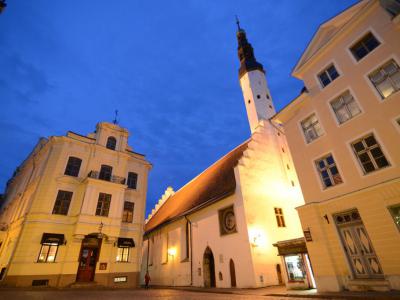
There is a lot of city history associated with the Holy Spirit Church of Tallinn. In 1531, they became the very first church to hold regular worship services in Estonian. The pastor at the time was Johann Koell, who also happens to be the person who authored the oldest surviving book known that was written in Estonian. With the assistance of Pastor Simon Wanradt from the Saint Nicholas Church, they compiled a short catechism for the people in German and Estonian. It was published circa 1535.
Pastor Balthasar Russow of the Holy Spirit Church is another famous author/clergyperson from the organization. He wrote a history book on the countries of Estonia and Livonia, as well as the war that happened between the two countries in the 16th Century.
The building dates back to the 1200s and it also served as an almshouse for the magistrate of Tallinn. From an architectural perspective, the locals call the church the museum of styles, because the sanctuary and altar have artifacts from the medieval, Baroque, and Renaissance periods. You will also want to see the woodcarvings on the balcony, as well as the arch and pews. The church bell here is also the oldest surviving in the country, dating back to 1433.
Pastor Balthasar Russow of the Holy Spirit Church is another famous author/clergyperson from the organization. He wrote a history book on the countries of Estonia and Livonia, as well as the war that happened between the two countries in the 16th Century.
The building dates back to the 1200s and it also served as an almshouse for the magistrate of Tallinn. From an architectural perspective, the locals call the church the museum of styles, because the sanctuary and altar have artifacts from the medieval, Baroque, and Renaissance periods. You will also want to see the woodcarvings on the balcony, as well as the arch and pews. The church bell here is also the oldest surviving in the country, dating back to 1433.
12) Estonian History Museum - Great Guild Hall
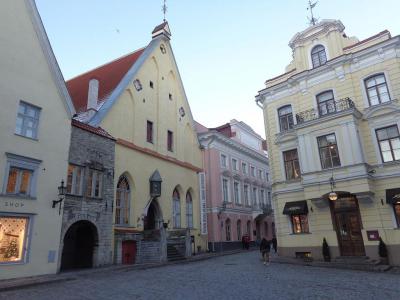
The Great Guild Hall is a wonderful old Gothic style structure that is located in the Old Town of Tallinn. It is not very far from Town Hall, and is just a couple of blocks south of Saint Olaf’s Church. You can find it directly across from the Holy Spirit Church.
It was built over a three year period that started in 1407. It was first used as a meeting place for Tallinn’s Merchant’s Union. During medieval times, local craft guilds controlled most aspects of business and commerce. The merchants of Tallinn banded together and became quite wealthy in their own right. Several old rooms in the building have been renovated and opened to the general public.
The hall now houses the Estonian History Museum, which brings to life over eleven thousand years of history of this part of the world. The displayed objects include archeological pieces, archived materials, ethnography, photography, glass and porcelain.
It was built over a three year period that started in 1407. It was first used as a meeting place for Tallinn’s Merchant’s Union. During medieval times, local craft guilds controlled most aspects of business and commerce. The merchants of Tallinn banded together and became quite wealthy in their own right. Several old rooms in the building have been renovated and opened to the general public.
The hall now houses the Estonian History Museum, which brings to life over eleven thousand years of history of this part of the world. The displayed objects include archeological pieces, archived materials, ethnography, photography, glass and porcelain.
13) Nunna, Sauna and Kuldjala Towers (Town Wall) (must see)
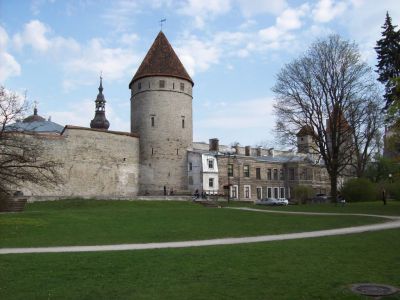
The Nunna, Sauna, and Kuldjala Towers are three of the remaining 26 towers that surround the Old Town of Tallinn. In the late 14th century, a massive project was started to build a fortified wall around the city to protect against invaders. By the 16th Century, the walls were raised to sixteen meters high with a thickness of 3 to 4 meters. This made it possible to defend against canon fire. During the 16th century, Tallinn was one of the most fortified cities in the entire world. The wall stretched 4 kilometers around old Tallinn.
These three towers are among the few that are still open to the general public. Visitors can come and walk through all three. In addition, there are some connection paths that are adjacent to the historic standing walls. It gives you a real sense of what the old town was like. Climbing the towers also gives you a great view of the city. You can imagine what it was like to be a guard on the towers. Admission is free.
These three towers are among the few that are still open to the general public. Visitors can come and walk through all three. In addition, there are some connection paths that are adjacent to the historic standing walls. It gives you a real sense of what the old town was like. Climbing the towers also gives you a great view of the city. You can imagine what it was like to be a guard on the towers. Admission is free.
Walking Tours in Tallinn, Estonia

Create Your Own Walk in Tallinn
Creating your own self-guided walk in Tallinn is easy and fun. Choose the city attractions that you want to see and a walk route map will be created just for you. You can even set your hotel as the start point of the walk.
Tallinn Introduction Walking Tour
Estonia’s capital Tallinn is the country’s largest city and cultural hub. One of the biggest ports on the Baltic Sea, the area has been known for its convenient harbor since as early as the 10th century. Owing to its strategic location for trade between Russia and Scandinavia, the Kingdom of Denmark laid claim on this land in 1219. The city itself, first mentioned in 1154, was incorporated in... view more
Tour Duration: 2 Hour(s)
Travel Distance: 4.1 Km or 2.5 Miles
Tour Duration: 2 Hour(s)
Travel Distance: 4.1 Km or 2.5 Miles
Tallinn Old Towers and Gates
Once Europe's greatest fortified city, Tallinn had 46 defense towers and approximately 4 kilometers of surrounding walls. Today, there are 26 towers and about 2 kilometers of walls still in place, making the Old Town of Tallinn one of the best-preserved systems of medieval fortifications in Europe.
Upon entering the district through the Viru Gate, whose two picturesque, ivy-covered towers... view more
Tour Duration: 2 Hour(s)
Travel Distance: 2.8 Km or 1.7 Miles
Upon entering the district through the Viru Gate, whose two picturesque, ivy-covered towers... view more
Tour Duration: 2 Hour(s)
Travel Distance: 2.8 Km or 1.7 Miles
The Most Popular Cities
/ view all