


The European Quarter Walking Tour (Self Guided), Brussels
Along with Luxembourg and Strasbourg, Brussels is one of the European Union’s de facto capitals. The office blocks of the European Quarter are mainly concentrated along and between two wide boulevards – rue de la Loi and rue Belliard – which Léopold II built to connect his Parc du Cinquantenaire with the city center.
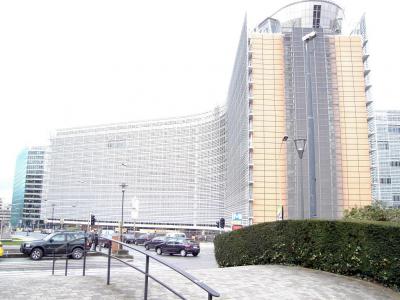
Begin your exploration with the EU’s most symbolic construction, the Berlaymont, a huge office building that was widely praised for its design – shaped like a giant cross of St Andrew – when it opened in 1967. After a refurbishment that took thirteen years, it reopened in 2004 and certainly looks even better as a home to the European Commission.
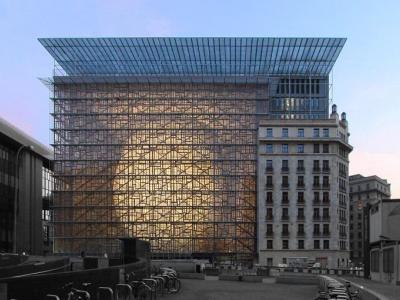
Not far away, the Charlemagne high-rise accommodates the rest of the Commission’s bureaucracy, while opposite, housing the Council of the EU, is the cream-colored Justus Lipsius building, constructed in the mid-1990s and linked via two skyways to the much newer Europa Building – seat of the European Council.
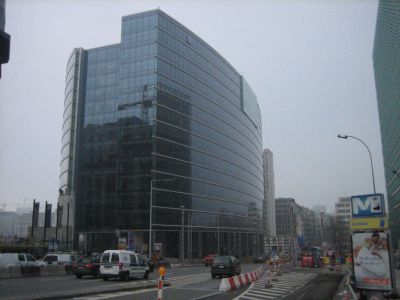
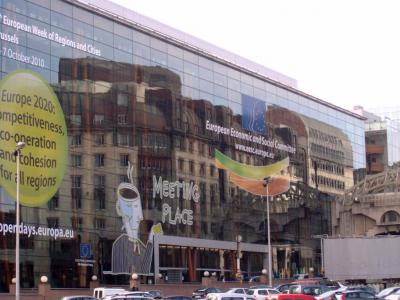
On rue Belliard, the low-rise Jacques Delors building houses the European Economic and Social Committee as well as the Committee of the Regions, while the European Parliament is at l’Espace Léopold. The latter’s curved glass roof, rising to 70 m (228 ft), can be seen from all around the district, and there are particularly pretty views from Parc Léopold at its eastern side.
Take this self-guided walking tour to discover Brussels’ European Quarter at your own pace.
Begin your exploration with the EU’s most symbolic construction, the Berlaymont, a huge office building that was widely praised for its design – shaped like a giant cross of St Andrew – when it opened in 1967. After a refurbishment that took thirteen years, it reopened in 2004 and certainly looks even better as a home to the European Commission.
Not far away, the Charlemagne high-rise accommodates the rest of the Commission’s bureaucracy, while opposite, housing the Council of the EU, is the cream-colored Justus Lipsius building, constructed in the mid-1990s and linked via two skyways to the much newer Europa Building – seat of the European Council.
On rue Belliard, the low-rise Jacques Delors building houses the European Economic and Social Committee as well as the Committee of the Regions, while the European Parliament is at l’Espace Léopold. The latter’s curved glass roof, rising to 70 m (228 ft), can be seen from all around the district, and there are particularly pretty views from Parc Léopold at its eastern side.
Take this self-guided walking tour to discover Brussels’ European Quarter at your own pace.
How it works: Download the app "GPSmyCity: Walks in 1K+ Cities" from Apple App Store or Google Play Store to your mobile phone or tablet. The app turns your mobile device into a personal tour guide. For US$14.99 per year, you get access to walking tours in 630+ cities worldwide. In comparison, a guided tour often costs dozens of dollars per person for a single tour. The app works offline, so no data plan is needed when traveling abroad.
Download The GPSmyCity App



The European Quarter Walking Tour Map
Guide Name: The European Quarter Walking Tour
Guide Location: Belgium » Brussels (See other walking tours in Brussels)
Guide Type: Self-guided Walking Tour (Sightseeing)
Tour Duration: 1 Hour(s)
Travel Distance: 1.3 Km or 0.8 Miles
Guide Location: Belgium » Brussels (See other walking tours in Brussels)
Guide Type: Self-guided Walking Tour (Sightseeing)
Tour Duration: 1 Hour(s)
Travel Distance: 1.3 Km or 0.8 Miles
Sights Featured in This Walk

2) Justus Lipsius Building
Sight description based on Wikipedia.

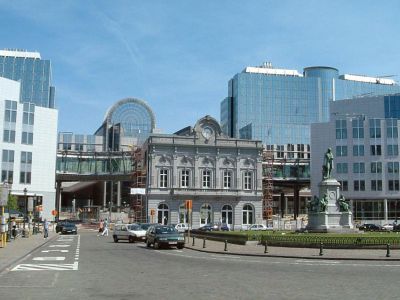
7) Espace Leopold
Sight description based on Wikipedia.
Walking Tours in Brussels, Belgium

Create Your Own Walk in Brussels
Creating your own self-guided walk in Brussels is easy and fun. Choose the city attractions that you want to see and a walk route map will be created just for you. You can even set your hotel as the start point of the walk.
Brussels Food Tour
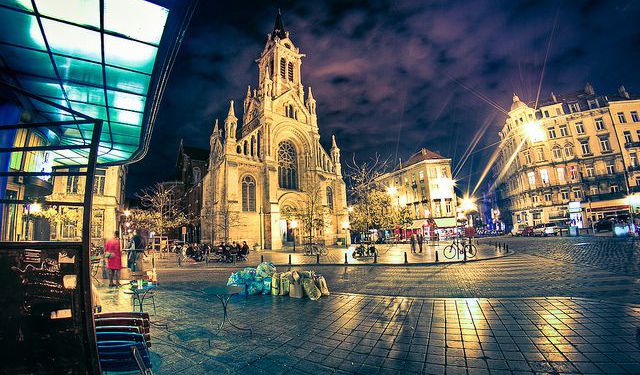
In the Middle Ages, Brussels grew as a commercial centre within the Duchy of Brabant. Markets formed around what is now the Grand Place, where traders sold bread, meat, dairy, and beer. Food production was regulated by powerful guilds, which controlled quality and pricing. Bakers, brewers, and butchers each had defined roles, establishing early standards that still influence Belgian food culture... view more
Tour Duration: 1 Hour(s)
Travel Distance: 1.4 Km or 0.9 Miles
Tour Duration: 1 Hour(s)
Travel Distance: 1.4 Km or 0.9 Miles
Chocolate Tour in Brussels
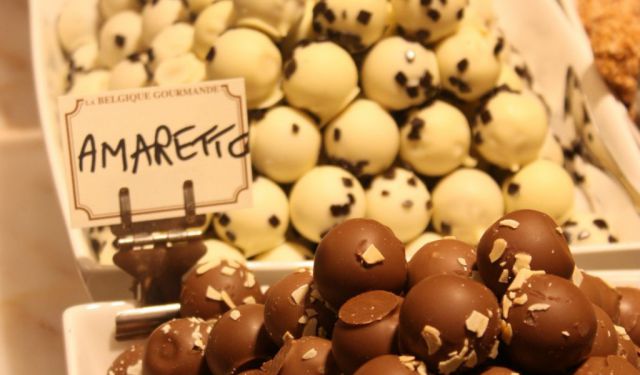
Belgium is considered one of, if not the, best producer of chocolate in the world. The country's capital, Brussels abounds in opportunities to taste more than 2,000 different varieties of this delectable treat. There is a plethora of chocolate shops in the city which offer chocolates of all imaginable shapes, sizes and colors.
Planète Chocolat’s chocolate-making demonstration make a... view more
Tour Duration: 1 Hour(s)
Travel Distance: 1.5 Km or 0.9 Miles
Planète Chocolat’s chocolate-making demonstration make a... view more
Tour Duration: 1 Hour(s)
Travel Distance: 1.5 Km or 0.9 Miles
Brussels Historical Churches Walking Tour
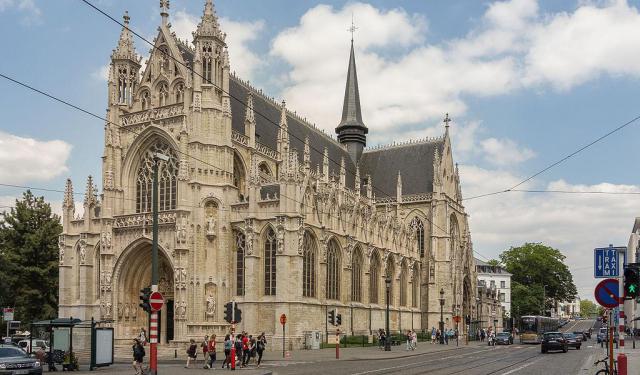
As well as being Belgium’s political and cultural capital, Brussels is the spiritual home of its most significant churches. Historically, the city has been predominantly Roman Catholic, especially since the expulsion of Protestants in the 16th century. The pre-eminent Catholic temple here, located just a couple of minutes from the Grand-Place, is the Brabantine Gothic Cathedral of St. Michael... view more
Tour Duration: 2 Hour(s)
Travel Distance: 4.6 Km or 2.9 Miles
Tour Duration: 2 Hour(s)
Travel Distance: 4.6 Km or 2.9 Miles
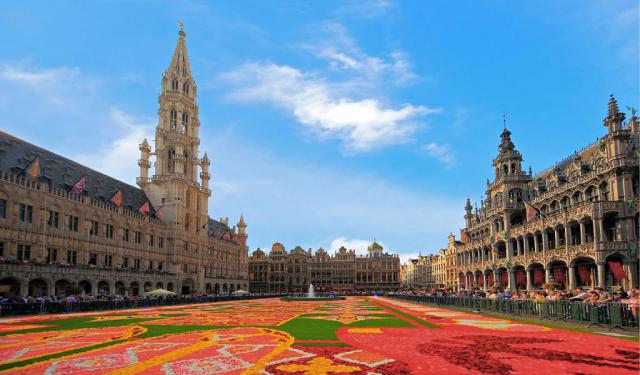
Brussels Introduction Walking Tour
Nowadays a major center for international politics, the capital of Belgium, Brussels, is often referred to as the "Crossroads of Europe". Indeed, nestled at the heart of the continent, this city has a history closely linked to that of Western Europe. Repeatedly changing hands between various duchies, empires, republics, and kingdoms, it has evolved from a small rural settlement to an... view more
Tour Duration: 2 Hour(s)
Travel Distance: 3.6 Km or 2.2 Miles
Tour Duration: 2 Hour(s)
Travel Distance: 3.6 Km or 2.2 Miles
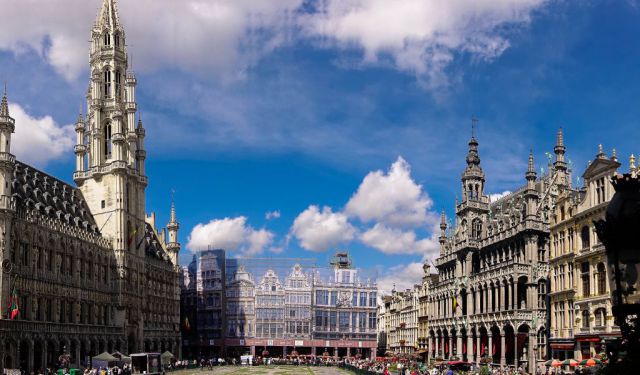
Grand Place Walking Tour
The Grand Square in Brussels-steeped in history and overflowing with architectural charm-is the city’s star attraction. Here, the buildings are dressed fancier than most people at a wedding, and every cobblestone whispers, “I’ve seen some stuff.”
Hard to believe, but back in the 11th century, this was just a humble wheat market. Eventually, the area evolved into a civic and commercial... view more
Tour Duration: 1 Hour(s)
Travel Distance: 0.3 Km or 0.2 Miles
Hard to believe, but back in the 11th century, this was just a humble wheat market. Eventually, the area evolved into a civic and commercial... view more
Tour Duration: 1 Hour(s)
Travel Distance: 0.3 Km or 0.2 Miles
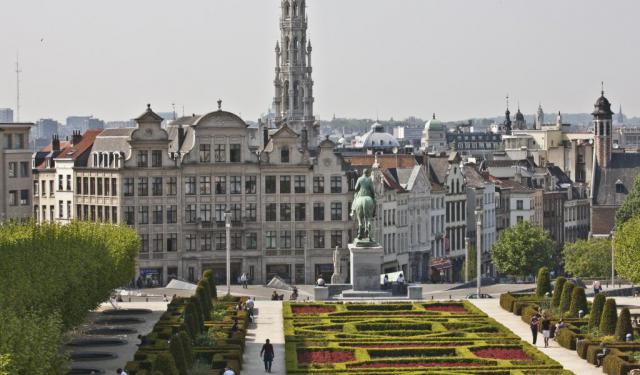
Mont Des Arts Cultural Walk
Mont des Arts, meaning "hill of the arts", is one of the most important cultural sites in Brussels. A classic among the city’s vantage points, it offers a fine city garden and restored showcase of architecture, in addition to several great museums.
Start your journey by traveling towards the old part of the city, where you’ll find the BOZAR Centre for Fine Arts, greatly admired... view more
Tour Duration: 1 Hour(s)
Travel Distance: 1.0 Km or 0.6 Miles
Start your journey by traveling towards the old part of the city, where you’ll find the BOZAR Centre for Fine Arts, greatly admired... view more
Tour Duration: 1 Hour(s)
Travel Distance: 1.0 Km or 0.6 Miles
Useful Travel Guides for Planning Your Trip
What to Buy in Brussels: 14 Ideas for Travelers
It's no secret that Brussels is not all about JCVD muscles and EU headquarters. Small country as such, Belgium abounds in signature items, such as beer, chocolates and... the peeing boy. All of these have made prime Belgian souvenirs for years. Now you can explore the Brussels gift scene in...
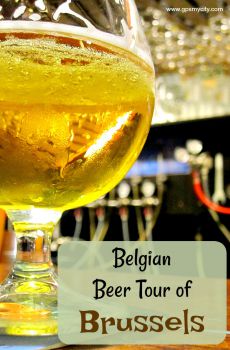
Belgian Beer Tour of Brussels
Belgium is world-renowned for its beers and Brussels is the best city to sample the huge variety of flavors. We'll show you the best places to buy them and to drink them. We'll even show you a family brewery where the liquid gold is produced right in front of your eyes! This tour is meant...
The Most Popular Cities
/ view all