


Audio Guide: French Quarter Walking Tour (Self Guided), New Orleans
The French Quarter, also known as the Old Square, is New Orleans’ oldest and most famous neighborhood. Founded in 1718, it brings together the tempting, noisy, and delightfully nutty nightlife of Bourbon Street with major historical landmarks, art galleries, and some of the city’s oldest churches—all within walking distance and proximity to the Mississippi River. Indeed, few places in America offer such a concentrated mix of architecture, music, food, folklore, and street life.
On this self-guided walking tour, the French Quarter comes to life through stories, legends, curious facts, and local experiences tied to its distinctive character. Here, the past does not sit quietly behind glass; it spills into sophisticated cafés, bars, hidden courtyards, antique shopfronts, and street corners.
Jackson Square is one of the essential stops, framed by the elegant Pontalba Buildings, whose ground floors are filled with shops and restaurants. Nearby stands Saint Louis Cathedral, with its Gothic Revival profile rising above the square, while the Cabildo and The Presbytère add layers of political, cultural, and Mardi Gras history. Close by, Café du Monde keeps the city’s coffee-and-beignet ritual alive with powdered sugar, chicory coffee, and a steady flow of visitors.
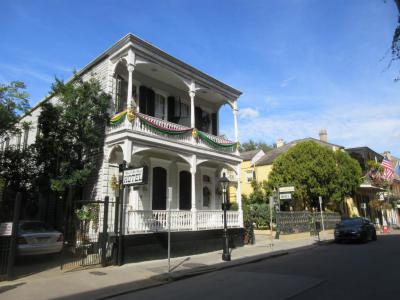
The Quarter also rewards those who look beyond its most photographed corners. The 1850 House offers a glimpse into domestic life in the antebellum era, while the New Orleans Pharmacy Museum recalls the strange, fascinating world of 19th-century medicine. The Hermann-Grima House preserves the setting of a prosperous Creole household, complete with courtyard life and period interiors. For a darker and more mysterious thread, the Historic Voodoo Museum explores one of the city’s most misunderstood traditions.
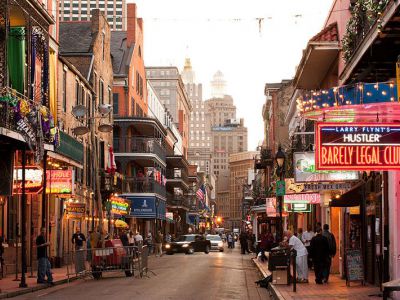
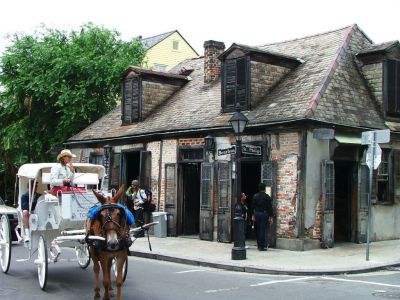
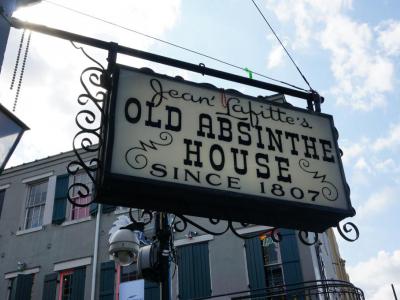
Bourbon Street may be loud enough to make subtlety pack its bags, but it is still part of the Quarter’s personality. Behind the neon and music are Creole residences, old balconies, long-running establishments, and historic drinking spots such as the Old Absinthe House and Lafitte’s Blacksmith Shop Bar. Royal Street, in contrast, offers galleries, boutiques, antique stores, restaurants, and a more polished version of local flavor.
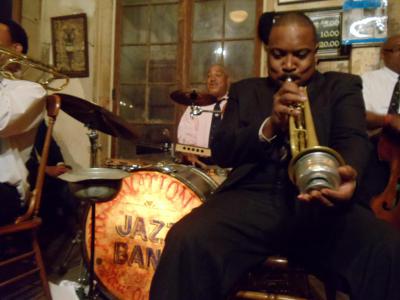
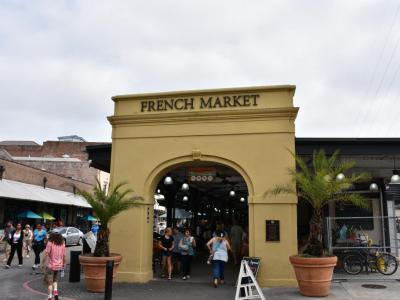
Music remains one of the Quarter’s strongest signatures. Preservation Hall is the place to hear traditional New Orleans jazz in an intimate setting, stripped of glitter and focused on the sound itself. Finally, the French Market brings the walk to a lively close, with food stalls, crafts, souvenirs, and the easy rhythm of people watching.
These are only a few of the places that draw visitors back to the French Quarter year after year. Follow this self-guided walking tour, take your time, listen closely, look up at the balconies, step into the courtyards whenever you can, and let New Orleans reveal itself one story, one song, and one street corner at a time.
On this self-guided walking tour, the French Quarter comes to life through stories, legends, curious facts, and local experiences tied to its distinctive character. Here, the past does not sit quietly behind glass; it spills into sophisticated cafés, bars, hidden courtyards, antique shopfronts, and street corners.
Jackson Square is one of the essential stops, framed by the elegant Pontalba Buildings, whose ground floors are filled with shops and restaurants. Nearby stands Saint Louis Cathedral, with its Gothic Revival profile rising above the square, while the Cabildo and The Presbytère add layers of political, cultural, and Mardi Gras history. Close by, Café du Monde keeps the city’s coffee-and-beignet ritual alive with powdered sugar, chicory coffee, and a steady flow of visitors.
The Quarter also rewards those who look beyond its most photographed corners. The 1850 House offers a glimpse into domestic life in the antebellum era, while the New Orleans Pharmacy Museum recalls the strange, fascinating world of 19th-century medicine. The Hermann-Grima House preserves the setting of a prosperous Creole household, complete with courtyard life and period interiors. For a darker and more mysterious thread, the Historic Voodoo Museum explores one of the city’s most misunderstood traditions.
Bourbon Street may be loud enough to make subtlety pack its bags, but it is still part of the Quarter’s personality. Behind the neon and music are Creole residences, old balconies, long-running establishments, and historic drinking spots such as the Old Absinthe House and Lafitte’s Blacksmith Shop Bar. Royal Street, in contrast, offers galleries, boutiques, antique stores, restaurants, and a more polished version of local flavor.
Music remains one of the Quarter’s strongest signatures. Preservation Hall is the place to hear traditional New Orleans jazz in an intimate setting, stripped of glitter and focused on the sound itself. Finally, the French Market brings the walk to a lively close, with food stalls, crafts, souvenirs, and the easy rhythm of people watching.
These are only a few of the places that draw visitors back to the French Quarter year after year. Follow this self-guided walking tour, take your time, listen closely, look up at the balconies, step into the courtyards whenever you can, and let New Orleans reveal itself one story, one song, and one street corner at a time.
How it works: Download the app "GPSmyCity: Walks in 1K+ Cities" from Apple App Store or Google Play Store to your mobile phone or tablet. The app turns your mobile device into a personal tour guide and its built-in GPS navigation functions guide you from one tour stop to next. The app works offline, so no data plan is needed when traveling abroad.
Download The GPSmyCity App



French Quarter Walking Tour Map
Guide Name: French Quarter Walking Tour
Guide Location: USA » New Orleans (See other walking tours in New Orleans)
Guide Type: Self-guided Walking Tour (Sightseeing)
Tour Duration: 2 Hour(s)
Travel Distance: 3.2 Km or 2 Miles
Guide Location: USA » New Orleans (See other walking tours in New Orleans)
Guide Type: Self-guided Walking Tour (Sightseeing)
Tour Duration: 2 Hour(s)
Travel Distance: 3.2 Km or 2 Miles
Sights Featured in This Walk
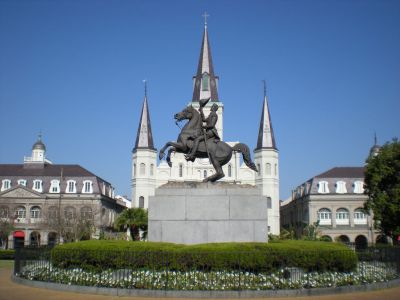
1) Jackson Square (must see)
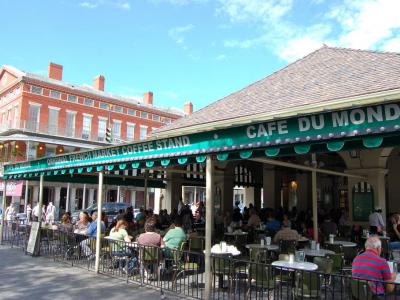
2) Cafe du Monde (must see)


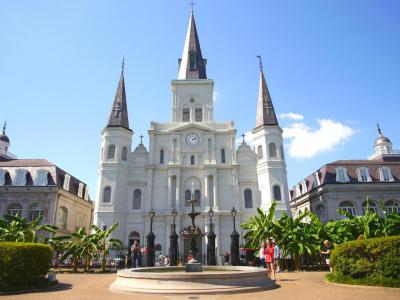
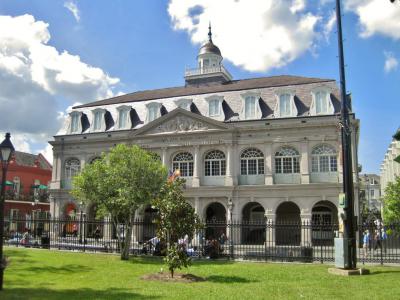


11) Preservation Hall (must see)

15) French Market (must see)
Walking Tours in New Orleans, Louisiana

Create Your Own Walk in New Orleans
Creating your own self-guided walk in New Orleans is easy and fun. Choose the city attractions that you want to see and a walk route map will be created just for you. You can even set your hotel as the start point of the walk.

African American Heritage Walking Tour
For over 300 years, the African-American community has played an intrinsic role in creating authentic New Orleans that everyone loves today. The bedrock of the city's life is built on the African-American experience, a heritage both proud and tragic, yet strong enough to have preserved throughout centuries the many aspects of African culture, influencing everything from religion to vibrant... view more
Tour Duration: 2 Hour(s)
Travel Distance: 3.6 Km or 2.2 Miles
Tour Duration: 2 Hour(s)
Travel Distance: 3.6 Km or 2.2 Miles
Garden District Walking Tour
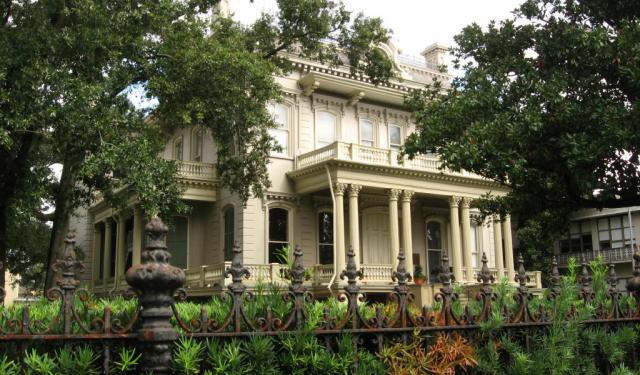
It may come as a surprise, but New Orleans’ Garden District is not particularly famous for its gardens. The real stars here are the houses: grand, confident, and clearly aware that they look good from every angle. Developed in the 19th century as a prestigious residential neighborhood for wealthy newcomers, the district became one of the best-preserved collections of historic mansions in the... view more
Tour Duration: 1 Hour(s)
Travel Distance: 1.9 Km or 1.2 Miles
Tour Duration: 1 Hour(s)
Travel Distance: 1.9 Km or 1.2 Miles

Top Religious Sites Walking Tour
New Orleans has some of the oldest and most beautiful churches in Louisiana. Some of them, like the St. Louis Cathedral, have become iconic symbols of the city, while others are considered to provide "fresh air" to the busy business quarters.
The churches on this walking tour combine different architectural styles, starting with the Spanish Colonial & French Neo-Gothic design of... view more
Tour Duration: 2 Hour(s)
Travel Distance: 4.0 Km or 2.5 Miles
The churches on this walking tour combine different architectural styles, starting with the Spanish Colonial & French Neo-Gothic design of... view more
Tour Duration: 2 Hour(s)
Travel Distance: 4.0 Km or 2.5 Miles
French Quarter Historical Buildings Walking Tour
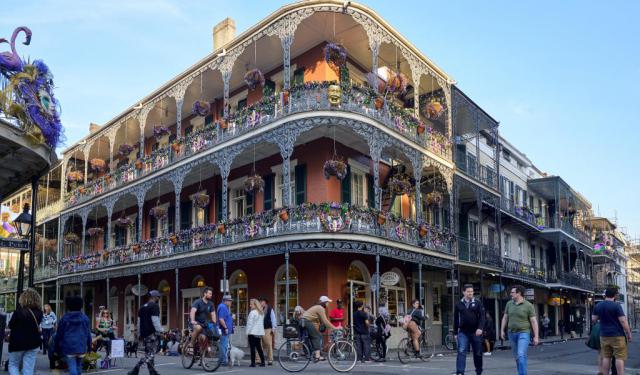
The French Quarter is not shy about showing off. Indeed, in this part of New Orleans, buildings come dressed in wrought iron, old brick, shuttered windows, and balconies as if they were purposely designed for dramatic entrances. Greek Revival, Creole, Spanish Colonial, American Colonial, and Victorian styles all turn up here, sometimes on the same stroll, producing the impression that the... view more
Tour Duration: 2 Hour(s)
Travel Distance: 2.3 Km or 1.4 Miles
Tour Duration: 2 Hour(s)
Travel Distance: 2.3 Km or 1.4 Miles

Voodoo Tour
Voodoo is an ancient ritualistic practice brought by enslaved West Africans onto the American soil upon their arrival in the 18th century. This form of religion was most prominent in New Orleans from the 1820s through the 1860s, when it was introduced by the “Voodoo Queens”. Of these, Marie Laveau became more prominent as she overthrew other queens to become the sole oracle.
Your best... view more
Tour Duration: 1 Hour(s)
Travel Distance: 2.6 Km or 1.6 Miles
Your best... view more
Tour Duration: 1 Hour(s)
Travel Distance: 2.6 Km or 1.6 Miles
The Most Popular Cities
/ view all