


Audio Guide: Dublin Introduction Walking Tour (Self Guided), Dublin
The Irish capital, Dublin, is a city where history has a pint in one hand and a smartphone in the other. Sitting snugly on Ireland’s east coast, straddling the River Liffey like it owns the place, Dublin is a heady mix of medieval charm, Georgian swagger, and modern-day buzz. The name itself, Dubh Linn (the Celtic expression for “black pool”) sounds mysterious enough - and yes, it refers to an actual tidal pool where the River Poddle once got dramatic, entering the Liffey.
Dublin's story kicks off in 988 with some Vikings dropping anchor and setting up a camp - though, truth be told, some early Christian settlers had already beaten them to it. The Norse stuck around, dodging the occasional angry native tribesmen, until the Normans crash-landed in 1169 and started a new chapter, with swords and “planning permissions.” Later, in the Tudor era, Queen Elizabeth I decided Dublin could use a little higher education - as long as it was Protestant. Thus, Trinity College was born in 1592, and it’s still showing off its fancy books today.
By the 1700s, Dublin hit the big time - second largest city of the British Empire, no less. Many of the buildings we now Instagram were built during this boom: Temple Bar, Grafton Street, all the hits. But then came the 19th century, when Dublin, following the Acts of Union, was politely told to hand its political power over to London. Subsequent decades brought decline, rebellion, and an awful lot of destruction after the Easter Rising, the War of Independence, and the Civil War that followed.
These days, Dublin is back on its feet and dancing. Trinity College still wows with the Book of Kells, while the Irish Whiskey Museum keeps the spirits high. O’Neill’s Pub & Kitchen is just around the corner if you need a feed or a fiddle tune.
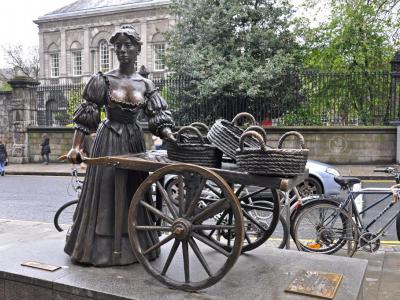
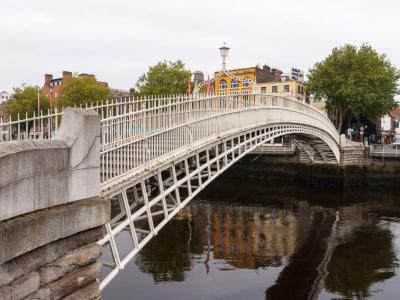
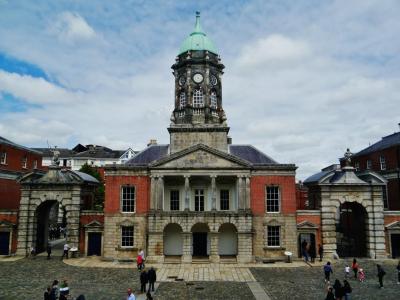
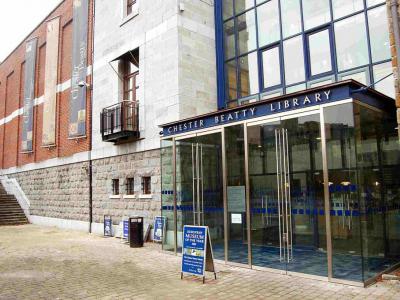
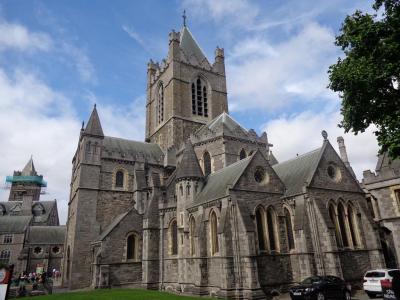
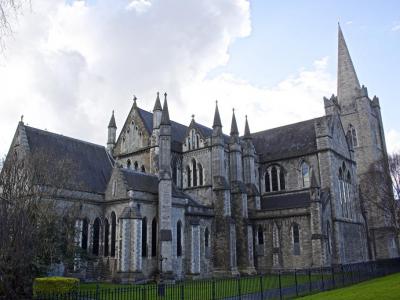
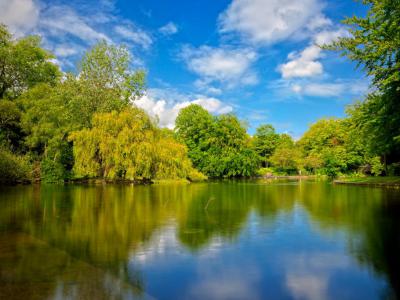
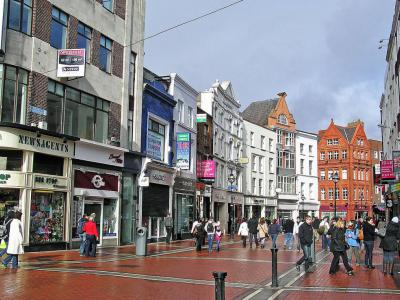
Take a selfie with the Molly Malone statue, wander over the elegant Ha’penny Bridge, then dive into the cobbled chaos of Temple Bar. From the grandeur of Dublin Castle to the global treasures at the Chester Beatty Library, there's no shortage of cultural sparkle. Cathedrals? There are two - Christ Church and St. Patrick’s - both Gothic, both grand. Add Dublinia for a Viking twist, and St. Stephen’s Green for a calm exhale before tackling the shops and buskers of Grafton Street.
So lace up, charge your phone, and let Dublin charm you - one story, statue, and cheeky street musician at a time...
Dublin's story kicks off in 988 with some Vikings dropping anchor and setting up a camp - though, truth be told, some early Christian settlers had already beaten them to it. The Norse stuck around, dodging the occasional angry native tribesmen, until the Normans crash-landed in 1169 and started a new chapter, with swords and “planning permissions.” Later, in the Tudor era, Queen Elizabeth I decided Dublin could use a little higher education - as long as it was Protestant. Thus, Trinity College was born in 1592, and it’s still showing off its fancy books today.
By the 1700s, Dublin hit the big time - second largest city of the British Empire, no less. Many of the buildings we now Instagram were built during this boom: Temple Bar, Grafton Street, all the hits. But then came the 19th century, when Dublin, following the Acts of Union, was politely told to hand its political power over to London. Subsequent decades brought decline, rebellion, and an awful lot of destruction after the Easter Rising, the War of Independence, and the Civil War that followed.
These days, Dublin is back on its feet and dancing. Trinity College still wows with the Book of Kells, while the Irish Whiskey Museum keeps the spirits high. O’Neill’s Pub & Kitchen is just around the corner if you need a feed or a fiddle tune.
Take a selfie with the Molly Malone statue, wander over the elegant Ha’penny Bridge, then dive into the cobbled chaos of Temple Bar. From the grandeur of Dublin Castle to the global treasures at the Chester Beatty Library, there's no shortage of cultural sparkle. Cathedrals? There are two - Christ Church and St. Patrick’s - both Gothic, both grand. Add Dublinia for a Viking twist, and St. Stephen’s Green for a calm exhale before tackling the shops and buskers of Grafton Street.
So lace up, charge your phone, and let Dublin charm you - one story, statue, and cheeky street musician at a time...
How it works: Download the app "GPSmyCity: Walks in 1K+ Cities" from Apple App Store or Google Play Store to your mobile phone or tablet. The app turns your mobile device into a personal tour guide. For US$14.99 per year (with a 3-day free trial), you get access to walking tours in 630+ cities worldwide for an entire year. In comparison, a guided tour often costs dozens of dollars per person for a single tour. The app works offline, so no data plan is needed when traveling abroad.
Download The GPSmyCity App



Dublin Introduction Walking Tour Map
Guide Name: Dublin Introduction Walking Tour
Guide Location: Ireland » Dublin (See other walking tours in Dublin)
Guide Type: Self-guided Walking Tour (Sightseeing)
Tour Duration: 2 Hour(s)
Travel Distance: 3.8 Km or 2.4 Miles
Guide Location: Ireland » Dublin (See other walking tours in Dublin)
Guide Type: Self-guided Walking Tour (Sightseeing)
Tour Duration: 2 Hour(s)
Travel Distance: 3.8 Km or 2.4 Miles
Sights Featured in This Walk
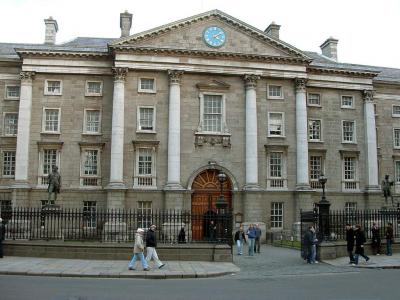
1) Trinity College (must see)


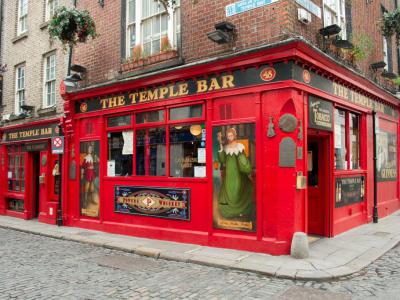
6) Temple Bar District (must see)
7) Dublin Castle (must see)

12) St. Stephen's Green (must see)
13) Grafton Street (must see)
Walking Tours in Dublin, Ireland

Create Your Own Walk in Dublin
Creating your own self-guided walk in Dublin is easy and fun. Choose the city attractions that you want to see and a walk route map will be created just for you. You can even set your hotel as the start point of the walk.

A Walk with Famous Irish Writers
Albeit a small country, Ireland has given the world a plethora of remarkable writers and poets, many of whom were born, lived, and studied in Dublin. Needless to say, as an epicenter of Ireland's literary scene, Dublin boasts a myriad of hallowed locations closely associated with the luminaries of Irish literature, such as James Joyce, William Butler Yeats, Samuel Beckett, and many of their... view more
Tour Duration: 2 Hour(s)
Travel Distance: 4.5 Km or 2.8 Miles
Tour Duration: 2 Hour(s)
Travel Distance: 4.5 Km or 2.8 Miles

Pub Crawl
The Irish in general and Dubliners in particular are known for their passion for whiskey and beer. As you embark upon a beguiling odyssey through the spirited streets of the Irish capital, you can't help noticing the reverberating vibrancy coming from its enchanting pubs. A tapestry of libation-laden lore awaits those who traverse the path of the Dublin pub crawl, guided by the siren call of... view more
Tour Duration: 2 Hour(s)
Travel Distance: 2.4 Km or 1.5 Miles
Tour Duration: 2 Hour(s)
Travel Distance: 2.4 Km or 1.5 Miles

Dublin Literary Pubs
The three Ps of Dublin – the pub, the poet, and the pint – have always distinguished the Irish capital as home to some of the most literary pubs in Europe. Indeed, Dublin's public houses, where writers traditionally sharpened their wit, today encapsulate the enchantment of the written word and play a significant role in preserving and celebrating this legacy.
Among these revered... view more
Tour Duration: 1 Hour(s)
Travel Distance: 2.2 Km or 1.4 Miles
Among these revered... view more
Tour Duration: 1 Hour(s)
Travel Distance: 2.2 Km or 1.4 Miles

A Walk Along Liffey River
The River Liffey - Dublin’s liquid backbone - slices through the Irish capital like a great shimmering bookmark, separating the Northside from the Southside in a civil yet longstanding sibling rivalry. Stretching around 125 kilometers, this body of water is indeed a living archive, a story that never quite ends. Stroll along its banks, and you’ll find yourself time-traveling without the hassle... view more
Tour Duration: 1 Hour(s)
Travel Distance: 2.1 Km or 1.3 Miles
Tour Duration: 1 Hour(s)
Travel Distance: 2.1 Km or 1.3 Miles
Useful Travel Guides for Planning Your Trip

16 Distinctively Irish Things to Buy in Dublin
The birthplace of many artistic talents, such as Jonathan Swift and Oscar Wilde, Dublin is the show-window of Ireland, a small country renowned for its rich cultural scene encompassing music, writing, poetry, dance, craftsmanship and more. The food & drink scene of Dublin (much as the whole of...
The Most Popular Cities
/ view all