Third Reich Munich Walking Tour (Self Guided), Munich
In the first quarter of the 20th century, the capital of Bavaria, Munich, was ill-fated to become the birthplace of the National Socialist German Workers' Party (aka NSDAP or Nazi Party) and the site of its early activities. The city played a significant role in the rise and consolidation of power of the Nazi Party and, ultimately, the establishment of the Third Reich.
The Third Reich went down in history as a totalitarian regime in Germany led by Adolf Hitler, which lasted from 1933 to 1945. During this time, Munich served as the unofficial capital of the Nazi movement (Hauptstadt der Bewegung), housing the Nazi Party headquarters – the so-called "Führer Building" (Führerbau) – and was instrumental in fostering Nazi ideology and propaganda. The term "Führer" referred to Adolf Hitler, who held significant authority within the Nazi Party ranks and eventually became the dictator of Germany.
It was in Munich that Hitler gave his first public speech for the German Workers' Party at the Sterneckerbräu beer hall, in 1919, and made his first attempts at grabbing power. Another popular beer hall, Hofbräuhaus, located in the city center, was an important gathering place for the early Nazi Party members. Here, Adolf Hitler delivered numerous speeches, and the infamous Beer Hall Putsch of 1923 was launched from this location.
The Feldherrnhalle (Field Marshal's Hall) was the site near which the failed Beer Hall Putsch took place. The Nazis turned it into a memorial for their comrades who died during the putsch. After the war, the Feldherrnhalle was restored to its pre-Nazi appearance.
The Altes Rathaus (Old Town Hall), located in Marienplatz, during the Third Reich, was the seat of the local Nazi government and housed various administrative offices.
"Munich's shame" is a term that refers to the city's association with Hitler and the Nazi Party. Whilst highlighting the darker aspects of Munich's history during that period, it serves as a reminder of the extreme atrocities, war, and human rights abuses committed under the Third Reich. And while the places featured in this self-guided walk have historical significance related to the Third Reich, it is important to approach them with sensitivity and respect for the victims of Nazi crimes.
The Third Reich went down in history as a totalitarian regime in Germany led by Adolf Hitler, which lasted from 1933 to 1945. During this time, Munich served as the unofficial capital of the Nazi movement (Hauptstadt der Bewegung), housing the Nazi Party headquarters – the so-called "Führer Building" (Führerbau) – and was instrumental in fostering Nazi ideology and propaganda. The term "Führer" referred to Adolf Hitler, who held significant authority within the Nazi Party ranks and eventually became the dictator of Germany.
It was in Munich that Hitler gave his first public speech for the German Workers' Party at the Sterneckerbräu beer hall, in 1919, and made his first attempts at grabbing power. Another popular beer hall, Hofbräuhaus, located in the city center, was an important gathering place for the early Nazi Party members. Here, Adolf Hitler delivered numerous speeches, and the infamous Beer Hall Putsch of 1923 was launched from this location.
The Feldherrnhalle (Field Marshal's Hall) was the site near which the failed Beer Hall Putsch took place. The Nazis turned it into a memorial for their comrades who died during the putsch. After the war, the Feldherrnhalle was restored to its pre-Nazi appearance.
The Altes Rathaus (Old Town Hall), located in Marienplatz, during the Third Reich, was the seat of the local Nazi government and housed various administrative offices.
"Munich's shame" is a term that refers to the city's association with Hitler and the Nazi Party. Whilst highlighting the darker aspects of Munich's history during that period, it serves as a reminder of the extreme atrocities, war, and human rights abuses committed under the Third Reich. And while the places featured in this self-guided walk have historical significance related to the Third Reich, it is important to approach them with sensitivity and respect for the victims of Nazi crimes.
How it works: Download the app "GPSmyCity: Walks in 1K+ Cities" from Apple App Store or Google Play Store to your mobile phone or tablet. The app turns your mobile device into a personal tour guide and its built-in GPS navigation functions guide you from one tour stop to next. The app works offline, so no data plan is needed when traveling abroad.
Download The GPSmyCity App



Third Reich Munich Walking Tour Map
Guide Name: Third Reich Munich Walking Tour
Guide Location: Germany » Munich (See other walking tours in Munich)
Guide Type: Self-guided Walking Tour (Sightseeing)
# of Attractions: 6
Tour Duration: 2 Hour(s)
Travel Distance: 3.3 Km or 2.1 Miles
Author: clare
Sight(s) Featured in This Guide:
Guide Location: Germany » Munich (See other walking tours in Munich)
Guide Type: Self-guided Walking Tour (Sightseeing)
# of Attractions: 6
Tour Duration: 2 Hour(s)
Travel Distance: 3.3 Km or 2.1 Miles
Author: clare
Sight(s) Featured in This Guide:
- Fuhrerbau (Führer's Building)
- Feldherrnhalle (Field Marshall’s Hall)
- Hofbrauhaus Beer Hall
- Altes Rathaus (Old Town Hall)
- Sterneckerbräu
- Hitler's Early Residence in Munich
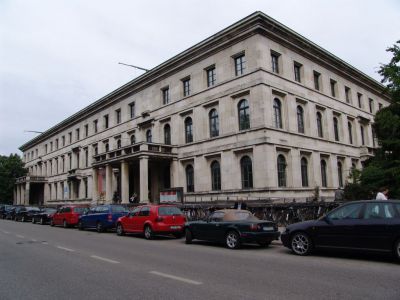
1) Fuhrerbau (Führer's Building)
The Führerbau, which translates to "the Führer's building," is an architectural structure associated with the Nazi party. It is situated in Königsplatz and was constructed between 1933 and 1937, following the design by architect Paul Ludwig Troost. The initial plans for this building were conceived in 1931, and it was completed three years after Troost's demise under the supervision of Leonhard Gall.
During the Nazi era, this edifice served as a prominent structure representing Adolf Hitler. Notably, the Führerbau holds historical significance as the location where Neville Chamberlain and Adolf Hitler signed the Munich Treaty in September 1938. This treaty allowed Germany to annex portions of Czechoslovakia.
From an architectural perspective, Brienner Strasse functions as a symmetry axis, and at Katharina-von-Bora-Strasse 10, there exists a very similar building known as the Administrative Building of the NSDAP (Verwaltungsbau der NSDAP). Following the surrender of Germany, the United States occupation forces utilized both structures as the Central Collecting Place (Zentrale Sammelstelle), responsible for managing the art pieces looted by the Nazis across Europe.
Today, the Führerbau is home to the University of Applied Sciences of Music and Theatre (Hochschule für Musik und Theater), and its congress hall serves as a venue for concerts and events.
During the Nazi era, this edifice served as a prominent structure representing Adolf Hitler. Notably, the Führerbau holds historical significance as the location where Neville Chamberlain and Adolf Hitler signed the Munich Treaty in September 1938. This treaty allowed Germany to annex portions of Czechoslovakia.
From an architectural perspective, Brienner Strasse functions as a symmetry axis, and at Katharina-von-Bora-Strasse 10, there exists a very similar building known as the Administrative Building of the NSDAP (Verwaltungsbau der NSDAP). Following the surrender of Germany, the United States occupation forces utilized both structures as the Central Collecting Place (Zentrale Sammelstelle), responsible for managing the art pieces looted by the Nazis across Europe.
Today, the Führerbau is home to the University of Applied Sciences of Music and Theatre (Hochschule für Musik und Theater), and its congress hall serves as a venue for concerts and events.
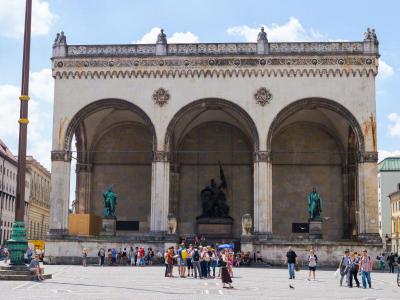
2) Feldherrnhalle (Field Marshall’s Hall)
The Feldherrnhalle, also known as Field Marshal's Hall, is a substantial loggia constructed as a tribute to Bavarian military leaders and soldiers who lost their lives in the Franco-Prussian War. This memorial project was initiated by King Ludwig I of Bavaria and designed by Friedrich von Gartner. Its construction took place from 1841 to 1844 on the location of the former city gate, Schwabinger Tor, situated at the southern terminus of Ludwigstrasse, near the Palais Preysing. The architectural inspiration for this structure was drawn from the Loggia dei Lanzi in Florence.
At the front of the building, there are sizable bronze statues honoring two esteemed Bavarian military figures: Johann Tilly and Karl Philipp von Wrede. These sculptures were crafted by the sculptor Ludwig Schwanthaler. In 1882, another sculpture commemorating the Bavarian army's achievements in the Franco-Prussian War was added, designed by Ferdinand von Miller Jr. and placed in the center of the memorial. As you ascend the steps leading to the monument, you'll notice two lion sculptures, created by Wilhelm Ruemann in 1906. One of these lions, with an open mouth, gazes towards the Residenz Royal Palace, while the other, with a closed mouth, faces the nearby church.
However, the place is perhaps best known for an incident that occurred in 1923, known as the Beer Hall Putsch, when there was a clash between the Bavarian Police and followers of Adolf Hitler. This event led to the arrest of Hitler and his supporters, who would later play significant roles in history.
At the front of the building, there are sizable bronze statues honoring two esteemed Bavarian military figures: Johann Tilly and Karl Philipp von Wrede. These sculptures were crafted by the sculptor Ludwig Schwanthaler. In 1882, another sculpture commemorating the Bavarian army's achievements in the Franco-Prussian War was added, designed by Ferdinand von Miller Jr. and placed in the center of the memorial. As you ascend the steps leading to the monument, you'll notice two lion sculptures, created by Wilhelm Ruemann in 1906. One of these lions, with an open mouth, gazes towards the Residenz Royal Palace, while the other, with a closed mouth, faces the nearby church.
However, the place is perhaps best known for an incident that occurred in 1923, known as the Beer Hall Putsch, when there was a clash between the Bavarian Police and followers of Adolf Hitler. This event led to the arrest of Hitler and his supporters, who would later play significant roles in history.
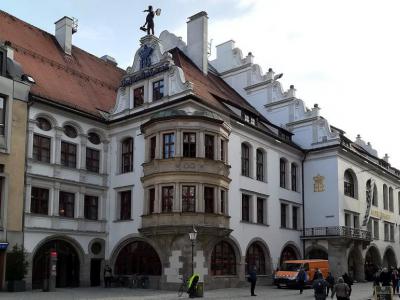
3) Hofbrauhaus Beer Hall (must see)
The Hofbräuhaus is probably the best-known “watering hole” in Munich. Dating all the way back to 1589, this beer hall was founded by the Duke of Bavaria, Wilhelm V, and originally, surprisingly enough, was not open to the public. Luckily for today's tourists and locals, though, in 1828 it finally opened up to the masses. Today, this hospitable spot, thick with traditional atmosphere and friendly vibes, is where you can come to enjoy typical Bavarian food to your heart's content, listen to the Oompah band play loudly on stage, and gulp down the rich Hofbräuhaus beer in large, one-liter steins, which the Germans call a Mass.
The Bavarian Beer Purity Law, passed in 1516, states that only natural ingredients can be used for beer brewing. To this day, this law is still duly adhered to and the beers of Munich, including Hofbräuhaus, are held to that high, delicious standard of beer making.
In case you want to take home one of the authentic huge Hofbräuhaus beer steins, you can find them at the Hofbräuhaus am Platzl gift shop at the cost of 10 to 15 Euros apiece. Just don’t tell any of your German friends that you might be willing to fill it up with something other than the pure, golden Hofbräuhaus beer. Never!!!
The Bavarian Beer Purity Law, passed in 1516, states that only natural ingredients can be used for beer brewing. To this day, this law is still duly adhered to and the beers of Munich, including Hofbräuhaus, are held to that high, delicious standard of beer making.
In case you want to take home one of the authentic huge Hofbräuhaus beer steins, you can find them at the Hofbräuhaus am Platzl gift shop at the cost of 10 to 15 Euros apiece. Just don’t tell any of your German friends that you might be willing to fill it up with something other than the pure, golden Hofbräuhaus beer. Never!!!
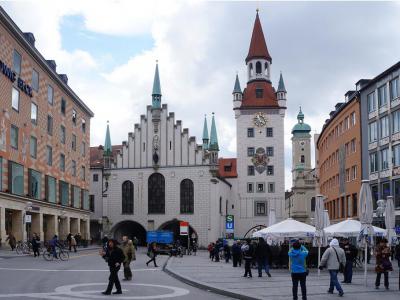
4) Altes Rathaus (Old Town Hall)
Before the construction of the Neues Rathaus in 1874, the Altes Rathaus, also known as the Old Town Hall, used to serve as the seat of the Munich Municipality. It's situated on the eastern side of Marienplatz and has a unique history. Unlike many other buildings that were demolished to make way for the Neues Rathaus, the Old Town Hall was left untouched.
The construction of the Old Town Hall took place between 1470 and 1480, and its design was created by Jörg von Halsbach, a renowned architect responsible for the Frauenkirche in Munich as well. Initially, the building exhibited Late Gothic architectural features, but it underwent several remodeling phases, ultimately adopting a Neo-Gothic style between 1861 and 1864. To accommodate traffic flow, two tunnels were constructed through the building from 1877 to 1934.
During World War II, the Rathaus endured significant damage from bombings, but extensive restoration work was carried out, aiming to restore its 15th-century design.
Today, the Old Town Hall serves as the location for city council offices, certain administrative departments, and even houses a Toy Museum (Spielzeugmuseum) situated in four rooms within its tower. Additionally, visitors can explore a souvenir and gift shop on the first floor, where they can find unique items such as replicas of The Morris Dancers, which are wooden sculptures created by Munich's Erasmus Grasser.
***Third Reich Walk***
This stately complex in the heart of Munich played a key role in the Nazi’s seizure of power. It is here that Joseph Goebbels gave his infamous speech that inspired Kristallnacht, or “the night of broken glass,” on November 9, 1938, a nationwide pogrom that led to the destruction of numerous Jewish businesses and arrest of thousands of Jewish citizens. Kristallnacht is generally considered to be the start of the “Ultimate Solution of the Jewish Question”, i.e. the Holocaust.
Why You Should Visit:
One of the finest historical buildings to see in Marienplatz. Just as the neighboring New Town Hall, it is open to climb upstairs to the top. Inside, the ground floor is just as gorgeous, exactly as one would expect a typical German building to look like.
Tip:
In addition to the Toy Museum, the Altes Rathaus offers yet another bit of fun in the form of the Juliet Capulet Statue, located on the side of the building, a gift from the city of Verona to Munich in the 1970s.
The construction of the Old Town Hall took place between 1470 and 1480, and its design was created by Jörg von Halsbach, a renowned architect responsible for the Frauenkirche in Munich as well. Initially, the building exhibited Late Gothic architectural features, but it underwent several remodeling phases, ultimately adopting a Neo-Gothic style between 1861 and 1864. To accommodate traffic flow, two tunnels were constructed through the building from 1877 to 1934.
During World War II, the Rathaus endured significant damage from bombings, but extensive restoration work was carried out, aiming to restore its 15th-century design.
Today, the Old Town Hall serves as the location for city council offices, certain administrative departments, and even houses a Toy Museum (Spielzeugmuseum) situated in four rooms within its tower. Additionally, visitors can explore a souvenir and gift shop on the first floor, where they can find unique items such as replicas of The Morris Dancers, which are wooden sculptures created by Munich's Erasmus Grasser.
***Third Reich Walk***
This stately complex in the heart of Munich played a key role in the Nazi’s seizure of power. It is here that Joseph Goebbels gave his infamous speech that inspired Kristallnacht, or “the night of broken glass,” on November 9, 1938, a nationwide pogrom that led to the destruction of numerous Jewish businesses and arrest of thousands of Jewish citizens. Kristallnacht is generally considered to be the start of the “Ultimate Solution of the Jewish Question”, i.e. the Holocaust.
Why You Should Visit:
One of the finest historical buildings to see in Marienplatz. Just as the neighboring New Town Hall, it is open to climb upstairs to the top. Inside, the ground floor is just as gorgeous, exactly as one would expect a typical German building to look like.
Tip:
In addition to the Toy Museum, the Altes Rathaus offers yet another bit of fun in the form of the Juliet Capulet Statue, located on the side of the building, a gift from the city of Verona to Munich in the 1970s.
5) Sterneckerbräu
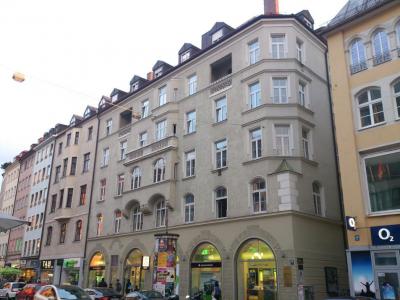
The Sterneckerbräu, located in Munich, was once a prominent brewery. It also served as a gathering place for the initial branch of the German Workers' Party (DAP), much like the Bürgerbräukeller, which played a significant role in the rise of the Nazi movement. The DAP members would convene on a weekly basis in the restaurant situated on the building's first floor. On September 12, 1919, Adolf Hitler attended a DAP meeting and accepted an invitation to join the party, becoming its 55th member.
In October 1919, a branch of the DAP was established in one of the rooms at the Sterneckerbräu. In February 1920, it underwent a name change and became the National Socialist German Workers' Party (NSDAP). Additionally, in 1921, the Bavarian nationalist and royalist league known as "In Treue fest" was founded at the Sterneckerbräu. However, the Nazis banned it on February 2, 1933, only for it to be re-established in 1952.
On November 8, 1933, Hitler inaugurated the Museum of the Nazi Party at the Sterneckerbräu, an establishment that was even mentioned in the Baedeker travel guide. Visitors can still view the original inventory, office furniture, and members' rooms from that time.
Remarkably, the building survived the ravages of World War II. In 1957, the restaurant ceased its operations, and the first floor was repurposed into a commercial space. Today, the building serves both residential and commercial purposes and holds a place on the Bavarian monument list as a registered historical monument.
In October 1919, a branch of the DAP was established in one of the rooms at the Sterneckerbräu. In February 1920, it underwent a name change and became the National Socialist German Workers' Party (NSDAP). Additionally, in 1921, the Bavarian nationalist and royalist league known as "In Treue fest" was founded at the Sterneckerbräu. However, the Nazis banned it on February 2, 1933, only for it to be re-established in 1952.
On November 8, 1933, Hitler inaugurated the Museum of the Nazi Party at the Sterneckerbräu, an establishment that was even mentioned in the Baedeker travel guide. Visitors can still view the original inventory, office furniture, and members' rooms from that time.
Remarkably, the building survived the ravages of World War II. In 1957, the restaurant ceased its operations, and the first floor was repurposed into a commercial space. Today, the building serves both residential and commercial purposes and holds a place on the Bavarian monument list as a registered historical monument.
6) Hitler's Early Residence in Munich
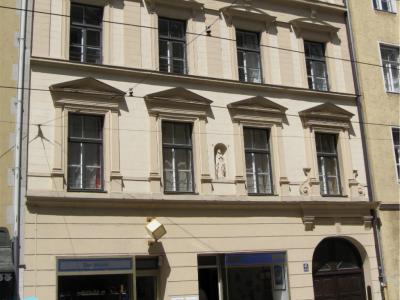
After being discharged from the German Army in March 1920, Hitler returned to Munich and began working full-time for the National Socialist German Workers Party, commonly known as the Nazi Party. Their headquarters were in Munich. Initially, he rented a small bedroom on Thierschstrasse, which he occupied from 1920 to 1929. Later on, he rented an additional room to use as an office. In 1936, the Munich city council installed a plaque on the building, marking the period when Hitler resided there from May 1, 1920, to October 5, 1929. The building still stands today, with Hitler's former room serving as storage space.
In 1929, Hitler moved into a luxurious eight-room apartment on Prinzregentenplatz. This apartment was on the second floor and boasted two kitchens and two bathrooms. Initially, his publisher covered the rent, but a decade later, Hitler personally paid for it in full. Eventually, the entire building came under the ownership of the Nazi Party.
Hitler occasionally used this Munich apartment for significant diplomatic meetings. On September 25, 1937, he held a meeting there with Benito Mussolini, as he attempted to persuade Mussolini to support his plan to annex Austria to Germany. This meeting resulted in the strengthening of their Axis pact. Additionally, on September 30, 1938, Hitler met with British Prime Minister Neville Chamberlain in the same apartment following the signing of the Munich Accords, a significant diplomatic event at the time.
In 1929, Hitler moved into a luxurious eight-room apartment on Prinzregentenplatz. This apartment was on the second floor and boasted two kitchens and two bathrooms. Initially, his publisher covered the rent, but a decade later, Hitler personally paid for it in full. Eventually, the entire building came under the ownership of the Nazi Party.
Hitler occasionally used this Munich apartment for significant diplomatic meetings. On September 25, 1937, he held a meeting there with Benito Mussolini, as he attempted to persuade Mussolini to support his plan to annex Austria to Germany. This meeting resulted in the strengthening of their Axis pact. Additionally, on September 30, 1938, Hitler met with British Prime Minister Neville Chamberlain in the same apartment following the signing of the Munich Accords, a significant diplomatic event at the time.
Walking Tours in Munich, Germany

Create Your Own Walk in Munich
Creating your own self-guided walk in Munich is easy and fun. Choose the city attractions that you want to see and a walk route map will be created just for you. You can even set your hotel as the start point of the walk.
Old Town Walking Tour
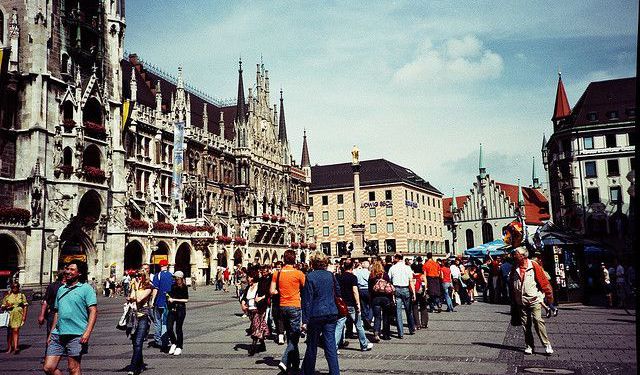
The Old Town of Munich, sprawling on the west bank of the River Isar, is a treasure trove of architectural splendor and cultural heritage. Also known in German as Altstadt, this medieval area forms the historic core and cultural heart of the Bavarian capital. The entire Old Town is listed as a historical monument and is a living museum – “where the past harmonizes with the present in a grand... view more
Tour Duration: 2 Hour(s)
Travel Distance: 2.7 Km or 1.7 Miles
Tour Duration: 2 Hour(s)
Travel Distance: 2.7 Km or 1.7 Miles
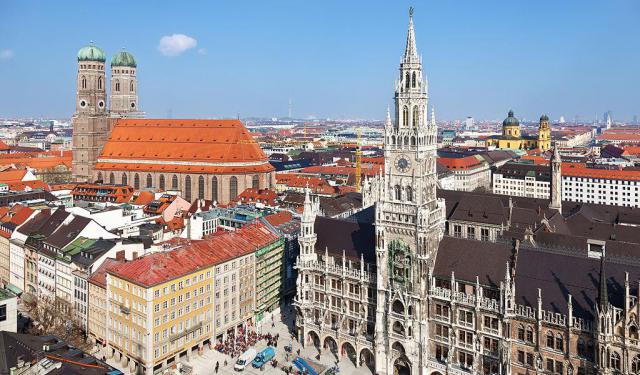
Munich Introduction Walking Tour
Straddling the banks of the River Isar north of the Bavarian Alps, Bavaria’s capital Munich is home to centuries-old buildings and numerous attractions.
The city was first mentioned in 1158. Its name is usually interpreted as the Old/Middle High German term Munichen, which means "by the monks", deriving from the monks of the Benedictine order, who ran a monastery at the place that... view more
Tour Duration: 2 Hour(s)
Travel Distance: 2.5 Km or 1.6 Miles
The city was first mentioned in 1158. Its name is usually interpreted as the Old/Middle High German term Munichen, which means "by the monks", deriving from the monks of the Benedictine order, who ran a monastery at the place that... view more
Tour Duration: 2 Hour(s)
Travel Distance: 2.5 Km or 1.6 Miles
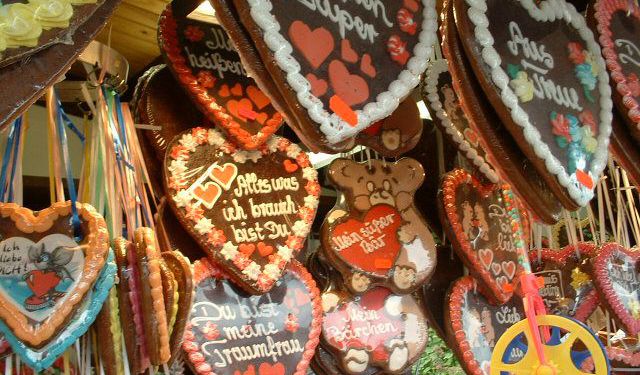
Old Town Souvenir Shops
"Collect moments, not things," wise men say. In reference to travel, this may be interpreted as the prevalence of experiences and memories over material gains. Still, when it comes to travel mementos, albeit material they are, memories and experiences are primarily what these little (or not so little) tokens are all about.
And it would be a pity to leave Munich without bringing home... view more
Tour Duration: 1 Hour(s)
Travel Distance: 1.5 Km or 0.9 Miles
And it would be a pity to leave Munich without bringing home... view more
Tour Duration: 1 Hour(s)
Travel Distance: 1.5 Km or 0.9 Miles
Useful Travel Guides for Planning Your Trip
Top 10 Cafes and Restaurants in Munich
While there are many restaurants and cafes in downtown Munich for a visitor to choose from, by far not all of them are truly worth visiting. Here's the solid list of quality cafes and restaurants that will add greatly to your Munich experience. Each restaurant and cafe featured here offers...
12 German-Made Things to Buy in Munich
The Bavarian capital Munich, much as the whole state of Bavaria, form an inseparable part of the German image, although a very unique part in its difference to the rest of the country, including the language. Bavarian beer occupies an important place in German heritage, from the infamous 1920s Beer...
The Most Popular Cities
/ view all