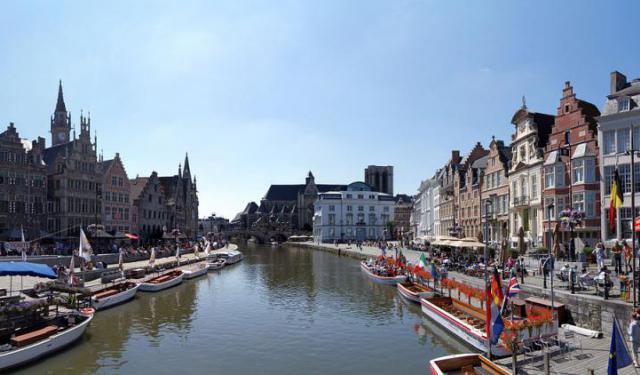


Ghent Introduction Walking Tour (Self Guided), Ghent
Some historians believe "Ghent" comes from the Celtic word, "ganda." "Ganda" meant a confluence, as with two rivers. There are traces of human settlements as far back as the stone age at the confluence of the rivers Scheldt and Leie in Belgium.
With the Frankish invasions at the end of the 4th century AD, the Celtic language was replaced by Old Dutch and this marked the beginning of Ghent. In 650 Saint Amand founded two abbeys in Ghent. They were Saint Peter's and Saint Bavo's. Under the empire of Charlemagne, the city expanded as a religious and commercial center.
The Vikings paid less than cordial visits to the city in 851 and 879, but Ghent survived. By the 11th century it was virtually a city state. By the 13th century Ghent was second in size only to Paris. Wool, fabric and grain had changed the area into a highly developed commercial zone.
In 1453 Ghent was defeated in a rebellion against taxes by Philip the Good of Burgundy. In 1539 Charles V, Holy Roman Emperor, suppressed another tax rebellion. He paraded the nobles of the city wearing nooses. They were thereafter called "Stroppendragers" ("Noose bearers").
The 16th, 17th and 18th centuries brought devastations by Spain, Austria, and France. Finally, after Waterloo, Ghent and Flanders became a part of the United Kingdom of the Netherlands. This period lasted 15 years until the Belgian Revolution in 1830.
Ghent is a center of Belgian industry and a major seaport. Horticulture, textiles, manufacturing and tourism have brought prosperity but Ghent has retained great reminders of the past.
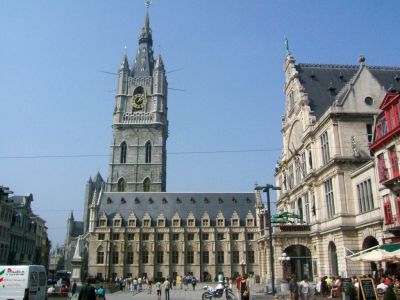
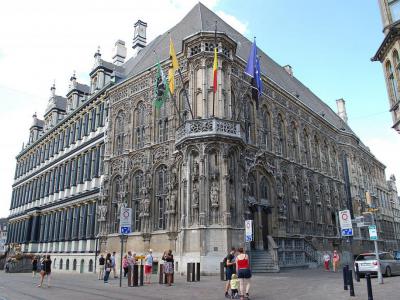
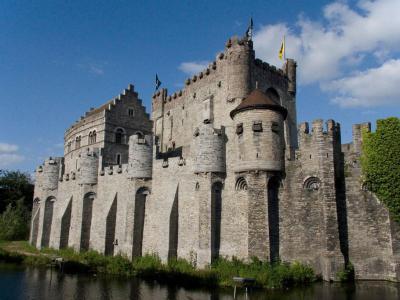
In the center of the city is the 292 foot 14th century Bell tower with a carillon of 52 bells. The Flamboyant Gothic Town Hall (1518-1535) combines Gothic with Renaissance styles. Feudalism is represented in the gloomy castle Gravensteen (1180), one time home to the Counts of Flanders.
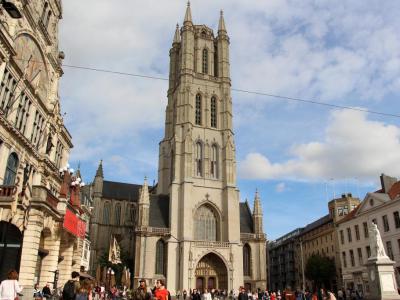
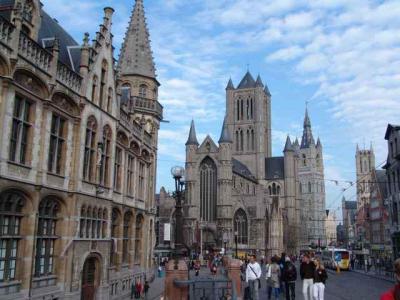
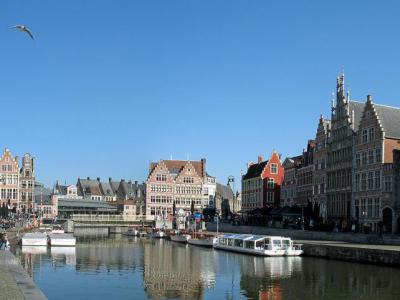
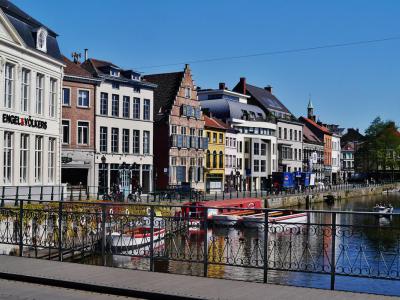
The towers of Gothic Saint Bavo, Saint Nicholas and the Belfry dominate the skyline. Come and walk along the quais of the canalized Leie river and lose yourself among the medieval facades of the ancient guild houses and the incomparable history of Ghent.
With the Frankish invasions at the end of the 4th century AD, the Celtic language was replaced by Old Dutch and this marked the beginning of Ghent. In 650 Saint Amand founded two abbeys in Ghent. They were Saint Peter's and Saint Bavo's. Under the empire of Charlemagne, the city expanded as a religious and commercial center.
The Vikings paid less than cordial visits to the city in 851 and 879, but Ghent survived. By the 11th century it was virtually a city state. By the 13th century Ghent was second in size only to Paris. Wool, fabric and grain had changed the area into a highly developed commercial zone.
In 1453 Ghent was defeated in a rebellion against taxes by Philip the Good of Burgundy. In 1539 Charles V, Holy Roman Emperor, suppressed another tax rebellion. He paraded the nobles of the city wearing nooses. They were thereafter called "Stroppendragers" ("Noose bearers").
The 16th, 17th and 18th centuries brought devastations by Spain, Austria, and France. Finally, after Waterloo, Ghent and Flanders became a part of the United Kingdom of the Netherlands. This period lasted 15 years until the Belgian Revolution in 1830.
Ghent is a center of Belgian industry and a major seaport. Horticulture, textiles, manufacturing and tourism have brought prosperity but Ghent has retained great reminders of the past.
In the center of the city is the 292 foot 14th century Bell tower with a carillon of 52 bells. The Flamboyant Gothic Town Hall (1518-1535) combines Gothic with Renaissance styles. Feudalism is represented in the gloomy castle Gravensteen (1180), one time home to the Counts of Flanders.
The towers of Gothic Saint Bavo, Saint Nicholas and the Belfry dominate the skyline. Come and walk along the quais of the canalized Leie river and lose yourself among the medieval facades of the ancient guild houses and the incomparable history of Ghent.
How it works: Download the app "GPSmyCity: Walks in 1K+ Cities" from Apple App Store or Google Play Store to your mobile phone or tablet. The app turns your mobile device into a personal tour guide. For US$14.99 per year, you get access to walking tours in 630+ cities worldwide. In comparison, a guided tour often costs dozens of dollars per person for a single tour. The app works offline, so no data plan is needed when traveling abroad.
Download The GPSmyCity App



Ghent Introduction Walking Tour Map
Guide Name: Ghent Introduction Walking Tour
Guide Location: Belgium » Ghent (See other walking tours in Ghent)
Guide Type: Self-guided Walking Tour (Sightseeing)
Tour Duration: 2 Hour(s)
Travel Distance: 1.7 Km or 1.1 Miles
Guide Location: Belgium » Ghent (See other walking tours in Ghent)
Guide Type: Self-guided Walking Tour (Sightseeing)
Tour Duration: 2 Hour(s)
Travel Distance: 1.7 Km or 1.1 Miles
Sights Featured in This Walk
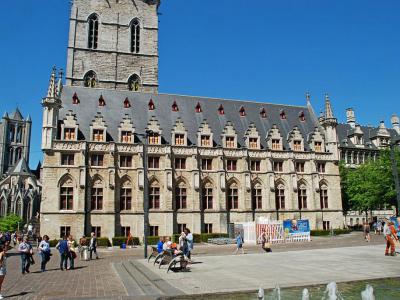
4) Stadhuis (Town Hall) (must see)
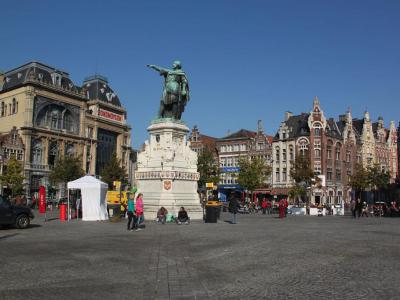
Walking Tours in Ghent, Belgium

Create Your Own Walk in Ghent
Creating your own self-guided walk in Ghent is easy and fun. Choose the city attractions that you want to see and a walk route map will be created just for you. You can even set your hotel as the start point of the walk.
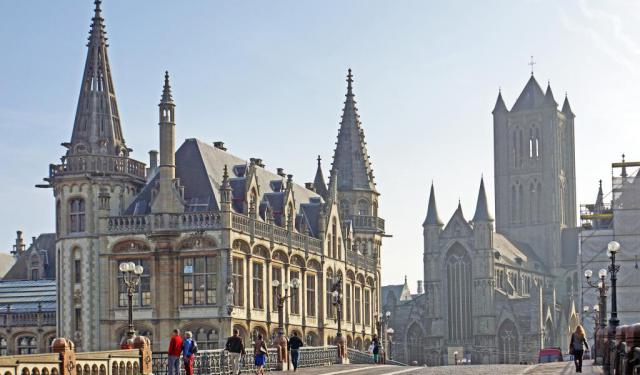
Ghent's Historical Buildings
The medieval city of Ghent is full of wonderful old buildings, some dating back as far as the 12th-13th centuries. Medieval buildings are indeed everywhere here, and if you're interested in the heritage fit to capture you imagination, you will find plenty of it in Ghent’s historic downtown.
And you won’t have to look far for the World Heritage worthy of its name either. The Castle of... view more
Tour Duration: 2 Hour(s)
Travel Distance: 2.8 Km or 1.7 Miles
And you won’t have to look far for the World Heritage worthy of its name either. The Castle of... view more
Tour Duration: 2 Hour(s)
Travel Distance: 2.8 Km or 1.7 Miles
The Most Popular Cities
/ view all