

Audio Guide: Tunis Introduction Walking Tour (Self Guided), Tunis
Born in Tunis in 1332, Arab scholar and historian Ibn Khaldun later looked back at his home city when writing the book “Introduction”, describing Tunis itself as a living urban organism shaped by power, trade and learning.
Tunis, the capital of modern Tunisia, stands at a historical crossroads of the Mediterranean, shaped by more than three millennia. The name Tunis is generally believed to derive from the ancient Berber root “to settle”, possibly referring to an early encampment or stopping place.
Tunis emerged in the shadow of Carthage, founded by Phoenician settlers in the 9th century BC. While Carthage dominated regional politics and trade, Tunis functioned as a modest settlement supporting agriculture and overland routes. After the Roman destruction of Carthage in 146 BC, the region was absorbed into the Roman Empire, and Tunis gradually developed as a provincial town.
The city’s fortunes shifted decisively with the Arab-Muslim expansion in the 7th century AD. Following the decline of Byzantine control, Tunis gained importance due to its inland position, which offered greater protection from naval attacks. In 698, after the final defeat of Byzantine forces in North Africa, Tunis effectively replaced Carthage as the region’s main urban center.
From the 13th century onward, under the Hafsid dynasty, Tunis reached a high point of political and cultural influence. It served as a capital of an independent kingdom and attracted scholars, merchants, and diplomats from across Europe and the Middle East. Ottoman control began in the 16th century, bringing Tunis into a vast imperial network while allowing a degree of local autonomy under the Beys.
In the 19th century, growing European influence culminated in the establishment of a French protectorate in 1881. Colonial rule introduced modern infrastructure and institutions but also provoked resistance and nationalist movements. Tunisia gained independence in 1956, and Tunis became the capital of a sovereign state, continuing to evolve as a political, cultural, and economic center.
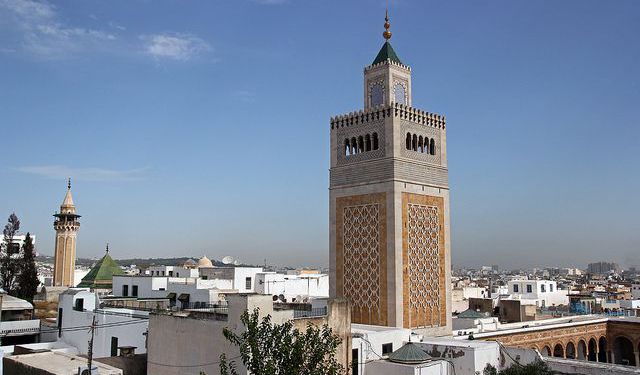
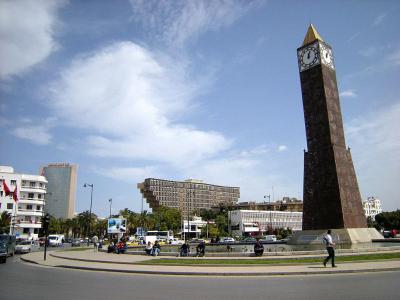
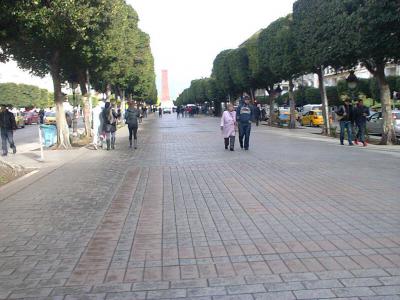
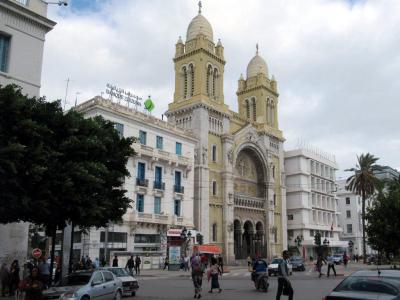
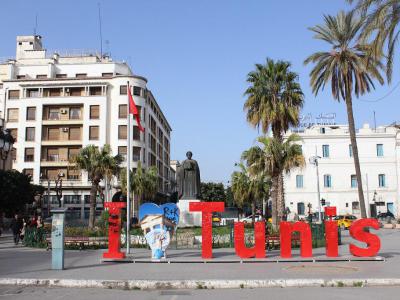
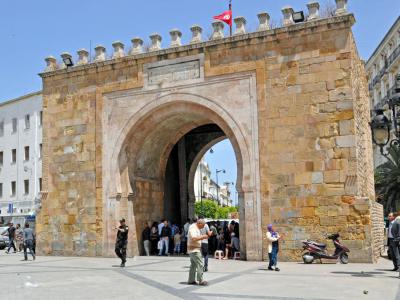
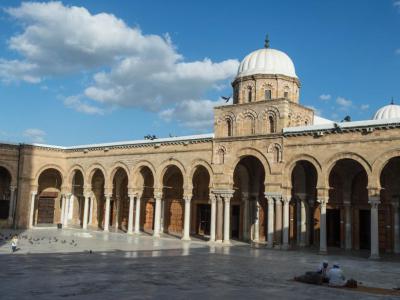
Walking through the city, visitors move between the dense, atmospheric alleys of the old town. Independence Square opens onto cafés and colonial façades, anchored by Saint Vincent de Paul Cathedral. Nearby, the Gate of France marks the threshold between the modern city and the old town. Inside, narrow souks, courtyards, and workshops lead toward the Mosque of Olive, where daily life, prayer, trade, and centuries of history still converge under minarets, balconies, street calls, aromas, and shifting light.
And that is Tunis as Ibn Khaldun understood it: not a frozen relic, but a city in motion. Power shifts, markets pulse, knowledge circulates, and streets absorb the marks of each era without erasing the last.
Tunis, the capital of modern Tunisia, stands at a historical crossroads of the Mediterranean, shaped by more than three millennia. The name Tunis is generally believed to derive from the ancient Berber root “to settle”, possibly referring to an early encampment or stopping place.
Tunis emerged in the shadow of Carthage, founded by Phoenician settlers in the 9th century BC. While Carthage dominated regional politics and trade, Tunis functioned as a modest settlement supporting agriculture and overland routes. After the Roman destruction of Carthage in 146 BC, the region was absorbed into the Roman Empire, and Tunis gradually developed as a provincial town.
The city’s fortunes shifted decisively with the Arab-Muslim expansion in the 7th century AD. Following the decline of Byzantine control, Tunis gained importance due to its inland position, which offered greater protection from naval attacks. In 698, after the final defeat of Byzantine forces in North Africa, Tunis effectively replaced Carthage as the region’s main urban center.
From the 13th century onward, under the Hafsid dynasty, Tunis reached a high point of political and cultural influence. It served as a capital of an independent kingdom and attracted scholars, merchants, and diplomats from across Europe and the Middle East. Ottoman control began in the 16th century, bringing Tunis into a vast imperial network while allowing a degree of local autonomy under the Beys.
In the 19th century, growing European influence culminated in the establishment of a French protectorate in 1881. Colonial rule introduced modern infrastructure and institutions but also provoked resistance and nationalist movements. Tunisia gained independence in 1956, and Tunis became the capital of a sovereign state, continuing to evolve as a political, cultural, and economic center.
Walking through the city, visitors move between the dense, atmospheric alleys of the old town. Independence Square opens onto cafés and colonial façades, anchored by Saint Vincent de Paul Cathedral. Nearby, the Gate of France marks the threshold between the modern city and the old town. Inside, narrow souks, courtyards, and workshops lead toward the Mosque of Olive, where daily life, prayer, trade, and centuries of history still converge under minarets, balconies, street calls, aromas, and shifting light.
And that is Tunis as Ibn Khaldun understood it: not a frozen relic, but a city in motion. Power shifts, markets pulse, knowledge circulates, and streets absorb the marks of each era without erasing the last.
How it works: Download the app "GPSmyCity: Walks in 1K+ Cities" from Apple App Store or Google Play Store to your mobile phone or tablet. The app turns your mobile device into a personal tour guide. For US$14.99 per year (with a 3-day free trial), you get access to walking tours in 630+ cities worldwide for an entire year. In comparison, a guided tour often costs dozens of dollars per person for a single tour. The app works offline, so no data plan is needed when traveling abroad.
Download The GPSmyCity App



Tunis Introduction Walking Tour Map
Guide Name: Tunis Introduction Walking Tour
Guide Location: Tunisia » Tunis (See other walking tours in Tunis)
Guide Type: Self-guided Walking Tour (Sightseeing)
Tour Duration: 1 Hour(s)
Travel Distance: 1.8 Km or 1.1 Miles
Guide Location: Tunisia » Tunis (See other walking tours in Tunis)
Guide Type: Self-guided Walking Tour (Sightseeing)
Tour Duration: 1 Hour(s)
Travel Distance: 1.8 Km or 1.1 Miles
Sights Featured in This Walk
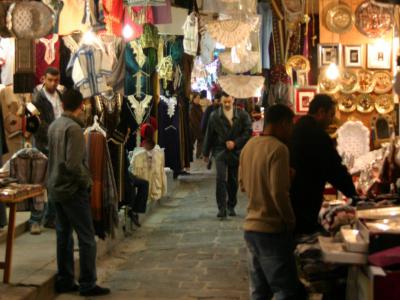
Walking Tours in Tunis, Tunisia

Create Your Own Walk in Tunis
Creating your own self-guided walk in Tunis is easy and fun. Choose the city attractions that you want to see and a walk route map will be created just for you. You can even set your hotel as the start point of the walk.
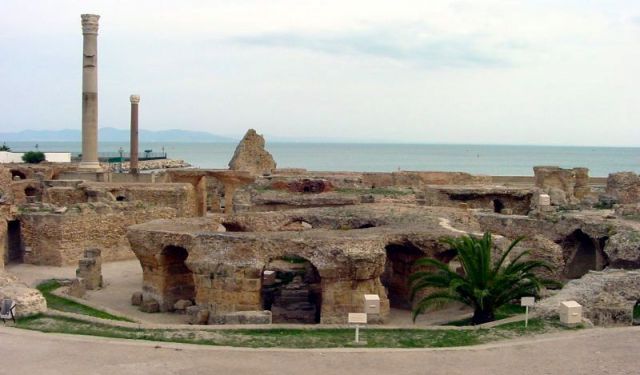
Carthage Walking Tour
The Roman statesman Cato the Elder ended every speech the same way, no matter the subject: “Carthage must be destroyed”. Not because the city was weak, but because it was powerful enough to worry Rome even in silence.
Carthage’s ruins sit on the northeastern edge of modern Tunis, looking out over the Gulf of Tunis. The name Carthage ultimately comes from the Punic word meaning “new... view more
Tour Duration: 2 Hour(s)
Travel Distance: 4.0 Km or 2.5 Miles
Carthage’s ruins sit on the northeastern edge of modern Tunis, looking out over the Gulf of Tunis. The name Carthage ultimately comes from the Punic word meaning “new... view more
Tour Duration: 2 Hour(s)
Travel Distance: 4.0 Km or 2.5 Miles
Useful Travel Guides for Planning Your Trip

Tunis Souvenirs: 15 Authentic Tunisian Products for Avid Traveler
A historic crossroads of many civilizations and influences, - Berber, Spanish, French, - Tunisia is a treasure trove of mementos waiting for a knowledgeable traveler to be picked up. The Medina market of Tunis (the capital city) is one of the best places to shop for local handcrafts. To help...

Tunisian Sweets and Pastries
No Tunisian meal is complete without a lavish dessert at the end. And Tunisians do take their sweets seriously, be it fresh seasonal fruits, cakes, fried almond pastries, ice cream, doughnuts or whatever else. Some of these delights have come from Turkey, brought by soldiers of the Ottoman army;...
The Most Popular Cities
/ view all