

Bosphorus Coast Walking Tour (Self Guided), Istanbul
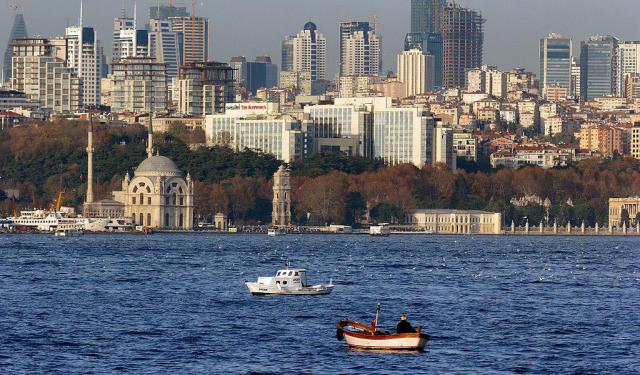
One of the planet's most praised stretches of water, the Bosphorus is a source of great pride for Istanbulites and of admiration for travelers. The 30-km strait dividing Europe and Asia and connecting the Marmara with the Black Sea is one of the city's highlights, having been for all ages the subject of legend and art.
This self-guided walk will take you along the coast so that you can enjoy the beautiful views and admire the city's architecture. Along the way are ancient fortresses, intriguing mosques and Imperial palaces, intermingled with small fishing villages and old wooden 'yalis' (waterside villas), each with a tale of their own.
This self-guided walk will take you along the coast so that you can enjoy the beautiful views and admire the city's architecture. Along the way are ancient fortresses, intriguing mosques and Imperial palaces, intermingled with small fishing villages and old wooden 'yalis' (waterside villas), each with a tale of their own.
How it works: Download the app "GPSmyCity: Walks in 1K+ Cities" from Apple App Store or Google Play Store to your mobile phone or tablet. The app turns your mobile device into a personal tour guide and its built-in GPS navigation functions guide you from one tour stop to next. The app works offline, so no data plan is needed when traveling abroad.
Download The GPSmyCity App



Bosphorus Coast Walking Tour Map
Guide Name: Bosphorus Coast Walking Tour
Guide Location: Turkey » Istanbul (See other walking tours in Istanbul)
Guide Type: Self-guided Walking Tour (Sightseeing)
# of Attractions: 8
Tour Duration: 3 Hour(s)
Travel Distance: 5.9 Km or 3.7 Miles
Author: kane
Sight(s) Featured in This Guide:
Guide Location: Turkey » Istanbul (See other walking tours in Istanbul)
Guide Type: Self-guided Walking Tour (Sightseeing)
# of Attractions: 8
Tour Duration: 3 Hour(s)
Travel Distance: 5.9 Km or 3.7 Miles
Author: kane
Sight(s) Featured in This Guide:
- Galata Tower
- Kilic Ali Pasha Complex
- Tophane-I Amire Culture and Art Center
- Dolmabahce Mosque
- Dolmabahce Clock Tower
- Dolmabahce Palace
- Ciragan Palace
- Ortakoy Mosque (Buyuk Mecidiye Camii)
1) Galata Tower (must see)
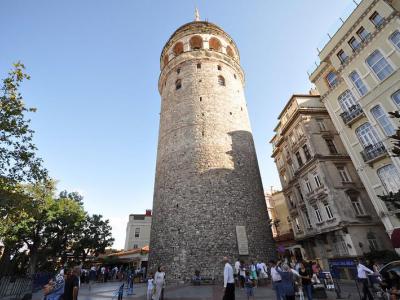
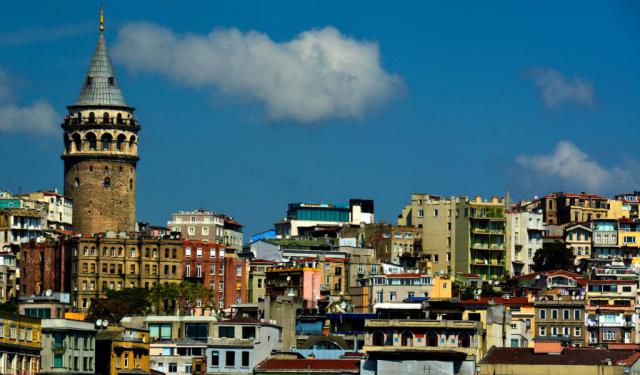
The Galata Tower, one of Istanbul’s most recognizable landmarks, rises above the city as a lasting emblem of power, endurance, and transformation. Erected in 1348 by Genoese merchants, it originally bore the name the “Tower of Christ” and served both as a watchtower and defensive stronghold for the independent Genoese colony of Galata, located across the Golden Horn from Byzantine Constantinople. Standing nine stories tall and approximately 67 meters high, the stone tower was the tallest structure of its time and offered an unmatched panoramic view of the city and sea. Even today, its circular viewing platform provides visitors with a 360-degree perspective of Istanbul’s skyline, encompassing the Bosphorus, Golden Horn, and the city’s historic landmarks.
When the Ottomans conquered Constantinople in 1453, the tower’s purpose evolved to meet new needs. Sultan Mehmed II converted it into a fire watchtower, capitalizing on its strategic vantage point to spot fires that frequently broke out in the city’s wooden neighborhoods. Over the centuries, it also served as a prison for sailors, a warehouse, and briefly as an observatory. These changing uses reflected the Ottoman practice of adapting existing structures to fit new civic or administrative functions, integrating the Genoese-built monument into the life of the empire.
Perhaps the most famous tale linked to the Galata Tower is that of Hezarfen Ahmed Çelebi, a 17th-century Ottoman aviator who reportedly leapt from its summit wearing artificial wings and glided across the Bosphorus. Though likely embellished, the story captures the inventive spirit and imagination long associated with Istanbul’s cultural identity.
Throughout its history, the tower suffered multiple fires, notably in 1794 and 1831, prompting major restorations that eventually gave it its distinctive conical roof. It continued to function as a fire lookout post until the 1960s before being restored once more and opened to the public as a museum and viewpoint.
Today, the Galata Tower remains a highlight for visitors who can ascend by elevator to its observation deck, enjoy a drink at the café, or dine at the restaurant offering evening cabaret shows. Surrounded by lively streets, music shops, and historic charm, the tower encapsulates nearly seven centuries of Istanbul’s layered heritage-where Genoese ambition, Ottoman resilience, and modern vitality meet in a single, soaring monument.
When the Ottomans conquered Constantinople in 1453, the tower’s purpose evolved to meet new needs. Sultan Mehmed II converted it into a fire watchtower, capitalizing on its strategic vantage point to spot fires that frequently broke out in the city’s wooden neighborhoods. Over the centuries, it also served as a prison for sailors, a warehouse, and briefly as an observatory. These changing uses reflected the Ottoman practice of adapting existing structures to fit new civic or administrative functions, integrating the Genoese-built monument into the life of the empire.
Perhaps the most famous tale linked to the Galata Tower is that of Hezarfen Ahmed Çelebi, a 17th-century Ottoman aviator who reportedly leapt from its summit wearing artificial wings and glided across the Bosphorus. Though likely embellished, the story captures the inventive spirit and imagination long associated with Istanbul’s cultural identity.
Throughout its history, the tower suffered multiple fires, notably in 1794 and 1831, prompting major restorations that eventually gave it its distinctive conical roof. It continued to function as a fire lookout post until the 1960s before being restored once more and opened to the public as a museum and viewpoint.
Today, the Galata Tower remains a highlight for visitors who can ascend by elevator to its observation deck, enjoy a drink at the café, or dine at the restaurant offering evening cabaret shows. Surrounded by lively streets, music shops, and historic charm, the tower encapsulates nearly seven centuries of Istanbul’s layered heritage-where Genoese ambition, Ottoman resilience, and modern vitality meet in a single, soaring monument.

2) Kilic Ali Pasha Complex
Consisting of a mosque, a madrassah (Islamic school), a hammam (Turkish bath), a türbe (tomb), and a fountain, this vast complex was designed and built between 1580-87 by celebrated architect Mimar Sinan, who at the time was in his nineties.
The complex is named after Italian-born Kılıç Ali Pasha (Ali the Sword), who, after being pressed into service as a galley-rower in the mid-16th century, rose through the ranks of the Ottoman navy to become Grand Admiral of the Ottoman Empire. Like other Grand Admirals, he built his mosque complex in the area of the Ottoman naval docks and arsenal known as Tophane-i Amire, the surviving 15th-century portion of which is right across the street. The mosque itself was designed as – quite obviously, despite some slight differences – almost a scaled-down replica of the Ayasofya (Hagia Sofia). It's a wonderful place to visit; much less crowded, yet as impressive as other famous mosques – so if you have limited time and want to see one of Istanbul's houses of worship, then this would be a good choice.
A 21st-century update on the Turkish bath, the Kılıç Ali Paşa Hamamı (8am–11pm) is housed in a very clean historic building, with nice staff that speaks fairly good English and is very accommodating. The scrub and wash down is completely relaxing and the massage afterward is a great way to finish the experience. As in other hammams, gender-segregation applies (i.e. men are not allowed before 4pm), but regardless of gender, think about making a reservation through their website.
The complex is named after Italian-born Kılıç Ali Pasha (Ali the Sword), who, after being pressed into service as a galley-rower in the mid-16th century, rose through the ranks of the Ottoman navy to become Grand Admiral of the Ottoman Empire. Like other Grand Admirals, he built his mosque complex in the area of the Ottoman naval docks and arsenal known as Tophane-i Amire, the surviving 15th-century portion of which is right across the street. The mosque itself was designed as – quite obviously, despite some slight differences – almost a scaled-down replica of the Ayasofya (Hagia Sofia). It's a wonderful place to visit; much less crowded, yet as impressive as other famous mosques – so if you have limited time and want to see one of Istanbul's houses of worship, then this would be a good choice.
A 21st-century update on the Turkish bath, the Kılıç Ali Paşa Hamamı (8am–11pm) is housed in a very clean historic building, with nice staff that speaks fairly good English and is very accommodating. The scrub and wash down is completely relaxing and the massage afterward is a great way to finish the experience. As in other hammams, gender-segregation applies (i.e. men are not allowed before 4pm), but regardless of gender, think about making a reservation through their website.
3) Tophane-I Amire Culture and Art Center
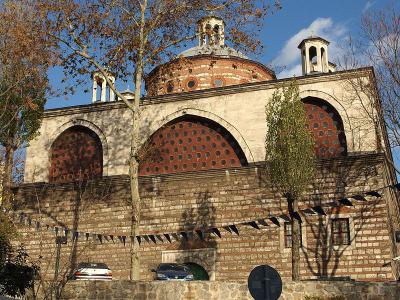
Although architecturally this fine structure resembles a mosque, it has nothing to do with religion, having been originally commissioned by Sultan Mehmed the Conqueror to manufacture artillery equipment for the Ottoman army – cannons and cannonballs, more specifically. As time went by, it became a center of the arms industry and trade in the Empire, and for a period in the 1900s, was used as an educational center. In 1958 it became the home of the Military Museum, and in 1992, it was turned over to the Mimar Sinan University of Fine Arts.
Following restoration, the very historic building now hosts important contemporary art exhibitions in three different exhibition halls, which you can easily visit free of charge. While exploring the building's architecture, you may be reminded of some of Mimar Sinan's mosques whose domes are interrupted by rows of windows. Symmetrical, well balanced, harmonious and elegant, the structure itself is a real masterpiece.
Following restoration, the very historic building now hosts important contemporary art exhibitions in three different exhibition halls, which you can easily visit free of charge. While exploring the building's architecture, you may be reminded of some of Mimar Sinan's mosques whose domes are interrupted by rows of windows. Symmetrical, well balanced, harmonious and elegant, the structure itself is a real masterpiece.
4) Dolmabahce Mosque
The Dolmabahçe Mosque in Istanbul's Beyoğlu area is a prime example of Ottoman design, complementing the nearby historical Dolmabahçe Palace. It was started in 1853 at the request of Queen Mother Bezmialem Valide Sultan, aiming to showcase the impressive architectural skills of the Ottoman era and to provide a place for worship. The design was the work of Garabet Balyan, who used a mix of Baroque, Rococo, and Empire styles to create something truly special. Unfortunately, the project faced a setback when Queen Bezmi passed away, leading her son, Sultan Abdülmecid, to finish the mosque in 1855.
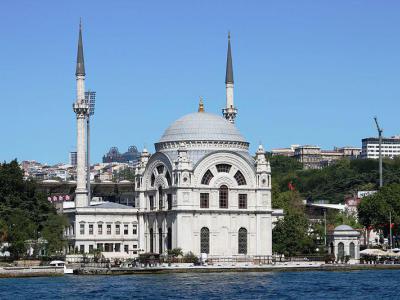
Its prime location by the Bosphorus makes the Dolmabahçe Mosque a great spot for views, adding to the experience of those who visit. It's easily recognized by its large dome and two tall minarets that stand symmetrically, making it a notable feature against the city's skyline. The outside of the mosque is covered with many glass windows, which let in plenty of light and show off the size and design of the building.
The mosque's exterior clearly exhibits Baroque style. But it's the inside that really draws people in. The walls are decorated with beautiful Arabic calligraphy that includes important Islamic phrases, set against a colorful backdrop. The mosque's interior, adorned with intricate gold designs, floral patterns on the ceiling, and a captivating chandelier, is simply breathtaking. The floor is marble and covered with carpets for prayer, adding to the mosque's serene atmosphere.
In a twist of history, the mosque was used as the Naval Museum from 1956 to 1960, which was a departure from its original religious function, before it went back to being a mosque in 1967. Recent changes, like the expansion of nearby roads, have led to the loss of its original courtyard and sebil, altering its historical look slightly. Despite these changes, the Dolmabahçe Mosque continues to be a standout piece of Ottoman architecture and a place of spiritual importance, attracting visitors and worshippers with its history and beauty.
Tip:
The entrance is not charged for, but make sure not to step on the carpet with shoes on!
Its prime location by the Bosphorus makes the Dolmabahçe Mosque a great spot for views, adding to the experience of those who visit. It's easily recognized by its large dome and two tall minarets that stand symmetrically, making it a notable feature against the city's skyline. The outside of the mosque is covered with many glass windows, which let in plenty of light and show off the size and design of the building.
The mosque's exterior clearly exhibits Baroque style. But it's the inside that really draws people in. The walls are decorated with beautiful Arabic calligraphy that includes important Islamic phrases, set against a colorful backdrop. The mosque's interior, adorned with intricate gold designs, floral patterns on the ceiling, and a captivating chandelier, is simply breathtaking. The floor is marble and covered with carpets for prayer, adding to the mosque's serene atmosphere.
In a twist of history, the mosque was used as the Naval Museum from 1956 to 1960, which was a departure from its original religious function, before it went back to being a mosque in 1967. Recent changes, like the expansion of nearby roads, have led to the loss of its original courtyard and sebil, altering its historical look slightly. Despite these changes, the Dolmabahçe Mosque continues to be a standout piece of Ottoman architecture and a place of spiritual importance, attracting visitors and worshippers with its history and beauty.
Tip:
The entrance is not charged for, but make sure not to step on the carpet with shoes on!
5) Dolmabahce Clock Tower
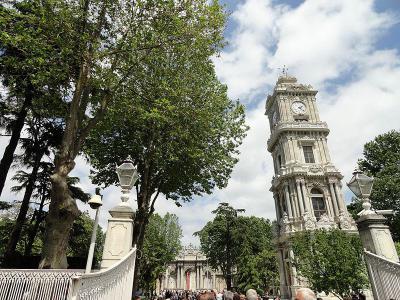
Right across the Treasury Gate of the Dolmabahçe Palace stands a beautiful four-sided clocktower built by Sultan Abdul Hamid II shortly after the palace was completed. The Sultan built clocktowers in many cities for his citizens but as the bells chimed every hour and reminded people of churches, they initially resented them. Their perception changed only upon realizing how helpful these clocks were in organizing their lives.
The tower itself is four floors high. Each story has a different size, embellishment and design, resulting in an interestingly Ottoman Neo-Baroque. Looking closely, you will notice eastern numerals on the faces of the clock and the tughra (calligraphic monogram) of the Sultan on two sides. The Ottomans had a fascination with clocks and here, too, the Sultan got a top-quality French clock installed by the court clock master, Johann Mayer.
Tip:
There is a café in the Clock Tower, and toilets near both entrances. Access inside is only granted if you pay the Palace ticket.
The tower itself is four floors high. Each story has a different size, embellishment and design, resulting in an interestingly Ottoman Neo-Baroque. Looking closely, you will notice eastern numerals on the faces of the clock and the tughra (calligraphic monogram) of the Sultan on two sides. The Ottomans had a fascination with clocks and here, too, the Sultan got a top-quality French clock installed by the court clock master, Johann Mayer.
Tip:
There is a café in the Clock Tower, and toilets near both entrances. Access inside is only granted if you pay the Palace ticket.
6) Dolmabahce Palace (must see)
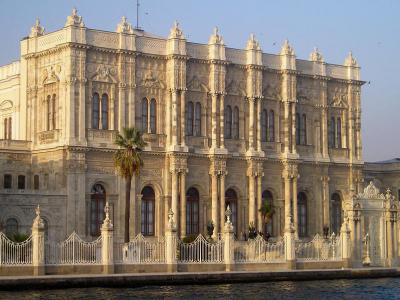
The Ottoman sultans shifted from Topkapi Palace to the newly built Dolmabahce in the 1850s. Designed by the renowned Armenian architect Garabet Balyan, it is the largest and most extravagant of all the palaces on the Bosphorus – especially the Ceremonial Hall with its famous Bohemian crystal chandelier glowing with 750 lamps, gifted by Queen Victoria.
Sultan Abdülmecid and his family clearly wanted a residence comparable to those of his contemporary European monarchs. On this note, it is quite evident that not only were European luxury goods desirable from an aesthetic viewpoint, but also from a symbolic one. The palace not only makes use of European goods but also of European technology to indicate that the Ottoman Empire has not been outdistanced by Europe.
Guided tours are broadly divided into two sections: the public and the private (known as the Selamlik and the Harem, respectively), access to which is given by separate tickets. Interiors are fairly well-preserved and many of the personal belongings of the Sultans and their families on display. Unfortunately, photography is not allowed inside.
Outside, there is a small, but attractive garden around the buildings, with magnificent magnolias, little water-lily ponds, and excellent views over the Bosphorus.
Tip:
Going early is highly encouraged – you'll have entire rooms all to yourself!
The audio guide is a must if you want to get into the cultural benefit of the visit.
Consider taking a rest at the small outdoor cafe in-between visiting the Selamlik and the Harem.
Several good restaurants are nearby on a popular street nearby (Şair Nedim Cd.) that you can walk to in five minutes.
Sultan Abdülmecid and his family clearly wanted a residence comparable to those of his contemporary European monarchs. On this note, it is quite evident that not only were European luxury goods desirable from an aesthetic viewpoint, but also from a symbolic one. The palace not only makes use of European goods but also of European technology to indicate that the Ottoman Empire has not been outdistanced by Europe.
Guided tours are broadly divided into two sections: the public and the private (known as the Selamlik and the Harem, respectively), access to which is given by separate tickets. Interiors are fairly well-preserved and many of the personal belongings of the Sultans and their families on display. Unfortunately, photography is not allowed inside.
Outside, there is a small, but attractive garden around the buildings, with magnificent magnolias, little water-lily ponds, and excellent views over the Bosphorus.
Tip:
Going early is highly encouraged – you'll have entire rooms all to yourself!
The audio guide is a must if you want to get into the cultural benefit of the visit.
Consider taking a rest at the small outdoor cafe in-between visiting the Selamlik and the Harem.
Several good restaurants are nearby on a popular street nearby (Şair Nedim Cd.) that you can walk to in five minutes.

7) Ciragan Palace
This former Ottoman palace located on the European shore of the Bosporus, between Beşiktaş and Ortaköy in Istanbul, was commissioned by Sultan Abdülâziz between 1863-67, during a period in which all Ottoman sultans built their own palaces rather than using those of their ancestors; Çırağan is the last example of this tradition. The inner walls and the roof were made of wood, the outer walls of colorful marble. A very high garden wall protects the palace from the outer world, and a beautiful marble bridge connects it to the Yıldız Palace on the hill behind.
During the Second Constitutional Monarchy, Sultan Mehmet V Reşat allowed the parliament to hold their meetings here. Only two months after, on January 19, 1910, a great fire destroyed the building, leaving only the outer walls intact. Called "Şeref Stadı", for many years it served as a football stadium for the club Beşiktaş J.K..
In 1989, the ruins were bought by a Japanese corporation, which restored the palace and added a modern hotel complex next to it. Today, it serves as luxury suites for the 5-star Kempinski hotel along with two of the city's best restaurants. The Sultan's Suite, billed at US$35,419 per night, was ranked #14 on World's 15 most expensive hotel suites compiled by in 2012.
During the Second Constitutional Monarchy, Sultan Mehmet V Reşat allowed the parliament to hold their meetings here. Only two months after, on January 19, 1910, a great fire destroyed the building, leaving only the outer walls intact. Called "Şeref Stadı", for many years it served as a football stadium for the club Beşiktaş J.K..
In 1989, the ruins were bought by a Japanese corporation, which restored the palace and added a modern hotel complex next to it. Today, it serves as luxury suites for the 5-star Kempinski hotel along with two of the city's best restaurants. The Sultan's Suite, billed at US$35,419 per night, was ranked #14 on World's 15 most expensive hotel suites compiled by in 2012.
8) Ortakoy Mosque (Buyuk Mecidiye Camii)
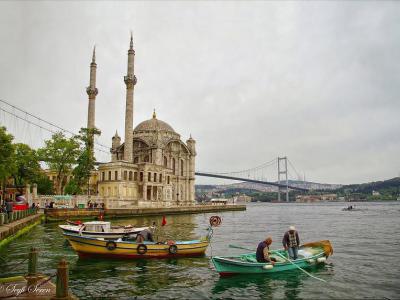
Ideally perched on the waters of the Bosphorus Strait, the "Grand Imperial Mosque" (Buyuk Mecidiye Camii) is actually rather "pint-sized" as compared to other mosques, but has been built with huge windows to illuminate its understated elegance. Now simply referred to as the Ortaköy Mosque, it was built in 1854 by Sultan Abdülmecid, who employed the talents of the same accomplished team of architects behind the Dolmabahçe Palace and many other buildings in and around Istanbul. The architecture is quite unique – a skillful blend of Ottoman and European Neo-Baroque influences, breaking away from the traditional Ottoman multi-domed style.
The landscape is breathtaking and surrounded by countless waterfront cafés, restaurants and clubs. Just in front of the mosque, a viewing platform offers views of the Bosphorus Bridge – the first to connect Asia to Europe; an enchanting place to smoke a hookah, play tavla (backgammon) and just enjoy the view and the incessant maritime traffic.
Tip:
Don't miss the collection of small boutiques scattered in the vicinity of the mosque, selling everything from siphoners to blue beads to home accessories and ladies' jewelry. Quite a few wool-combers' shops around, too!
The landscape is breathtaking and surrounded by countless waterfront cafés, restaurants and clubs. Just in front of the mosque, a viewing platform offers views of the Bosphorus Bridge – the first to connect Asia to Europe; an enchanting place to smoke a hookah, play tavla (backgammon) and just enjoy the view and the incessant maritime traffic.
Tip:
Don't miss the collection of small boutiques scattered in the vicinity of the mosque, selling everything from siphoners to blue beads to home accessories and ladies' jewelry. Quite a few wool-combers' shops around, too!
Walking Tours in Istanbul, Turkey

Create Your Own Walk in Istanbul
Creating your own self-guided walk in Istanbul is easy and fun. Choose the city attractions that you want to see and a walk route map will be created just for you. You can even set your hotel as the start point of the walk.
Istanbul City Walls
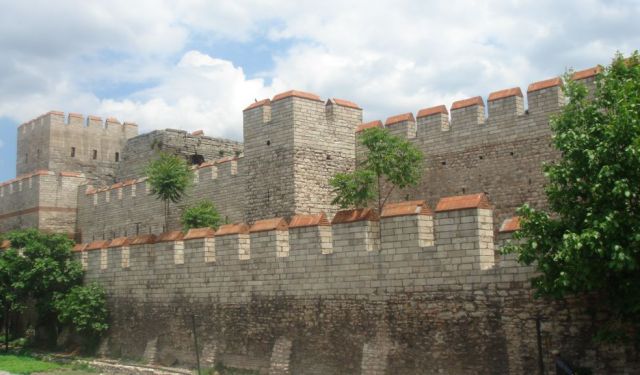
One of the most elaborate fortification systems of ancient times, the Walls of Constantinople were built by Constantine the Great to protect the city, the then newly-established capital of the Eastern Roman Empire, from attacks by land and sea. Of these, only the Golden Gate, an old ceremonial gateway into the city, had survived by the late Byzantine Era when a new series of land walls were added... view more
Tour Duration: 2 Hour(s)
Travel Distance: 5.2 Km or 3.2 Miles
Tour Duration: 2 Hour(s)
Travel Distance: 5.2 Km or 3.2 Miles
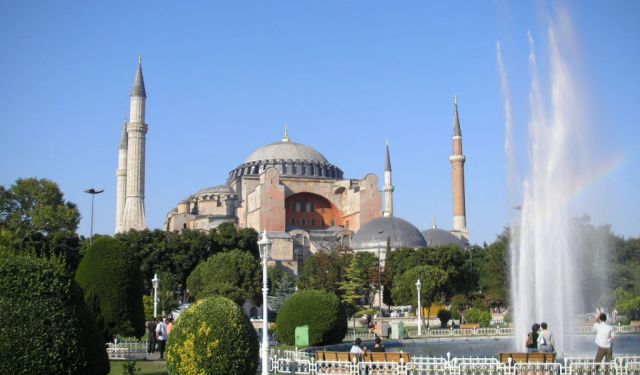
Istanbul Introduction Walking Tour
Once called Byzantium, Constantinople, and New Rome, Istanbul has had more name changes over the years than a celebrity avoiding paparazzi... The largest city in Turkey and one of the world’s most historic urban centers, it straddles the Bosphorus Strait like it couldn’t decide whether to sit on its European or Asian side and ultimately opted for both. The result was a cultural smoothie... view more
Tour Duration: 2 Hour(s)
Travel Distance: 4.3 Km or 2.7 Miles
Tour Duration: 2 Hour(s)
Travel Distance: 4.3 Km or 2.7 Miles
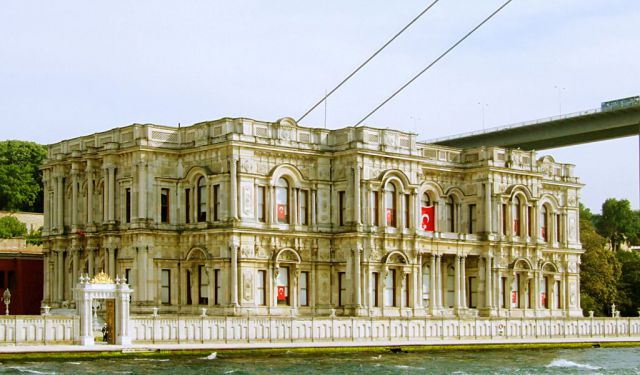
Asian Side and Bosphorus Walking Tour
Istanbul is the only megalopolis in the world that straddles two continents. The Bosphorus Strait splits Turkey's biggest city into two parts: European and Asian. The latter, known locally as Asya Yakası (“Asian Side”), or more commonly as Anadolu Yakası (“Anatolian Side”), is found east of the strait, geographically on the Asian mainland.
The vast Anatolian shore, wrongly... view more
Tour Duration: 2 Hour(s)
Travel Distance: 4.6 Km or 2.9 Miles
The vast Anatolian shore, wrongly... view more
Tour Duration: 2 Hour(s)
Travel Distance: 4.6 Km or 2.9 Miles
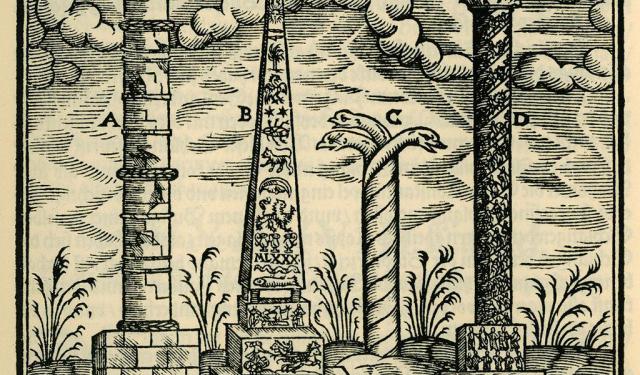
Byzantine Heritage Walking Tour
Originated as a Greek city called Byzantium, what's now known as Istanbul initially made name as Constantinople, an Eastern Roman imperial capital whose greatness had lasted for over a millennium, from 330 AD until the Ottoman invasion in 1453.
The Byzantine Empire’s rich cultural and architectural heritage is still preserved in dazzling sites throughout the city. Away from its Islamic... view more
Tour Duration: 2 Hour(s)
Travel Distance: 2.5 Km or 1.6 Miles
The Byzantine Empire’s rich cultural and architectural heritage is still preserved in dazzling sites throughout the city. Away from its Islamic... view more
Tour Duration: 2 Hour(s)
Travel Distance: 2.5 Km or 1.6 Miles
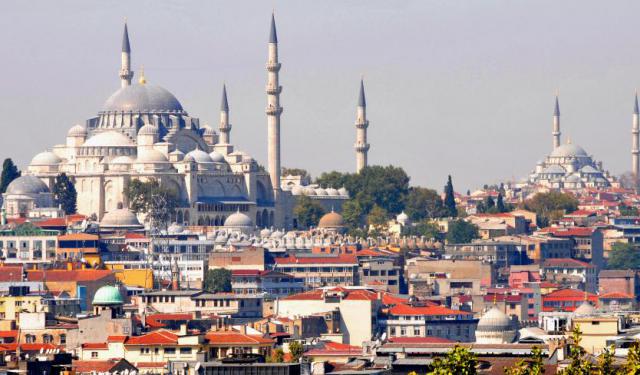
Istanbul Old City Walking Tour
The Old City of Istanbul, occupying a triangular peninsula between the Golden Horn and the Sea of Marmara, is one of the most historically layered urban areas in the world. Its evolution reflects a succession of empires that shaped its architecture, culture, and spiritual life. The city’s origins date to around 657 BC, when Greek settlers from Megara founded Byzantium for its ideal harbor and... view more
Tour Duration: 2 Hour(s)
Travel Distance: 2.3 Km or 1.4 Miles
Tour Duration: 2 Hour(s)
Travel Distance: 2.3 Km or 1.4 Miles
Old European Quarter Walk
Back in the Ottoman era, the Beyoğlu neighborhood (then known as Pera), together with Galata, formed the stylish European Quarter of Istanbul. Home to embassies, trading houses, and Parisian-style apartment blocks, it all looks like it wandered in straight from the French capital. This area was where the city’s non-Islamic communities worked, lived, and possibly argued over the best pastries...... view more
Tour Duration: 2 Hour(s)
Travel Distance: 2.4 Km or 1.5 Miles
Tour Duration: 2 Hour(s)
Travel Distance: 2.4 Km or 1.5 Miles
Useful Travel Guides for Planning Your Trip
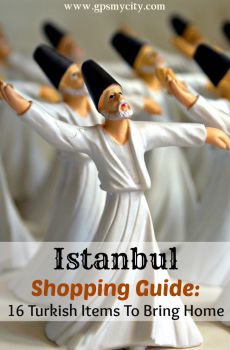
Istanbul Shopping Guide: 16 Turkish Items To Bring Home
Istanbul, known throughout history as Byzantium and Constantinople, has been a major center of commerce and trade, a place where merchants and general folk would rush to regularly in search of exotic things. In our days, modern travelers to Istanbul are also bound to enjoy a truly magnificent...
The Most Popular Cities
/ view all