

Audio Guide: A Walk in Panama's Charming Old Town (Self Guided), Panama City
German polymath and geographer Alexander von Humboldt, who analyzed the Isthmus of Panama as a natural crossroads in the early 19th century, famously described Panama as a place destined by nature to become the meeting point of nations.
Founded on 15 August 1519 by the Spanish conquistador Pedro Arias Dávila, Panama City was the first permanent European settlement on the Pacific coast of the Americas. Indigenous peoples had already used routes for trade, and the Spanish quickly recognized the city’s strategic value as a link between the riches of South America and Europe. The name Panamá is generally believed to derive from an indigenous word, likely from the Cueva or related languages once spoken in the region, commonly associated with ideas such as “abundance of fish” or “place of many fish”.
The original city became a key hub of the Spanish Empire. Gold and silver from Peru were shipped north along the Pacific coast, transported across the isthmus by mule, and then sent onward to Spain from Caribbean ports. This prosperity also made the city a target. In 1671, the pirate Henry Morgan attacked and destroyed Old Panama, leaving it largely in ruins. The remains of churches, convents, and the cathedral tower still mark the site today.
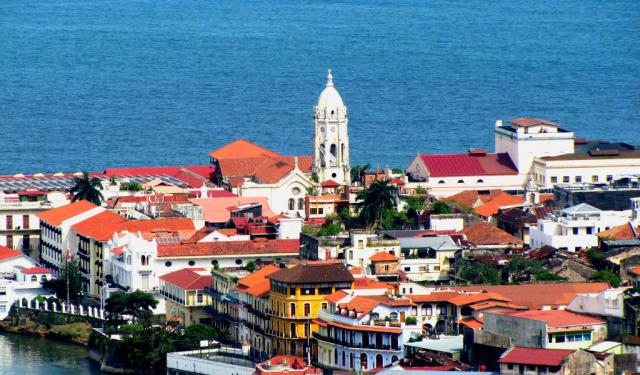
Following the destruction, the city was rebuilt a few kilometers west, on a small peninsula easier to defend. This new settlement, founded in 1673, is today’s Old Town, known as Casco Viejo. Designed with defensive walls, narrow streets, and fortified bastions, it reflected both military concerns and Spanish colonial urban planning.
During the 19th century, Panama City gained renewed importance with the California Gold Rush, when thousands crossed the Isthmus of Panama en route to the Pacific. The opening of the Panama Canal in 1914 transformed the city once again, shifting its role from colonial port to global transit center. Today, Panama City stands as a city of contrasts, where glass towers rise beyond colonial plazas. Its Old Town, recognized as a UNESCO World Heritage Site, preserves the memory of conquest, trade, destruction, and renewal that has defined the city for more than five centuries.
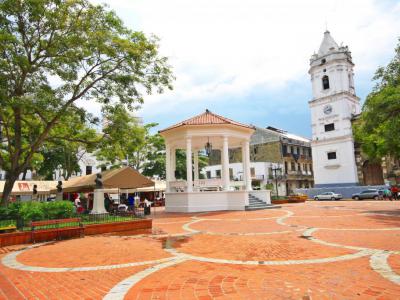
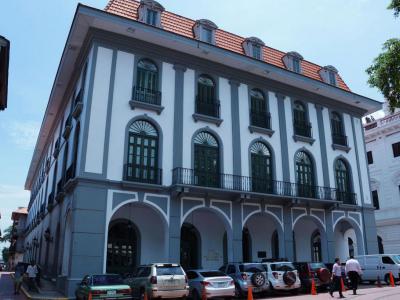
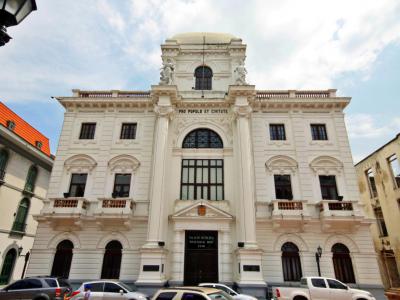
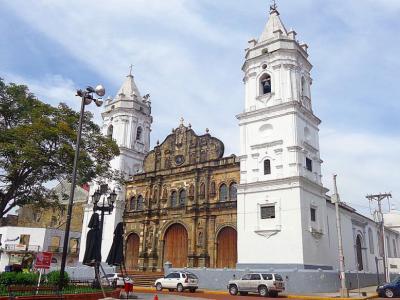
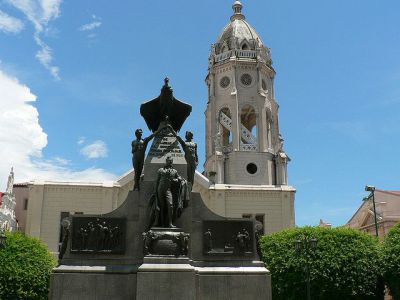
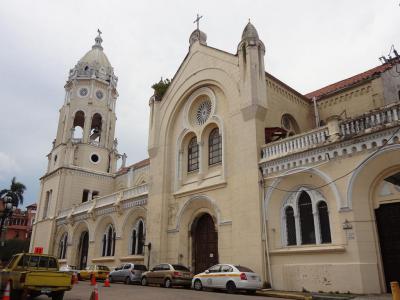
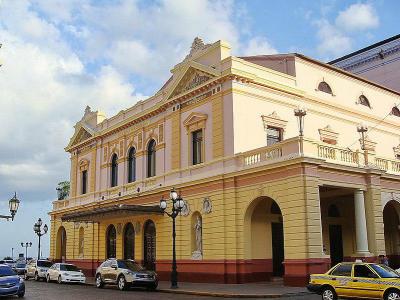
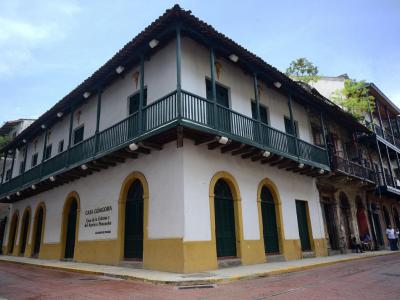
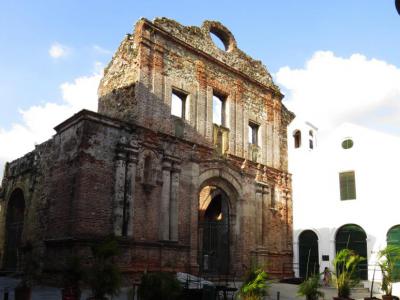
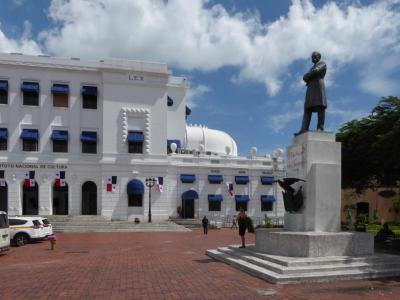
Walking through Panama City’s Old Town, visitors move between plazas and landmark buildings that trace the country’s past. Independence Square anchors the historic quarter, facing the Metropolitan Cathedral. Nearby, the Panama Canal Museum explains the canal’s global impact. Bolivar Park offers a quieter pause, while the Museum of Colonial Religious Art reveals sacred paintings, sculpture, and silverwork.
As this walk unfolds, the streets of the Old Town reveal why Humboldt’s observation still holds. This is not simply a historic district, but a place shaped by movement: of people, goods, ideas, and ambition, where Panama continues to serve as a meeting point of nations.
Founded on 15 August 1519 by the Spanish conquistador Pedro Arias Dávila, Panama City was the first permanent European settlement on the Pacific coast of the Americas. Indigenous peoples had already used routes for trade, and the Spanish quickly recognized the city’s strategic value as a link between the riches of South America and Europe. The name Panamá is generally believed to derive from an indigenous word, likely from the Cueva or related languages once spoken in the region, commonly associated with ideas such as “abundance of fish” or “place of many fish”.
The original city became a key hub of the Spanish Empire. Gold and silver from Peru were shipped north along the Pacific coast, transported across the isthmus by mule, and then sent onward to Spain from Caribbean ports. This prosperity also made the city a target. In 1671, the pirate Henry Morgan attacked and destroyed Old Panama, leaving it largely in ruins. The remains of churches, convents, and the cathedral tower still mark the site today.
Following the destruction, the city was rebuilt a few kilometers west, on a small peninsula easier to defend. This new settlement, founded in 1673, is today’s Old Town, known as Casco Viejo. Designed with defensive walls, narrow streets, and fortified bastions, it reflected both military concerns and Spanish colonial urban planning.
During the 19th century, Panama City gained renewed importance with the California Gold Rush, when thousands crossed the Isthmus of Panama en route to the Pacific. The opening of the Panama Canal in 1914 transformed the city once again, shifting its role from colonial port to global transit center. Today, Panama City stands as a city of contrasts, where glass towers rise beyond colonial plazas. Its Old Town, recognized as a UNESCO World Heritage Site, preserves the memory of conquest, trade, destruction, and renewal that has defined the city for more than five centuries.
Walking through Panama City’s Old Town, visitors move between plazas and landmark buildings that trace the country’s past. Independence Square anchors the historic quarter, facing the Metropolitan Cathedral. Nearby, the Panama Canal Museum explains the canal’s global impact. Bolivar Park offers a quieter pause, while the Museum of Colonial Religious Art reveals sacred paintings, sculpture, and silverwork.
As this walk unfolds, the streets of the Old Town reveal why Humboldt’s observation still holds. This is not simply a historic district, but a place shaped by movement: of people, goods, ideas, and ambition, where Panama continues to serve as a meeting point of nations.
How it works: Download the app "GPSmyCity: Walks in 1K+ Cities" from Apple App Store or Google Play Store to your mobile phone or tablet. The app turns your mobile device into a personal tour guide and its built-in GPS navigation functions guide you from one tour stop to next. The app works offline, so no data plan is needed when traveling abroad.
Download The GPSmyCity App



A Walk in Panama's Charming Old Town Map
Guide Name: A Walk in Panama's Charming Old Town
Guide Location: Panama » Panama City (See other walking tours in Panama City)
Guide Type: Self-guided Walking Tour (Sightseeing)
Tour Duration: 1 Hour(s)
Travel Distance: 0.9 Km or 0.6 Miles
Guide Location: Panama » Panama City (See other walking tours in Panama City)
Guide Type: Self-guided Walking Tour (Sightseeing)
Tour Duration: 1 Hour(s)
Travel Distance: 0.9 Km or 0.6 Miles
Sights Featured in This Walk
Walking Tours in Panama City, Panama

Create Your Own Walk in Panama City
Creating your own self-guided walk in Panama City is easy and fun. Choose the city attractions that you want to see and a walk route map will be created just for you. You can even set your hotel as the start point of the walk.
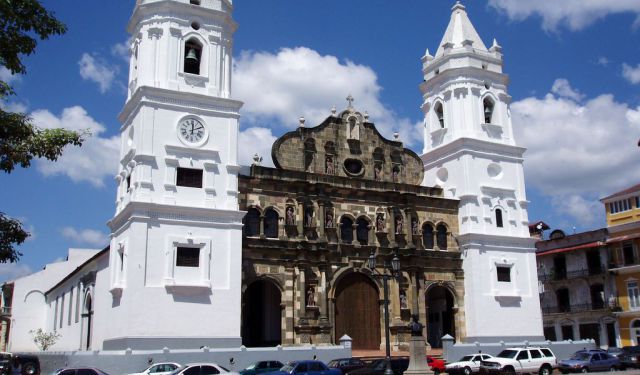
Historical Churches Tour
Caught between the lush green mountains and the ocean, the capital of Panama is a concentration of colors and styles. The evidence of Spanish influence is still vivid in the colonial landmarks, especially religious sites.
For centuries, colonial religious architecture has played an important role in the configuration of the urban layout of Panama City. By the 17th century, convents had an... view more
Tour Duration: 1 Hour(s)
Travel Distance: 1.0 Km or 0.6 Miles
For centuries, colonial religious architecture has played an important role in the configuration of the urban layout of Panama City. By the 17th century, convents had an... view more
Tour Duration: 1 Hour(s)
Travel Distance: 1.0 Km or 0.6 Miles
The Most Popular Cities
/ view all