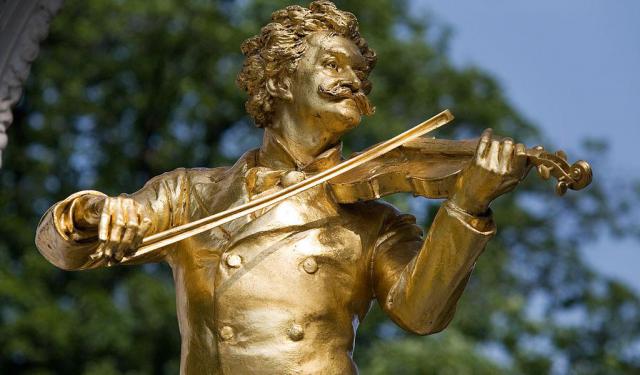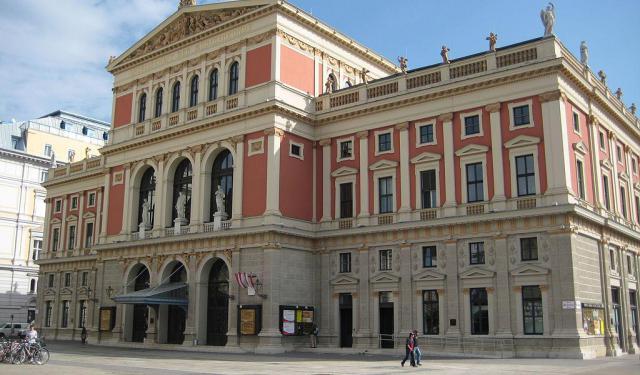


To call Vienna the "Music Capital of the World" would not be an exaggeration. It is home to a vast range of magnificent music venues where you can enjoy the sounds of Mozart’s arias, fabulous compositions by the "King of Waltz" Johann Strauss, famous Viennese Waltzes and other superb works of world-known musicians. Come enjoy the majestic sounds you will hear in some of the most popular music venues of Vienna.
1) Wiener Kammeroper
The Weiner Kammeroper was founded by Hans Gabor after the Second World War. The mission was to introduce Baroque opera that was getting little to no attention at other venues. The group did not have a permanent home, but was a traveling troupe. Today it resides at Fleischmarkt 24 in the center of Vienna. It is a tiny venue, but the performances are wonderful, well worth going to see.
In addition to opera that might not be viewed elsewhere, the Kammeroper is also home to budding young talent. This is not to say that the quality is not top notch, because it is, the venue is a stepping stone to fame for these talented newcomers. Generally, four operas are performed per year, so the quality is very good. While this gem is still not the most popular opera house in the area, it is certainly one worth patronizing.
It is a place to go for those who truly love the opera and are looking for new and exciting productions. Contemporary productions are often presented. Opera buffa (comic opera) is also part of the mainstay. It is this wonderful mix of classic but not often preformed with the contemporary that sets this venue apart from the others in the city. Be sure to see what is playing while visiting Vienna; it will be a nice change from the classics.
Image Courtesy of Wikimedia and --S
Sight description based on wikipedia
2) Mozart Ensemble
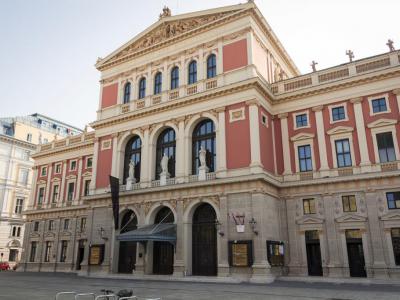
The Mozart Ensemble at Mozarthaus consists of four musicians who perform the chamber music of Austrian composers. The setting is intimate as the room only holds 100 guests and the musicians all wear period dress. It is rather like stepping into a time machine and transporting back to the time of Mozart. Although the name may make you think you will only hear Mozart compositions, the music includes all composers from the Viennese classical time period.
The room where the performance takes place is the Sala Terrena which means ground floor hall. This is also one of the oldest concert halls in the city. Mozart himself performed here. In fact he spent a couple of months living in the guest housing of the convent that is next door when first moving to Vienna. The room is an absolute overload of baroque art and is almost overwhelming. However, it is wonderfully transformative when sitting and listening to the music; it is almost like being there in the late 1700s.
As you can well imagine, tickets sell out frequently, so this might be the first venue to book when your travel plans are firm. Ticket prices range from € 39 to €50 and The Mozart House is located at Singerstrasse 7.
Image Courtesy of Wikimedia and Georges Jansoone
3) Vienna Hofburg-Orchestra
In a place where music has flourished for centuries and music houses abound, the Vienna Hofburg-Orchestra is a mere babe in arms. It was founded in 1971and its main goal is to cultivate the Viennese waltz and also the music of the opera. Its 36 musicians come from all over Vienna and are joined by 6 international as well as local vocal talents.
They can be found performing in the Hofburg Imperial Palace in Vienna as well as the Wiener Konzerthaus and the Wiener Musikverein. Every year they also perform a New Years Eve concert at the Redouten Hall at the Palace. It features the music for Strauss, Kalman, Léhar, and of course Mozart. What an incredible way to start the New Year!
Additionally, their concert season is from May until October. During this time, there are concerts given every Tuesday, Thursday and Saturday, so there is ample opportunity to enjoy a performance while in Austria during these months. Sporadic performances will also be given during November and December, so be sure to check these out also. Could there be a more perfect place to hear the waltz played than in Vienna? Or perhaps catch a performance of “Die Fledermaus”, or “Die Hochzeit des Figaro” or “Die Zauberflöte”?
Image Courtesy of Flickr and arquera
4) Vienna State Opera
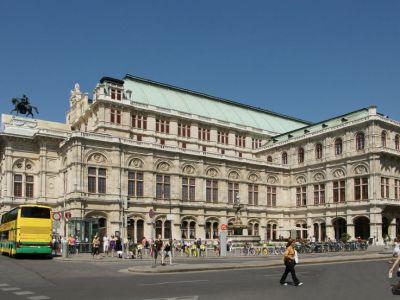
Vienna State Opera Opera is an impressive structure, with an equally impressive company of singers that perform there. The history of this location dates all the way back to around the 1860s. It is centrally located in the heart of Austria. The place was originally called the Vienna Court Opera. That name was changed by the Habsburgs during the early formation of the first Austrian Republic. This occurred in 1920. Many of the members of the Opera end up performing with the Vienna Philharmonic. The group has a large repertoire of very famous pieces as well, such as La Traviata, La clemenza di Tito, and Verdi’s Don Carlo. You will also see a lot of very famous singers coming to this venue to sing also. Some of the world’s most famous directors have also come from here. Gustav Mahler conducted here in the early 20th Century. Herbert von Karajan and Claudio Abbado have also had a turn at being the leader of this famous opera. Apart from the singers and orchestra, the building is also worth the visit. The State Opera offers guided tours of the location. They are available every day of the week, and last for around 40 minutes. The tours are also available in 12 different languages.
Image Courtesy of Wikimedia and Smtunli
5) Theater an der Wien
The Theater an der Wien may seem to be misnamed, however, the Wien river used to flow just beside the theater. The river was covered over and the Naschmarkt, the wonderful farmers market now occupies that area. To feel what it looked like at that time, enter from the Millöckergasse and imagine the river where the marketplace is. Confusing name aside, the theater is absolutely beautiful and should not be missed.
The rich history of the building begins with its inception by Emanuel Schikaneder who collaborated with Mozart on The Magic Flute. The building was completed in 1801 and was spectacularly appointed and had a huge stage to accommodate large sets. There have been ups and downs for this venue, but the good news is the building has been restored and again is absolutely breathtakingly beautiful. The acoustics are magnificent and operas are again being performed here along with concerts and contemporary productions.
Be sure to note the nod to Schikaneder over the entrance at the Papagenogate. The man and the three children are Schikaneder and his three boys portraying Papageno from The Magic Flute. Also be sure to see the memorial to Beethoven who lived in the Theater whilst working on Fidelio, his only opera.
Tours are around € 7 and are a wonderful way to get the entire history and see backstage areas.
Image Courtesy of Wikimedia and Doris Antony
6) Wiener Philharmoniker
The Weiner Philharmoniker is one of the most famous orchestras in the world and is consistently considered one of the finest. All of its members come from the ranks of the Vienna State Opera (VSO), and cannot even apply to the Philharmoniker until they have played for at least three years with the VSO. Until very recently, only men could even hope to have a chance of playing with the famous Vienna Philharmonic.
Formed in 1842 as the Philharmonische Academie under the baton of Otto Nicolai, it is an interesting organization. All the members have a vote in decisions about the orchestra, although there is an administrative committee that is made up of 12 orchestra members who generally handle the day to day administrative functions. There are paid support staff positions as well to carry out the day to day details as dictated by the orchestra. Conduction is done by guest conductors as there is no regular subscription conductor.
The unique sound is due to several factors, but probably one of the most important is the string section. All stringed instruments belong to the Philharmoniker not the individual member. Some of these instruments have been played for centuries and in fact four violins made by Stradivari are currently part of the mixture. Instruments are very carefully selected so that their unique sound will blend well with the others.
The waiting list for season tickets can be years long, however, there are a few tickets available for some programs. When plans are being made for a visit to Vienna, be sure to check and see if there are any tickets available. What an evening that would be!
Image Courtesy of Flickr and Julius!
7) Wiener Konzerthaus
The Weiner Konzerthaus is located in the third district of Vienna. The idea for a multipurpose music auditorium was discussed as early as 1890; by 1913 the building was finally a reality. The venue was originally equipped with three soundproof auditoriums so that several musical events could be held simultaneously. The purpose was to entertain both traditional and new music styles.
Fortunately, WWI action did very little damage to the building. Updates to the Konzerthaus did change the original plans significantly; however, the building was restored to its original design at the end of the 20th century. Today the facility houses four concert halls and the building is home to the Vienna Symphony Orchestra; a mixed choir, the Weiner Singakademie which does both traditional and contemporary music; and the Klangforum Wien, a chamber orchestra that is known for contemporary classical music.
This beautiful facility is able to handle 4,000 people comfortably and the acoustics accommodate both traditional and contemporary music styles. No matter what time of year one visits Vienna, there will be concert offerings to see at the Weiner Konzerthaus, both contemporary and traditional. Also on the docket during the season are films, lectures, readings and private functions.
Image Courtesy of Wikimedia and Andreas Praefcke