


Audio Guide: Vancouver Chinatown Walking Tour (Self Guided), Vancouver
Vancouver's Chinatown is the second-largest Chinese-centered area in North America. As such, it has long attracted hordes of tourists with its expressive culture, inexpensive but delicious food, and fabulous traditional architecture.
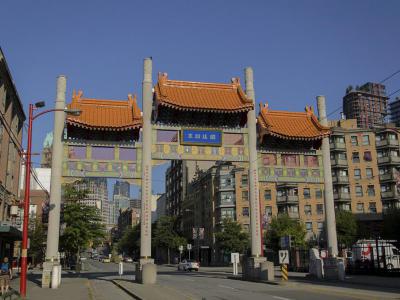
The very first landmark that welcomes visitors entering Chinatown is the grand, ornate structure called the Millennium Gate. With its intricate architectural details and symbolic significance, this iconic gate represents the cultural connection between Vancouver and the Chinese community, serving as a symbol of unity.
Passing through the gate, to your right, find the historic Shanghai Alley, a narrow lane that holds a special place in the neighborhood's history. Once a center of activity for the Chinese community, today it retains its historical charm with traditional shops and businesses.
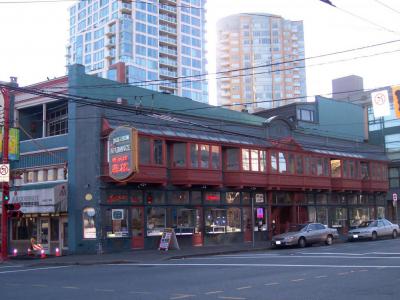
Standing further ahead is the Sam Kee Building, renowned for its incredibly narrow width, earning it a place in the Guinness World Book of Records as the world's narrowest commercial building - a true testament to the creative use of space in a busy urban environment!
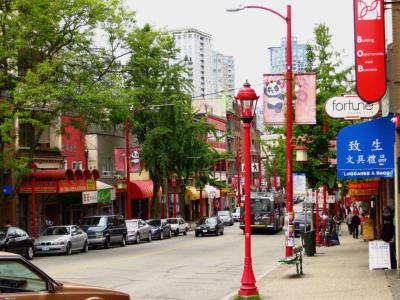
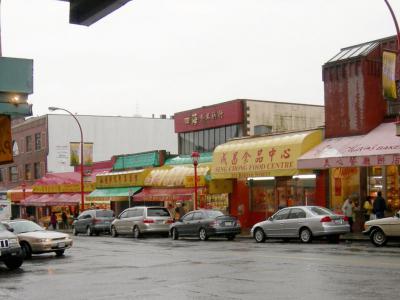
East Pender Street and Keefer Street are the main arteries of Chinatown, lined with a variety of restaurants, shops, and cultural attractions. These lanes come alive in the evenings, offering a vibrant food and nightlife scene with a wide range of gastronomic pleasures to savor.
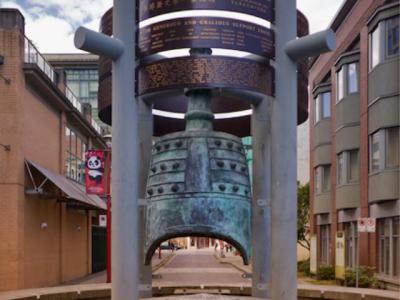
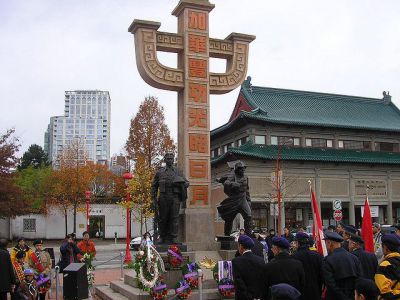
Meanwhile, the Monument of Canadian Chinese pays tribute to the contributions of the Chinese community to Canada's history and development. It's a significant reminder of the enduring impact of this community on the country.
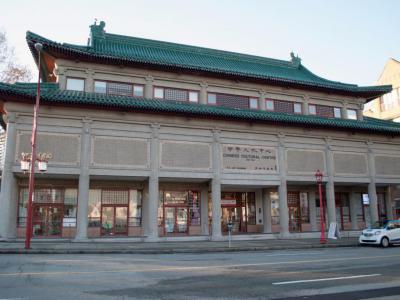
The Chinese Cultural Center and Museum is a hub for preserving and promoting Chinese culture in Vancouver. Visitors can explore exhibits and events that showcase the rich heritage and traditions of the Chinese denizens.
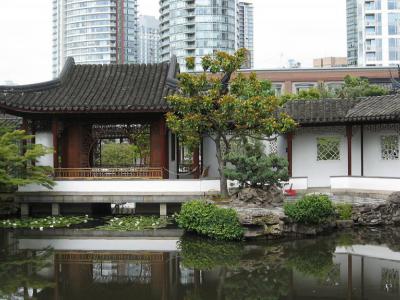
For a tranquil escape, the Doctor Sun Yat-Sen Garden offers a peaceful oasis within the bustling urban setting. This classical Chinese garden features typical architecture, serene ponds, and manicured greenery - a perfect place for reflection and relaxation.
Visiting Vancouver's Chinatown is a journey through history, culture, and culinary delights. If you wish to experience it all firsthand, take this self-guided tour of Vancouver's Chinatown and immerse yourself in the sights, flavors, and stories that await you in this captivating corner of the city.
The very first landmark that welcomes visitors entering Chinatown is the grand, ornate structure called the Millennium Gate. With its intricate architectural details and symbolic significance, this iconic gate represents the cultural connection between Vancouver and the Chinese community, serving as a symbol of unity.
Passing through the gate, to your right, find the historic Shanghai Alley, a narrow lane that holds a special place in the neighborhood's history. Once a center of activity for the Chinese community, today it retains its historical charm with traditional shops and businesses.
Standing further ahead is the Sam Kee Building, renowned for its incredibly narrow width, earning it a place in the Guinness World Book of Records as the world's narrowest commercial building - a true testament to the creative use of space in a busy urban environment!
East Pender Street and Keefer Street are the main arteries of Chinatown, lined with a variety of restaurants, shops, and cultural attractions. These lanes come alive in the evenings, offering a vibrant food and nightlife scene with a wide range of gastronomic pleasures to savor.
Meanwhile, the Monument of Canadian Chinese pays tribute to the contributions of the Chinese community to Canada's history and development. It's a significant reminder of the enduring impact of this community on the country.
The Chinese Cultural Center and Museum is a hub for preserving and promoting Chinese culture in Vancouver. Visitors can explore exhibits and events that showcase the rich heritage and traditions of the Chinese denizens.
For a tranquil escape, the Doctor Sun Yat-Sen Garden offers a peaceful oasis within the bustling urban setting. This classical Chinese garden features typical architecture, serene ponds, and manicured greenery - a perfect place for reflection and relaxation.
Visiting Vancouver's Chinatown is a journey through history, culture, and culinary delights. If you wish to experience it all firsthand, take this self-guided tour of Vancouver's Chinatown and immerse yourself in the sights, flavors, and stories that await you in this captivating corner of the city.
How it works: Download the app "GPSmyCity: Walks in 1K+ Cities" from Apple App Store or Google Play Store to your mobile phone or tablet. The app turns your mobile device into a personal tour guide and its built-in GPS navigation functions guide you from one tour stop to next. The app works offline, so no data plan is needed when traveling abroad.
Download The GPSmyCity App



Vancouver Chinatown Walking Tour Map
Guide Name: Vancouver Chinatown Walking Tour
Guide Location: Canada » Vancouver (See other walking tours in Vancouver)
Guide Type: Self-guided Walking Tour (Sightseeing)
Tour Duration: 1 Hour
Travel Distance: 1.3 Km or 0.8 Miles
Tour Best Suited For: In-depth exploration
Guide Location: Canada » Vancouver (See other walking tours in Vancouver)
Guide Type: Self-guided Walking Tour (Sightseeing)
Tour Duration: 1 Hour
Travel Distance: 1.3 Km or 0.8 Miles
Tour Best Suited For: In-depth exploration
Sights Featured in This Walk
Walking Tours in Vancouver, Canada

Create Your Own Walk in Vancouver
Creating your own self-guided walk in Vancouver is easy and fun. Choose the city attractions that you want to see and a walk route map will be created just for you. You can even set your hotel as the start point of the walk.

Gastown Walking Tour
To get the feel of authentic Vancouver, head for Gastown. This is where the city was born, when ex-sailor and gold prospector “Gassy” Jack Deighton opened an inn here in the late 19th century. A rough settlement of mill workers, dockhands, loggers, and merchants soon grew around it, eventually becoming modern Vancouver. Today, Gastown is a National Historic Site, where cobblestone streets and... view more
Tour Duration: 1 Hour
Travel Distance: 2.1 Km or 1.3 Miles
Tour Duration: 1 Hour
Travel Distance: 2.1 Km or 1.3 Miles

Granville Island Walking Tour
Successfully transformed, back in the 1970s, from an industrial wasteland into one of the most beloved public spaces in Vancouver, Granville Island is now viewed as a premier artistic and cultural hub famous for its balance of functionality and flare. It is equally popular as a shopping destination, too, with a plethora of other attractions like art galleries, markets, and a brewery to boot.... view more
Tour Duration: 2 Hours
Travel Distance: 2.3 Km or 1.4 Miles
Tour Duration: 2 Hours
Travel Distance: 2.3 Km or 1.4 Miles

Vancouver Downtown Walking Tour
Numerous historic and otherwise notable landmarks scattered throughout Downtown Vancouver make it a hot traveler's destination. Each such landmark is unique in itself and has a great deal of story to tell visitors, be it cultural history or simple amusement.
While in Downtown, you can't miss the Vancouver Lookout. This observation deck lures you with its breathtaking scenery - the... view more
Tour Duration: 2 Hours
Travel Distance: 3.7 Km or 2.3 Miles
While in Downtown, you can't miss the Vancouver Lookout. This observation deck lures you with its breathtaking scenery - the... view more
Tour Duration: 2 Hours
Travel Distance: 3.7 Km or 2.3 Miles

Vancouver Introduction Walking Tour
A bustling seaport on the west coast of Canada, Vancouver is among the country's densest and most ethnically diverse cities. It is also one of British Columbia's youngest cities. Prior to the Europeans, the Vancouver area had been inhabited - for almost 10,000 years - by Aboriginal tribes: Squamish, Musqueam, and Tsleil-Waututh (Burrard). The explorer Simon Fraser and his crew were the... view more
Tour Duration: 2 Hours
Travel Distance: 3.7 Km or 2.3 Miles
Tour Duration: 2 Hours
Travel Distance: 3.7 Km or 2.3 Miles

Vancouver Yaletown Walking Tour
For many years, Yaletown was the thriving industrial heart of Vancouver. Today, this historic neighborhood looks unlike any other part of the city and is considered to be the home of Vancouver's "elite" society.
The Roundhouse Community Arts & Recreation Centre is a prominent landmark here, serving as a hub for art exhibitions and recreational activities. Its historic... view more
Tour Duration: 1 Hour
Travel Distance: 1.7 Km or 1.1 Miles
The Roundhouse Community Arts & Recreation Centre is a prominent landmark here, serving as a hub for art exhibitions and recreational activities. Its historic... view more
Tour Duration: 1 Hour
Travel Distance: 1.7 Km or 1.1 Miles
Useful Travel Guides for Planning Your Trip

14 Distinctively Canadian Things to Buy in Vancouver
British Columbia, in general, and Vancouver, in particular, are among the top Canadian destinations worth being explored. The amalgam of aboriginal and western cultures, Vancouver is a treasure trove of distinctively Canadian delights that are not found anywhere else. Most of these items make for an...