

Audio Guide: Old Quebec Walk (Self Guided), Quebec City
The historic part of Quebec City known as Old Quebec (French: Vieux-Québec), sometimes also referred to as the Latin Quarter (Quartier Latin), is the neighborhood centered around Cape Diamond (Cap Diamant), located on the eastern edge of Quebec hill promontory. The area comprises Upper Town (Haute-Ville) and Lower Town (Basse-Ville) and is currently listed among UNESCO’s World Heritage Sites.
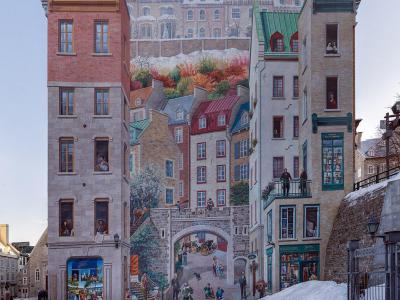
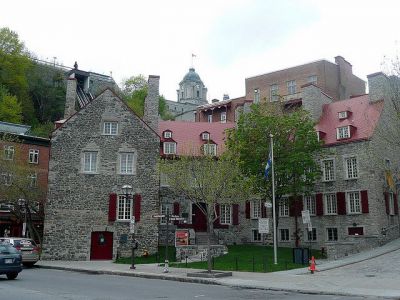
In 1608, French explorer Samuel de Champlain chose the land of today's Upper Town to set up Fort Saint Louis, the precursor of Quebec City. After the British Conquest, the territory was occupied mainly by British government officials and Catholic clergy, while merchants and artisans, both French and English, settled in the Lower Town. Much of Quebec's traditional architecture – dating from the 17th to the 19th centuries – is concentrated in the old part of the city.
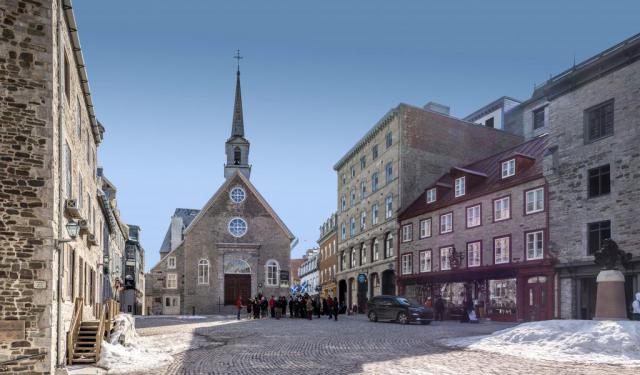
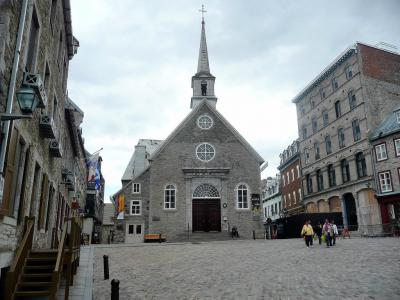
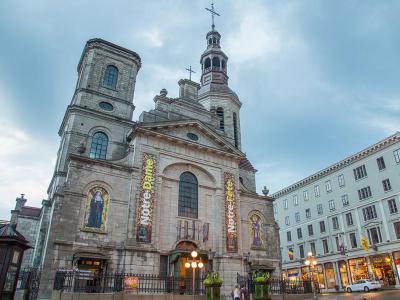
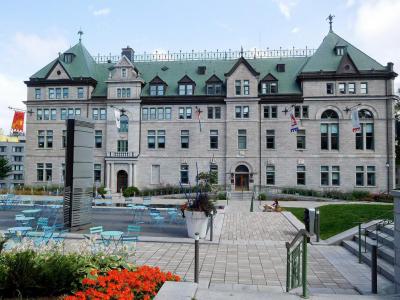
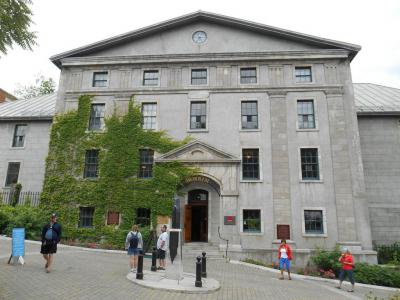
Among the most notable buildings here is the Church of Our Lady of Victories (Notre-Dame-des-Victoires), constructed between 1687 and 1723, as well as some civic buildings like the Quebec City Hall (Hôtel de Ville) and the Museum of the Central Hospital of the Augustinian Convent of Quebec (Musee des Augustines de l'Hôtel-Dieu de Québec).
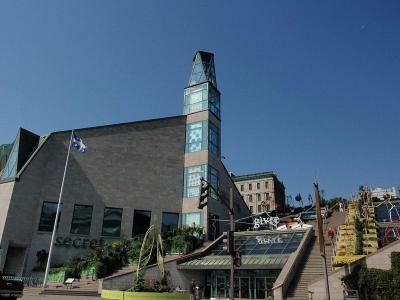
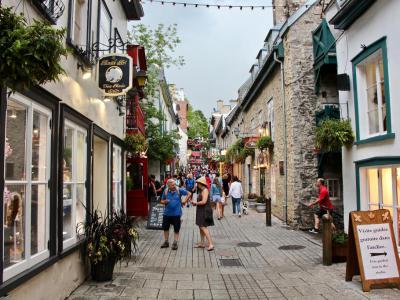
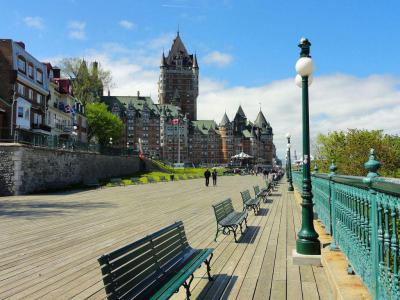
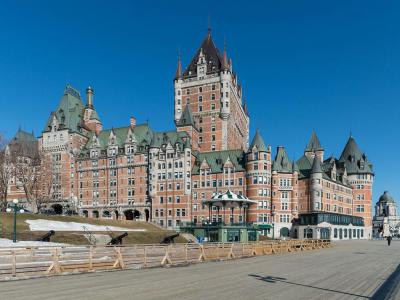
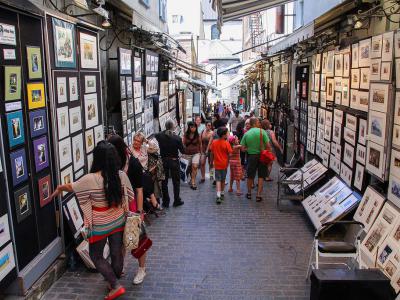
The ancient stones and winding streets give this area a distinctly European feel. The abundance of shops and restaurants, as well as hotels, such as the imposing historic Frontenac Castle (Château Frontenac), makes the Old City a very popular tourist destination. Also adding to its appeal, albeit modern in terms of architecture, is the Museum of Civilization (Musée de la Civilisation).
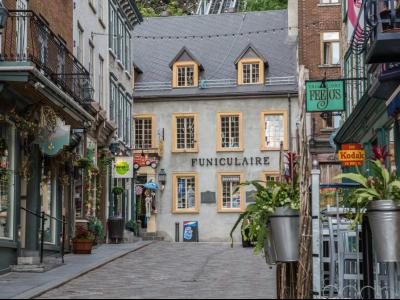
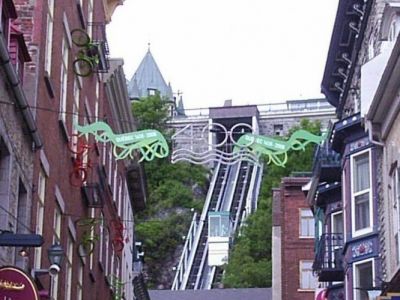
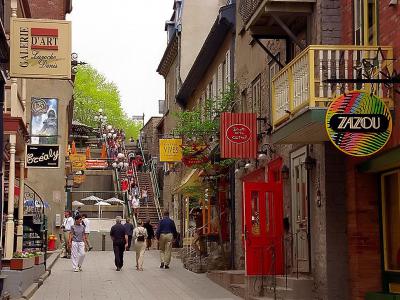
The Upper and Lower towns of Old Quebec are connected by numerous staircases, the most notable of which, undoubtedly, is the "Breakneck Stairway". Among other things, this staircase is renowned for the marvelous view opening from its top and the vicinity of the Old Quebec funicular, which links the Upper Town to the historic Petit-Champlain street copiously lined with small boutiques.
If you're in the mood for a bit of Europe organically blended into the Canadian setting, or perhaps would like to have some insight into the New World's history and enjoy great food along the way, you can find all of this and more in the old part of Quebec City. Just embark on our self-guided walking tour and see for yourself!
In 1608, French explorer Samuel de Champlain chose the land of today's Upper Town to set up Fort Saint Louis, the precursor of Quebec City. After the British Conquest, the territory was occupied mainly by British government officials and Catholic clergy, while merchants and artisans, both French and English, settled in the Lower Town. Much of Quebec's traditional architecture – dating from the 17th to the 19th centuries – is concentrated in the old part of the city.
Among the most notable buildings here is the Church of Our Lady of Victories (Notre-Dame-des-Victoires), constructed between 1687 and 1723, as well as some civic buildings like the Quebec City Hall (Hôtel de Ville) and the Museum of the Central Hospital of the Augustinian Convent of Quebec (Musee des Augustines de l'Hôtel-Dieu de Québec).
The ancient stones and winding streets give this area a distinctly European feel. The abundance of shops and restaurants, as well as hotels, such as the imposing historic Frontenac Castle (Château Frontenac), makes the Old City a very popular tourist destination. Also adding to its appeal, albeit modern in terms of architecture, is the Museum of Civilization (Musée de la Civilisation).
The Upper and Lower towns of Old Quebec are connected by numerous staircases, the most notable of which, undoubtedly, is the "Breakneck Stairway". Among other things, this staircase is renowned for the marvelous view opening from its top and the vicinity of the Old Quebec funicular, which links the Upper Town to the historic Petit-Champlain street copiously lined with small boutiques.
If you're in the mood for a bit of Europe organically blended into the Canadian setting, or perhaps would like to have some insight into the New World's history and enjoy great food along the way, you can find all of this and more in the old part of Quebec City. Just embark on our self-guided walking tour and see for yourself!
How it works: Download the app "GPSmyCity: Walks in 1K+ Cities" from Apple App Store or Google Play Store to your mobile phone or tablet. The app turns your mobile device into a personal tour guide and its built-in GPS navigation functions guide you from one tour stop to next. The app works offline, so no data plan is needed when traveling abroad.
Download The GPSmyCity App



Old Quebec Walk Map
Guide Name: Old Quebec Walk
Guide Location: Canada » Quebec City (See other walking tours in Quebec City)
Guide Type: Self-guided Walking Tour (Sightseeing)
Tour Duration: 2 Hour(s)
Travel Distance: 2.6 Km or 1.6 Miles
Guide Location: Canada » Quebec City (See other walking tours in Quebec City)
Guide Type: Self-guided Walking Tour (Sightseeing)
Tour Duration: 2 Hour(s)
Travel Distance: 2.6 Km or 1.6 Miles
Sights Featured in This Walk


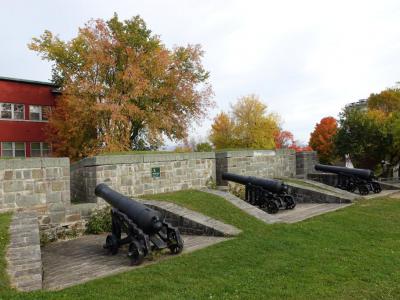
Walking Tours in Quebec City, Quebec

Create Your Own Walk in Quebec City
Creating your own self-guided walk in Quebec City is easy and fun. Choose the city attractions that you want to see and a walk route map will be created just for you. You can even set your hotel as the start point of the walk.
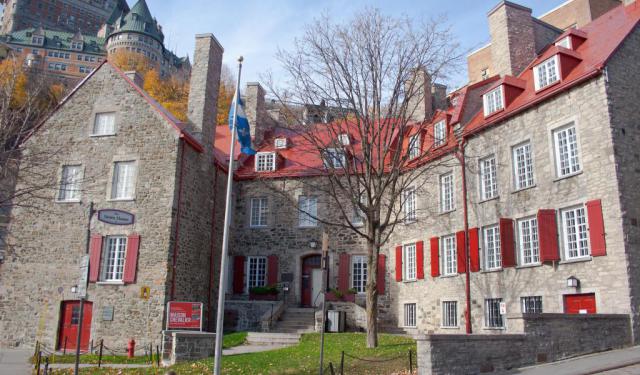
Historical Houses Walking Tour
Quebec City, particularly evocative of Europe in its atmosphere, is often referred to as the cradle of New France. The city boasts one of the richest architectural heritages in North America, though most of its buildings had to be adapted to harsh winters and the lack of specialized workers and materials in the colony. As such, the majority of local houses were designed as simple and efficient... view more
Tour Duration: 2 Hour(s)
Travel Distance: 2.5 Km or 1.6 Miles
Tour Duration: 2 Hour(s)
Travel Distance: 2.5 Km or 1.6 Miles
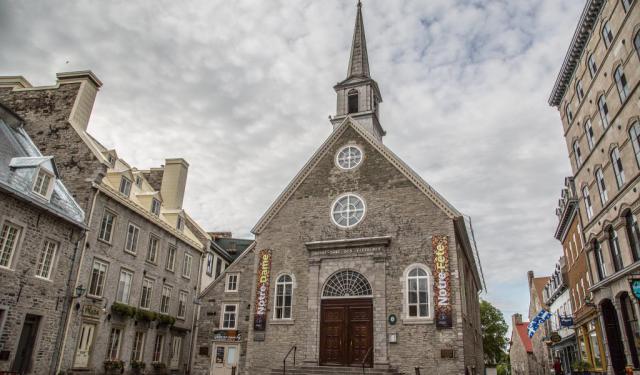
Qucbec City's Historical Churches Walking Tour
The first religious buildings in Canada were established by the Récollets and Jesuits, in 1615 and 1625, respectively, when they first arrived in New France. Later on, the French colonists brought along their culture and architectural traditions, and the establishment of British and evangelical society triggered further major developments in Quebec City.
Over the course of the 17th and 18th... view more
Tour Duration: 1 Hour(s)
Travel Distance: 2.9 Km or 1.8 Miles
Over the course of the 17th and 18th... view more
Tour Duration: 1 Hour(s)
Travel Distance: 2.9 Km or 1.8 Miles
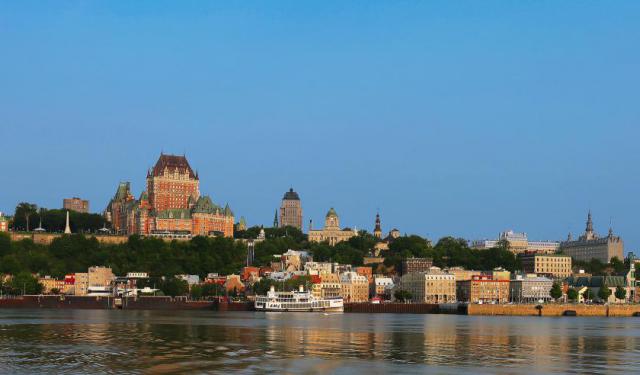
Quebec City Introduction Walking Tour
Cresting a cliff above the St. Lawrence River, Québec City (French: Ville de Québec) is the soul of the province of Québec – a place all its own; a country within a country with its own traditions, architecture, and French-speaking population.
The Algonquian people had originally named the area Kébec, which means "where the river narrows", because the Saint Lawrence River... view more
Tour Duration: 2 Hour(s)
Travel Distance: 3.2 Km or 2 Miles
The Algonquian people had originally named the area Kébec, which means "where the river narrows", because the Saint Lawrence River... view more
Tour Duration: 2 Hour(s)
Travel Distance: 3.2 Km or 2 Miles
The Most Popular Cities
/ view all