Custom Walk in Athens, Greece by gillandlex_9ec55 created on 2025-03-12
Guide Location: Greece » Athens
Guide Type: Custom Walk
# of Sights: 14
Tour Duration: 4 Hour(s)
Travel Distance: 7.8 Km or 4.8 Miles
Share Key: JSYBA
Guide Type: Custom Walk
# of Sights: 14
Tour Duration: 4 Hour(s)
Travel Distance: 7.8 Km or 4.8 Miles
Share Key: JSYBA
How It Works
Please retrieve this walk in the GPSmyCity app. Once done, the app will guide you from one tour stop to the next as if you had a personal tour guide. If you created the walk on this website or come to the page via a link, please follow the instructions below to retrieve the walk in the app.
Retrieve This Walk in App
Step 1. Download the app "GPSmyCity: Walks in 1K+ Cities" on Apple App Store or Google Play Store.



Step 2. In the GPSmyCity app, download(or launch) the guide "Athens Map and Walking Tours".
Step 3. Tap the menu button located at upper right corner of the "Walks" screen and select "Retrieve custom walk". Enter the share key: JSYBA
1) Syntagma Square (Constitution Square)
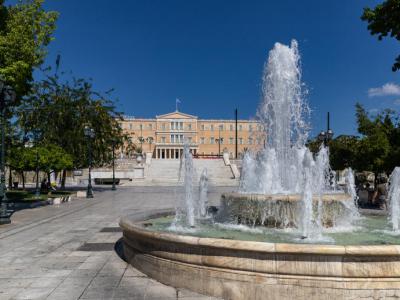
Constitution Square in Athens is where history, politics, and a good cup of coffee collide. This spacious landmark sits right in front of the 19th-century Royal Palace, which has been home to the Greek Parliament since 1935. And no, the square wasn’t just randomly named so-King Otto, Greece’s first monarch, was practically strong-armed into granting the country a Constitution here in 1843, thanks to a rather persuasive public and military uprising.
Nowadays, Constitution Square is still at the heart of the action. It’s not just a tourist hotspot-this is also Athens’ nerve center, linking visitors to top attractions by road, tram, bus, and subway. Political rallies, public gatherings, and plenty of people simply waiting for their Uber-this square sees it all on a regular basis.
Speaking of layout, Constitution Square has two levels-a bit like a giant marble stage set for both relaxation and spectacle. The central fountain, surrounded by benches, is perfect for a break, preferably with a Greek coffee in hand. Need WiFi? – No problem. Need a shade? – The pine and orange trees have you covered. And if caffeine calls, there are plenty of cafés ready to oblige. Oh, and in case you missed it, the whole square is clad in gleaming white marble, now with brand-new lampposts for that extra sparkle.
But the real showstopper is The Tomb of the Unknown Soldier. Guarded around the clock by the Evzones, Greece’s elite ceremonial soldiers, it’s a must-see. Their high-stepping routine, complete with kilts and pom-pom clogs, is as precise as it is fascinating. The tomb itself, unveiled on March 25, 1932, features a moving relief of a fallen Greek warrior (hoplite), forever frozen in time.
Tip:
If you fancy some retail therapy, just head to the lower end of the square-that’s where Ermou Street begins, Athens' ultimate shopping avenue. Happy strolling!
Nowadays, Constitution Square is still at the heart of the action. It’s not just a tourist hotspot-this is also Athens’ nerve center, linking visitors to top attractions by road, tram, bus, and subway. Political rallies, public gatherings, and plenty of people simply waiting for their Uber-this square sees it all on a regular basis.
Speaking of layout, Constitution Square has two levels-a bit like a giant marble stage set for both relaxation and spectacle. The central fountain, surrounded by benches, is perfect for a break, preferably with a Greek coffee in hand. Need WiFi? – No problem. Need a shade? – The pine and orange trees have you covered. And if caffeine calls, there are plenty of cafés ready to oblige. Oh, and in case you missed it, the whole square is clad in gleaming white marble, now with brand-new lampposts for that extra sparkle.
But the real showstopper is The Tomb of the Unknown Soldier. Guarded around the clock by the Evzones, Greece’s elite ceremonial soldiers, it’s a must-see. Their high-stepping routine, complete with kilts and pom-pom clogs, is as precise as it is fascinating. The tomb itself, unveiled on March 25, 1932, features a moving relief of a fallen Greek warrior (hoplite), forever frozen in time.
Tip:
If you fancy some retail therapy, just head to the lower end of the square-that’s where Ermou Street begins, Athens' ultimate shopping avenue. Happy strolling!
2) Church of Panaghia Kapnikarea
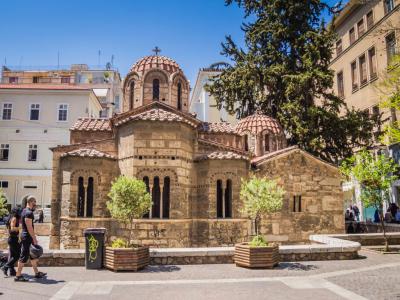
In the heart of modern Athens, the past and present do their daily dance. Right here, amid the high-energy, shop-till-you-drop chaos of Ermou Street, stands Kapnikarea-a charming Byzantine church that’s been stubbornly holding its ground since around 1050. That’s right, while today’s shoppers hunt for bargains, this little masterpiece has been casually watching history unfold for nearly a thousand years.
Like many early Christian structures, Kapnikarea wasn’t built from scratch. It took over prime real estate from an ancient Greek temple, likely dedicated to either Athena, the fierce protector of Athens, or Demeter, the goddess of the harvest. Talk about a divine property swap...
Much later, in the 19th century, Athens was getting a facelift. Enter King Otto I of Greece and his Bavarian architect, Leo von Klenze, who had grand plans to revamp the city. Kapnikarea-not exactly part of their modern vision-almost got the axe. But, plot twist! King Ludwig I of Bavaria, an art-loving, history-saving hero, intervened, ensuring the church survived. And let’s be honest, its slightly out-of-place vibe just makes it all the more intriguing.
Today, Kapnikarea is one of Athens’ most treasured churches. It’s a three-part complex: the main church, dedicated to the Virgin Mary, features a lovely colonnaded porch from the 12th century; a chapel to the north honors Saint Barbara; and a western exonarthex was added later for that extra touch of architectural flair.
Outside, you’ll spot a stunning mosaic from 1936, depicting the Virgin Mary holding baby Jesus. Step inside, and you’ll find Byzantine-inspired frescoes, some dating back to 1900.
One catch: Kapnikarea’s opening hours are as unpredictable as Athens’ traffic. So, if you find it open, consider it a lucky break and step inside. If not, well, at least you’ll have admired one of Athens’ most charming time capsules from the outside.
Like many early Christian structures, Kapnikarea wasn’t built from scratch. It took over prime real estate from an ancient Greek temple, likely dedicated to either Athena, the fierce protector of Athens, or Demeter, the goddess of the harvest. Talk about a divine property swap...
Much later, in the 19th century, Athens was getting a facelift. Enter King Otto I of Greece and his Bavarian architect, Leo von Klenze, who had grand plans to revamp the city. Kapnikarea-not exactly part of their modern vision-almost got the axe. But, plot twist! King Ludwig I of Bavaria, an art-loving, history-saving hero, intervened, ensuring the church survived. And let’s be honest, its slightly out-of-place vibe just makes it all the more intriguing.
Today, Kapnikarea is one of Athens’ most treasured churches. It’s a three-part complex: the main church, dedicated to the Virgin Mary, features a lovely colonnaded porch from the 12th century; a chapel to the north honors Saint Barbara; and a western exonarthex was added later for that extra touch of architectural flair.
Outside, you’ll spot a stunning mosaic from 1936, depicting the Virgin Mary holding baby Jesus. Step inside, and you’ll find Byzantine-inspired frescoes, some dating back to 1900.
One catch: Kapnikarea’s opening hours are as unpredictable as Athens’ traffic. So, if you find it open, consider it a lucky break and step inside. If not, well, at least you’ll have admired one of Athens’ most charming time capsules from the outside.
3) Monastiraki Square (must see)
Monastiraki Square is a major gathering spot for locals and tourists in Athens. As such, it is well worth a visit, if only for a few minutes, just to soak up the lively and often festive atmosphere, which is as Greek as it gets. You can also indulge in some local street snacks like "koulouri", a bagel-like roll sprinkled with sesame seeds.
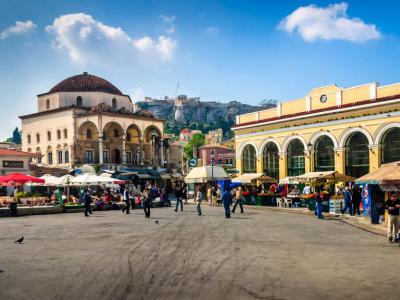
Monastiraki Square is renowned for its striking juxtaposition of architectural styles. Visitors are greeted by the iconic clock tower of the Ottoman-era Tzistarakis Mosque, which stands alongside the remnants of the ancient Agora and the ruins of the Hadrian’s Library. This eclectic mix of historical landmarks reflects the square’s evolution through various periods, from ancient Greece to Roman, Byzantine, and Ottoman times.
The vibrant flea market offers everything from antiques and souvenirs to contemporary fashion. On weekends, the square comes alive with an energetic atmosphere, showcasing traditional Greek music, street performances, and a lively exchange of local culture. And if that's not enough, the surrounding streets are dotted with shops, taverns, bistros, cafes, and tea houses, luring visitors with a chance for a pleasant break.
Monastiraki Square is renowned for its striking juxtaposition of architectural styles. Visitors are greeted by the iconic clock tower of the Ottoman-era Tzistarakis Mosque, which stands alongside the remnants of the ancient Agora and the ruins of the Hadrian’s Library. This eclectic mix of historical landmarks reflects the square’s evolution through various periods, from ancient Greece to Roman, Byzantine, and Ottoman times.
The vibrant flea market offers everything from antiques and souvenirs to contemporary fashion. On weekends, the square comes alive with an energetic atmosphere, showcasing traditional Greek music, street performances, and a lively exchange of local culture. And if that's not enough, the surrounding streets are dotted with shops, taverns, bistros, cafes, and tea houses, luring visitors with a chance for a pleasant break.
4) Kerameikos Ancient Cemetery
If ancient Athens had a VIP section for the dearly departed, Kerameikos would be it. Now, before you start picturing some dusty ruins with a few sad stones, let’s set the record straight-this place is an oasis. Really. Thanks to the lush Iridhanós stream decorated with water lilies, which lazily meanders through the site, it makes it feel more like a secret garden than a burial ground.
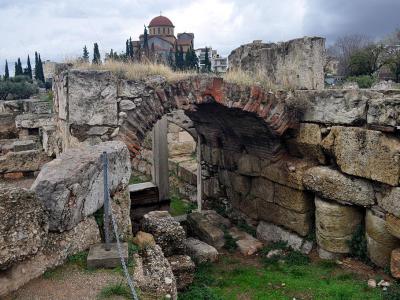
As you enter, glance to your right. There’s the impressive double line of the city wall. Ancient Athens wasn’t an open-door policy kind of town-two major roads once sliced through these defenses, each with its own grand gate-now unearthed through excavations.
First up, the Dipylon Gate, the city’s busiest entrance in its heyday. If ancient Athenians had morning traffic, this is where it all happened-the hustle and bustle of traders, travelers, and festival-goers pouring in from Piraeus, Eleusis, and the north. Then, there’s the Sacred Gate, which wasn’t just a fancy name-it had a VIP role, welcoming the famous Eleusinian and Panathenaic processions into the city, which were basically parades of the gods.
Wander left from the Sacred Way, and you’ll find the Street of the Tombs, where Classical Athens put its best funerary art on display. Expect a mix of solemn ancient headstones and sarcophagi from later Hellenistic and Roman times. Among the highlights is The Memorial of Dexileos, honoring a 20-year-old warrior who fell in battle in 394 BC, and the Monument of Dionysios of Kollytos, topped with a striking, exquisitely sculpted Pentelic marble bull-why settle for a regular tombstone when you can have a full-on animal guardian?
Now, if you love artifacts, the Kerameikos Museum is a must. A chic, marble-floored gallery showcasing stunning ceramics, intricate grave markers, and even children’s burial toys (poignant, yet fascinating). The pottery collection is particularly dazzling, with everything from horse-adorned dishes from the 8th century BC to those famous black-and-red figure vases of the 5th century BC.
Tip:
Your ticket to Kerameikos is part of the Acropolis multi-site pass, so don’t let it go to waste! And before you leave, climb the hill near the entrance-there’s a charming little church and a sweeping panorama of the entire site, perfect for a quiet moment of contemplation… or a dramatic selfie.
As you enter, glance to your right. There’s the impressive double line of the city wall. Ancient Athens wasn’t an open-door policy kind of town-two major roads once sliced through these defenses, each with its own grand gate-now unearthed through excavations.
First up, the Dipylon Gate, the city’s busiest entrance in its heyday. If ancient Athenians had morning traffic, this is where it all happened-the hustle and bustle of traders, travelers, and festival-goers pouring in from Piraeus, Eleusis, and the north. Then, there’s the Sacred Gate, which wasn’t just a fancy name-it had a VIP role, welcoming the famous Eleusinian and Panathenaic processions into the city, which were basically parades of the gods.
Wander left from the Sacred Way, and you’ll find the Street of the Tombs, where Classical Athens put its best funerary art on display. Expect a mix of solemn ancient headstones and sarcophagi from later Hellenistic and Roman times. Among the highlights is The Memorial of Dexileos, honoring a 20-year-old warrior who fell in battle in 394 BC, and the Monument of Dionysios of Kollytos, topped with a striking, exquisitely sculpted Pentelic marble bull-why settle for a regular tombstone when you can have a full-on animal guardian?
Now, if you love artifacts, the Kerameikos Museum is a must. A chic, marble-floored gallery showcasing stunning ceramics, intricate grave markers, and even children’s burial toys (poignant, yet fascinating). The pottery collection is particularly dazzling, with everything from horse-adorned dishes from the 8th century BC to those famous black-and-red figure vases of the 5th century BC.
Tip:
Your ticket to Kerameikos is part of the Acropolis multi-site pass, so don’t let it go to waste! And before you leave, climb the hill near the entrance-there’s a charming little church and a sweeping panorama of the entire site, perfect for a quiet moment of contemplation… or a dramatic selfie.
5) Church of St. Marina (Thissio)
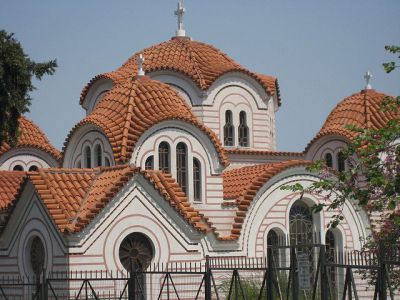
Resembling a layered confection and adorned with vibrant red-tile domes, this Byzantine-style church, erected in 1931 atop a preexisting 19th-century temple, stands proudly on the northwest flank of the Hill of the Nymphs. It neighbors the National Observatory, commanding a picturesque vista of the Thissio area and affording a delightful panoramic view of the city of Athens.
The church's murals, tinged with elements of Art Nouveau, are enchanting, but the true gem lies in the significantly smaller chapel nestled in the southeastern corner, hewn directly into the bedrock. Dating back to the 11th or 12th century, this chapel has been a revered site for health and fertility rituals. Historically, women would visit the church and engage in a tradition of sliding down a small cliff located adjacent to it, seeking to ensure a painless childbirth and the well-being of their unborn child.
The church's murals, tinged with elements of Art Nouveau, are enchanting, but the true gem lies in the significantly smaller chapel nestled in the southeastern corner, hewn directly into the bedrock. Dating back to the 11th or 12th century, this chapel has been a revered site for health and fertility rituals. Historically, women would visit the church and engage in a tradition of sliding down a small cliff located adjacent to it, seeking to ensure a painless childbirth and the well-being of their unborn child.
6) Temple of Hephaestus (must see)
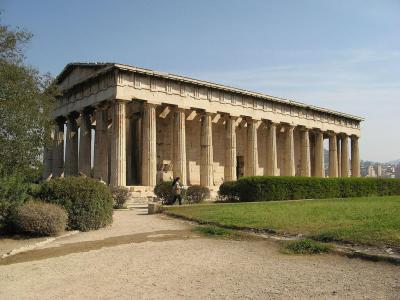
The Temple of Hephaestus is arguably the best-kept piece of real estate in ancient Athens. While other temples crumbled under time, earthquakes, and general neglect, this one decided to stick around, much like a friend who refuses to leave a party.
Dedicated to Hephaestus, the god of fire, metalworking, and crafting all things indestructible (including the Olympian gods’ celestial mansions), this temple sits proudly on Agoraios Kolonos hill, as if keeping an eye on the Agora below. Thanks to its side hustle as a Greek Orthodox church from the 7th century until 1834, it avoided the fate of so many ancient ruins-namely, becoming an oversized jigsaw puzzle.
Its construction started in 449 BC during the Golden Days of Athens, but progress was a bit delayed. Why? Because Athens was busy throwing money at the Parthenon. Eventually, circa 421–415 BC, the builders got back to it, completing this Doric peripteral beauty-a 13+ by 31+ meter marble masterpiece, with six columns at the front, thirteen on the sides, and all the classical elegance you’d expect. Inside, it once housed bronze statues of Hephaestus and Athena, as noted by the Greek travel influencer of antiquity, Pausanias.
The decoration?-A delightful mix of Doric and Ionic flair. The east pediment showed Athena being born (classic), while the west pediment depicted Hephaestus returning to Olympus (presumably after being thrown off it as a baby-tough childhood). The pronaos frieze captured Theseus vs. the Pallantides, while the opisthodomos frieze threw in a good old-fashioned Centaurs vs. Lapiths battle. Meanwhile, 18 sculpted metopes (out of 68) focused on the heroic labors of Heracles and Theseus.
Like all good historical sites, the temple went through a few career changes. By the late Roman Empire, it stopped serving as a pagan sanctuary, and by 700 AD, it was reborn as the Church of Saint George Akamates (why "Akamates"? No one quite knows). Then, in 1833, it hosted one last Divine Liturgy to welcome Greece’s first modern king, Otto, before transforming into a museum. By 1934, the temple officially retired, designated as an ancient monument.
Tips:
The surrounding garden offers shaded spots-perfect for a scenic break.
It’s included in the Acropolis multi-site ticket, so bundle up for the full Athenian experience.
An audio guide is a smart move for deeper insight.
While you can’t waltz inside, the exterior friezes are well worth the admiration.
In short, whether you're a history buff, an architecture lover, or just here for the views, the Temple of Hephaestus is a must-see survivor of ancient Athens-no time machine required.
Dedicated to Hephaestus, the god of fire, metalworking, and crafting all things indestructible (including the Olympian gods’ celestial mansions), this temple sits proudly on Agoraios Kolonos hill, as if keeping an eye on the Agora below. Thanks to its side hustle as a Greek Orthodox church from the 7th century until 1834, it avoided the fate of so many ancient ruins-namely, becoming an oversized jigsaw puzzle.
Its construction started in 449 BC during the Golden Days of Athens, but progress was a bit delayed. Why? Because Athens was busy throwing money at the Parthenon. Eventually, circa 421–415 BC, the builders got back to it, completing this Doric peripteral beauty-a 13+ by 31+ meter marble masterpiece, with six columns at the front, thirteen on the sides, and all the classical elegance you’d expect. Inside, it once housed bronze statues of Hephaestus and Athena, as noted by the Greek travel influencer of antiquity, Pausanias.
The decoration?-A delightful mix of Doric and Ionic flair. The east pediment showed Athena being born (classic), while the west pediment depicted Hephaestus returning to Olympus (presumably after being thrown off it as a baby-tough childhood). The pronaos frieze captured Theseus vs. the Pallantides, while the opisthodomos frieze threw in a good old-fashioned Centaurs vs. Lapiths battle. Meanwhile, 18 sculpted metopes (out of 68) focused on the heroic labors of Heracles and Theseus.
Like all good historical sites, the temple went through a few career changes. By the late Roman Empire, it stopped serving as a pagan sanctuary, and by 700 AD, it was reborn as the Church of Saint George Akamates (why "Akamates"? No one quite knows). Then, in 1833, it hosted one last Divine Liturgy to welcome Greece’s first modern king, Otto, before transforming into a museum. By 1934, the temple officially retired, designated as an ancient monument.
Tips:
The surrounding garden offers shaded spots-perfect for a scenic break.
It’s included in the Acropolis multi-site ticket, so bundle up for the full Athenian experience.
An audio guide is a smart move for deeper insight.
While you can’t waltz inside, the exterior friezes are well worth the admiration.
In short, whether you're a history buff, an architecture lover, or just here for the views, the Temple of Hephaestus is a must-see survivor of ancient Athens-no time machine required.
7) Ancient Agora of Athens (must see)
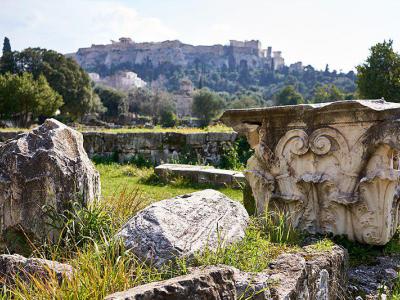
The ancient Agora of Athens sits beneath the revered hill of the Acropolis. This sprawling site contains the remnants of what was once a vast and intricate marketplace complex. In ancient times, the Agora served as the beating heart of public life in the city-state of Athens. Numerous administrative buildings, temples, altars, and roofed shopping arcades known as 'stoas', as well as fountains were constructed around the open square, which took its final shape in the 2nd century AD. Common citizens would gather here to engage in political discussions and participate in the voting process for proposed laws. It was within the Agora council buildings, law courts, and streets that democracy took root and thrived.
In 507 BC, Athenian leader Cleisthenes introduced a system of political reforms which he termed "demokratia", or the "rule of the people". This consisted of three distinct institutions, such as the "ekklesia", a sovereign governing body responsible for drafting laws and shaping foreign policy; the "boule", a council of representatives from the ten Athenian tribes; and the "dikasteria" – popular courts where citizens presented cases to a panel of randomly selected jurors. Although Athenian democracy lasted only two centuries, it stands as one of ancient Greece's most enduring legacies to the modern world.
Beyond its role as the city's political center, the Agora also served as a venue for religious ceremonies, commercial transactions, theatrical and musical shows, and even athletic competitions. The city mint producing Athens' silver currency was here, just as the state prison in which philosopher Socrates was executed in 399 BC.
Tips:
Admission to the on-site museum is included in the Agora ticket. Water fountains and restrooms are conveniently located nearby.
The site also features a well-marked ancient temple complete with the remains of the ancient drainage system.
In 507 BC, Athenian leader Cleisthenes introduced a system of political reforms which he termed "demokratia", or the "rule of the people". This consisted of three distinct institutions, such as the "ekklesia", a sovereign governing body responsible for drafting laws and shaping foreign policy; the "boule", a council of representatives from the ten Athenian tribes; and the "dikasteria" – popular courts where citizens presented cases to a panel of randomly selected jurors. Although Athenian democracy lasted only two centuries, it stands as one of ancient Greece's most enduring legacies to the modern world.
Beyond its role as the city's political center, the Agora also served as a venue for religious ceremonies, commercial transactions, theatrical and musical shows, and even athletic competitions. The city mint producing Athens' silver currency was here, just as the state prison in which philosopher Socrates was executed in 399 BC.
Tips:
Admission to the on-site museum is included in the Agora ticket. Water fountains and restrooms are conveniently located nearby.
The site also features a well-marked ancient temple complete with the remains of the ancient drainage system.
8) Anafiotika and Plaka Stairs (must see)
Nestled in the shadow of the Acropolis and frequently likened to the charming whitewashed villages of the rural Greek islands, Anafiotika is one of Athens' most delightful and idiosyncratic neighborhoods. Situated in the capital's Plaka district, it is poetically described as a "breeze of the Aegean" in the heart of the city, and as such exudes a unique character and ambiance.
Originally settled by the descendants of Anafi stonemasons, who arrived in the 19th century to work in the expanding capital, Anafiotika has retained much of its original charm. The area features simple stone houses, some of which are built directly into the bedrock. Many of them remain unchanged while others have undergone restoration over the years.
The cascades of vibrant bougainvillea and pots of geraniums and marigolds adorn the balconies and rooftops, adding to the prevailing tranquility that contrasts the bustle and noise of modern Athens. Back in antiquity, this area was abandoned because the Delphic Oracle claimed it as a sacred ground. Later, during Ottoman rule, locals ingeniously constructed their homes overnight, taking advantage of the law that granted ownership of the property if it were erected between sunset and sunrise.
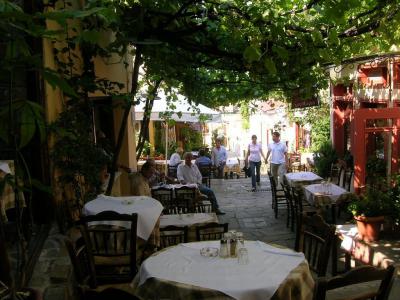
Recently renovated, the Plaka Stairs neighborhood abounds in small eateries and bars scattered on the slopes of the Acropolis, particularly along Mnisikleous pedestrian street and its vicinity. Due to the hilly landscape, this street is designed in the form of steps, lined with cafes and restaurants on both sides. Creative and often compact seating arrangements along the steps create a lively atmosphere filled with music and the cheerful voices of the passers-by. This unique dining experience is guaranteed from early lunchtime until the evening.
Tip:
For those seeking a lovely spot for dinner and drinks, the Anafiotika Cafe Restaurant, located on the narrow Plaka Steps, offers a spacious patio area and a rooftop terrace that is perfect for catching the sunset.
Originally settled by the descendants of Anafi stonemasons, who arrived in the 19th century to work in the expanding capital, Anafiotika has retained much of its original charm. The area features simple stone houses, some of which are built directly into the bedrock. Many of them remain unchanged while others have undergone restoration over the years.
The cascades of vibrant bougainvillea and pots of geraniums and marigolds adorn the balconies and rooftops, adding to the prevailing tranquility that contrasts the bustle and noise of modern Athens. Back in antiquity, this area was abandoned because the Delphic Oracle claimed it as a sacred ground. Later, during Ottoman rule, locals ingeniously constructed their homes overnight, taking advantage of the law that granted ownership of the property if it were erected between sunset and sunrise.
Recently renovated, the Plaka Stairs neighborhood abounds in small eateries and bars scattered on the slopes of the Acropolis, particularly along Mnisikleous pedestrian street and its vicinity. Due to the hilly landscape, this street is designed in the form of steps, lined with cafes and restaurants on both sides. Creative and often compact seating arrangements along the steps create a lively atmosphere filled with music and the cheerful voices of the passers-by. This unique dining experience is guaranteed from early lunchtime until the evening.
Tip:
For those seeking a lovely spot for dinner and drinks, the Anafiotika Cafe Restaurant, located on the narrow Plaka Steps, offers a spacious patio area and a rooftop terrace that is perfect for catching the sunset.
9) Parthenon (must see)
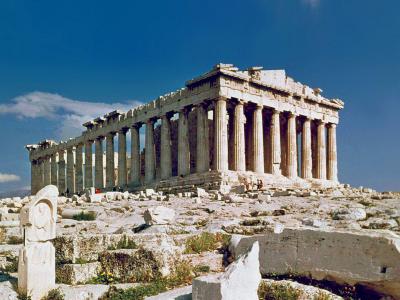
Presiding over the Acropolis like a timeless guardian of Athens, the Parthenon is one of the finest and most recognizable examples of classical architecture. This 5th-century BC temple was the brainchild of Pericles, the man who decided Athens needed an upgrade-preferably in glorious white Pentelic marble.
Replacing an older sanctuary, the Parthenon was dedicated to Athena, the city's patron goddess, whose grand 12-meter-tall statue, adorned in ivory and gold, once dazzled anyone lucky enough to lay eyes on it. More than just a temple, the Parthenon was a statement piece-loud and clear-about Athens' dominance following its victories in the Persian Wars and its leading role in the Delian League (uniting under its umbrella equal city-states against Persia). In other words, it wasn’t just about worship; it was about showing off.
Designed in the Doric style, the temple was built to withstand the test of time-but history had other plans. Over the centuries, it transformed from a Greek temple to a Byzantine church, then a Turkish mosque, and finally, in 1687, into a really unlucky storage facility for gunpowder. That decision ended about as well as you'd expect when the Venetians decided to bombard the Acropolis, causing a spectacular explosion. And if that wasn't enough, Lord Elgin of Great Britain came along in the 19th century and helped himself to much of its sculptural beauty, now sitting in the British Museum.
Yet, despite the looting, wars, and centuries of wear, the Parthenon still reigns supreme, standing as an enduring emblem of Greek culture and a favorite inspiration for neoclassical buildings worldwide.
Tips:
Go early-unless you enjoy waiting in long lines under the scorching Athenian sun.
Use both entrances to explore the site fully.
Get a combined ticket-it covers multiple iconic spots, including the Odeon of Herodes Atticus, the Theater of Dionysus, the Temple of Olympian Zeus, and the Ancient Agora. Because if you're traveling back in time, you might as well see it all.
Replacing an older sanctuary, the Parthenon was dedicated to Athena, the city's patron goddess, whose grand 12-meter-tall statue, adorned in ivory and gold, once dazzled anyone lucky enough to lay eyes on it. More than just a temple, the Parthenon was a statement piece-loud and clear-about Athens' dominance following its victories in the Persian Wars and its leading role in the Delian League (uniting under its umbrella equal city-states against Persia). In other words, it wasn’t just about worship; it was about showing off.
Designed in the Doric style, the temple was built to withstand the test of time-but history had other plans. Over the centuries, it transformed from a Greek temple to a Byzantine church, then a Turkish mosque, and finally, in 1687, into a really unlucky storage facility for gunpowder. That decision ended about as well as you'd expect when the Venetians decided to bombard the Acropolis, causing a spectacular explosion. And if that wasn't enough, Lord Elgin of Great Britain came along in the 19th century and helped himself to much of its sculptural beauty, now sitting in the British Museum.
Yet, despite the looting, wars, and centuries of wear, the Parthenon still reigns supreme, standing as an enduring emblem of Greek culture and a favorite inspiration for neoclassical buildings worldwide.
Tips:
Go early-unless you enjoy waiting in long lines under the scorching Athenian sun.
Use both entrances to explore the site fully.
Get a combined ticket-it covers multiple iconic spots, including the Odeon of Herodes Atticus, the Theater of Dionysus, the Temple of Olympian Zeus, and the Ancient Agora. Because if you're traveling back in time, you might as well see it all.
10) Acropolis Museum (must see)
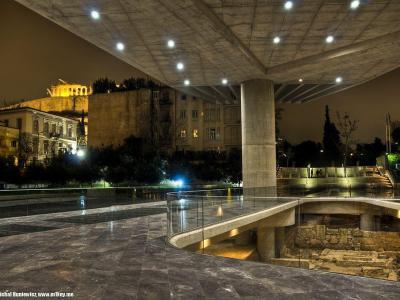
Welcome to the Acropolis Museum, where ancient history meets sleek modern design-because nothing says “let’s preserve the past” quite like this four-story glass fortress perched atop millennia of buried treasures. Since 2009, this museum has housed every artifact unearthed from the Acropolis, making it the ultimate attic of Athenian greatness.
Step inside, and you’re greeted by an ancient owl-Athena’s favorite bird, dating back to 500 BC-watching over visitors with an expression that says, “I’ve seen it all.” As for the exhibits, there's a dazzling array of freestanding sculptures, marble figures, and friezes, each with a story to tell (if only marble could talk). And for a touch of drama, the museum’s glass floors and walkways let you peer down at the remains of an ancient civilization, like an archaeological reality show in progress.
The collections follow a timeline, beginning with finds from the Acropolis slopes-statues, reliefs, and pieces from the Sanctuary of Asclepius, the god of healing (who, let’s be honest, would have had his hands full in ancient Athens). Move on to the Archaic Collection, displayed in a soaring gallery, where mythological scenes play out in painted pediments-think Hercules wrestling monsters long before superhero movies were a thing. One level down, the post-Parthenon Collection showcases sculptures from the Temple of Athena Nike, architectural gems from the Propylaea, and five of the six legendary Caryatids from the Erechtheion (the sixth is currently “on leave” at the British Museum).
Cool, organized, and mercifully air-conditioned, the Acropolis Museum offers a captivating dive into ancient Athenian life-complete with multimedia presentations and expert guides ready to unravel centuries of history.
Tip:
Start with the video on the third floor, then work your way down through history. And when your brain needs a break, the second-floor terrace awaits-with panoramic views and a café serving Greek cuisine that even the gods would approve of.
Step inside, and you’re greeted by an ancient owl-Athena’s favorite bird, dating back to 500 BC-watching over visitors with an expression that says, “I’ve seen it all.” As for the exhibits, there's a dazzling array of freestanding sculptures, marble figures, and friezes, each with a story to tell (if only marble could talk). And for a touch of drama, the museum’s glass floors and walkways let you peer down at the remains of an ancient civilization, like an archaeological reality show in progress.
The collections follow a timeline, beginning with finds from the Acropolis slopes-statues, reliefs, and pieces from the Sanctuary of Asclepius, the god of healing (who, let’s be honest, would have had his hands full in ancient Athens). Move on to the Archaic Collection, displayed in a soaring gallery, where mythological scenes play out in painted pediments-think Hercules wrestling monsters long before superhero movies were a thing. One level down, the post-Parthenon Collection showcases sculptures from the Temple of Athena Nike, architectural gems from the Propylaea, and five of the six legendary Caryatids from the Erechtheion (the sixth is currently “on leave” at the British Museum).
Cool, organized, and mercifully air-conditioned, the Acropolis Museum offers a captivating dive into ancient Athenian life-complete with multimedia presentations and expert guides ready to unravel centuries of history.
Tip:
Start with the video on the third floor, then work your way down through history. And when your brain needs a break, the second-floor terrace awaits-with panoramic views and a café serving Greek cuisine that even the gods would approve of.
11) National Garden
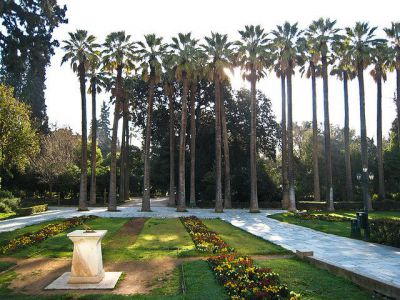
Just behind the Voulí parliament building, this expansive 16-hectare (40-acre) park, held dear by all Athenians and formerly referred to as the "Royal Gardens", was officially renamed the National Gardens in 1923 by decree. The park's origins date back to the 1840s when Queen Amalía spearheaded its creation, even using the fledgling Greek navy to transport 15,000 seedlings from various corners of the world. Landscaping was entrusted to Prussian horticulturalist Friedrich Schmidt, an avid traveler who scoured the globe in search of rare plant specimens. Notably, Queen Amalía herself planted the avenue of Washingtonia fan palms, native to the southwestern United States.
While the gardens have undergone changes over the years, they remain a serene oasis in the heart of the city. Winding paths lead visitors past charming squares, park benches, and ponds inhabited by koi fish. Adding to the ambiance, visitors can explore remnants of Roman mosaics unearthed within the park and an ancient aqueduct. Throughout the gardens, you'll also encounter modern sculptures paying tribute to renowned writers such as Dionýsios Solomós (author of the Greek National Hymn), Aristotélis Valaorítis, and Jean Moreas. Towards the eastern end stands the neoclassical Zappeion Hall, constructed in 1888 as an Olympic facility. You will also find a duck pond, a small zoo, a small cafe, and a Children's Library and playground. The place is quite clean, suitable and safe for everyone in daytime.
Tip:
The pine-covered Ardittos Hill nearby offers one of the city's most serene and tranquil public spaces, along with stunning viewpoints.
While the gardens have undergone changes over the years, they remain a serene oasis in the heart of the city. Winding paths lead visitors past charming squares, park benches, and ponds inhabited by koi fish. Adding to the ambiance, visitors can explore remnants of Roman mosaics unearthed within the park and an ancient aqueduct. Throughout the gardens, you'll also encounter modern sculptures paying tribute to renowned writers such as Dionýsios Solomós (author of the Greek National Hymn), Aristotélis Valaorítis, and Jean Moreas. Towards the eastern end stands the neoclassical Zappeion Hall, constructed in 1888 as an Olympic facility. You will also find a duck pond, a small zoo, a small cafe, and a Children's Library and playground. The place is quite clean, suitable and safe for everyone in daytime.
Tip:
The pine-covered Ardittos Hill nearby offers one of the city's most serene and tranquil public spaces, along with stunning viewpoints.
12) Panathenaic Stadium (must see)
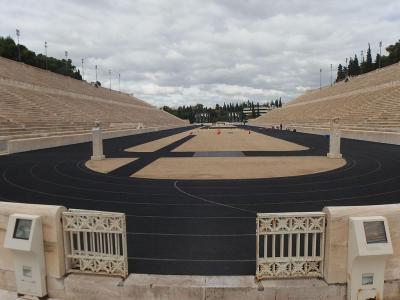
The Panathenaic is truly a remarkable historical site, being the only major stadium in the world constructed entirely of white marble. Its origins trace back to ancient times when it served as the venue for the athletic competitions of the Panathenaic Games, dedicated to the Goddess Athena and held every four years. The stadium underwent significant transformations, with a marble reconstruction in 329 BC and later expansion and renovation in 140 AD, accommodating up to 50,000 spectators.
Having fallen into disuse and disrepair after the 4th century AD, it was rediscovered and revitalized for the modern era, playing a pivotal role in the revival of the Olympic Games in the late 19th century. Despite its smaller scale compared to contemporary Olympic venues, the Panathenaic's elegant simplicity and iconic five Olympic rings continue to inspire awe. At the entrance, you'll encounter four stones engraved with the interesting history of the Olympics from the late 19th century to the present day.
The inaugural international Olympic Games in modern history were held here in 1896, with King George I of Greece opening the ceremony. Among participants were 241 male athletes from 14 countries, competing in 9 sports and 43 events. These early modern Olympic sports included athletics, cycling, fencing, gymnastics, tennis, shooting, swimming, weightlifting, and wrestling. Since then, athletes from across the globe have convened every four years, with the tradition enduring through the tumultuous 20th century wars.
Why You Should Visit:
A captivating place to explore, and you can enhance your visit with the free audio guide provided.
The on-site museum provides an engaging exhibition on the fascinating history of the Olympics.
Tip:
Don't miss the opportunity to climb to the upper tier for stunning views of the stadium.
Having fallen into disuse and disrepair after the 4th century AD, it was rediscovered and revitalized for the modern era, playing a pivotal role in the revival of the Olympic Games in the late 19th century. Despite its smaller scale compared to contemporary Olympic venues, the Panathenaic's elegant simplicity and iconic five Olympic rings continue to inspire awe. At the entrance, you'll encounter four stones engraved with the interesting history of the Olympics from the late 19th century to the present day.
The inaugural international Olympic Games in modern history were held here in 1896, with King George I of Greece opening the ceremony. Among participants were 241 male athletes from 14 countries, competing in 9 sports and 43 events. These early modern Olympic sports included athletics, cycling, fencing, gymnastics, tennis, shooting, swimming, weightlifting, and wrestling. Since then, athletes from across the globe have convened every four years, with the tradition enduring through the tumultuous 20th century wars.
Why You Should Visit:
A captivating place to explore, and you can enhance your visit with the free audio guide provided.
The on-site museum provides an engaging exhibition on the fascinating history of the Olympics.
Tip:
Don't miss the opportunity to climb to the upper tier for stunning views of the stadium.
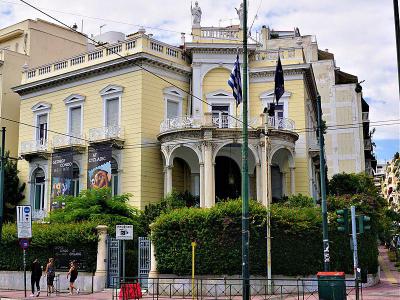
13) Museum of Cycladic Art (must see)
This museum is home to one of the world's most exquisite collections of Cycladic art, featuring elegant carvings that are unlike anything found in contemporary civilizations. These artifacts are remnants of an ancient culture that thrived in the Cycladic Islands of the Aegean Sea from around 3,200 to 1,000 BC. The islands formed a homogenous unit, with pristine white marble from places like Paros and Naxos, as well as rich mineral deposits including gold, silver, and copper on other islands. Such an abundance of resources led to a flourishing industry in various arts and crafts, especially sculpture, metallurgy, and jewelry-making. The items were traded not only within Greece but also with Asia Minor (modern-day Turkey).
The museum's collection was initially curated by Nikolaos and Dolly Goulandrís, members of Greece's most prominent shipping dynasty, and it has grown over time with contributions from other Greek collectors. Dating back to the 3rd millennium BC, the Cycladic marble sculptures depicting both women and men exhibit a haunting simplicity that has inspired numerous 20th-century artists and sculptors, including Henry Moore, Picasso, and Modigliani. Additionally, the museum features an outstanding selection of ancient Greek and Cypriot art pieces, some dating as far back as 5,000 years ago.
In the main building, the Cycladic collection is on the first floor, ancient Greek art is on the second floor, and the third floor features ancient Cypriot art, while the fourth floor houses objects depicting everyday life in antiquity. The neoclassical Stathátos Mansion, an adjacent structure designed by Bavarian architect Ernst Ziller in 1895, hosts temporary exhibitions, receptions, and lectures.
Why You Should Visit:
The four floors of this exceptional museum offer a comprehensive exploration of the history and culture of the Cycladic Islands through various means, including exhibits, artifacts, soundscapes, and films.
Tip:
Be sure to explore the second building as well. While you may come across interesting temporary exhibitions, the building itself is worth a brief stroll.
The museum's collection was initially curated by Nikolaos and Dolly Goulandrís, members of Greece's most prominent shipping dynasty, and it has grown over time with contributions from other Greek collectors. Dating back to the 3rd millennium BC, the Cycladic marble sculptures depicting both women and men exhibit a haunting simplicity that has inspired numerous 20th-century artists and sculptors, including Henry Moore, Picasso, and Modigliani. Additionally, the museum features an outstanding selection of ancient Greek and Cypriot art pieces, some dating as far back as 5,000 years ago.
In the main building, the Cycladic collection is on the first floor, ancient Greek art is on the second floor, and the third floor features ancient Cypriot art, while the fourth floor houses objects depicting everyday life in antiquity. The neoclassical Stathátos Mansion, an adjacent structure designed by Bavarian architect Ernst Ziller in 1895, hosts temporary exhibitions, receptions, and lectures.
Why You Should Visit:
The four floors of this exceptional museum offer a comprehensive exploration of the history and culture of the Cycladic Islands through various means, including exhibits, artifacts, soundscapes, and films.
Tip:
Be sure to explore the second building as well. While you may come across interesting temporary exhibitions, the building itself is worth a brief stroll.
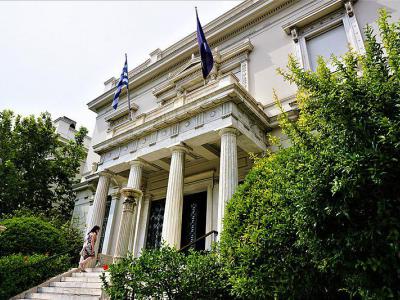
14) Benaki Museum (must see)
Established in 1931 by Antónis Benákis and housed within an elegant Neoclassical mansion dating back to 1867, which once served as the residence of the Benákis family, this museum stands out as perhaps the sole institution that comprehensively chronicles all eras of Greek culture and history. Its impressive collection encompasses Greek arts, paintings, jewelry, regional costumes, and political memorabilia, spanning an impressive timeline of over 5,000 years, from the Neolithic era (7,000 BC) to the 20th century. The wealth of exhibits is incredibly diverse, impeccably organized, and thoughtfully curated, providing visitors with a coherent historical context. A visit is undoubtedly worthwhile, especially for those with limited time in Athens seeking a museum that encapsulates Greece's rich history.
The ground floor exhibition is thoughtfully arranged into distinct periods, encompassing prehistoric to late Byzantine art and Cretan icon painting. On the first floor, exhibits are organized by geographic origin, showcasing artifacts from Asia Minor, mainland Greece, and the Greek islands, as well as a remarkable collection of ecclesiastical silverware and jewelry. The second floor features artifacts pertaining to Greek spiritual, economic, and social life, while the third floor delves into the Greek War of Independence, modern political and cultural developments, and includes a space for temporary exhibitions.
The museum's lesser-known gems include a ground-floor gift shop and a rooftop café, the latter offering delectable cuisine and breathtaking views of the National Gardens and the House of Parliament.
Tip:
Consider visiting on Thursdays when the museum offers free admission and extends its opening hours until midnight.
The ground floor exhibition is thoughtfully arranged into distinct periods, encompassing prehistoric to late Byzantine art and Cretan icon painting. On the first floor, exhibits are organized by geographic origin, showcasing artifacts from Asia Minor, mainland Greece, and the Greek islands, as well as a remarkable collection of ecclesiastical silverware and jewelry. The second floor features artifacts pertaining to Greek spiritual, economic, and social life, while the third floor delves into the Greek War of Independence, modern political and cultural developments, and includes a space for temporary exhibitions.
The museum's lesser-known gems include a ground-floor gift shop and a rooftop café, the latter offering delectable cuisine and breathtaking views of the National Gardens and the House of Parliament.
Tip:
Consider visiting on Thursdays when the museum offers free admission and extends its opening hours until midnight.
