Custom Walk in Rome, Italy by domnadk7322 created on 2026-05-23
Guide Location: Italy » Rome
Guide Type: Custom Walk
# of Sights: 6
Tour Duration: 2 Hour(s)
Travel Distance: 4.3 Km or 2.7 Miles
Share Key: 33YCH
Guide Type: Custom Walk
# of Sights: 6
Tour Duration: 2 Hour(s)
Travel Distance: 4.3 Km or 2.7 Miles
Share Key: 33YCH
How It Works
Please retrieve this walk in the GPSmyCity app. Once done, the app will guide you from one tour stop to the next as if you had a personal tour guide. If you created the walk on this website or come to the page via a link, please follow the instructions below to retrieve the walk in the app.
Retrieve This Walk in App
Step 1. Download the app "GPSmyCity: Walks in 1K+ Cities" on Apple App Store or Google Play Store.



Step 2. In the GPSmyCity app, download(or launch) the guide "Rome Map and Walking Tours".
Step 3. Tap the menu button located at upper right corner of the "Walks" screen and select "Retrieve custom walk". Enter the share key: 33YCH
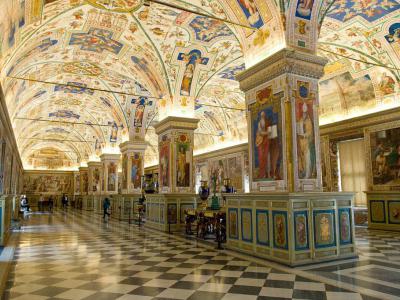
1) Musei Vaticani (Vatican Museums) (must see)
The Vatican Museums house an extensive collection of art and historical artifacts amassed by the Catholic Church over centuries. With approximately 70,000 works, of which 20,000 are on display, they rank among the most significant museums in the world and are the second most-visited art museum after the Louvre.
The museums trace their origins to Pope Julius II in the early 16th century. Their foundation is closely linked to the discovery of the famous Roman sculpture "Laocoon and His Sons" in 1506. Following expert advice from Michelangelo and Giuliano da Sangallo, who was an Italian sculptor, architect, and military engineer, the Pope acquired the piece and put it on display. Over time, the collection expanded, with Pope Pius IX establishing the Museum Christianum and Lateran Museum in 1854. In 2006, the museums celebrated their 500th anniversary by opening the Vatican Hill necropolis to the public.
The museums include 24 galleries, culminating in the Sistine Chapel, famous for Michelangelo’s frescoed ceiling and The Last Judgment. Other highlights include the Raphael Rooms, featuring masterpieces like The School of Athens, and the Vatican Art Gallery, showcasing works by Giotto, Leonardo da Vinci, Raphael, Titian, Caravaggio, and Veronese.
Several museums surrounding the Belvedere Courtyard specialize in sculpture. The Pio-Clementino Museum is the most prominent, housing Greek and Roman sculptures, such as Apollo Belvedere and Laocoön and His Sons. The Chiaramonti Museum displays statues, friezes, and sarcophagi, while the Gregoriano Etrusco and Gregoriano Egiziano museums feature Etruscan and Egyptian antiquities, respectively.
The Vatican Historical Museum (established in 1973) displays papal artifacts, including a red marble papal throne. The Gallery of Maps, commissioned by Pope Gregory XIII, remains the largest geographical pictorial study ever created. The Borgia Apartment, once home to Pope Alexander VI, contains Renaissance frescoes. Another highlight is the Bramante Staircase, a stunning double-helix design from 1932.
Tip:
Before embarking on a visit, ensure you have a satisfying breakfast and wear comfortable walking shoes. It can be helpful to prioritize a few key pieces of art that you don't want to miss and focus on experiencing those. Alternatively, if you wish to explore the entire collection, plan for multiple visits.
It is highly recommended to book tickets in advance online, particularly for an afternoon visit during the middle of the week. Saturdays and Mondays tend to be the busiest days, so opting for other times can enhance your experience.
The museums trace their origins to Pope Julius II in the early 16th century. Their foundation is closely linked to the discovery of the famous Roman sculpture "Laocoon and His Sons" in 1506. Following expert advice from Michelangelo and Giuliano da Sangallo, who was an Italian sculptor, architect, and military engineer, the Pope acquired the piece and put it on display. Over time, the collection expanded, with Pope Pius IX establishing the Museum Christianum and Lateran Museum in 1854. In 2006, the museums celebrated their 500th anniversary by opening the Vatican Hill necropolis to the public.
The museums include 24 galleries, culminating in the Sistine Chapel, famous for Michelangelo’s frescoed ceiling and The Last Judgment. Other highlights include the Raphael Rooms, featuring masterpieces like The School of Athens, and the Vatican Art Gallery, showcasing works by Giotto, Leonardo da Vinci, Raphael, Titian, Caravaggio, and Veronese.
Several museums surrounding the Belvedere Courtyard specialize in sculpture. The Pio-Clementino Museum is the most prominent, housing Greek and Roman sculptures, such as Apollo Belvedere and Laocoön and His Sons. The Chiaramonti Museum displays statues, friezes, and sarcophagi, while the Gregoriano Etrusco and Gregoriano Egiziano museums feature Etruscan and Egyptian antiquities, respectively.
The Vatican Historical Museum (established in 1973) displays papal artifacts, including a red marble papal throne. The Gallery of Maps, commissioned by Pope Gregory XIII, remains the largest geographical pictorial study ever created. The Borgia Apartment, once home to Pope Alexander VI, contains Renaissance frescoes. Another highlight is the Bramante Staircase, a stunning double-helix design from 1932.
Tip:
Before embarking on a visit, ensure you have a satisfying breakfast and wear comfortable walking shoes. It can be helpful to prioritize a few key pieces of art that you don't want to miss and focus on experiencing those. Alternatively, if you wish to explore the entire collection, plan for multiple visits.
It is highly recommended to book tickets in advance online, particularly for an afternoon visit during the middle of the week. Saturdays and Mondays tend to be the busiest days, so opting for other times can enhance your experience.
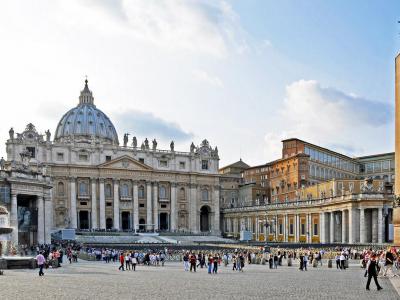
2) Basilica Papale di San Pietro in Vaticano (Saint Peter's Basilica) (must see)
Despite not being the mother church of Catholicism or Rome's cathedral, Saint Peter's Basilica in the Vatican is one of Christianity's holiest sites. Tradition holds that Saint Peter, the first Bishop of Rome, is buried inside, beneath the high altar, known as the Altar of the Confession.
Built to replace the aging original basilica, the new construction began in 1506, under Pope Julius II, and was completed in 1626. Designed by Renaissance masters such as Donato Bramante, Michelangelo, and Carlo Maderno, the structure embodies the grandeur of Italian High Renaissance architecture. Its vast interior makes it the largest church in the world by space.
The Latin cross layout features a vast dome, spanning 42 meters in diameter and towering 120 meters high. Meanwhile, the imposing façade adorned with statues of Saints Peter and Paul is complemented by a narthex housing the Holy Door. The latter, walled up with bricks, is opened only during jubilee years. Inside, the immense nave, wide aisles, and chapels are decorated with elaborate sculptures and artwork. Among these are Michelangelo’s Pietà and Bernini’s Baldachin, a monumental canopy over the Papal Altar. Other notable artworks include Giotto’s Navicella mosaic and equestrian statues of Constantine and Charlemagne.
Michelangelo played a crucial role in shaping the place, refining its design into a more unified and monumental form. His dome, completed in 1590, has profoundly influenced Western church architecture. Slightly more pointed than Michelangelo's original plan, the dome's design blends Renaissance ideals with Baroque dynamism. Encircling the interior is an inscription that reads: "You are Peter, and on this rock I will build my church... and I will give you the keys of the kingdom of heaven."
The basilica also has six bells. The largest of them, "Campanone," weighs 9 tons and is used for ringing for papal blessings. Up on the roof are the sculptures of Christ the Redeemer, Saint John the Baptist, and 11 Apostles. Meanwhile, inside, there are over 100 tombs. Among those laid to rest are many popes, including Pope Jean Paul II, royals, and other historical figures, such as Holy Roman Emperor Otto II and Italian composer Giovanni Pierluigi da Palestrina.
Tips:
Arrive early in the morning to avoid long queues. Admission is free (until 5 PM when the gates close), but expect to undergo a security check before entering. Remember to dress modestly, with knees and shoulders covered (affordable scarves for ladies are available from nearby vendors). If you're feeling adventurous, ascend to the top of the dome. An elevator ride can save you from climbing more than 300 stairs.
Built to replace the aging original basilica, the new construction began in 1506, under Pope Julius II, and was completed in 1626. Designed by Renaissance masters such as Donato Bramante, Michelangelo, and Carlo Maderno, the structure embodies the grandeur of Italian High Renaissance architecture. Its vast interior makes it the largest church in the world by space.
The Latin cross layout features a vast dome, spanning 42 meters in diameter and towering 120 meters high. Meanwhile, the imposing façade adorned with statues of Saints Peter and Paul is complemented by a narthex housing the Holy Door. The latter, walled up with bricks, is opened only during jubilee years. Inside, the immense nave, wide aisles, and chapels are decorated with elaborate sculptures and artwork. Among these are Michelangelo’s Pietà and Bernini’s Baldachin, a monumental canopy over the Papal Altar. Other notable artworks include Giotto’s Navicella mosaic and equestrian statues of Constantine and Charlemagne.
Michelangelo played a crucial role in shaping the place, refining its design into a more unified and monumental form. His dome, completed in 1590, has profoundly influenced Western church architecture. Slightly more pointed than Michelangelo's original plan, the dome's design blends Renaissance ideals with Baroque dynamism. Encircling the interior is an inscription that reads: "You are Peter, and on this rock I will build my church... and I will give you the keys of the kingdom of heaven."
The basilica also has six bells. The largest of them, "Campanone," weighs 9 tons and is used for ringing for papal blessings. Up on the roof are the sculptures of Christ the Redeemer, Saint John the Baptist, and 11 Apostles. Meanwhile, inside, there are over 100 tombs. Among those laid to rest are many popes, including Pope Jean Paul II, royals, and other historical figures, such as Holy Roman Emperor Otto II and Italian composer Giovanni Pierluigi da Palestrina.
Tips:
Arrive early in the morning to avoid long queues. Admission is free (until 5 PM when the gates close), but expect to undergo a security check before entering. Remember to dress modestly, with knees and shoulders covered (affordable scarves for ladies are available from nearby vendors). If you're feeling adventurous, ascend to the top of the dome. An elevator ride can save you from climbing more than 300 stairs.
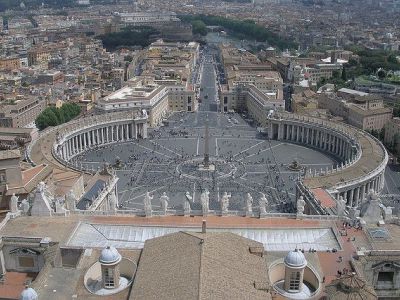
3) Piazza San Pietro (St. Peter's Square) (must see)
Saint Peter's Square is a grand plaza in front of Saint Peter's Basilica in Vatican City. Both the square and the basilica (the largest Christian temple and spiritual heart of Catholicism), are dedicated to Saint Peter, one of Jesus’s apostles, who is also regarded as the first Pope.
Dominating the square's center is the Vatican obelisk, a red granite structure, rising to approximately 25 meters (or 83 feet). Originally erected in Heliopolis, Egypt, it was moved to Rome by Emperor Caligula in the 1st century AD and was finally relocated to its current position in 1586 by engineer Domenico Fontana under Pope Sixtus V. The obelisk, adorned with bronze lions and a cross-topped Chigi family crest, has remained intact since antiquity. It serves as the plaza's focal point and symbolizes the triumph of Christianity over paganism.
Designed by Gian Lorenzo Bernini between 1656 and 1667 under Pope Alexander VII, the square was intended to maximize visibility for papal blessings. Bernini incorporated colossal Tuscan colonnades, which are four columns deep and comprise 284 columns and 88 pilasters. The colonnades encircle the oval-shaped plaza, symbolizing the "maternal arms of Mother Church." The trapezoidal approach enhances the visual impact, a hallmark of Baroque design.
The square also features two matching fountains, flanking the obelisk, created by Carlo Maderno and Bernini (in 1613 and 1675 respectively), balancing the architectural harmony. The fountains represent the life-giving waters of the Christian faith.
The paving of the square includes travertine lines that radiate outward, breaking up the vast stone surface. In 1817, circular stones were added to transform the obelisk into a giant sundial, marking the sun’s position as it enters each zodiac sign.
Saint Peter's Square is accessible via Conciliation Street, an avenue created between 1937 and 1950 following the demolition of the medieval “spina” area. Its removal, under Mussolini's directive, made the basilica visible from Saint Angel's Castle.
Apart from being an architectural marvel, today the square serves as a gathering space for momentous events and ceremonies within the Catholic Church. These attract annually millions of visitors and pilgrims from across the globe seeking to attend papal audiences and receive blessings from the Pope. During significant occasions like Easter Sunday and Christmas, the square transforms into a splendid backdrop for grand celebrations and religious rituals, much as for capturing memorable photos.
Dominating the square's center is the Vatican obelisk, a red granite structure, rising to approximately 25 meters (or 83 feet). Originally erected in Heliopolis, Egypt, it was moved to Rome by Emperor Caligula in the 1st century AD and was finally relocated to its current position in 1586 by engineer Domenico Fontana under Pope Sixtus V. The obelisk, adorned with bronze lions and a cross-topped Chigi family crest, has remained intact since antiquity. It serves as the plaza's focal point and symbolizes the triumph of Christianity over paganism.
Designed by Gian Lorenzo Bernini between 1656 and 1667 under Pope Alexander VII, the square was intended to maximize visibility for papal blessings. Bernini incorporated colossal Tuscan colonnades, which are four columns deep and comprise 284 columns and 88 pilasters. The colonnades encircle the oval-shaped plaza, symbolizing the "maternal arms of Mother Church." The trapezoidal approach enhances the visual impact, a hallmark of Baroque design.
The square also features two matching fountains, flanking the obelisk, created by Carlo Maderno and Bernini (in 1613 and 1675 respectively), balancing the architectural harmony. The fountains represent the life-giving waters of the Christian faith.
The paving of the square includes travertine lines that radiate outward, breaking up the vast stone surface. In 1817, circular stones were added to transform the obelisk into a giant sundial, marking the sun’s position as it enters each zodiac sign.
Saint Peter's Square is accessible via Conciliation Street, an avenue created between 1937 and 1950 following the demolition of the medieval “spina” area. Its removal, under Mussolini's directive, made the basilica visible from Saint Angel's Castle.
Apart from being an architectural marvel, today the square serves as a gathering space for momentous events and ceremonies within the Catholic Church. These attract annually millions of visitors and pilgrims from across the globe seeking to attend papal audiences and receive blessings from the Pope. During significant occasions like Easter Sunday and Christmas, the square transforms into a splendid backdrop for grand celebrations and religious rituals, much as for capturing memorable photos.
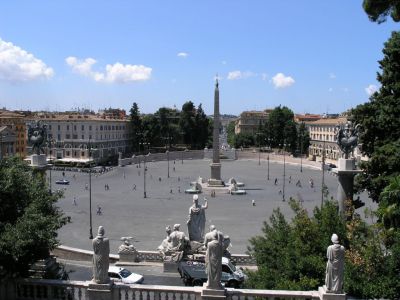
4) Piazza del Popolo (People's Square)
Characterized by its obelisk and twin churches, this expansive oval-shaped space stands as an iconic landmark in Rome. Throughout the centuries, it served as the northern gateway to the city, where countless visitors, including pilgrims, would experience their initial encounter with the Eternal City. The ambition to create a distinct and memorable entrance to Rome was an endeavor pursued by popes and architects over several generations. Thanks to Valadier's contributions, the square exhibits its present symmetrical design, highlighted by the addition of the central fountain in 1814. The monumental Porta del Popolo, crafted by Bernini in 1655, bears the Chigi family symbol, an emblematic representation of their patron, Alexander VII, featuring a mound of hills crowned by a star, prominently displayed above the main gateway.
Once adorned with fashionable carriages and enlivened by carnival revelers, the piazza has now transformed into a pedestrian zone, teeming with life. It serves as a venue for major political rallies during election periods and hosts a magnificent outdoor celebration on New Year's Eve. During the summer months, locals and visitors alike gather on the steps surrounding the obelisk and fountain, as well as at the charming cafes. However, the true allure of the square lies in the uninterrupted view it offers, stretching all the way down Via del Corso, leading the gaze to the central columns of the Vittoriano.
If you have the opportunity to choose your first glimpse of Rome's city center, let it be from this remarkable vantage point.
Why You Should Visit:
A great starting point for those interested in walking their way through Rome, as it leads to many historic, cultural and social sites.
Tip:
Head up the steps towards Villa Borghese for a great view across the piazza and over to the Vatican.
Also, when the summer sun is beating down on you, there is nothing like the shady retreat of the Borghese park right above.
Once adorned with fashionable carriages and enlivened by carnival revelers, the piazza has now transformed into a pedestrian zone, teeming with life. It serves as a venue for major political rallies during election periods and hosts a magnificent outdoor celebration on New Year's Eve. During the summer months, locals and visitors alike gather on the steps surrounding the obelisk and fountain, as well as at the charming cafes. However, the true allure of the square lies in the uninterrupted view it offers, stretching all the way down Via del Corso, leading the gaze to the central columns of the Vittoriano.
If you have the opportunity to choose your first glimpse of Rome's city center, let it be from this remarkable vantage point.
Why You Should Visit:
A great starting point for those interested in walking their way through Rome, as it leads to many historic, cultural and social sites.
Tip:
Head up the steps towards Villa Borghese for a great view across the piazza and over to the Vatican.
Also, when the summer sun is beating down on you, there is nothing like the shady retreat of the Borghese park right above.
5) Passeggiata del Pincio (Pincio Promenade)
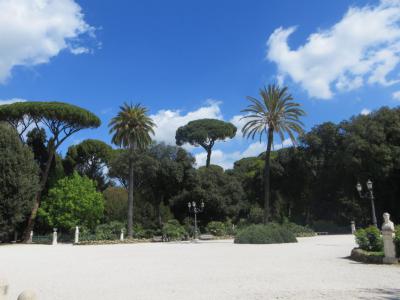
With an enchanting ambiance reminiscent of a bygone era, the Pincian Gardens have retained their status as a timeless destination for leisurely walks. Once a gathering place for Grand Tourists and even frequented by popes, this picturesque spot offered a chance to see and be seen among Rome's high society.
Today, the Pincian Terrace continues to be a beloved spot for locals, especially during leisurely Sunday strolls in the springtime. The gardens showcase an elegant, early-19th-century style, offering a delightful contrast to the more elaborate terraced gardens of Lucullus, the legendary Roman gastronome who hosted lavish banquets in this very location. Along the pathways, you'll find off-white marble busts honoring Italian Risorgimento heroes and renowned artists, although unfortunately, some of these sculptures have fallen victim to vandalism, much like their counterparts on the Gianicolo Hill.
Separating the Pincio from the southwest corner of Villa Borghese, a stretch of ancient walls adds a touch of historical charm. From the balustraded terrace, you can indulge in panoramic views that stretch across Piazza del Popolo and beyond, allowing you to take in the grandeur of Rome.
Tip:
As you venture southeast from the Pincian Terrace, you'll encounter the Casina Valadier, a beautifully adorned neoclassical building that houses an upscale bar and bistro, providing an exquisite setting to enjoy splendid vistas.
Today, the Pincian Terrace continues to be a beloved spot for locals, especially during leisurely Sunday strolls in the springtime. The gardens showcase an elegant, early-19th-century style, offering a delightful contrast to the more elaborate terraced gardens of Lucullus, the legendary Roman gastronome who hosted lavish banquets in this very location. Along the pathways, you'll find off-white marble busts honoring Italian Risorgimento heroes and renowned artists, although unfortunately, some of these sculptures have fallen victim to vandalism, much like their counterparts on the Gianicolo Hill.
Separating the Pincio from the southwest corner of Villa Borghese, a stretch of ancient walls adds a touch of historical charm. From the balustraded terrace, you can indulge in panoramic views that stretch across Piazza del Popolo and beyond, allowing you to take in the grandeur of Rome.
Tip:
As you venture southeast from the Pincian Terrace, you'll encounter the Casina Valadier, a beautifully adorned neoclassical building that houses an upscale bar and bistro, providing an exquisite setting to enjoy splendid vistas.
6) Villa Borghese (Rome's Central Park)
Villa Borghese, Rome's Central Park, was initially conceived in the early 17th century by Cardinal Scipione Borghese as an opulent haven of leisure. The term "villa" denoted a suburban sanctuary, following in the footsteps of ancient Roman estates that had been embraced by Renaissance nobility. While the current expanse of the gardens occupies a more modest area, it is worth noting that by 1630, the encompassing perimeter wall stretched an impressive length of approximately 5 kilometers (equivalent to 3 miles). During the late 18th century, the gardens underwent a transformation in the hands of Scottish painter Jacob More, who fashioned them into the prevailing English style of that era.
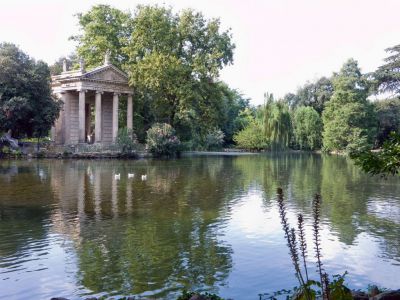
In addition to the restored Galleria Borghese, which showcases its priceless treasures, the park's crowning jewels include the graceful amphitheater known as Piazza di Siena, the botanical garden on Via Canonica, where an idyllic lake mirrors the serenity of its surroundings, and the neoclassical replica of the Temple of Aesculapius stands as a testament to the artistry of yesteryears. The park also plays host to the Biopark zoo, Rome's own homage to London's famed Globe Theatre, and the esteemed Villa Giulia museum, a bastion of cultural heritage.
Art enthusiasts are drawn to the allure of the Carlo Bilotti Museum, an haven for admirers of Giorgio de Chirico's works. In close proximity lies the Galleria Nazionale d'Arte Moderna e Contemporanea, a sanctuary of modern artistic expression. For cinephiles, a treat awaits at the intimate 63-seat children's movie theater, Cinema dei Piccoli, which transforms into a venue for adult screenings during the evening. Additionally, the Casa del Cinema invites film aficionados to savor the cinematic experience while lounging within its sleek, indoor-outdoor caffè, adorned with a lustrous cherry-red ambiance.
In addition to the restored Galleria Borghese, which showcases its priceless treasures, the park's crowning jewels include the graceful amphitheater known as Piazza di Siena, the botanical garden on Via Canonica, where an idyllic lake mirrors the serenity of its surroundings, and the neoclassical replica of the Temple of Aesculapius stands as a testament to the artistry of yesteryears. The park also plays host to the Biopark zoo, Rome's own homage to London's famed Globe Theatre, and the esteemed Villa Giulia museum, a bastion of cultural heritage.
Art enthusiasts are drawn to the allure of the Carlo Bilotti Museum, an haven for admirers of Giorgio de Chirico's works. In close proximity lies the Galleria Nazionale d'Arte Moderna e Contemporanea, a sanctuary of modern artistic expression. For cinephiles, a treat awaits at the intimate 63-seat children's movie theater, Cinema dei Piccoli, which transforms into a venue for adult screenings during the evening. Additionally, the Casa del Cinema invites film aficionados to savor the cinematic experience while lounging within its sleek, indoor-outdoor caffè, adorned with a lustrous cherry-red ambiance.
