Custom Walk in York, England by esowerby_33a85b created on 2026-06-08
Guide Location: England » York
Guide Type: Custom Walk
# of Sights: 5
Tour Duration: 1 Hour(s)
Travel Distance: 2.2 Km or 1.4 Miles
Share Key: 2LN4E
Guide Type: Custom Walk
# of Sights: 5
Tour Duration: 1 Hour(s)
Travel Distance: 2.2 Km or 1.4 Miles
Share Key: 2LN4E
How It Works
Please retrieve this walk in the GPSmyCity app. Once done, the app will guide you from one tour stop to the next as if you had a personal tour guide. If you created the walk on this website or come to the page via a link, please follow the instructions below to retrieve the walk in the app.
Retrieve This Walk in App
Step 1. Download the app "GPSmyCity: Walks in 1K+ Cities" on Apple App Store or Google Play Store.



Step 2. In the GPSmyCity app, download(or launch) the guide "York Map and Walking Tours".
Step 3. Tap the menu button located at upper right corner of the "Walks" screen and select "Retrieve custom walk". Enter the share key: 2LN4E

1) JORVIK Viking Centre (must see)
The Vikings captured York in 866 AD and settled the area until William the Conqueror invaded in 1066. In 1972, an excavation revealed evidence of the Viking settlement. The dig showed up to nine meters (29 feet) of layers. The layers protected delicate historical items such as clothing, timber, leather shoes, seeds, and insects. The dig continued, and over the next five years, archeologists found over 40,000 items.
The dig found Roman and medieval roof tiles re-used by Vikings, the timber used for buildings, metal slag, and pottery. The discoveries enabled scientists to envision how the Vikings lived, the layouts of buildings, what the Jorvik people ate, and how they spent their time.
To show visitors what life in Jorvik was like, the center has created an immersive experience. Visitors travel through the re-created Viking city in a time capsule ride. As visitors travel 1,000 years in the past, they will meet different animatronic Vikings, traders, Anglo-Saxons, and settlers from Ireland.
Visitors can then leave the ride and see 1,000-year-old artifacts up close. For example, visitors can admire ancient earrings, padlocks, and socks.
Tip:
It is worth booking in advance – for a little extra you jump the queue. Tickets are also valid for a year's worth of visits.
Once inside, ask the staff about what to look out for and they will point out some interesting things about the place you would never have realized.
The dig found Roman and medieval roof tiles re-used by Vikings, the timber used for buildings, metal slag, and pottery. The discoveries enabled scientists to envision how the Vikings lived, the layouts of buildings, what the Jorvik people ate, and how they spent their time.
To show visitors what life in Jorvik was like, the center has created an immersive experience. Visitors travel through the re-created Viking city in a time capsule ride. As visitors travel 1,000 years in the past, they will meet different animatronic Vikings, traders, Anglo-Saxons, and settlers from Ireland.
Visitors can then leave the ride and see 1,000-year-old artifacts up close. For example, visitors can admire ancient earrings, padlocks, and socks.
Tip:
It is worth booking in advance – for a little extra you jump the queue. Tickets are also valid for a year's worth of visits.
Once inside, ask the staff about what to look out for and they will point out some interesting things about the place you would never have realized.
2) Clifford's Tower (must see)
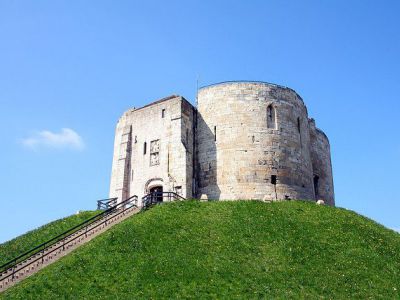
Clifford's Tower in York is a historical site steeped in a rich and tumultuous past. It stands as the largest surviving part of York Castle, which was once northern England's most formidable medieval royal fortress. The tower has recently been enhanced with a significant update in 2022, which includes a dramatic roof deck, internal walkways, and a soundscape interpretation that narrates the tower's compelling history like never before. These new features make its history and interior more accessible, providing a vivid account of its dramatic and sometimes tragic events.
Originally constructed by William the Conqueror in 1068-69, Clifford's Tower was built to assert control over the rebellious north. The tower has endured multiple devastations, having been burned down twice before being reconstructed by Henry III in the 13th century. It is named after a particularly dark event where Roger de Clifford was executed for treason against Edward II and displayed on the tower walls.
Today, the tower's stone structure, dating from the late 13th century, invites visitors to explore its multifaceted history. The site is not only significant for its military and royal associations but also as a tragic site of the 1190 massacre of about 150 Jews who sought refuge there. Visitors can climb to the top of the tower to walk the open-air wall that guards once patrolled, offering unparalleled views of York, including the Old Minister, the North York Moors, and other remnants of York Castle.
From this vantage point, one can also view the "Eye of York"-a collection of buildings that includes the Female Prison, Debtor's Prison, and the Assize Courts, enhancing the understanding of York's historical and architectural development. The panoramic views from the tower make it an ideal starting point for anyone visiting the city.
The ground floor of Clifford's Tower, once the royal exchequer, now invites visitors to explore its history. A tactile model in the courtyard showcases its unique, possibly French-inspired four-lobed architecture. The first floor features a richly decorated chapel, formerly private apartments. Historically, the tower has served as a prison and royal mint, and it was here that the infamous highwayman Dick Turpin was identified, leading to his execution in 1739.
Originally constructed by William the Conqueror in 1068-69, Clifford's Tower was built to assert control over the rebellious north. The tower has endured multiple devastations, having been burned down twice before being reconstructed by Henry III in the 13th century. It is named after a particularly dark event where Roger de Clifford was executed for treason against Edward II and displayed on the tower walls.
Today, the tower's stone structure, dating from the late 13th century, invites visitors to explore its multifaceted history. The site is not only significant for its military and royal associations but also as a tragic site of the 1190 massacre of about 150 Jews who sought refuge there. Visitors can climb to the top of the tower to walk the open-air wall that guards once patrolled, offering unparalleled views of York, including the Old Minister, the North York Moors, and other remnants of York Castle.
From this vantage point, one can also view the "Eye of York"-a collection of buildings that includes the Female Prison, Debtor's Prison, and the Assize Courts, enhancing the understanding of York's historical and architectural development. The panoramic views from the tower make it an ideal starting point for anyone visiting the city.
The ground floor of Clifford's Tower, once the royal exchequer, now invites visitors to explore its history. A tactile model in the courtyard showcases its unique, possibly French-inspired four-lobed architecture. The first floor features a richly decorated chapel, formerly private apartments. Historically, the tower has served as a prison and royal mint, and it was here that the infamous highwayman Dick Turpin was identified, leading to his execution in 1739.
3) York Minster (must see)
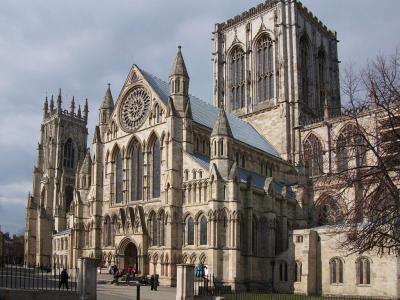
The York Minster is an impressive cathedral with a long and storied history. The Romans settled here and named the area Eboracum in 71 AD. King Edwin was baptized in a small wooden church here in 625. A stone church was built, and King Edwin was buried in the stone church in 633. In 1088, a new Minster was built. The Minster was expanded between 1154 and 1225. In 1328, the York Minster hosted a royal wedding between King Edward III and Philippa of Hainault.
Richard Scrope, Archbishop of York, was accused of treason by Henry IV and beheaded in 1405. His tomb lies in the Minster.
The Minster as it stands today was completed in 1471. It is the second-largest Gothic cathedral in Northern Europe. The name "minster" harkens to Anglo-Saxon missionary churches. The cathedral's official name is the Cathedral and Metropolitical Church of Saint Peter in York.
The Minster features majestic architecture, including a Gothic nave and a Perpendicular Gothic quire. The 1408 Great East Window is the largest expanse of stained glass in the world. Each lancet in the magnificent Five Sisters Window is 53 feet tall. A gorgeous rose window graces the south transept. The design of the west window is known as The Heart of Yorkshire.
The transepts feature wooden roofs. The nave was completed in 1350 and is England's widest Gothic nave. The central tower is 235 feet tall (72 meters). The choir is 102 feet tall (31 meters). The octagonal Chapter House was built in 1280 and features wonderful stone carvings.
Visitors can view the remains of the Roman fort in the cathedral's museum.
Why You Should Visit:
The York Minster is one of the most impressive churches in Northern Europe. It was one of the few Catholic churches not destroyed by Henry VIII, as he wanted to convert it to an Anglican church. The soaring nave, impressive towers, storied history, and Gothic architecture are the highlight of any York visit.
Tips:
Go for an evensong service, usually held in the evenings at 5:15 pm, and experience the acoustic wonders of the choir and organ.
The 35 church bells ring at 10:00 am on Sundays.
Richard Scrope, Archbishop of York, was accused of treason by Henry IV and beheaded in 1405. His tomb lies in the Minster.
The Minster as it stands today was completed in 1471. It is the second-largest Gothic cathedral in Northern Europe. The name "minster" harkens to Anglo-Saxon missionary churches. The cathedral's official name is the Cathedral and Metropolitical Church of Saint Peter in York.
The Minster features majestic architecture, including a Gothic nave and a Perpendicular Gothic quire. The 1408 Great East Window is the largest expanse of stained glass in the world. Each lancet in the magnificent Five Sisters Window is 53 feet tall. A gorgeous rose window graces the south transept. The design of the west window is known as The Heart of Yorkshire.
The transepts feature wooden roofs. The nave was completed in 1350 and is England's widest Gothic nave. The central tower is 235 feet tall (72 meters). The choir is 102 feet tall (31 meters). The octagonal Chapter House was built in 1280 and features wonderful stone carvings.
Visitors can view the remains of the Roman fort in the cathedral's museum.
Why You Should Visit:
The York Minster is one of the most impressive churches in Northern Europe. It was one of the few Catholic churches not destroyed by Henry VIII, as he wanted to convert it to an Anglican church. The soaring nave, impressive towers, storied history, and Gothic architecture are the highlight of any York visit.
Tips:
Go for an evensong service, usually held in the evenings at 5:15 pm, and experience the acoustic wonders of the choir and organ.
The 35 church bells ring at 10:00 am on Sundays.
4) York City Walls (must see)
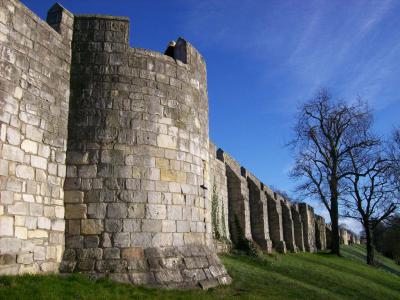
The York City Walls in York are a historic and extensive fortification that has surrounded the city since Roman times. Today, York boasts more miles of intact walls than any other city in England, known collectively as the York City Walls, the Bar Walls, or, less accurately, the Roman Walls. The latter term is a misnomer since the majority of the surviving structure is not of Roman origin, and the layout of the walls has significantly evolved since the Roman period.
These walls originally date back to around 71 AD when the Romans built a wooden fort near the River Ouse, covering approximately 50 acres. The fort's rectangular boundary was integral to its defensive strategy. However, these early fortifications proved inadequate during the Viking invasions, necessitating the construction of more robust defenses.
Between the 12th and 14th centuries, a new stone wall was erected, utilizing the foundations of the old Roman walls and extending southwards across both sides of the Rivers Ouse and Foss. This expansion effectively enclosed the city, enhancing its defense against future threats. Today, the walls stand about 13 feet high and 6 feet wide, a testament to medieval engineering and strategic planning.
Access to the city is controlled through four main gates, also known as "bars": Bootham Bar, Monk Bar, Walmgate Bar, and Micklegate Bar. These gates not only served as toll collection points in medieval times but also played crucial roles in the city’s defense during wartime. Each gate has its unique historical significance and architectural features, contributing to the overall heritage of York’s medieval city defenses.
These walls originally date back to around 71 AD when the Romans built a wooden fort near the River Ouse, covering approximately 50 acres. The fort's rectangular boundary was integral to its defensive strategy. However, these early fortifications proved inadequate during the Viking invasions, necessitating the construction of more robust defenses.
Between the 12th and 14th centuries, a new stone wall was erected, utilizing the foundations of the old Roman walls and extending southwards across both sides of the Rivers Ouse and Foss. This expansion effectively enclosed the city, enhancing its defense against future threats. Today, the walls stand about 13 feet high and 6 feet wide, a testament to medieval engineering and strategic planning.
Access to the city is controlled through four main gates, also known as "bars": Bootham Bar, Monk Bar, Walmgate Bar, and Micklegate Bar. These gates not only served as toll collection points in medieval times but also played crucial roles in the city’s defense during wartime. Each gate has its unique historical significance and architectural features, contributing to the overall heritage of York’s medieval city defenses.
5) The Shambles (must see)
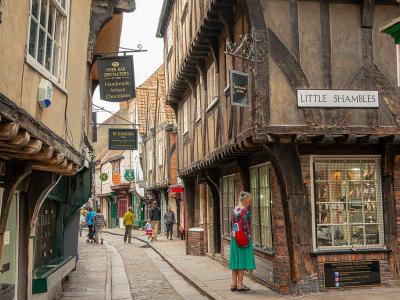
The Shambles is a historic street. Shambles refers to a meat market, and several streets with butcher shops are named The Shambles. Butcher stalls in this area were named in the 1086 Doomsday Book. The oldest buildings that line The Shambles today were built in the 14th century, and most were built by 1475. By 1426 the street was known as the Great Flesh Shambles, and later the street name was shortened to The Shambles.
Slaughterhouses were set up at the back of the butcher shops. The pavements were raised on the cobblestone street to allow easier cleaning of blood.
This narrow street features overhanging buildings, and some areas are so skinny that visitors can touch both sides of the street at once. The overhanging buildings would have sheltered the walls below and protected the display meat from the sun.
Visitors will find a shrine to Saint Margaret Clitherow on this street. Known as the "Pearl of York," she was martyred in 1586 for refusing to enter a plea to the charge of harboring Catholic priests. Saint Margaret Clitherow was married to a butcher and lived on The Shambles.
Butchers no longer line The Shambles, but several buildings still display meat hooks and meat shelves on display. Today's shops include restaurants, a bakery, and a bookshop.
Shambles Market runs daily between The Shambles and Parliament Street.
Why You Should Visit:
The Shambles is known as one of the best-preserved medieval streets in England. While fans believe it may have been the inspiration for Harry Potter's Diagon Alley, author J.K Rowling has denied these rumors. Regardless, the charming narrow street will transport visitors back in time.
Tips:
Visitors will also love exploring the five snickelways that lead off The Shambles. These snickelways are narrow alleys that connect to other streets.
Slaughterhouses were set up at the back of the butcher shops. The pavements were raised on the cobblestone street to allow easier cleaning of blood.
This narrow street features overhanging buildings, and some areas are so skinny that visitors can touch both sides of the street at once. The overhanging buildings would have sheltered the walls below and protected the display meat from the sun.
Visitors will find a shrine to Saint Margaret Clitherow on this street. Known as the "Pearl of York," she was martyred in 1586 for refusing to enter a plea to the charge of harboring Catholic priests. Saint Margaret Clitherow was married to a butcher and lived on The Shambles.
Butchers no longer line The Shambles, but several buildings still display meat hooks and meat shelves on display. Today's shops include restaurants, a bakery, and a bookshop.
Shambles Market runs daily between The Shambles and Parliament Street.
Why You Should Visit:
The Shambles is known as one of the best-preserved medieval streets in England. While fans believe it may have been the inspiration for Harry Potter's Diagon Alley, author J.K Rowling has denied these rumors. Regardless, the charming narrow street will transport visitors back in time.
Tips:
Visitors will also love exploring the five snickelways that lead off The Shambles. These snickelways are narrow alleys that connect to other streets.
