


Audio Guide: Hradcany (Castle District) Walking Tour (Self Guided), Prague
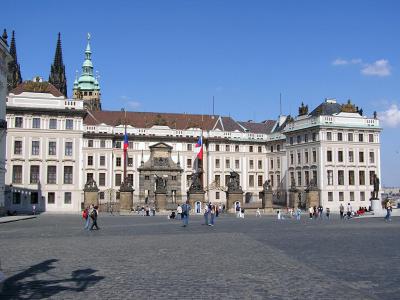
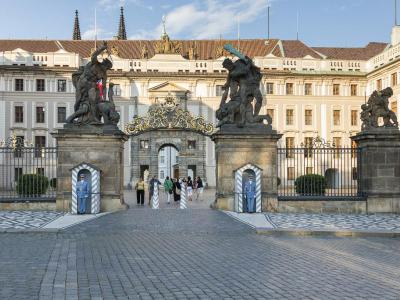
Prague’s Castle District is a neighborhood where history feels almost tangible-an atmospheric blend of towering landmarks, quiet courtyards, and sweeping city views. At its heart sits the mighty Prague Castle, often cited as the largest castle complex in the world. Its origins stretch back to the 9th century, and over time, it has been home to Bohemian kings, Holy Roman emperors, Communist leaders, and today, the president of the Czech Republic.
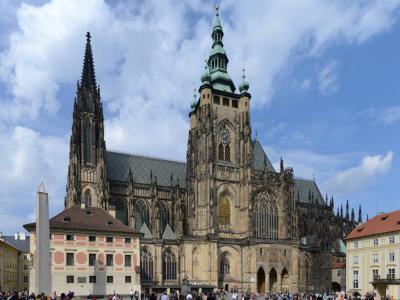
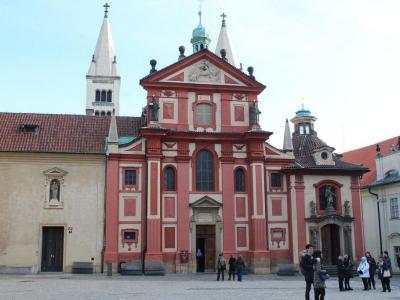
Within the castle walls, you'll find some of Prague’s most treasured sights. Saint Vitus Cathedral rises above the skyline with its soaring Gothic spires, sheltering the Czech crown jewels and royal tombs. The Old Royal Palace tells tales of centuries of courtly life and political intrigue, while Saint George’s Basilica invites a quieter kind of reverence within its ancient interior.
Just beyond the main complex, the district continues to impress. The grand Czernin Palace houses the Ministry of Foreign Affairs, and the Schwarzenberg Palace showcases a remarkable Baroque art collection curated by the National Gallery. Across the square, the Archbishop’s Palace adds a touch of Rococo elegance to the area, still serving as the residence of Prague’s highest-ranking Catholic figure.
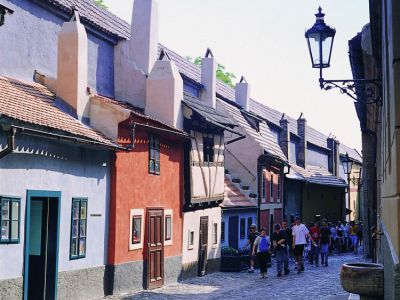
But the Castle District isn’t only about grandeur-it’s filled with hidden corners, peaceful gardens, and streets that reward slow exploration. Stroll through the serene grounds of the Loreta, a pilgrimage site with bells that chime every hour, or step back in time along the Golden Lane, where tiny, brightly painted cottages recall the lives of medieval tradespeople and castle guards.
Craving something refreshing? Just up the hill is the Strahov Monastic Brewery, where centuries of brewing tradition meet modern-day hospitality. Not far from there, the Lobkowicz Palace displays an extraordinary private art collection, while Villa Richter serves fine meals paired with panoramic views across the city. And tucked into the castle’s northern gardens lies the Belvedere-an elegant Renaissance summer palace surrounded by greenery and serenaded by the melodic waters of the Singing Fountain.
There’s no better way to experience all of this than by setting out on a walking tour. With each step, you’ll uncover centuries of stories, art, and architecture-at your own pace, and with the freedom to linger wherever history speaks to you most.
Within the castle walls, you'll find some of Prague’s most treasured sights. Saint Vitus Cathedral rises above the skyline with its soaring Gothic spires, sheltering the Czech crown jewels and royal tombs. The Old Royal Palace tells tales of centuries of courtly life and political intrigue, while Saint George’s Basilica invites a quieter kind of reverence within its ancient interior.
Just beyond the main complex, the district continues to impress. The grand Czernin Palace houses the Ministry of Foreign Affairs, and the Schwarzenberg Palace showcases a remarkable Baroque art collection curated by the National Gallery. Across the square, the Archbishop’s Palace adds a touch of Rococo elegance to the area, still serving as the residence of Prague’s highest-ranking Catholic figure.
But the Castle District isn’t only about grandeur-it’s filled with hidden corners, peaceful gardens, and streets that reward slow exploration. Stroll through the serene grounds of the Loreta, a pilgrimage site with bells that chime every hour, or step back in time along the Golden Lane, where tiny, brightly painted cottages recall the lives of medieval tradespeople and castle guards.
Craving something refreshing? Just up the hill is the Strahov Monastic Brewery, where centuries of brewing tradition meet modern-day hospitality. Not far from there, the Lobkowicz Palace displays an extraordinary private art collection, while Villa Richter serves fine meals paired with panoramic views across the city. And tucked into the castle’s northern gardens lies the Belvedere-an elegant Renaissance summer palace surrounded by greenery and serenaded by the melodic waters of the Singing Fountain.
There’s no better way to experience all of this than by setting out on a walking tour. With each step, you’ll uncover centuries of stories, art, and architecture-at your own pace, and with the freedom to linger wherever history speaks to you most.
How it works: Download the app "GPSmyCity: Walks in 1K+ Cities" from Apple App Store or Google Play Store to your mobile phone or tablet. The app turns your mobile device into a personal tour guide and its built-in GPS navigation functions guide you from one tour stop to next. The app works offline, so no data plan is needed when traveling abroad.
Download The GPSmyCity App



Hradcany (Castle District) Walking Tour Map
Guide Name: Hradcany (Castle District) Walking Tour
Guide Location: Czech Republic » Prague (See other walking tours in Prague)
Guide Type: Self-guided Walking Tour (Sightseeing)
Tour Duration: 2 Hour(s)
Travel Distance: 3.0 Km or 1.9 Miles
Guide Location: Czech Republic » Prague (See other walking tours in Prague)
Guide Type: Self-guided Walking Tour (Sightseeing)
Tour Duration: 2 Hour(s)
Travel Distance: 3.0 Km or 1.9 Miles
Sights Featured in This Walk


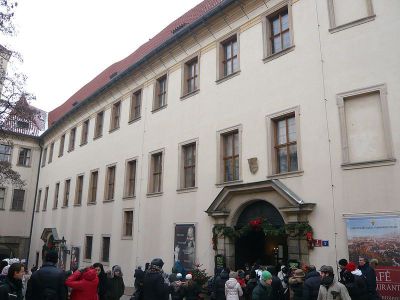
7) Prague Castle (must see)


Walking Tours in Prague, Czech Republic

Create Your Own Walk in Prague
Creating your own self-guided walk in Prague is easy and fun. Choose the city attractions that you want to see and a walk route map will be created just for you. You can even set your hotel as the start point of the walk.

Lesser Town Walking Tour
Malá Strana, or the “Lesser Town,” lies along the left bank of the Vltava River and remains one of Prague’s most charming and historically layered districts. In medieval times, it was primarily settled by ethnic Germans, and even as Baroque architecture reshaped the neighborhood following the devastating fire of 1541, the area held onto its Germanic roots for generations. Its location near... view more
Tour Duration: 2 Hour(s)
Travel Distance: 3.9 Km or 2.4 Miles
Tour Duration: 2 Hour(s)
Travel Distance: 3.9 Km or 2.4 Miles
Prague Introduction Walking Tour
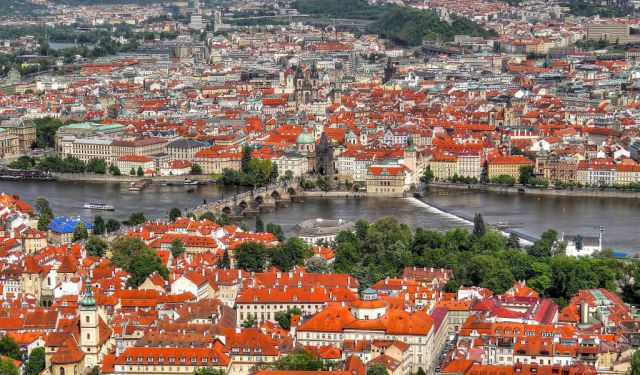
Nicknamed the “City of a Hundred Spires,” Prague is a living gallery of history and architecture, home to world-class museums, eclectic galleries, numerous theaters, and a seemingly endless collection of historic landmarks.
The name Praha comes from the old Slavic word “práh”, which means “rapid”, nodding to the city's beginnings at a crossing on the Vltava River. Legend... view more
Tour Duration: 2 Hour(s)
Travel Distance: 3.2 Km or 2 Miles
The name Praha comes from the old Slavic word “práh”, which means “rapid”, nodding to the city's beginnings at a crossing on the Vltava River. Legend... view more
Tour Duration: 2 Hour(s)
Travel Distance: 3.2 Km or 2 Miles

Old Town Walking Tour
Prague’s Old Town is a living tapestry of medieval roots and vibrant modern life, wrapped in narrow cobblestone streets and brimming with architectural treasures. Once a self-contained settlement, it was protected by a semi-circular moat and a fortified wall, both tracing the curve of the Vltava River. Although the moat is long gone, its path survives in the form of key streets-most notably Na... view more
Tour Duration: 2 Hour(s)
Travel Distance: 2.8 Km or 1.7 Miles
Tour Duration: 2 Hour(s)
Travel Distance: 2.8 Km or 1.7 Miles

Old Town Souvenir Shopping
Strolling through the Old Town of Prague, souvenir shopping becomes a delightful adventure. Indeed, it would be a pity to leave Prague without having explored its specialty shops and bringing home something truly original and unique to the city.
One of the prime spots for such endeavors is the Municipal House, a majestic Art Nouveau building that houses various shops and boutiques. Here,... view more
Tour Duration: 1 Hour(s)
Travel Distance: 1.7 Km or 1.1 Miles
One of the prime spots for such endeavors is the Municipal House, a majestic Art Nouveau building that houses various shops and boutiques. Here,... view more
Tour Duration: 1 Hour(s)
Travel Distance: 1.7 Km or 1.1 Miles

Jewish Quarter Walking Tour
The Jewish Quarter of Prague carries over a thousand years of memory etched into its streets, synagogues, and gravestones. Jewish communities began settling in this area as early as the 10th century, and although they were later forced into a walled ghetto, they cultivated a vibrant cultural and intellectual life-especially during the 16th century, a golden age shaped by the influence of Rabbi Ben... view more
Tour Duration: 1 Hour(s)
Travel Distance: 1.1 Km or 0.7 Miles
Tour Duration: 1 Hour(s)
Travel Distance: 1.1 Km or 0.7 Miles
New Town Walking Tour
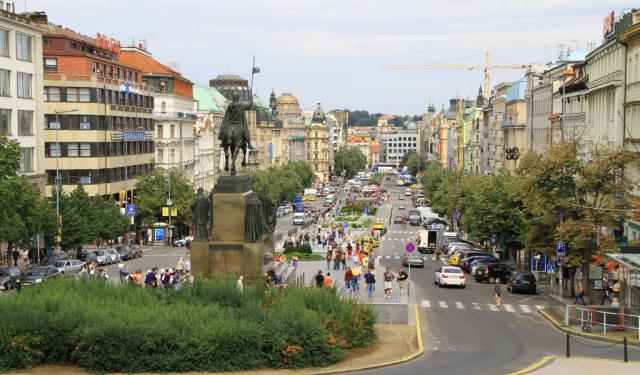
The youngest (founded in 1348) and the largest (three times the size of the Old Town), the New Town (or Nove Mesto) of Prague is one of the five originally independent townships that today form the historic center of the Czech capital. This vibrant district offers a mix of historical charm and modern amenities and is traditionally dense with tourists.
At its heart lies Wenceslas Square, a... view more
Tour Duration: 2 Hour(s)
Travel Distance: 3.1 Km or 1.9 Miles
At its heart lies Wenceslas Square, a... view more
Tour Duration: 2 Hour(s)
Travel Distance: 3.1 Km or 1.9 Miles
Useful Travel Guides for Planning Your Trip

Prague Shopping: 15 Distinctively Czech Products to Bring Home
Previously known mainly for its beer and ice-hockey (both for a very good reason), today's Czech Republic - and, primarily, its capital city Prague - is seen among the top European tourist destinations emerged following the breakup of the Soviet Bloc. A shooting ground for some Hollywood...

Czech Sweets and Pastries
Once part of the Austro-Hungarian Empire, the Czechs have duly absorbed the dessert-making know-how of their Austrian neighbors to complement their own confectionery heritage deeply rooted in the Eastern European, Slavic tradition. The end result of such cultural blend is the abundance of pastries,...
The Most Popular Cities
/ view all