


Historical Religious Buildings Walking Tour (Self Guided), Salzburg
The historic center of Salzburg, a UNESCO World Heritage Site since 1996, is home to numerous landmarks, including religious sites. Collectively, these historical sanctuaries, from small churches to the impressive Baroque-style Salzburg Cathedral, bear witness to the city's fascinating past and contribute a great deal of charm to its alluring present.
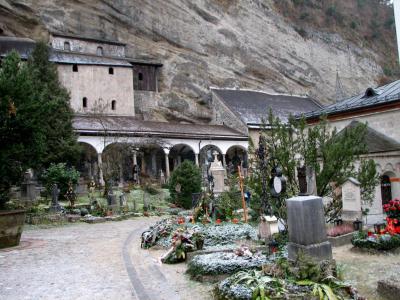
The local Saint Peter's Abbey is one of the oldest monastic settlements in the German-speaking world. Its tranquil graveyard is an attraction in its own right.
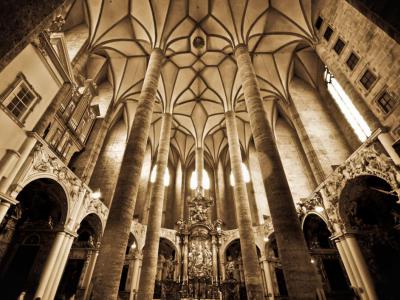
The Franciscan Church is another medieval monument in the vicinity. Its Gothic architecture and serene atmosphere make it a true gem, inviting visitors to explore its peaceful interior.
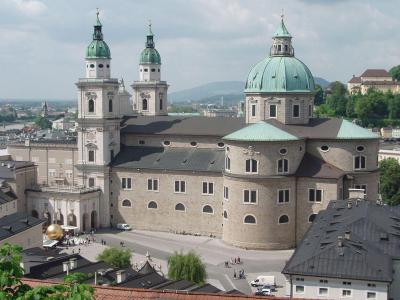
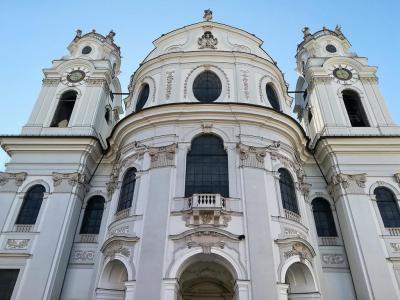
The Collegiate Church boasts a richness of Baroque. Its stunning façade and interior showcase the evolution of Salzburg's religious architecture over the centuries.
Saint Michael's Church, with its bell tower, is a notable feature on Salzburg's skyline. Inside, the church boasts exquisite frescoes and a colorful altar, making it a point of interest for art and history enthusiasts alike.
Finally, the Nonnberg Convent, perched atop a hill, is known for its stunning panoramic views. It is also famous as the real-life convent of Maria von Trapp, inspiring the much loved "The Sound of Music" movie.
To truly appreciate Salzburg's historical churches, take your time to explore their architectural details, immerse yourself in their spiritual ambiance, and soak in the city's rich cultural vibe. Whether you are a devout pilgrim, an art enthusiast, or simply a curious traveler, these sacred sites can offer you a unique window into Salzburg's past and present, sharing their tales with you.
The local Saint Peter's Abbey is one of the oldest monastic settlements in the German-speaking world. Its tranquil graveyard is an attraction in its own right.
The Franciscan Church is another medieval monument in the vicinity. Its Gothic architecture and serene atmosphere make it a true gem, inviting visitors to explore its peaceful interior.
The Collegiate Church boasts a richness of Baroque. Its stunning façade and interior showcase the evolution of Salzburg's religious architecture over the centuries.
Saint Michael's Church, with its bell tower, is a notable feature on Salzburg's skyline. Inside, the church boasts exquisite frescoes and a colorful altar, making it a point of interest for art and history enthusiasts alike.
Finally, the Nonnberg Convent, perched atop a hill, is known for its stunning panoramic views. It is also famous as the real-life convent of Maria von Trapp, inspiring the much loved "The Sound of Music" movie.
To truly appreciate Salzburg's historical churches, take your time to explore their architectural details, immerse yourself in their spiritual ambiance, and soak in the city's rich cultural vibe. Whether you are a devout pilgrim, an art enthusiast, or simply a curious traveler, these sacred sites can offer you a unique window into Salzburg's past and present, sharing their tales with you.
How it works: Download the app "GPSmyCity: Walks in 1K+ Cities" from Apple App Store or Google Play Store to your mobile phone or tablet. The app turns your mobile device into a personal tour guide. For US$14.99 per year, you get access to walking tours in 630+ cities worldwide. In comparison, a guided tour often costs dozens of dollars per person for a single tour. The app works offline, so no data plan is needed when traveling abroad.
Download The GPSmyCity App



Historical Religious Buildings Walking Tour Map
Guide Name: Historical Religious Buildings Walking Tour
Guide Location: Austria » Salzburg (See other walking tours in Salzburg)
Guide Type: Self-guided Walking Tour (Sightseeing)
Tour Duration: 1 Hour(s)
Travel Distance: 1.4 Km or 0.9 Miles
Guide Location: Austria » Salzburg (See other walking tours in Salzburg)
Guide Type: Self-guided Walking Tour (Sightseeing)
Tour Duration: 1 Hour(s)
Travel Distance: 1.4 Km or 0.9 Miles
Sights Featured in This Walk


Walking Tours in Salzburg, Austria

Create Your Own Walk in Salzburg
Creating your own self-guided walk in Salzburg is easy and fun. Choose the city attractions that you want to see and a walk route map will be created just for you. You can even set your hotel as the start point of the walk.

Old Town Gift Shops
Specialty shops make up an integral part of tourist life in Salzburg. The picturesque Old Town of Salzburg boasts a delightful array of gift shops, all within a pleasant walking distance, offering a diverse range of souvenirs and local treasures. Let's take a stroll through some of the notable establishments in this historic area.
We start at Kirchtag, a quaint gift shop known for its... view more
Tour Duration: 1 Hour(s)
Travel Distance: 0.9 Km or 0.6 Miles
We start at Kirchtag, a quaint gift shop known for its... view more
Tour Duration: 1 Hour(s)
Travel Distance: 0.9 Km or 0.6 Miles

Mozart Walking Tour
Salzburg was Mozart's home throughout most of his short life. For those who wish to immerse themselves in the Mozart world, there are several locations in the city well worth exploring.
Born on Grain Street (Getreidegasse) and baptized in the nearby Cathedral, Mozart played his first big concert, at age 6, at the Residence Palace.
Later, he served as an organist for the Cathedral,... view more
Tour Duration: 2 Hour(s)
Travel Distance: 2.4 Km or 1.5 Miles
Born on Grain Street (Getreidegasse) and baptized in the nearby Cathedral, Mozart played his first big concert, at age 6, at the Residence Palace.
Later, he served as an organist for the Cathedral,... view more
Tour Duration: 2 Hour(s)
Travel Distance: 2.4 Km or 1.5 Miles

Sound of Music Tour
Salzburg-home of Mozart, marzipan, and musical nostalgia... While Wolfgang Amadeus gave the city its classical cred, it was The Sound of Music movie that turned Salzburg into a global stage, complete with singing nannies, dancing children, and enough picturesque scenery to make your Instagram weep with joy.
Shot in 1965, this Hollywood juggernaut followed the real-life story of Von Trapp... view more
Tour Duration: 2 Hour(s)
Travel Distance: 4.2 Km or 2.6 Miles
Shot in 1965, this Hollywood juggernaut followed the real-life story of Von Trapp... view more
Tour Duration: 2 Hour(s)
Travel Distance: 4.2 Km or 2.6 Miles

Salzburg Introduction Walking Tour
Dubbed the "City of Mozart", the enchanting Austrian city of Salzburg has gone down in history primarily as the hometown of its greatest son, Wolfgang Amadeus Mozart. His birthplace on a busy shopping street called Grain Lane (Getreidegasse) is now a museum. Also popular is the Mozart Residence, a place where the 18th-century composer spent much of his early life.
Apart from Mozart,... view more
Tour Duration: 2 Hour(s)
Travel Distance: 2.8 Km or 1.7 Miles
Apart from Mozart,... view more
Tour Duration: 2 Hour(s)
Travel Distance: 2.8 Km or 1.7 Miles
The Most Popular Cities
/ view all