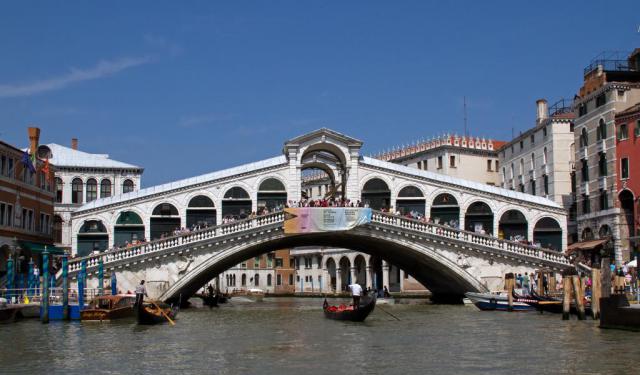


Audio Guide: Around Rialto Bridge (Self Guided), Venice
The Rialto district represents the earliest urban and commercial core of Venice that has shaped the city’s identity for centuries. Long before grand palaces lined the canals or empires were managed from marble halls, this was the practical heart of the lagoon. Its name comes from Rivo Alto, meaning “high bank,” a rare patch of ground that stayed relatively dry and therefore attracted settlers as early as the 9th century. Stability mattered here-both literally and financially-and Rialto quickly became the place where things happened.
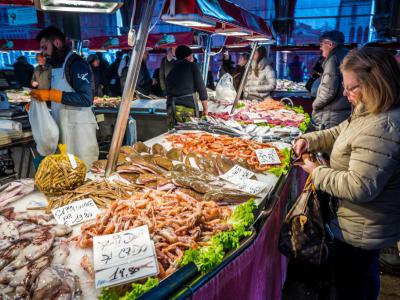
By the 11th century, Rialto was already running Venice’s main market and its earliest banking system, all under watchful state control. Spices, silk, grain, fish, and precious metals passed through its stalls and warehouses, while contracts were signed, loans negotiated, and currencies exchanged nearby. Foreign merchants were kept on a tight leash inside supervised warehouses called “fondachi,” and money-changers and notaries quite often worked overtime. The result was a tightly organized commercial machine that made Rialto one of medieval Europe’s most sophisticated business districts.
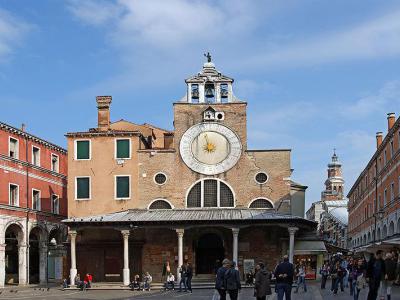
Geography helped. The Grand Canal narrows here, turning Rialto into a natural crossing point between the city’s eastern and western halves. Before stone replaced wood, a succession of wooden bridges spanned the canal-many of them burning down or collapsing under the strain of constant traffic. Indeed, this was a place of noise and movement: sailors shouting, porters rushing, officials counting, and deals being struck alongside gossip and news. A major fire in 1514 nearly wiped the district out, leaving the Church of San Giacomo as one of the few survivors.
The stone Rialto Bridge, completed in 1591, settled the matter for good. Even as Venice’s global influence began to face competition, Rialto stayed firmly in charge of the city’s everyday economy. Political power gradually drifted toward San Marco, but the local markets continued to supply Venetians with food and goods, preserving commercial traditions rooted in centuries of trade.
That layered history still defines Rialto today. Markets, churches, old financial buildings, and long-standing shops share the same tight streets, keeping the district busy, loud, and unmistakably alive. Rialto is not a museum quarter-it’s Venice at work, doing what it has always done best. So, take this self-guided tour and walk its bridges and markets slowly. Follow the flow of people rather than signs, and experience Venice where it has always been most itself.
By the 11th century, Rialto was already running Venice’s main market and its earliest banking system, all under watchful state control. Spices, silk, grain, fish, and precious metals passed through its stalls and warehouses, while contracts were signed, loans negotiated, and currencies exchanged nearby. Foreign merchants were kept on a tight leash inside supervised warehouses called “fondachi,” and money-changers and notaries quite often worked overtime. The result was a tightly organized commercial machine that made Rialto one of medieval Europe’s most sophisticated business districts.
Geography helped. The Grand Canal narrows here, turning Rialto into a natural crossing point between the city’s eastern and western halves. Before stone replaced wood, a succession of wooden bridges spanned the canal-many of them burning down or collapsing under the strain of constant traffic. Indeed, this was a place of noise and movement: sailors shouting, porters rushing, officials counting, and deals being struck alongside gossip and news. A major fire in 1514 nearly wiped the district out, leaving the Church of San Giacomo as one of the few survivors.
The stone Rialto Bridge, completed in 1591, settled the matter for good. Even as Venice’s global influence began to face competition, Rialto stayed firmly in charge of the city’s everyday economy. Political power gradually drifted toward San Marco, but the local markets continued to supply Venetians with food and goods, preserving commercial traditions rooted in centuries of trade.
That layered history still defines Rialto today. Markets, churches, old financial buildings, and long-standing shops share the same tight streets, keeping the district busy, loud, and unmistakably alive. Rialto is not a museum quarter-it’s Venice at work, doing what it has always done best. So, take this self-guided tour and walk its bridges and markets slowly. Follow the flow of people rather than signs, and experience Venice where it has always been most itself.
How it works: Download the app "GPSmyCity: Walks in 1K+ Cities" from Apple App Store or Google Play Store to your mobile phone or tablet. The app turns your mobile device into a personal tour guide and its built-in GPS navigation functions guide you from one tour stop to next. The app works offline, so no data plan is needed when traveling abroad.
Download The GPSmyCity App



Around Rialto Bridge Map
Guide Name: Around Rialto Bridge
Guide Location: Italy » Venice (See other walking tours in Venice)
Guide Type: Self-guided Walking Tour (Sightseeing)
Tour Duration: 1 Hour(s)
Travel Distance: 0.4 Km or 0.2 Miles
Guide Location: Italy » Venice (See other walking tours in Venice)
Guide Type: Self-guided Walking Tour (Sightseeing)
Tour Duration: 1 Hour(s)
Travel Distance: 0.4 Km or 0.2 Miles
Sights Featured in This Walk
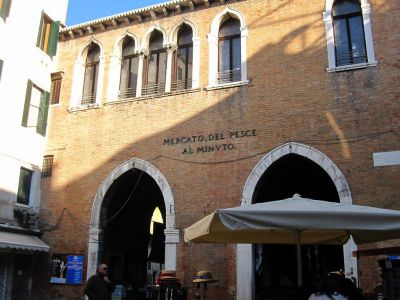
Walking Tours in Venice, Italy

Create Your Own Walk in Venice
Creating your own self-guided walk in Venice is easy and fun. Choose the city attractions that you want to see and a walk route map will be created just for you. You can even set your hotel as the start point of the walk.
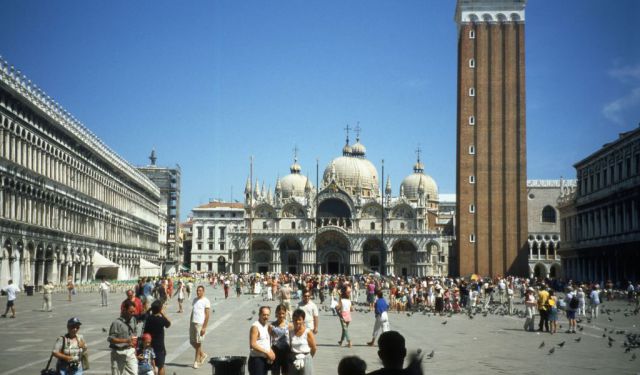
Piazza San Marco Walking Tour
Piazza San Marco is where Venice has always put on its best face. This is the city’s ceremonial and political core, shaped over centuries as the grand stage of the Venetian Republic. Its story began in the 9th century, when the relics of Saint Mark arrived in the lagoon and instantly raised the evangelist-much as the square built in his name-to the highest rank. From a simple open space, the... view more
Tour Duration: 1 Hour(s)
Travel Distance: 0.6 Km or 0.4 Miles
Tour Duration: 1 Hour(s)
Travel Distance: 0.6 Km or 0.4 Miles
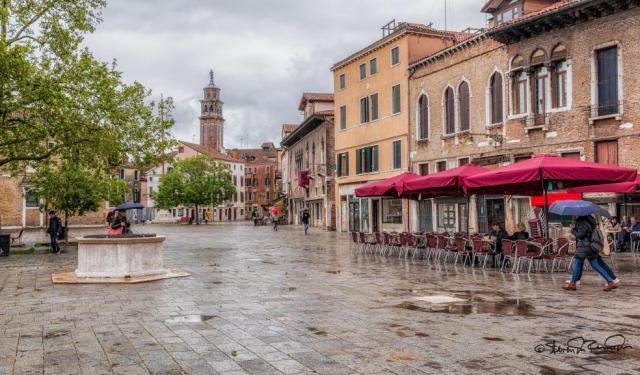
Dorsoduro Walking Tour
One of the six districts of Venice, Dorsoduro’s name translates as “hard bridge” due to the area's relatively high terrain. Home to some of the city’s highest spots, it also comprises some of Venice’s most picturesque canals, historic locations and cultural venues, including the Basilica di Santa Maria della Salute; the Gallerie dell’ Academia & the Ca’ Rezzonico – both... view more
Tour Duration: 1 Hour(s)
Travel Distance: 2.1 Km or 1.3 Miles
Tour Duration: 1 Hour(s)
Travel Distance: 2.1 Km or 1.3 Miles
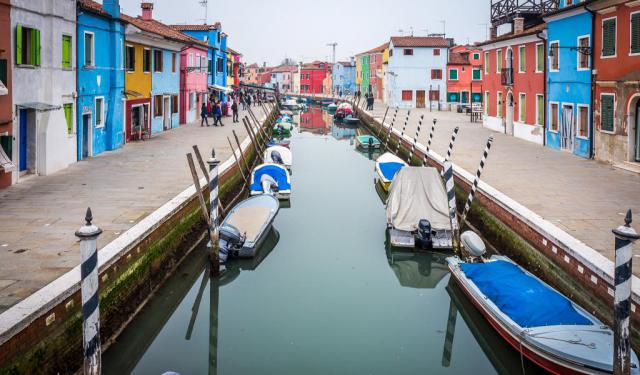
Murano Island Walking Tour
Murano Island is known around the world as the “Glass Island,” and it didn’t earn that nickname overnight. This reputation rests on more than seven centuries of uninterrupted glassmaking. Located just north of Venice, separated by a slim ribbon of lagoon water, Murano grew into a place where identity and industry became inseparable. Although inhabited since Roman times, the island truly... view more
Tour Duration: 1 Hour(s)
Travel Distance: 2.3 Km or 1.4 Miles
Tour Duration: 1 Hour(s)
Travel Distance: 2.3 Km or 1.4 Miles
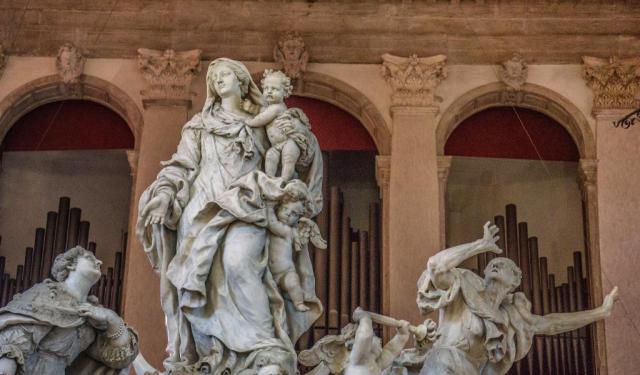
Venice's Hidden Art Treasures
Among the first things springing to mind when talking about Venice, apart from the canals and gondolas, of course, is Art and Architecture. Indeed, Venice is one of the few cities in the world where Art and Architecture have merged in a stunning multiplicity of forms. The city is even renowned for its unique (Venetian) pictorial school famed by the likes of Tintoretto, Titian, Veronese, Castagno... view more
Tour Duration: 2 Hour(s)
Travel Distance: 3.6 Km or 2.2 Miles
Tour Duration: 2 Hour(s)
Travel Distance: 3.6 Km or 2.2 Miles
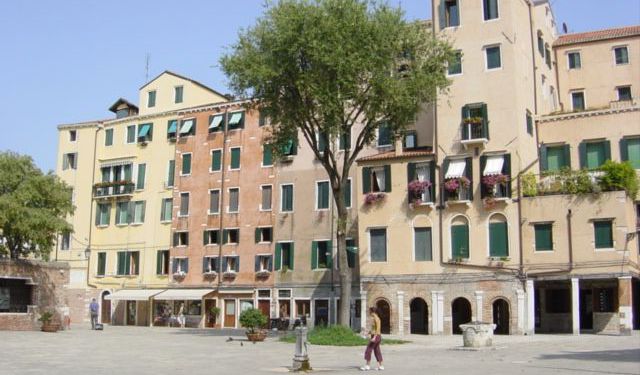
Jewish Ghetto Tour
Founded in 1516, the Jewish Ghetto of Venice earns its grim little footnote in European history as the first place officially designated as a “ghetto.” It began as a Venetian compromise with sharp edges: the Papacy urged to expel the Jews, while Venice-never one to waste a useful population-chose to confine them to a small island.
The word “ghetto” comes with competing origin stories.... view more
Tour Duration: 1 Hour(s)
Travel Distance: 0.4 Km or 0.2 Miles
The word “ghetto” comes with competing origin stories.... view more
Tour Duration: 1 Hour(s)
Travel Distance: 0.4 Km or 0.2 Miles
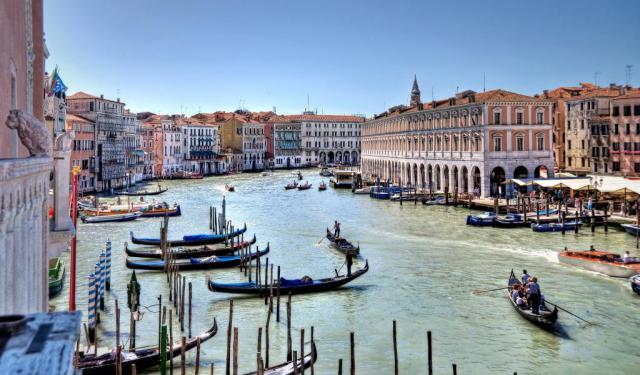
Venice Introduction Walking Tour
Venice is a city that learned early how to live with water-and, ultimately, how to profit from it. Built across hundreds of small islands in a shallow lagoon in the northern Adriatic, it runs without roads, relying solely on canals and bridges. Although the lagoon itself formed thousands of years ago, it was inhabited mainly by fishermen up until the 5th century AD, when waves of barbarian... view more
Tour Duration: 3 Hour(s)
Travel Distance: 4.1 Km or 2.5 Miles
Tour Duration: 3 Hour(s)
Travel Distance: 4.1 Km or 2.5 Miles
Useful Travel Guides for Planning Your Trip
15 Distinctively Italian Things to Buy in Venice
Venice has been a tourist mecca for over a century now, with millions of visitors flocking in every year to see this unique place on the face of the Earth. Many, if not all, of these people seek to obtain something memorable as a token of their stay in this city. By far, not all of them know which...
The Most Popular Cities
/ view all