


Audio Guide: Florence Food Tour (Self Guided), Florence
Food has long been central to Florentine life, shaped by local tradition, seasonal ingredients, and a strong regional identity. Tuscan cuisine is often described as simple, but that simplicity is intentional: dishes rely on quality raw materials and recipes refined over generations rather than on elaborate techniques.
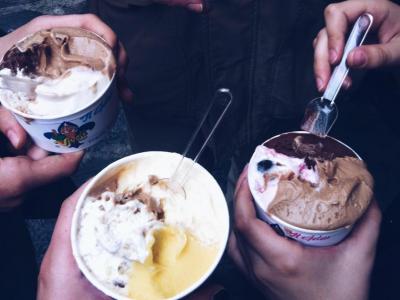
Several foods closely associated with Florence have become known far beyond the city while remaining rooted in everyday habits. Gelato, often linked to Renaissance Florence, developed here into a craft defined by dense texture and clear flavors. The Negroni cocktail, created in the city around 1919, reflects Florence’s café culture and preference for balanced combinations. Schiacciata fiorentina, a soft, lightly sweet cake prepared during Carnival, sits alongside savory schiacciata bread, which forms the base of many local sandwiches.
At one end of the culinary spectrum stands bistecca alla fiorentina, a thick-cut T-bone steak grilled simply to highlight the quality of the beef; at the other is lampredotto, a tripe sandwich sold from street stalls that reflects Florence’s working-class food traditions. Together, these dishes show how Florentine cuisine balances refinement and practicality.
One of the pleasures of eating in Florence is that good food is not confined to formal restaurants. Everyday meals, snacks, and sweets receive the same care as celebratory dishes, and it remains possible to eat well without spending excessively.
Florence also excels at casual eating, with sandwich shops, pizza by the slice, and wine bars forming part of daily routine. Sweet traditions are equally important: historic cafés continue to serve pastries, chocolate, and coffee, while gelato remains a daily habit rather than a luxury.
This self-guided food walk brings these elements together, offering a practical way to experience how food fits naturally into Florence’s streets, markets, and squares-and how it continues to shape everyday life in the city.
Several foods closely associated with Florence have become known far beyond the city while remaining rooted in everyday habits. Gelato, often linked to Renaissance Florence, developed here into a craft defined by dense texture and clear flavors. The Negroni cocktail, created in the city around 1919, reflects Florence’s café culture and preference for balanced combinations. Schiacciata fiorentina, a soft, lightly sweet cake prepared during Carnival, sits alongside savory schiacciata bread, which forms the base of many local sandwiches.
At one end of the culinary spectrum stands bistecca alla fiorentina, a thick-cut T-bone steak grilled simply to highlight the quality of the beef; at the other is lampredotto, a tripe sandwich sold from street stalls that reflects Florence’s working-class food traditions. Together, these dishes show how Florentine cuisine balances refinement and practicality.
One of the pleasures of eating in Florence is that good food is not confined to formal restaurants. Everyday meals, snacks, and sweets receive the same care as celebratory dishes, and it remains possible to eat well without spending excessively.
Florence also excels at casual eating, with sandwich shops, pizza by the slice, and wine bars forming part of daily routine. Sweet traditions are equally important: historic cafés continue to serve pastries, chocolate, and coffee, while gelato remains a daily habit rather than a luxury.
This self-guided food walk brings these elements together, offering a practical way to experience how food fits naturally into Florence’s streets, markets, and squares-and how it continues to shape everyday life in the city.
How it works: Download the app "GPSmyCity: Walks in 1K+ Cities" from Apple App Store or Google Play Store to your mobile phone or tablet. The app turns your mobile device into a personal tour guide. For US$14.99 per year (with a 3-day free trial), you get access to walking tours in 630+ cities worldwide for an entire year. In comparison, a guided tour often costs dozens of dollars per person for a single tour. The app works offline, so no data plan is needed when traveling abroad.
Download The GPSmyCity App



Florence Food Tour Map
Guide Name: Florence Food Tour
Guide Location: Italy » Florence (See other walking tours in Florence)
Guide Type: Self-guided Walking Tour (Sightseeing)
Tour Duration: 1 Hour(s)
Travel Distance: 1.7 Km or 1.1 Miles
Guide Location: Italy » Florence (See other walking tours in Florence)
Guide Type: Self-guided Walking Tour (Sightseeing)
Tour Duration: 1 Hour(s)
Travel Distance: 1.7 Km or 1.1 Miles
Sights Featured in This Walk


Walking Tours in Florence, Italy

Create Your Own Walk in Florence
Creating your own self-guided walk in Florence is easy and fun. Choose the city attractions that you want to see and a walk route map will be created just for you. You can even set your hotel as the start point of the walk.

Arno South Bank Walking Tour
The area south of the Arno River-known as Oltrarno, or “Beyond the Arno”-offers a quieter, more intimate side of Florence, but one that’s no less captivating. It’s here that you’ll find the grand Pitti Palace, home to a painting collection rivaled only by the Uffizi Gallery, and the expansive Boboli Gardens, once the private domain of the Medici and later, the royal family. As one of the... view more
Tour Duration: 2 Hour(s)
Travel Distance: 2.4 Km or 1.5 Miles
Tour Duration: 2 Hour(s)
Travel Distance: 2.4 Km or 1.5 Miles
Medici Landmarks Walking Tour
The Medici family helped to establish Florence as the single most important art capital of Renaissance Europe. In order to prove wealth and power, they built numerous palaces, libraries, churches, chapels and personal residences. The Medicis were big lovers of art and they acquired huge, expensive collections, as well as supporting many sculptors and painters of the time.
Designed by... view more
Tour Duration: 1 Hour(s)
Travel Distance: 2.7 Km or 1.7 Miles
Designed by... view more
Tour Duration: 1 Hour(s)
Travel Distance: 2.7 Km or 1.7 Miles

Michelangelo's Masterpieces Walking Tour
Though born in the small Tuscan town of Caprese, Michelangelo spent over two decades of his life in Florence-the heart of the Renaissance. It was here that he grew up, was educated, and began shaping his artistic voice, eventually creating some of the most iconic masterpieces the city has ever known.
His larger-than-life work-“David”-didn’t just reshape the image of biblical heroism-it... view more
Tour Duration: 2 Hour(s)
Travel Distance: 4.0 Km or 2.5 Miles
His larger-than-life work-“David”-didn’t just reshape the image of biblical heroism-it... view more
Tour Duration: 2 Hour(s)
Travel Distance: 4.0 Km or 2.5 Miles

Florence Introduction Walking Tour
Florence was founded in 59 BC by Julius Caesar as a settlement for his veteran soldiers. Laid out like a Roman military camp, its main roads intersected at what is now the Republic Square. Originally named Fluentia, referencing its location between two rivers, the city later adopted the name Florentia, meaning “flowering” or “flourishing”.
And flourish it did. During the Middle Ages and... view more
Tour Duration: 2 Hour(s)
Travel Distance: 4.1 Km or 2.5 Miles
And flourish it did. During the Middle Ages and... view more
Tour Duration: 2 Hour(s)
Travel Distance: 4.1 Km or 2.5 Miles

In Galileo's Footsteps
Galileo Galilei-born in Pisa in 1564-spent much of his life in and around Florence, where some of the most defining moments of his revolutionary career unfolded. A genius of many talents-physicist, mathematician, astronomer, inventor-he helped usher in the scientific revolution and reshape humanity’s understanding of the universe. Florence, the cradle of the Renaissance, became a backdrop for... view more
Tour Duration: 2 Hour(s)
Travel Distance: 3.9 Km or 2.4 Miles
Tour Duration: 2 Hour(s)
Travel Distance: 3.9 Km or 2.4 Miles

Florence's Hidden Art Treasures
The “Cradle of the Renaissance,” Florence is one of Europe’s most beautiful and busiest destinations, home to some of the world's greatest pieces of art and architecture. The iconic masters like Giotto, Botticelli, Raphael and Michelangelo, as well as their somewhat less-known but equally talented counterparts, such as Ghirlandaio, Sangallo and Castagno, have blessed this city with... view more
Tour Duration: 2 Hour(s)
Travel Distance: 4.6 Km or 2.9 Miles
Tour Duration: 2 Hour(s)
Travel Distance: 4.6 Km or 2.9 Miles
Useful Travel Guides for Planning Your Trip

Florence's Tasty Coffee Shop Guide
The caffe scene throughout Italy is an important factor of everyday life. People will pop in to their favorite bar on their way to work for a quick espresso breakfast with a pastry, they’ll grab a slice of pizza for lunch or drop by for an aperitivo before dining out and take a peaceful digestivo...

Souvenir Shopping Guide: 15 Unique Products to Buy in Florence
Compared to other Italian "grands" like Rome, Venice, or Milan, Florence is relatively less-known to an outsider for any local products, save, perhaps, Florentine mosaics and Fiorentina FC. Fortunately, there are tonnes of locally-originated things that this Italian city is rightfully...

Top 13 Pubs in Florence
Florence, the city of art and beauty has no problem in mastering the art of the nightlife as well. Local pubs are very popular and appreciated among the Florentines and the tourists. Locals and native English speakers that study or live in the city cannot wait to welcome tourists in their cozy...
The Most Popular Cities
/ view all