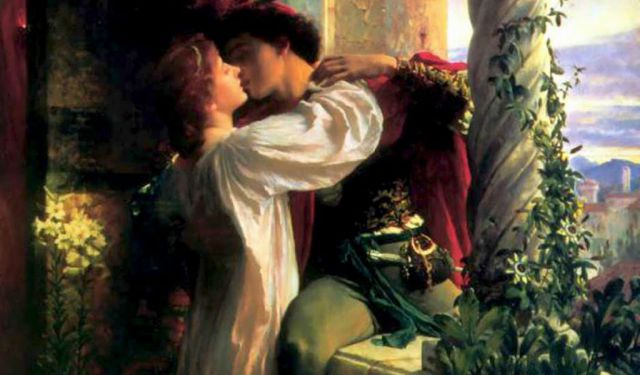


Audio Guide: Romeo and Juliet Tour (Self Guided), Verona
Few cities in the world capture romance like Verona, the setting that inspired Shakespeare’s Romeo and Juliet. Each year, thousands of visitors stroll the cobbled streets, imagining the star-crossed lovers meeting under moonlight. For romantics, literature enthusiasts, and curious travelers, the Romeo and Juliet Tour offers an unforgettable journey through history, myth, and passion.
Long before Shakespeare penned his play in the late 16th century, stories of tragic young lovers circulated in Italy. The earliest known version appeared in the 1470s, written by Masuccio Salernitano. In the early 1500s, Luigi da Porto adapted the tale explicitly to Verona, naming the lovers Romeo Montecchi and Giulietta Capuleti. His version introduced the feuding families, secret marriage, and tragic tomb ending. Later, Matteo Bandello refined the story, and Arthur Brooke translated it into English as The Tragical History of Romeus and Juliet in 1562, which directly inspired Shakespeare.
Shakespeare transformed the tale into a timeless masterpiece, bringing vivid characters, lyrical language, and deep exploration of love, fate, and conflict. Although he never visited Verona, his play forever linked the city with the story, turning local legend into international cultural heritage. Over centuries, landmarks like Juliet’s House, Romeo’s House, and Juliet’s Tomb became pilgrimage sites, while statues, plaques, and museums celebrate both the city’s history and its mythical connection to the lovers who “never were” yet live on in imagination.
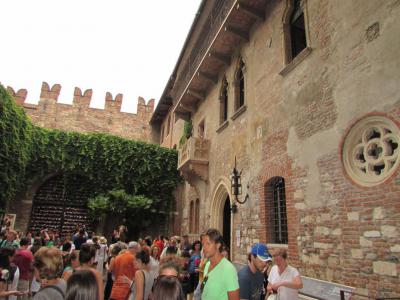
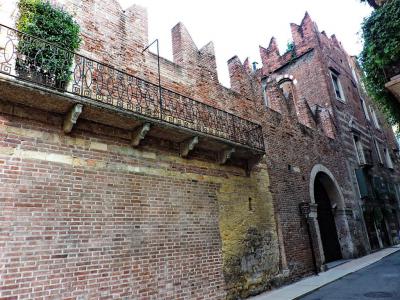
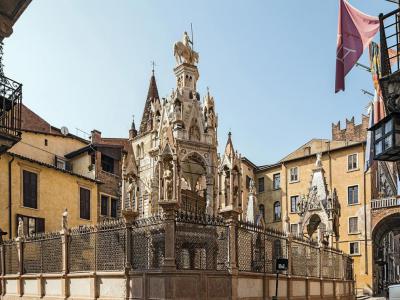
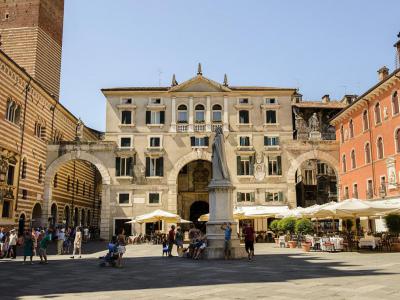
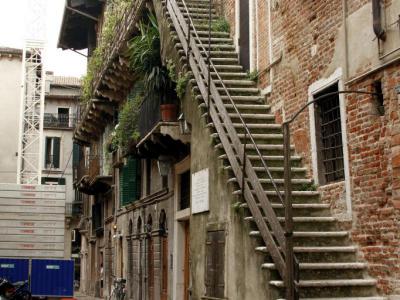
The tour begins at Juliet’s House, a 13th-century residence featuring the famous balcony. Visitors can explore the small museum, leave love notes on the courtyard wall, or touch the bronze statue of Juliet for good luck. Nearby is Romeo’s House, a medieval building linked to the Montecchi family, whose exterior evokes the secrecy and tension of Shakespeare’s tale. The Scaligeri Tombs, magnificent Gothic monuments to Verona’s medieval rulers, reflect the city’s grandeur and turbulent history.
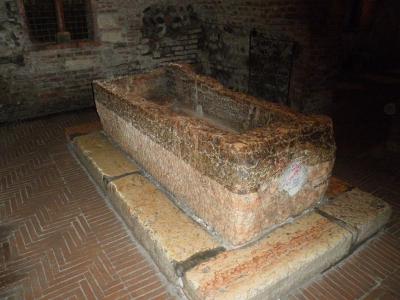
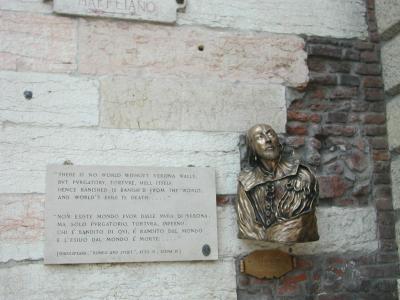
No visit is complete without Juliet’s Tomb, in the crypt of the former Capuchin convent of San Francesco al Corso, and the nearby William Shakespeare Bust and Plaque, honoring the playwright who immortalized Verona in literature.
By the end of the tour, it becomes clear that Verona is more than a setting - it is a living monument to love, where history, literature, and legend blend seamlessly. Every balcony, archway, and whisper of the past keeps the story of Romeo and Juliet alive, eternal, and heartbreakingly human.
Long before Shakespeare penned his play in the late 16th century, stories of tragic young lovers circulated in Italy. The earliest known version appeared in the 1470s, written by Masuccio Salernitano. In the early 1500s, Luigi da Porto adapted the tale explicitly to Verona, naming the lovers Romeo Montecchi and Giulietta Capuleti. His version introduced the feuding families, secret marriage, and tragic tomb ending. Later, Matteo Bandello refined the story, and Arthur Brooke translated it into English as The Tragical History of Romeus and Juliet in 1562, which directly inspired Shakespeare.
Shakespeare transformed the tale into a timeless masterpiece, bringing vivid characters, lyrical language, and deep exploration of love, fate, and conflict. Although he never visited Verona, his play forever linked the city with the story, turning local legend into international cultural heritage. Over centuries, landmarks like Juliet’s House, Romeo’s House, and Juliet’s Tomb became pilgrimage sites, while statues, plaques, and museums celebrate both the city’s history and its mythical connection to the lovers who “never were” yet live on in imagination.
The tour begins at Juliet’s House, a 13th-century residence featuring the famous balcony. Visitors can explore the small museum, leave love notes on the courtyard wall, or touch the bronze statue of Juliet for good luck. Nearby is Romeo’s House, a medieval building linked to the Montecchi family, whose exterior evokes the secrecy and tension of Shakespeare’s tale. The Scaligeri Tombs, magnificent Gothic monuments to Verona’s medieval rulers, reflect the city’s grandeur and turbulent history.
No visit is complete without Juliet’s Tomb, in the crypt of the former Capuchin convent of San Francesco al Corso, and the nearby William Shakespeare Bust and Plaque, honoring the playwright who immortalized Verona in literature.
By the end of the tour, it becomes clear that Verona is more than a setting - it is a living monument to love, where history, literature, and legend blend seamlessly. Every balcony, archway, and whisper of the past keeps the story of Romeo and Juliet alive, eternal, and heartbreakingly human.
How it works: Download the app "GPSmyCity: Walks in 1K+ Cities" from Apple App Store or Google Play Store to your mobile phone or tablet. The app turns your mobile device into a personal tour guide and its built-in GPS navigation functions guide you from one tour stop to next. The app works offline, so no data plan is needed when traveling abroad.
Download The GPSmyCity App



Romeo and Juliet Tour Map
Guide Name: Romeo and Juliet Tour
Guide Location: Italy » Verona (See other walking tours in Verona)
Guide Type: Self-guided Walking Tour (Sightseeing)
Tour Duration: 2 Hour(s)
Travel Distance: 3.9 Km or 2.4 Miles
Guide Location: Italy » Verona (See other walking tours in Verona)
Guide Type: Self-guided Walking Tour (Sightseeing)
Tour Duration: 2 Hour(s)
Travel Distance: 3.9 Km or 2.4 Miles
Sights Featured in This Walk
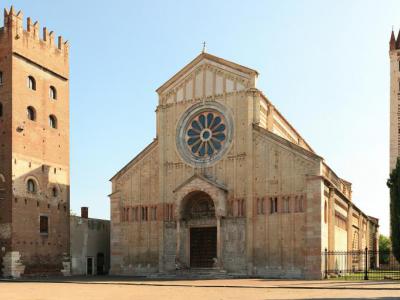
Walking Tours in Verona, Italy

Create Your Own Walk in Verona
Creating your own self-guided walk in Verona is easy and fun. Choose the city attractions that you want to see and a walk route map will be created just for you. You can even set your hotel as the start point of the walk.
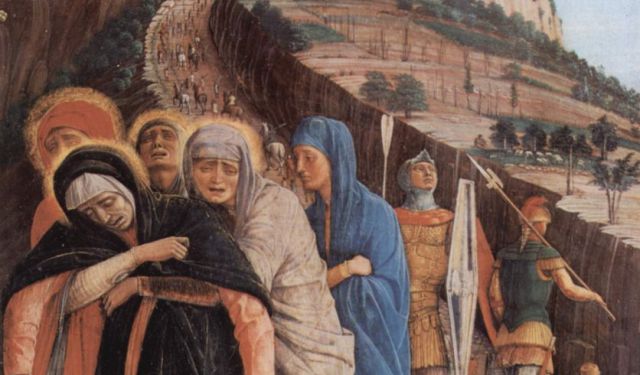
Verona's Museums and Galleries
Art and history have been the pillars supporting the elegant city of Verona for centuries. Among other things here, you will find the abundance of grand museums and galleries holding unique collections of art and cultural treasures suiting all tastes.
Whatever your interest – ancient or modern art, archaeology, frescoes, Roman inscriptions, natural history, antique furniture, or wine – be... view more
Tour Duration: 1 Hour(s)
Travel Distance: 2.3 Km or 1.4 Miles
Whatever your interest – ancient or modern art, archaeology, frescoes, Roman inscriptions, natural history, antique furniture, or wine – be... view more
Tour Duration: 1 Hour(s)
Travel Distance: 2.3 Km or 1.4 Miles
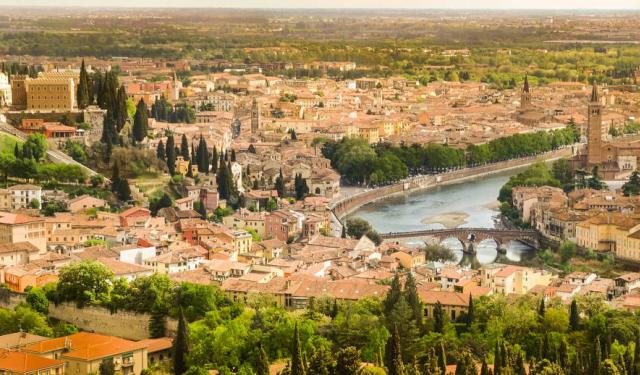
Verona Introduction Walking Tour
As William Shakespeare once wrote, “Two households, both alike in dignity, in fair Verona, where we lay our scene…” - a line that has forever entwined the city’s name with timeless romance and drama.
Verona is one of northern Italy’s most storied cities, shaped by ancient tribes, Roman expansion, medieval rivalries, and later cultural prosperity that earned it UNESCO World Heritage... view more
Tour Duration: 3 Hour(s)
Travel Distance: 4.0 Km or 2.5 Miles
Verona is one of northern Italy’s most storied cities, shaped by ancient tribes, Roman expansion, medieval rivalries, and later cultural prosperity that earned it UNESCO World Heritage... view more
Tour Duration: 3 Hour(s)
Travel Distance: 4.0 Km or 2.5 Miles
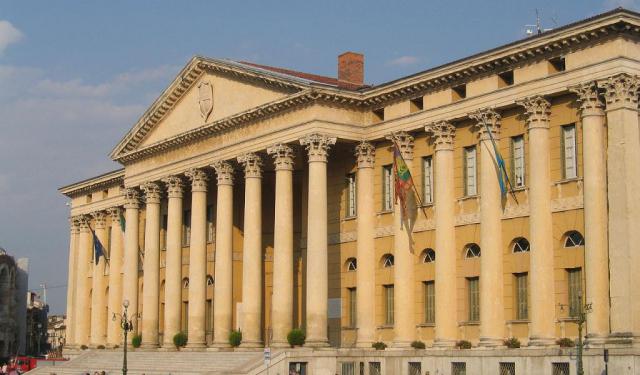
Verona's Palaces
It's no secret that Italy boasts some of the most remarkable palatial architecture in the world. A good portion of it is found in the incredibly charming city of Verona, the long history of which stretches all the way back to ancient Rome and is reflected in an array of Romanesque and Renaissance gates and bridges, but, most notably, the monumental palaces.
Walking the streets of Verona,... view more
Tour Duration: 1 Hour(s)
Travel Distance: 1.6 Km or 1 Miles
Walking the streets of Verona,... view more
Tour Duration: 1 Hour(s)
Travel Distance: 1.6 Km or 1 Miles
The Most Popular Cities
/ view all