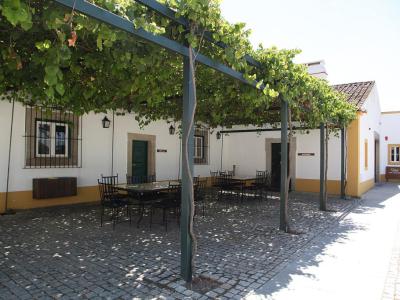


Adega Cartuxa, Evora
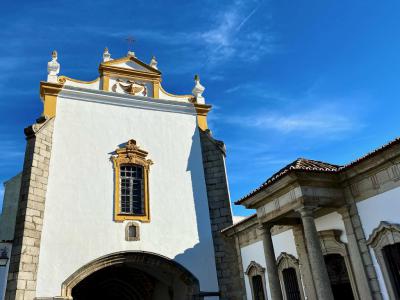
Adega Cartuxa is a venerable structure, steeped in history and surrounded by lush vineyards. It holds a narrative that spans centuries. Originally serving as a respite for the Jesuits of the Companhia de Jesus, who were educators at the prestigious University of Évora during the 16th and 17th centuries, Adega Cartuxa has witnessed the ebb and flow of time, embodying the rich heritage of the region.
The echoes of history resonate through the walls of this ancient edifice. The Jesuits, dedicated to both academia and spirituality, found solace within its walls, contributing to the intellectual tapestry of Évora. However, in 1759, the Marquis of Pombal's decree led to their expulsion, and Adega Cartuxa's ownership shifted to the hands of the State. A pivotal transformation awaited the building in 1776, as it was transformed into a pivotal wine press, absorbing and processing the bountiful grape harvest of the region. This marked a new chapter in its existence, intertwining viticulture with its venerable history.
Fast forward to the 19th century, when the Eugénio de Almeida family acquired Adega Cartuxa. With their stewardship, the building underwent a series of renovations and expansions, meticulously preserving the architectural opulence that bore testament to its past. This delicate balance between historical preservation and progressive adaptation exemplifies the family's commitment to honoring both heritage and innovation.
As you step into this time-honored structure, you embark on an enthralling journey that celebrates history, viticulture, and the convergence of the two. The doors of Adega Cartuxa swing open to welcome visitors into the world of wine tourism, inviting them to explore the captivating landscape of Quinta de Valbom.
The echoes of history resonate through the walls of this ancient edifice. The Jesuits, dedicated to both academia and spirituality, found solace within its walls, contributing to the intellectual tapestry of Évora. However, in 1759, the Marquis of Pombal's decree led to their expulsion, and Adega Cartuxa's ownership shifted to the hands of the State. A pivotal transformation awaited the building in 1776, as it was transformed into a pivotal wine press, absorbing and processing the bountiful grape harvest of the region. This marked a new chapter in its existence, intertwining viticulture with its venerable history.
Fast forward to the 19th century, when the Eugénio de Almeida family acquired Adega Cartuxa. With their stewardship, the building underwent a series of renovations and expansions, meticulously preserving the architectural opulence that bore testament to its past. This delicate balance between historical preservation and progressive adaptation exemplifies the family's commitment to honoring both heritage and innovation.
As you step into this time-honored structure, you embark on an enthralling journey that celebrates history, viticulture, and the convergence of the two. The doors of Adega Cartuxa swing open to welcome visitors into the world of wine tourism, inviting them to explore the captivating landscape of Quinta de Valbom.
Want to visit this sight? Check out these Self-Guided Walking Tours in Evora. Alternatively, you can download the mobile app "GPSmyCity: Walks in 1K+ Cities" from Apple App Store or Google Play Store. The app turns your mobile device to a personal tour guide and it works offline, so no data plan is needed when traveling abroad.
Download The GPSmyCity App



Adega Cartuxa on Map
Sight Name: Adega Cartuxa
Sight Location: Evora, Portugal (See walking tours in Evora)
Sight Type: Food/Drink
Sight Location: Evora, Portugal (See walking tours in Evora)
Sight Type: Food/Drink
Nearby Sights



Walking Tours in Evora, Portugal

Create Your Own Walk in Evora
Creating your own self-guided walk in Evora is easy and fun. Choose the city attractions that you want to see and a walk route map will be created just for you. You can even set your hotel as the start point of the walk.
Evora Introduction Walking Tour
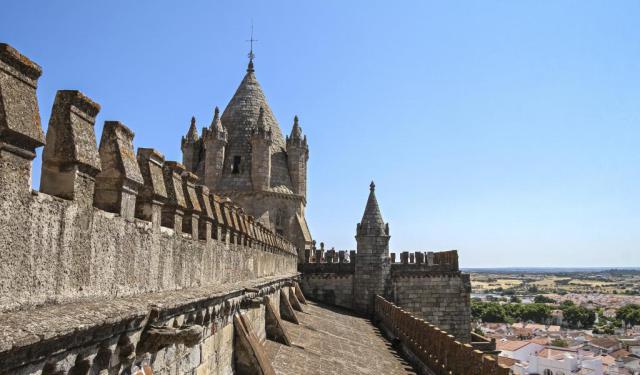
Nestling in the sun-drenched Alentejo region of Portugal, Évora is a timeless gem in the heart of the country and one of its oldest and most enchanting cities.
The city's history spans over 5,000 years. The name Évora originates from the Celtic word "ebura," which means "of the yew trees."
The Romans conquered the place in 57 BC, shaping it into a vital town at... view more
Tour Duration: 2 Hour(s)
Travel Distance: 3.3 Km or 2.1 Miles
The city's history spans over 5,000 years. The name Évora originates from the Celtic word "ebura," which means "of the yew trees."
The Romans conquered the place in 57 BC, shaping it into a vital town at... view more
Tour Duration: 2 Hour(s)
Travel Distance: 3.3 Km or 2.1 Miles