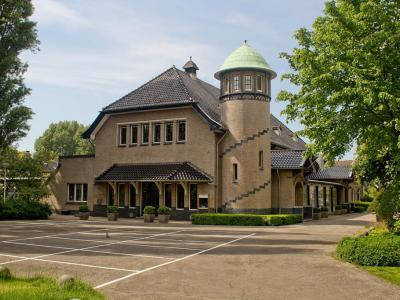


Agnetapark, Delft
Agnetapark in Delft is one of the earliest examples of a planned garden village in the Netherlands, created in the late 19th century as a progressive housing project for workers. It was established in 1882 by the industrialist Jacques van Marken and his wife Agneta Matthes, after whom the park is named. At a time when industrial workers often lived in cramped, unhealthy conditions, the couple envisioned a healthier, greener environment that combined housing with community facilities. The design of Agnetapark reflected both social ideals and practical innovation, making it a landmark in the history of Dutch urban planning.
The park’s layout was inspired by English garden cities, featuring winding paths, spacious green areas, and homes set among trees and gardens. The houses were designed in different styles to avoid monotony, with influences from Dutch Renaissance and Neo-Gothic architecture. Community life was at the heart of the project: residents had access to a bathhouse, a cooperative shop, and even a cultural hall where concerts and lectures were held. This combination of social welfare and architectural charm distinguished Agnetapark from standard workers’ housing of the era.
Today, Agnetapark retains much of its historic character and remains a quiet residential neighborhood, still admired for its forward-thinking design. Visitors walking through its leafy lanes will find a unique blend of heritage and tranquility, far removed from the bustle of Delft’s city centre. Recognized as a protected national monument, the park is not just a piece of social history but also a living example of how visionary planning shaped modern urban life in the Netherlands.
The park’s layout was inspired by English garden cities, featuring winding paths, spacious green areas, and homes set among trees and gardens. The houses were designed in different styles to avoid monotony, with influences from Dutch Renaissance and Neo-Gothic architecture. Community life was at the heart of the project: residents had access to a bathhouse, a cooperative shop, and even a cultural hall where concerts and lectures were held. This combination of social welfare and architectural charm distinguished Agnetapark from standard workers’ housing of the era.
Today, Agnetapark retains much of its historic character and remains a quiet residential neighborhood, still admired for its forward-thinking design. Visitors walking through its leafy lanes will find a unique blend of heritage and tranquility, far removed from the bustle of Delft’s city centre. Recognized as a protected national monument, the park is not just a piece of social history but also a living example of how visionary planning shaped modern urban life in the Netherlands.
Want to visit this sight? Check out these Self-Guided Walking Tours in Delft. Alternatively, you can download the mobile app "GPSmyCity: Walks in 1K+ Cities" from Apple App Store or Google Play Store. The app turns your mobile device to a personal tour guide and it works offline, so no data plan is needed when traveling abroad.
Download The GPSmyCity App



Agnetapark on Map
Sight Name: Agnetapark
Sight Location: Delft, Netherlands (See walking tours in Delft)
Sight Type: Park/Outdoor
Sight Location: Delft, Netherlands (See walking tours in Delft)
Sight Type: Park/Outdoor
Nearby Sights

Walking Tours in Delft, Netherlands

Create Your Own Walk in Delft
Creating your own self-guided walk in Delft is easy and fun. Choose the city attractions that you want to see and a walk route map will be created just for you. You can even set your hotel as the start point of the walk.
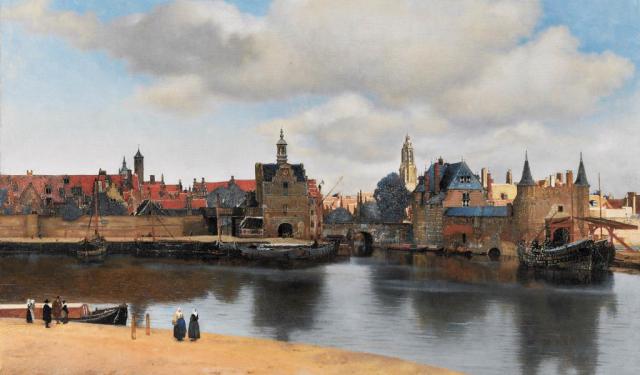
A Walking Guide of Johannes Vermeer's Delft
The Dutch painter Johannes Vermeer (1632 - 1675) spent almost his entire life in his home town, Delft. He left only a few times, towards the end, on the short trips to Amsterdam and The Hague.
The old Delft undoubtedly was one of the most typical little towns of the 17th-century Netherlands, and as such, was rather picturesque. Just like any other Dutch place, Delft was dominated by its towers:... view more
Tour Duration: 1 Hour
Travel Distance: 2 Km or 1.2 Miles
The old Delft undoubtedly was one of the most typical little towns of the 17th-century Netherlands, and as such, was rather picturesque. Just like any other Dutch place, Delft was dominated by its towers:... view more
Tour Duration: 1 Hour
Travel Distance: 2 Km or 1.2 Miles
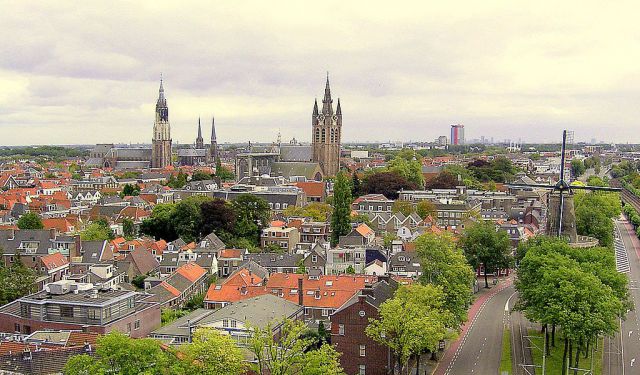
A Walk Through Delft's Historic Old Town
The word "delven" in Dutch means "to dig." The town of Delft began in 1075 when a nobleman decided to build his dream manor where a canal crossed the silted up river Gantel. A settlement became a market town with a large market square. The town was called "Delft."
Canals were vital to Delft. Flat-bottomed boats brought in products, fuel and people. In 1246 Count... view more
Tour Duration: 2 Hours
Travel Distance: 2 Km or 1.2 Miles
Canals were vital to Delft. Flat-bottomed boats brought in products, fuel and people. In 1246 Count... view more
Tour Duration: 2 Hours
Travel Distance: 2 Km or 1.2 Miles
City Walks Overview
