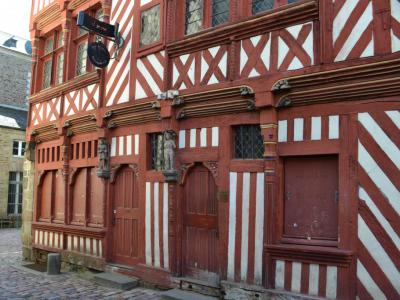


An Ti Kozh (The Old House), Rennes
The Old House (An Ti Kozh) is a historic house situated in the heart of Rennes, behind the Rennes Cathedral. It was constructed in the 16th century, and the date of construction, 1505, is inscribed on its facade. The house was built for two canons of the nearby cathedral, one of Saint Michael and the other of Saint Sebastian, as indicated by the sculptures of the two entrance doors of this double canonical house.
Although popular tradition had long associated the house with Bertrand Du Guesclin, a legendary Breton knight and constable of France, Adolphe Orain debunked the myth of the house's connection to Du Guesclin. Orain noted that the house was constructed two centuries after Du Guesclin's death. Despite this, the house remained a historical monument and was listed as such on July 20, 1923.
The name of the house, An Ti Kozh, means "the old house" in Breton. It was given this name after the Ty-Coz restaurant, which was located in the house, burned down in September 1994. The originality of the house lies in its unique structure, with two houses in one, and many staircases. The carved figures representing the martyrdom of Saint Sebastian demonstrate the social rank of the first occupants. The stained glass windows, which were rare at the time and often sealed by oiled parchment, further demonstrate the occupants' high social status.
Over the years, The Old House has had many different uses. It was transformed into a prestigious inn, where many celebrities and French presidents dined at its Michelin-starred restaurant. However, the restaurant was destroyed in a fire in 1994, and a crêperie took its place. Today, the house has become an icon of Rennes and is well known to night owls, as El Teatro, a Rennes club, has occupied the premises since 2014.
Although popular tradition had long associated the house with Bertrand Du Guesclin, a legendary Breton knight and constable of France, Adolphe Orain debunked the myth of the house's connection to Du Guesclin. Orain noted that the house was constructed two centuries after Du Guesclin's death. Despite this, the house remained a historical monument and was listed as such on July 20, 1923.
The name of the house, An Ti Kozh, means "the old house" in Breton. It was given this name after the Ty-Coz restaurant, which was located in the house, burned down in September 1994. The originality of the house lies in its unique structure, with two houses in one, and many staircases. The carved figures representing the martyrdom of Saint Sebastian demonstrate the social rank of the first occupants. The stained glass windows, which were rare at the time and often sealed by oiled parchment, further demonstrate the occupants' high social status.
Over the years, The Old House has had many different uses. It was transformed into a prestigious inn, where many celebrities and French presidents dined at its Michelin-starred restaurant. However, the restaurant was destroyed in a fire in 1994, and a crêperie took its place. Today, the house has become an icon of Rennes and is well known to night owls, as El Teatro, a Rennes club, has occupied the premises since 2014.
Want to visit this sight? Check out these Self-Guided Walking Tours in Rennes. Alternatively, you can download the mobile app "GPSmyCity: Walks in 1K+ Cities" from Apple App Store or Google Play Store. The app turns your mobile device to a personal tour guide and it works offline, so no data plan is needed when traveling abroad.
Download The GPSmyCity App



An Ti Kozh (The Old House) on Map
Sight Name: An Ti Kozh (The Old House)
Sight Location: Rennes, France (See walking tours in Rennes)
Sight Type: Attraction/Landmark
Sight Location: Rennes, France (See walking tours in Rennes)
Sight Type: Attraction/Landmark
Nearby Sights


Walking Tours in Rennes, France

Create Your Own Walk in Rennes
Creating your own self-guided walk in Rennes is easy and fun. Choose the city attractions that you want to see and a walk route map will be created just for you. You can even set your hotel as the start point of the walk.
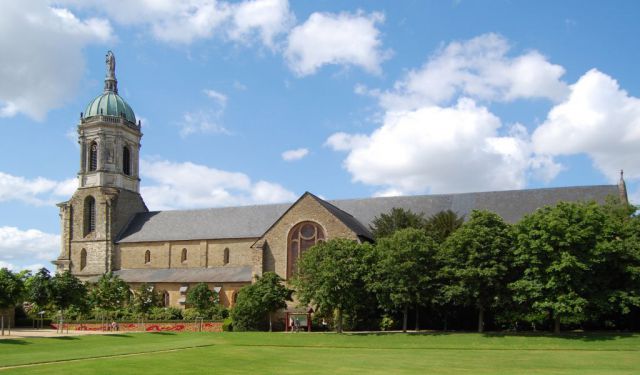
Rennes Historical Churches Walking Tour
Historical churches occupy a significant place in the cultural identity of Rennes, France. Travelers with a keen interest in religious history and architecture will find plenty to look at in this town.
Standing out majestically among the local ecclesiastical landmarks is Rennes Cathedral. Built in the 12th century, it underwent a centuries-long transformation from its Gothic origins to its... view more
Tour Duration: 1 Hour
Travel Distance: 2.1 Km or 1.3 Miles
Standing out majestically among the local ecclesiastical landmarks is Rennes Cathedral. Built in the 12th century, it underwent a centuries-long transformation from its Gothic origins to its... view more
Tour Duration: 1 Hour
Travel Distance: 2.1 Km or 1.3 Miles
Medieval Houses Walking Tour
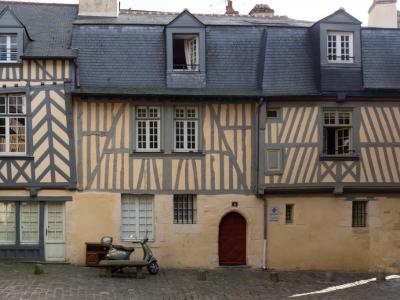
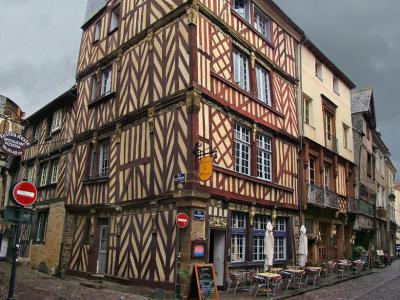
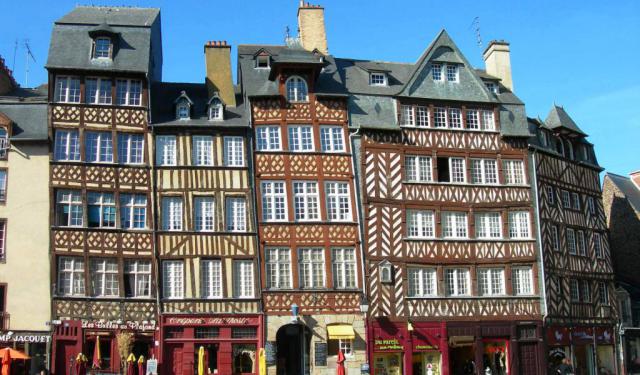
From the late Middle Ages through to the end of the Ancien Régime (the period of Bourbon rule in France, from 1589 to 1789), a multitude of half-timbered houses were built in Brittany, and particularly in Rennes. Even today, the Breton capital is where half-timbered houses remain the most prevalent style of architecture, and a key element of the cultural heritage of the region reiterated in many... view more
Tour Duration: 1 Hour
Travel Distance: 0.9 Km or 0.6 Miles
Tour Duration: 1 Hour
Travel Distance: 0.9 Km or 0.6 Miles
Rennes Introduction Walking Tour
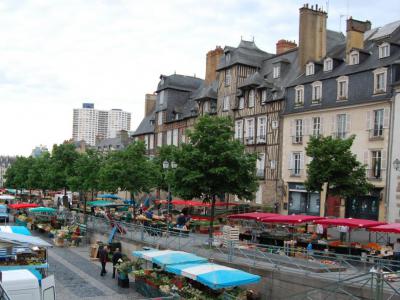
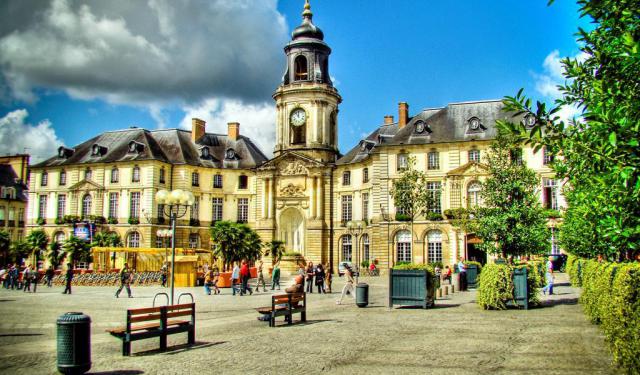
Rennes began its existence as Condate Redonum, a Gallic and Roman town at the confluence of the Ille and Vilaine rivers. During medieval times, it became one of the three major cities of Brittany, together with Vannes and Nantes. The city played an important role in the Stamped Paper Revolt in 1675. During the French Revolution, it became the headquarters of the republican army in the fighting... view more
Tour Duration: 2 Hours
Travel Distance: 2.9 Km or 1.8 Miles
Tour Duration: 2 Hours
Travel Distance: 2.9 Km or 1.8 Miles