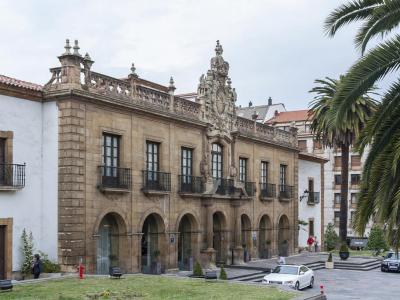


Antiguo Hospicio de Oviedo (Old Hospice of Oviedo), Oviedo
The Old Hospice of Oviedo, now operating as the five-star Hotel Reconquista is a notable example of 18th-century Spanish Baroque architecture. Commissioned in 1752 by Isidoro Gil de Jaz, the regent of Asturias, the complex was originally conceived as a combined hospice, orphanage, and work institution to support impoverished and orphaned children. Its founding mission included vocational training, aimed at integrating residents into employment-a forward-thinking form of early social welfare.
Designed mostly by architect Pedro Antonio Menéndez de Ambás, the building officially opened by Fernando VI, its principal façade is notable for seven graceful round arches beneath a richly sculpted Baroque shield. Due to erosion of the original soft sandstone crest, it was replaced in 1958 with an exact limestone copy to preserve its detail.
At the heart of the structure are two expansive internal courtyards-the Gil de Jaz courtyard and the Reina courtyard-featuring wooden galleries that evoke the layout and atmosphere of Old Castilian plazas. The centerpiece chapel, conceived in 1768 by the architect Ventura Rodríguez and executed by Manuel Reguera González, is circular inside and octagonal outside, crowned with a lofty dome adorned with ornamental coffers and floral motifs.
After decades of service under various social roles, including use as an emergency hospital during the Spanish Civil War, the building was restored in the mid-20th century and reopened as the Hotel Reconquista in 1972. Today, it serves as one of two key venues for the Princess of Asturias Awards, hosting distinguished guests and members of the royal family. Despite its transformation into a luxury hotel, much of its historic structure remains intact.
Designed mostly by architect Pedro Antonio Menéndez de Ambás, the building officially opened by Fernando VI, its principal façade is notable for seven graceful round arches beneath a richly sculpted Baroque shield. Due to erosion of the original soft sandstone crest, it was replaced in 1958 with an exact limestone copy to preserve its detail.
At the heart of the structure are two expansive internal courtyards-the Gil de Jaz courtyard and the Reina courtyard-featuring wooden galleries that evoke the layout and atmosphere of Old Castilian plazas. The centerpiece chapel, conceived in 1768 by the architect Ventura Rodríguez and executed by Manuel Reguera González, is circular inside and octagonal outside, crowned with a lofty dome adorned with ornamental coffers and floral motifs.
After decades of service under various social roles, including use as an emergency hospital during the Spanish Civil War, the building was restored in the mid-20th century and reopened as the Hotel Reconquista in 1972. Today, it serves as one of two key venues for the Princess of Asturias Awards, hosting distinguished guests and members of the royal family. Despite its transformation into a luxury hotel, much of its historic structure remains intact.
Want to visit this sight? Check out these Self-Guided Walking Tours in Oviedo. Alternatively, you can download the mobile app "GPSmyCity: Walks in 1K+ Cities" from Apple App Store or Google Play Store. The app turns your mobile device to a personal tour guide and it works offline, so no data plan is needed when traveling abroad.
Download The GPSmyCity App



Antiguo Hospicio de Oviedo (Old Hospice of Oviedo) on Map
Sight Name: Antiguo Hospicio de Oviedo (Old Hospice of Oviedo)
Sight Location: Oviedo, Spain (See walking tours in Oviedo)
Sight Type: Attraction/Landmark
Sight Location: Oviedo, Spain (See walking tours in Oviedo)
Sight Type: Attraction/Landmark
Nearby Sights


Walking Tours in Oviedo, Spain

Create Your Own Walk in Oviedo
Creating your own self-guided walk in Oviedo is easy and fun. Choose the city attractions that you want to see and a walk route map will be created just for you. You can even set your hotel as the start point of the walk.
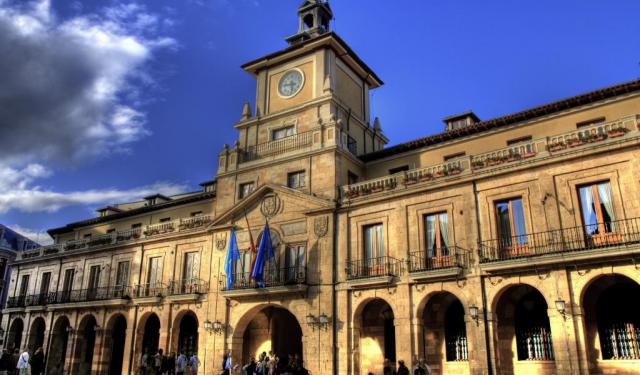
Oviedo Historic Architecture
The north Spanish region of Asturias and particularly its capital city, Oviedo, have long been noted for their unique architecture. The medieval part of town, whose ancient walls are still largely intact, contains some truly priceless relics. Among them is a well called La Foncalada, a fascinating example of an effective hydraulic system, dating back to the first half of the 9th century, based on... view more
Tour Duration: 2 Hour(s)
Travel Distance: 2.7 Km or 1.7 Miles
Tour Duration: 2 Hour(s)
Travel Distance: 2.7 Km or 1.7 Miles
Oviedo Introduction Walking Tour
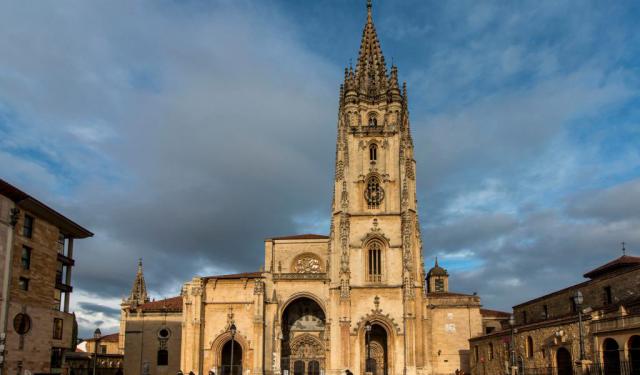
The Kingdom of Asturias began in 720, with the Visigothic revolt against Muslim rule led by the nobleman Pelagius. At that time, the city of Oviedo did not exist. Two monks, Maximo and Fromestano, founded the city in 761. They built a small church for Saint Vincent on a bare hillside, and from this seed, Oviedo grew.
After Pelagius died in 737, King Alfonso I founded a dynasty in Oviedo that... view more
Tour Duration: 1 Hour(s)
Travel Distance: 1.8 Km or 1.1 Miles
After Pelagius died in 737, King Alfonso I founded a dynasty in Oviedo that... view more
Tour Duration: 1 Hour(s)
Travel Distance: 1.8 Km or 1.1 Miles
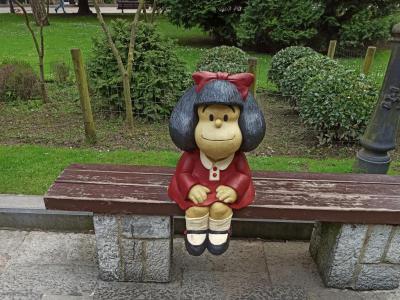
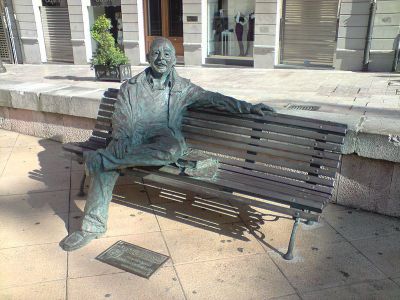
Oviedo Public Art Walking Tour
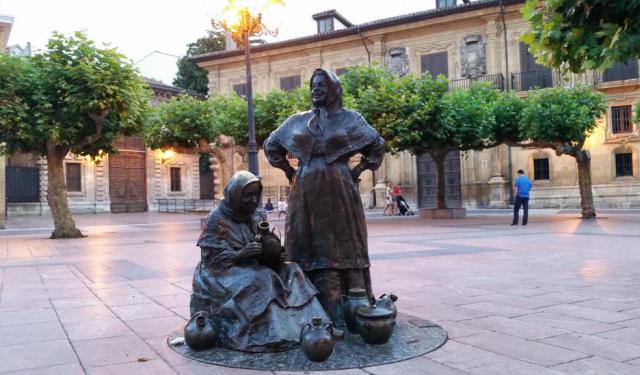
Public art adds a great deal of vibrancy and character to the cityscape of Oviedo, Spain, reflecting, among other things, its contemporary spirit. From the bustling Plaza Trascorrales to the serene Plaza Porlier De Oviedo, numerous sculptures have long become an integral part of the neighborhood, captivating passers-by in their numbers.
In Plaza Trascorrales, sculptures like The Fishwife and... view more
Tour Duration: 3 Hour(s)
Travel Distance: 3.0 Km or 1.9 Miles
In Plaza Trascorrales, sculptures like The Fishwife and... view more
Tour Duration: 3 Hour(s)
Travel Distance: 3.0 Km or 1.9 Miles