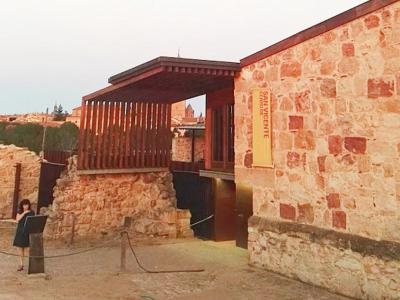


Archaeological Park of St. Vincent's Hill, Salamanca
The Archaeological Park of Saint Vincent’s Hill stands as the birthplace of the city. This elevated site offers both panoramic views and a tangible connection to Salamanca’s earliest chapter, where the first stable human settlement emerged during the Early Iron Age (7th-4th centuries B.C.). The strategic location, adjacent to the Tormes River and overlooking fertile lowlands, made it an ideal foundation for early agrarian communities.
Visitors today can walk along a protected walkway above the site and observe remarkably preserved structures: complete dwellings built with adobe and mudbrick, along with auxiliary features like silos, granaries, and storage areas-all laid out along a central pathway that hints at the organization of this protohistoric village. These early homes and artifacts offer a vivid glimpse into daily life during over two millennia ago, bringing the distant past to life through architecture, material culture, and interpretive displays.
Beyond its protohistoric layers, the park's story spans centuries. In the medieval period, the hill hosted the Monastery of San Vicente, one of Salamanca’s earliest monastic foundations, before later being transformed into a Napoleonic fortress during the Peninsular War-only to be destroyed in the siege of 1812. Post-war attempts to rebuild the monastery ultimately failed, and the site later gave way to urban development until archaeological efforts began in the late 20th century.
Today, the park includes the recently inaugurated Museum of Cerro de San Vicente, which contextualizes these many layers of evidence through modern, interactive exhibits. The museum traces Salamanca’s evolution from its Iron Age hamlet through monastic and military phases to present-day transformations. Audiovisual installations, interpretive panels, and curated objects-such as Egyptian-style artifacts tracing cultural contact-help weave together a coherent narrative of the city’s long and dynamic history.
Visitors today can walk along a protected walkway above the site and observe remarkably preserved structures: complete dwellings built with adobe and mudbrick, along with auxiliary features like silos, granaries, and storage areas-all laid out along a central pathway that hints at the organization of this protohistoric village. These early homes and artifacts offer a vivid glimpse into daily life during over two millennia ago, bringing the distant past to life through architecture, material culture, and interpretive displays.
Beyond its protohistoric layers, the park's story spans centuries. In the medieval period, the hill hosted the Monastery of San Vicente, one of Salamanca’s earliest monastic foundations, before later being transformed into a Napoleonic fortress during the Peninsular War-only to be destroyed in the siege of 1812. Post-war attempts to rebuild the monastery ultimately failed, and the site later gave way to urban development until archaeological efforts began in the late 20th century.
Today, the park includes the recently inaugurated Museum of Cerro de San Vicente, which contextualizes these many layers of evidence through modern, interactive exhibits. The museum traces Salamanca’s evolution from its Iron Age hamlet through monastic and military phases to present-day transformations. Audiovisual installations, interpretive panels, and curated objects-such as Egyptian-style artifacts tracing cultural contact-help weave together a coherent narrative of the city’s long and dynamic history.
Want to visit this sight? Check out these Self-Guided Walking Tours in Salamanca. Alternatively, you can download the mobile app "GPSmyCity: Walks in 1K+ Cities" from Apple App Store or Google Play Store. The app turns your mobile device to a personal tour guide and it works offline, so no data plan is needed when traveling abroad.
Download The GPSmyCity App



Archaeological Park of St. Vincent's Hill on Map
Sight Name: Archaeological Park of St. Vincent's Hill
Sight Location: Salamanca, Spain (See walking tours in Salamanca)
Sight Type: Attraction/Landmark
Sight Location: Salamanca, Spain (See walking tours in Salamanca)
Sight Type: Attraction/Landmark
Nearby Sights
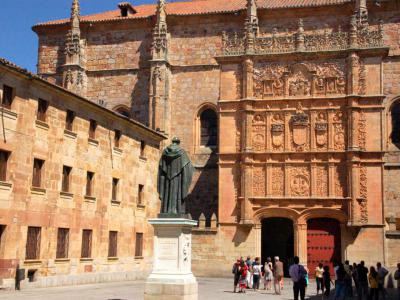
Walking Tours in Salamanca, Spain

Create Your Own Walk in Salamanca
Creating your own self-guided walk in Salamanca is easy and fun. Choose the city attractions that you want to see and a walk route map will be created just for you. You can even set your hotel as the start point of the walk.
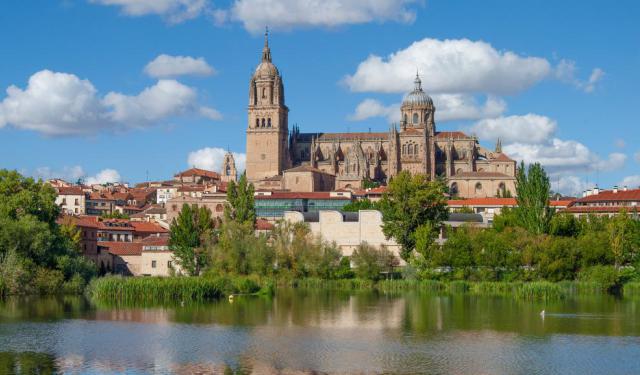
Salamanca Introduction Walking Tour
Usually, frogs inhabit marshy lands, not the sun-baked plains of central Spain. Yet Salamanca is the exception. The small stone frog adorning the façade of the University of Salamanca keeps a watchful eye over visitors. Local legend says that if you find the frog among the carvings, fate will one day bring you back to the city.
The name Salamanca is rooted in antiquity. One theory links it to... view more
Tour Duration: 1 Hour
Travel Distance: 1.6 Km or 1 Miles
The name Salamanca is rooted in antiquity. One theory links it to... view more
Tour Duration: 1 Hour
Travel Distance: 1.6 Km or 1 Miles
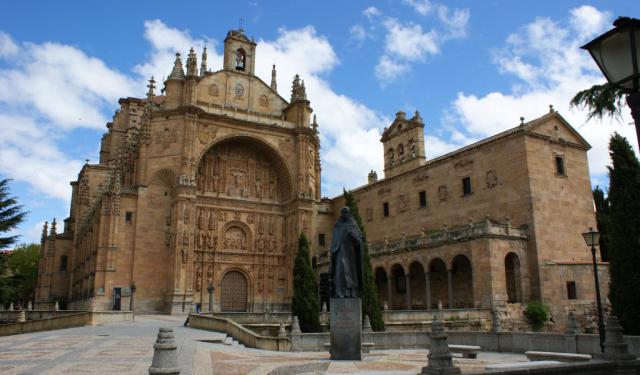
Salamanca's Historical Buildings Walking Tour
Salamanca - one of Spain’s most delightful and intriguing destinations - is a treasure trove of architectural marvels. The abundance of well-preserved, centuries-old wonders of construction tucked away in the labyrinth of narrow lanes in this prestigious university city is truly awe-inspiring. A true feast for the eyes, they are so impressive that the entire historic center of Salamanca was... view more
Tour Duration: 2 Hours
Travel Distance: 2.3 Km or 1.4 Miles
Tour Duration: 2 Hours
Travel Distance: 2.3 Km or 1.4 Miles
City Walks Overview
