

Assumption of Virgin Mary Church, Brno
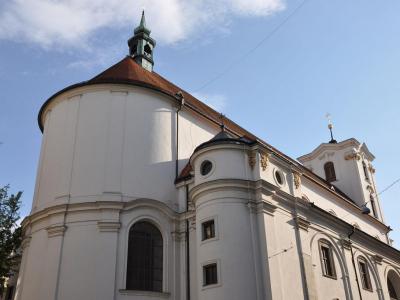
The Assumption of Virgin Mary Church (Kostel Nanebevzetí Panny Marie) in Brno is a significant historical and architectural landmark. This church is one of three Jesuit churches built in Brno and is deeply associated with the Jesuit order's educational mission in the city. The Jesuit college, linked to the church, provided free education to peasants, becoming a key center of knowledge and re-Catholicization in the region.
The church and the college were established in 1578 on the site of a medieval convent, making the college the sixth oldest in Czech lands and the second oldest in Moravia. The construction of the complex was supported by Cardinal and Count František of Dietrichstein, a key figure in the re-Catholicization of Moravia, and his brother, Zikmund, the Provincial Vice-Chamberlain. Both are buried in front of the church's high altar. The church itself, completed in 1602, is one of the earliest Baroque buildings in Brno and Moravia.
The architecture of the church is notable for its Baroque features. The building is a triple-nave structure, with a monumental altar dating from 1734 to 1737, which features a replica of a Madonna painting from Santa Maria Maggiore in Rome. The church's interior is adorned with altarpieces and ceiling paintings by F. A. Scheffler and sculptures by J. J. Schauberger. The pews in the gallery (1602-1605) and the main nave (1660s), as well as the organ with its figurative decorations, are particularly remarkable. The sacristy vault is decorated with stucco garlands and putti heads, showcasing the intricate Baroque style.
Originally serving the Jesuit Order until its dissolution in 1773, the complex later became an academy and military barracks. In 1904, the college and monastic buildings were demolished, leaving only the church. Despite severe damage in the 1944 bombing of Brno, the church remains a historic site. In 2020, a statue of Jesuit Father Martin Středa was erected in front of the church, honoring its Jesuit heritage.
The church and the college were established in 1578 on the site of a medieval convent, making the college the sixth oldest in Czech lands and the second oldest in Moravia. The construction of the complex was supported by Cardinal and Count František of Dietrichstein, a key figure in the re-Catholicization of Moravia, and his brother, Zikmund, the Provincial Vice-Chamberlain. Both are buried in front of the church's high altar. The church itself, completed in 1602, is one of the earliest Baroque buildings in Brno and Moravia.
The architecture of the church is notable for its Baroque features. The building is a triple-nave structure, with a monumental altar dating from 1734 to 1737, which features a replica of a Madonna painting from Santa Maria Maggiore in Rome. The church's interior is adorned with altarpieces and ceiling paintings by F. A. Scheffler and sculptures by J. J. Schauberger. The pews in the gallery (1602-1605) and the main nave (1660s), as well as the organ with its figurative decorations, are particularly remarkable. The sacristy vault is decorated with stucco garlands and putti heads, showcasing the intricate Baroque style.
Originally serving the Jesuit Order until its dissolution in 1773, the complex later became an academy and military barracks. In 1904, the college and monastic buildings were demolished, leaving only the church. Despite severe damage in the 1944 bombing of Brno, the church remains a historic site. In 2020, a statue of Jesuit Father Martin Středa was erected in front of the church, honoring its Jesuit heritage.
Want to visit this sight? Check out these Self-Guided Walking Tours in Brno. Alternatively, you can download the mobile app "GPSmyCity: Walks in 1K+ Cities" from Apple App Store or Google Play Store. The app turns your mobile device to a personal tour guide and it works offline, so no data plan is needed when traveling abroad.
Download The GPSmyCity App



Assumption of Virgin Mary Church on Map
Sight Name: Assumption of Virgin Mary Church
Sight Location: Brno, Czech Republic (See walking tours in Brno)
Sight Type: Religious
Sight Location: Brno, Czech Republic (See walking tours in Brno)
Sight Type: Religious
Nearby Sights



Walking Tours in Brno, Czech Republic

Create Your Own Walk in Brno
Creating your own self-guided walk in Brno is easy and fun. Choose the city attractions that you want to see and a walk route map will be created just for you. You can even set your hotel as the start point of the walk.
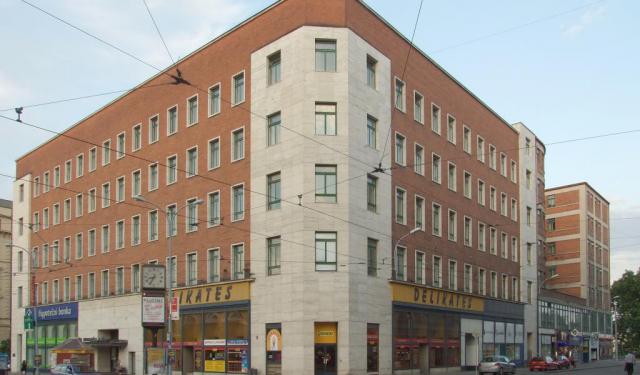
Explore Brno's Functionalist Architecture by Foot
Functionalist architecture, a style that sought to meet the needs of the rapidly evolving industrial society, emerged in Europe in the wake of World War I.
After Czechoslovakia gained independence in 1918, Brno, the second-largest city in the country, developed rapidly both economically and politically. Its architecture reflected a modernist approach that prioritized functionality and... view more
Tour Duration: 1 Hour
Travel Distance: 1.5 Km or 0.9 Miles
After Czechoslovakia gained independence in 1918, Brno, the second-largest city in the country, developed rapidly both economically and politically. Its architecture reflected a modernist approach that prioritized functionality and... view more
Tour Duration: 1 Hour
Travel Distance: 1.5 Km or 0.9 Miles
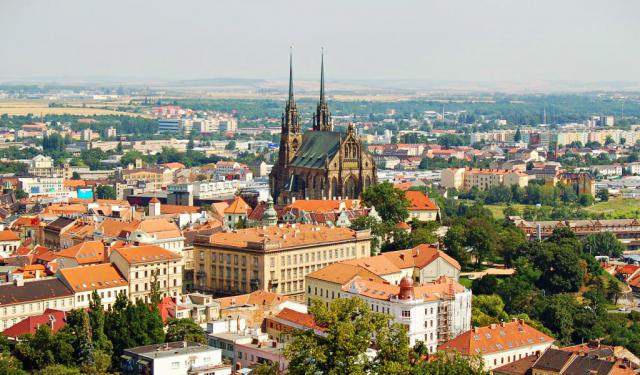
A Walk Through Brno's Compact and Charming Downtown
Brno is the second-largest city in the Czech Republic. Located in the South Moravian Region, it is the center of Czech's judiciary and the former capital of Moravia.
Brno is known for its exhibition center, one of the largest in Europe. It is also known for its international fireworks competition, Fire of Brno. The long history of fireworks and pyrotechnics are seen in the Spilberk Castle... view more
Tour Duration: 2 Hours
Travel Distance: 2.7 Km or 1.7 Miles
Brno is known for its exhibition center, one of the largest in Europe. It is also known for its international fireworks competition, Fire of Brno. The long history of fireworks and pyrotechnics are seen in the Spilberk Castle... view more
Tour Duration: 2 Hours
Travel Distance: 2.7 Km or 1.7 Miles
City Walks Overview
