

Basilica di San Francesco d'Assisi (Basilica of Saint Francis), Assisi (must see)
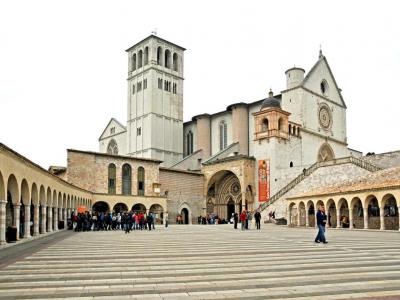
Since its construction began in 1228, the Basilica of Saint Francis has held major significance as a Catholic pilgrimage site. In addition to enshrining the body of the venerated saint beneath the high altar, the basilica is renowned for its collection of paintings by Giotto and their important role in Western art history. These works helped mark the transition from Byzantine stylization toward humanist narrative, realism, and three-dimensionality.
Architecturally, the basilica is arranged on two levels, with the Upper Church standing above the Lower Church. This extraordinary design presented significant engineering challenges, which were ingeniously addressed through the use of massive arched buttresses. The immense project was overseen by Brother Elias of Cortona, who worked alongside the master architect Jacopo Tedesco to create a single-nave design that later served as a model for numerous Franciscan churches across Italy.
Begin your exploration by pausing in the Lower Square of Saint Francis to admire the sweeping double arcades framing the lower entrance portal and the massive stone buttresses anchoring the church to the hillside.
After entering from the Lower Square, walk along the main aisle of the Lower Basilica and descend into the crypt beneath the central altar. Here, you can view the simple stone tomb containing the remains of Saint Francis, illuminated by a single perpetual flame.
Remarkably, both churches are adorned with exquisite frescoes, making them veritable artistic treasure troves. The Lower Church contains frescoes by the esteemed painters Simone Martini and Pietro Lorenzetti, alongside works attributed to Giotto or his assistants. By contrast, Giotto’s frescoes in the Upper Church, painted when he was still in his twenties, established him as a pivotal figure in the evolution of Western painting.
To reach the Upper Basilica, climb the stone staircase beside the lower entrance portal. Once inside, follow Giotto’s cycle of 28 frescoes chronologically, beginning on the right-hand wall closest to the altar. Walk toward the main entrance doors, examine the panels on the back wall, and then continue along the left-hand wall as the narrative leads you back toward the sanctuary. The cycle begins with Francis renouncing his worldly possessions and ends with his canonization.
Visitors should observe the basilica’s strict dress code, which prohibits bare shoulders and knees. To avoid the largest crowds, consider visiting early or late in the day, when you may enjoy a quieter experience.
Architecturally, the basilica is arranged on two levels, with the Upper Church standing above the Lower Church. This extraordinary design presented significant engineering challenges, which were ingeniously addressed through the use of massive arched buttresses. The immense project was overseen by Brother Elias of Cortona, who worked alongside the master architect Jacopo Tedesco to create a single-nave design that later served as a model for numerous Franciscan churches across Italy.
Begin your exploration by pausing in the Lower Square of Saint Francis to admire the sweeping double arcades framing the lower entrance portal and the massive stone buttresses anchoring the church to the hillside.
After entering from the Lower Square, walk along the main aisle of the Lower Basilica and descend into the crypt beneath the central altar. Here, you can view the simple stone tomb containing the remains of Saint Francis, illuminated by a single perpetual flame.
Remarkably, both churches are adorned with exquisite frescoes, making them veritable artistic treasure troves. The Lower Church contains frescoes by the esteemed painters Simone Martini and Pietro Lorenzetti, alongside works attributed to Giotto or his assistants. By contrast, Giotto’s frescoes in the Upper Church, painted when he was still in his twenties, established him as a pivotal figure in the evolution of Western painting.
To reach the Upper Basilica, climb the stone staircase beside the lower entrance portal. Once inside, follow Giotto’s cycle of 28 frescoes chronologically, beginning on the right-hand wall closest to the altar. Walk toward the main entrance doors, examine the panels on the back wall, and then continue along the left-hand wall as the narrative leads you back toward the sanctuary. The cycle begins with Francis renouncing his worldly possessions and ends with his canonization.
Visitors should observe the basilica’s strict dress code, which prohibits bare shoulders and knees. To avoid the largest crowds, consider visiting early or late in the day, when you may enjoy a quieter experience.
Want to visit this sight? Check out these Self-Guided Walking Tours in Assisi. Alternatively, you can download the mobile app "GPSmyCity: Walks in 1K+ Cities" from Apple App Store or Google Play Store. The app turns your mobile device to a personal tour guide and it works offline, so no data plan is needed when traveling abroad.
Download The GPSmyCity App



Basilica di San Francesco d'Assisi (Basilica of Saint Francis) on Map
Sight Name: Basilica di San Francesco d'Assisi (Basilica of Saint Francis)
Sight Location: Assisi, Italy (See walking tours in Assisi)
Sight Type: Religious
Guide(s) Containing This Sight:
Sight Location: Assisi, Italy (See walking tours in Assisi)
Sight Type: Religious
Guide(s) Containing This Sight:
Nearby Sights
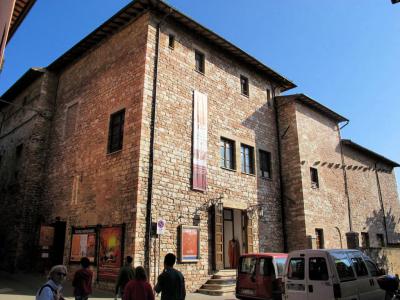
Walking Tours in Assisi, Italy

Create Your Own Walk in Assisi
Creating your own self-guided walk in Assisi is easy and fun. Choose the city attractions that you want to see and a walk route map will be created just for you. You can even set your hotel as the start point of the walk.
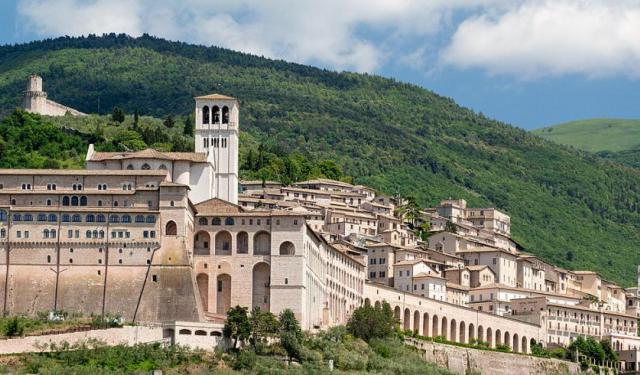
Explore Assisi Medieval Town on Foot
Dante believed that the name Assisi did not fully express the town’s significance. In his poem Paradiso, he suggested that it should instead be called the “East” because Saint Francis rose from its hillside like a new sun.
Assisi stands on the western slope of Mount Subasio, overlooking the Umbrian Valley. Human settlement in the area dates back to prehistoric times, while the town itself... view more
Tour Duration: 2 Hours
Travel Distance: 1.9 Km or 1.2 Miles
Assisi stands on the western slope of Mount Subasio, overlooking the Umbrian Valley. Human settlement in the area dates back to prehistoric times, while the town itself... view more
Tour Duration: 2 Hours
Travel Distance: 1.9 Km or 1.2 Miles
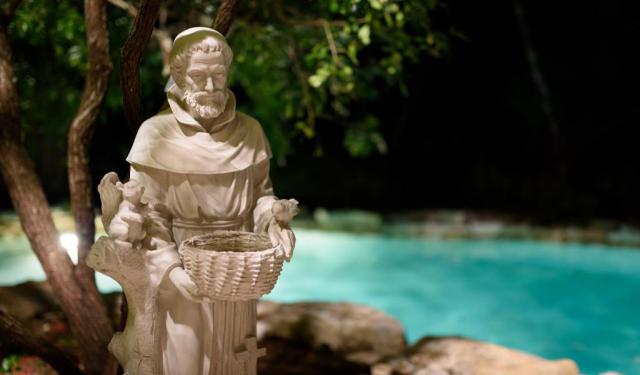
St. Francis' Assisi Walking Tour
Assisi’s identity as the city of Saint Francis began with a merchant’s son who seemed destined for anything but sainthood. Giovanni di Pietro di Bernardone-later known as Francis-was born here in late 1181 or early 1182 into a prosperous cloth-trading family. As a young man, he delighted in fashionable clothes, music, feasting, and dreams of knighthood. Assisi was then a turbulent commune,... view more
Tour Duration: 2 Hours
Travel Distance: 3.2 Km or 2 Miles
Tour Duration: 2 Hours
Travel Distance: 3.2 Km or 2 Miles
City Walks Overview
