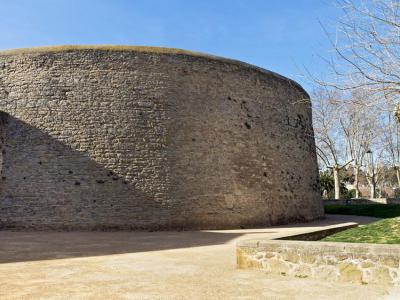


Bastion Saint-Martial, Carcassonne
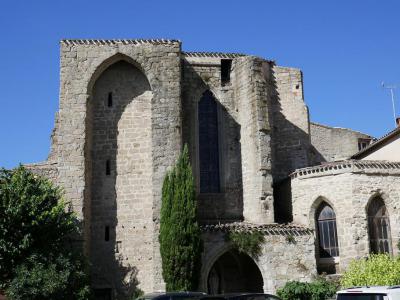
The Bastion Saint-Martial in Carcassonne is a striking remnant of the city’s historic fortifications, notable for its circular stone mass partly draped in ivy. Positioned in the lively heart of Boulevard Omer Sarraut and overlooking the Garden of Plants (Jardin des Plantes), this bastion bears witness to the city’s layered history.
Originally part of the 16th-century ramparts, the bastion was situated near the old post road that skirted the Grazailles hillside. In the late 18th century, its western portion briefly served as a cemetery. However, major transformations reshaped the area during the early 19th century, following the construction of the Marengo Bridge and enhancements to the Canal du Midi. This included plans to develop public spaces, which set the stage for later projects.
In 1878, the secular Bastion School (Ecole du Bastion) was built nearby, incorporating the bastion into its design. By 1879, the school had become a key feature of the district. Over time, urban development encroached on the site; the early 20th century saw partial demolition of the bastion’s western flank to make way for new streets like Jules Sauzede Street. A fountain, nicknamed "the artichoke," also disappeared, leaving the neighborhood with the colloquial moniker of the "Artichaud" district.
A turning point came in 1999 when restoration efforts revived the Bastion Saint-Martial. Excavations uncovered previously buried sections of the wall, and a surrounding path was laid to connect Boulevard Omer Sarraut to Jules Sauzede Street. The addition of grassy landscaping and integrated lighting further highlighted the bastion's historical charm. Today, this revitalized landmark stands as both a reminder of Carcassonne’s past and a refreshing feature in its modern urban landscape.
Originally part of the 16th-century ramparts, the bastion was situated near the old post road that skirted the Grazailles hillside. In the late 18th century, its western portion briefly served as a cemetery. However, major transformations reshaped the area during the early 19th century, following the construction of the Marengo Bridge and enhancements to the Canal du Midi. This included plans to develop public spaces, which set the stage for later projects.
In 1878, the secular Bastion School (Ecole du Bastion) was built nearby, incorporating the bastion into its design. By 1879, the school had become a key feature of the district. Over time, urban development encroached on the site; the early 20th century saw partial demolition of the bastion’s western flank to make way for new streets like Jules Sauzede Street. A fountain, nicknamed "the artichoke," also disappeared, leaving the neighborhood with the colloquial moniker of the "Artichaud" district.
A turning point came in 1999 when restoration efforts revived the Bastion Saint-Martial. Excavations uncovered previously buried sections of the wall, and a surrounding path was laid to connect Boulevard Omer Sarraut to Jules Sauzede Street. The addition of grassy landscaping and integrated lighting further highlighted the bastion's historical charm. Today, this revitalized landmark stands as both a reminder of Carcassonne’s past and a refreshing feature in its modern urban landscape.
Want to visit this sight? Check out these Self-Guided Walking Tours in Carcassonne. Alternatively, you can download the mobile app "GPSmyCity: Walks in 1K+ Cities" from Apple App Store or Google Play Store. The app turns your mobile device to a personal tour guide and it works offline, so no data plan is needed when traveling abroad.
Download The GPSmyCity App



Bastion Saint-Martial on Map
Sight Name: Bastion Saint-Martial
Sight Location: Carcassonne, France (See walking tours in Carcassonne)
Sight Type: Attraction/Landmark
Sight Location: Carcassonne, France (See walking tours in Carcassonne)
Sight Type: Attraction/Landmark
Nearby Sights




Walking Tours in Carcassonne, France

Create Your Own Walk in Carcassonne
Creating your own self-guided walk in Carcassonne is easy and fun. Choose the city attractions that you want to see and a walk route map will be created just for you. You can even set your hotel as the start point of the walk.
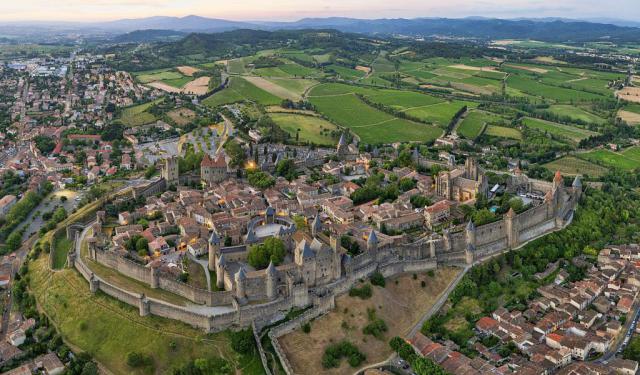
Discover Carcassonne City Center on Foot
Nestled in the picturesque region of Occitanie in southern France is the captivating city of Carcassonne.
The name "Carcassonne" is believed to have originated from the Gallic word "Carsac," referring to a fort settlement that was later fortified by the Romans who occupied the area in the 1st century BC.
A legend suggests another, more colorful version of the name,... view more
Tour Duration: 1 Hour(s)
Travel Distance: 1.9 Km or 1.2 Miles
The name "Carcassonne" is believed to have originated from the Gallic word "Carsac," referring to a fort settlement that was later fortified by the Romans who occupied the area in the 1st century BC.
A legend suggests another, more colorful version of the name,... view more
Tour Duration: 1 Hour(s)
Travel Distance: 1.9 Km or 1.2 Miles
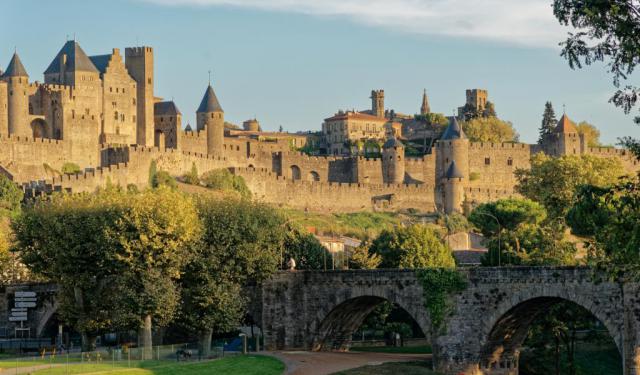
A Walk Through Carcassonne Medieval Hilltop Town
A pig full of wheat was thrown off the battlements. The lady commanding the fortress was a Muslim. The besieging Christians knew Muslims do not eat pig. What is more, the defenders must have plenty of food if they could feed wheat to a pig and throw it over the walls. The siege had lasted five years. The attackers were starving. They left.
Many stories are told about the fortified medieval... view more
Tour Duration: 1 Hour(s)
Travel Distance: 1.2 Km or 0.7 Miles
Many stories are told about the fortified medieval... view more
Tour Duration: 1 Hour(s)
Travel Distance: 1.2 Km or 0.7 Miles