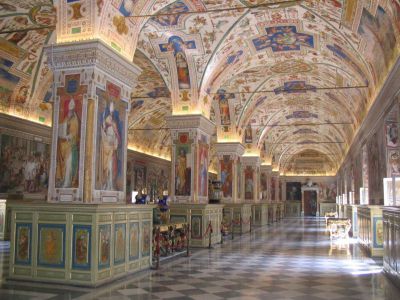


Biblioteca Apostolica Vaticana (Vatican Apostolic Library), Rome
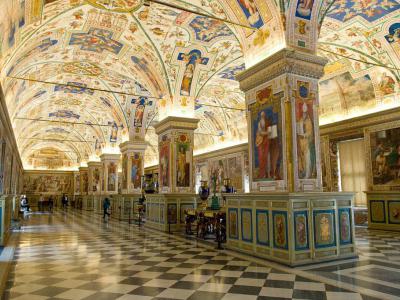
The Vatican Apostolic Library, one of the world’s oldest and most prestigious libraries, holds an extensive collection of historical texts and manuscripts. It is located within the Vatican Palace and can be accessed through the Belvedere Courtyard. While officially established in 1475, its origins trace back much earlier, making it a vital repository of historical and cultural heritage.
The library’s foundation began in 1448 when Pope Nicholas V consolidated approximately 350 Greek, Latin, and Hebrew manuscripts from his predecessors with his own private collection and new acquisitions. These included texts from the Library of Constantinople. By 1455, Nicholas V had expanded the library to 1,200 books, solidifying its role as a major intellectual center. Under Pope Sixtus IV, it grew into the Palatine Library, the largest in Western Europe at the time. Later, Pope Sixtus V (who held office from 1585 to 1590) commissioned Domenico Fontana to construct a new building, which remains in use today. In its early years, books were displayed on benches and chained to prevent theft.
The library’s collection continued to grow through various acquisitions and gifts. In 1623, the Palatine Library of Heidelberg was transferred here. The Dukes of Urbino’s manuscripts were added in 1657, followed by Queen Christina of Sweden’s collection in 1689. Under Pope Clement XI, an Oriental section was established. The Vatican Film Library, created in 1959, further expanded its holdings.
Today, the Vatican Library houses 75,000 ancient manuscripts, 1.1 million printed books, and 8,500 so-called “incunabula” – the books printed before the invention of the printing press. Notable treasures include one of the oldest nearly complete Bibles – in Greek (dated the 4th century); the Codex Borgia, an important Mesoamerican manuscript; and a tiny 45mm Quran.
The vast facility includes 42 km (or 26 miles) of shelving, along with specialized areas for manuscript storage, restoration, and photographic archiving. The Vatican Secret Archives, now called the Vatican Apostolic Archive, was separated from the library in the 17th century and holds 150,000 additional documents of historical importance.
Although primarily known for its theological texts, the library also preserves significant secular works, particularly Greek and Latin classics that were essential to the Renaissance. Some 6,000 new books are acquired annually. Additionally, the collection comprises 330,000 coins and medals.
As a research library for scholars in history, law, philosophy, science, and theology, the Vatican Apostolic Library remains an essential institution for global intellectual and cultural heritage. Access is restricted to qualified researchers, ensuring that its invaluable resources continue to be studied and preserved.
The library’s foundation began in 1448 when Pope Nicholas V consolidated approximately 350 Greek, Latin, and Hebrew manuscripts from his predecessors with his own private collection and new acquisitions. These included texts from the Library of Constantinople. By 1455, Nicholas V had expanded the library to 1,200 books, solidifying its role as a major intellectual center. Under Pope Sixtus IV, it grew into the Palatine Library, the largest in Western Europe at the time. Later, Pope Sixtus V (who held office from 1585 to 1590) commissioned Domenico Fontana to construct a new building, which remains in use today. In its early years, books were displayed on benches and chained to prevent theft.
The library’s collection continued to grow through various acquisitions and gifts. In 1623, the Palatine Library of Heidelberg was transferred here. The Dukes of Urbino’s manuscripts were added in 1657, followed by Queen Christina of Sweden’s collection in 1689. Under Pope Clement XI, an Oriental section was established. The Vatican Film Library, created in 1959, further expanded its holdings.
Today, the Vatican Library houses 75,000 ancient manuscripts, 1.1 million printed books, and 8,500 so-called “incunabula” – the books printed before the invention of the printing press. Notable treasures include one of the oldest nearly complete Bibles – in Greek (dated the 4th century); the Codex Borgia, an important Mesoamerican manuscript; and a tiny 45mm Quran.
The vast facility includes 42 km (or 26 miles) of shelving, along with specialized areas for manuscript storage, restoration, and photographic archiving. The Vatican Secret Archives, now called the Vatican Apostolic Archive, was separated from the library in the 17th century and holds 150,000 additional documents of historical importance.
Although primarily known for its theological texts, the library also preserves significant secular works, particularly Greek and Latin classics that were essential to the Renaissance. Some 6,000 new books are acquired annually. Additionally, the collection comprises 330,000 coins and medals.
As a research library for scholars in history, law, philosophy, science, and theology, the Vatican Apostolic Library remains an essential institution for global intellectual and cultural heritage. Access is restricted to qualified researchers, ensuring that its invaluable resources continue to be studied and preserved.
Want to visit this sight? Check out these Self-Guided Walking Tours in Rome. Alternatively, you can download the mobile app "GPSmyCity: Walks in 1K+ Cities" from Apple App Store or Google Play Store. The app turns your mobile device to a personal tour guide and it works offline, so no data plan is needed when traveling abroad.
Download The GPSmyCity App



Biblioteca Apostolica Vaticana (Vatican Apostolic Library) on Map
Sight Name: Biblioteca Apostolica Vaticana (Vatican Apostolic Library)
Sight Location: Rome, Italy (See walking tours in Rome)
Sight Type: Attraction/Landmark
Guide(s) Containing This Sight:
Sight Location: Rome, Italy (See walking tours in Rome)
Sight Type: Attraction/Landmark
Guide(s) Containing This Sight:
Nearby Sights
Walking Tours in Rome, Italy

Create Your Own Walk in Rome
Creating your own self-guided walk in Rome is easy and fun. Choose the city attractions that you want to see and a walk route map will be created just for you. You can even set your hotel as the start point of the walk.

"Roman Holiday" Movie Walking Tour
Filmed entirely in the heart of Rome, Roman Holiday is one of those timeless films that beckons you to hop on a Vespa and lose yourself in the intoxicating beauty of the Italian capital. Released in 1953, this beloved classic has captured hearts across generations, thanks to its irresistible blend of romance, adventure, and charm-anchored by two of Hollywood’s brightest stars, Audrey Hepburn and... view more
Tour Duration: 4 Hour(s)
Travel Distance: 8.5 Km or 5.3 Miles
Tour Duration: 4 Hour(s)
Travel Distance: 8.5 Km or 5.3 Miles
Trastevere Walking Tour
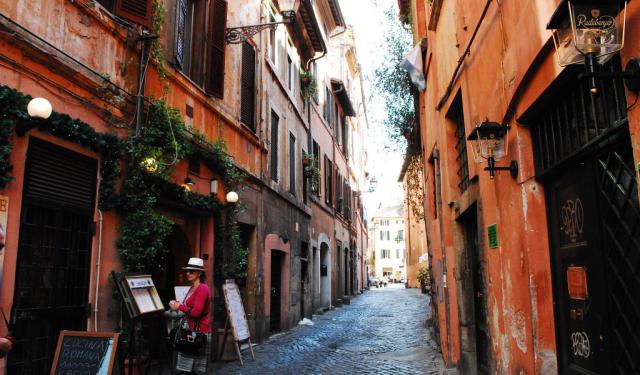
Heading down from the Vatican along the River Tiber, one is bound to find yet another city hidden within the city – Trastevere. This name translates literally to "across the Tiber". Indeed, crossing the picturesque Ponte Sisto (Sisto Bridge) to the west bank, you will find yourself in a charming neighborhood with a distinct character that sets it apart from any other part of Rome.
... view more
Tour Duration: 2 Hour(s)
Travel Distance: 3.0 Km or 1.9 Miles
... view more
Tour Duration: 2 Hour(s)
Travel Distance: 3.0 Km or 1.9 Miles
Food Tasting Walking Tour
Whether it’s a long lunch or a stop-off for an ice cream on an evening stroll, eating in Rome is a very social activity. Culinary traditions run deep here, and it may well be one of Italy’s most pleasurable cities in which to eat. Deli shops, prosciutterias, pizzerias, fornos (bakeries) and caffès are also very popular and offer a great alternative to a restaurant meal.
On this... view more
Tour Duration: 2 Hour(s)
Travel Distance: 2.5 Km or 1.6 Miles
On this... view more
Tour Duration: 2 Hour(s)
Travel Distance: 2.5 Km or 1.6 Miles
EUR Sightseeing Walking Tour
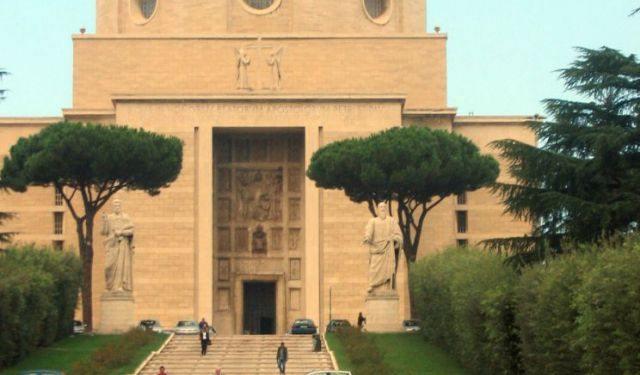
The Esposizione Universale di Roma (EUR), located in the southern suburb of Rome, was originally constructed for an international exhibition that was planned by Mussolini as a grand celebration of Fascist Italy. However, due to the outbreak of World War II, the exhibition never took place. The architecture of EUR was designed to glorify Fascism and showcases a distinct style that sets it apart... view more
Tour Duration: 2 Hour(s)
Travel Distance: 3.6 Km or 2.2 Miles
Tour Duration: 2 Hour(s)
Travel Distance: 3.6 Km or 2.2 Miles
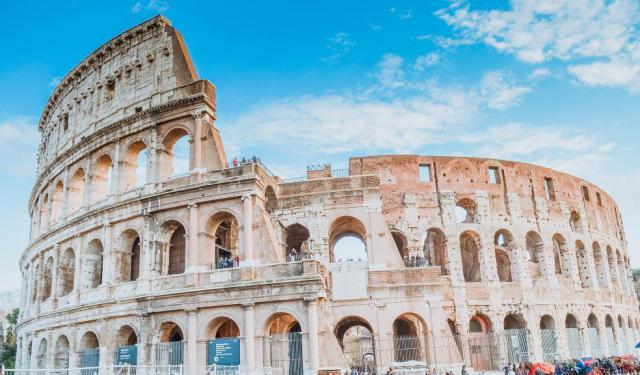
Rome Introduction Walking Tour I
Often referred to as the Eternal City, Rome holds a unique place in the story of Western civilization. Its influence shaped European culture through language, governance, and monumental architecture.
The name “Rome” originates from Romulus, the mythical founder of the city, who, according to legend, was the son of the war god Mars and Rhea Silvia, the priestess of goddess Vesta. Both... view more
Tour Duration: 2 Hour(s)
Travel Distance: 3.7 Km or 2.3 Miles
The name “Rome” originates from Romulus, the mythical founder of the city, who, according to legend, was the son of the war god Mars and Rhea Silvia, the priestess of goddess Vesta. Both... view more
Tour Duration: 2 Hour(s)
Travel Distance: 3.7 Km or 2.3 Miles
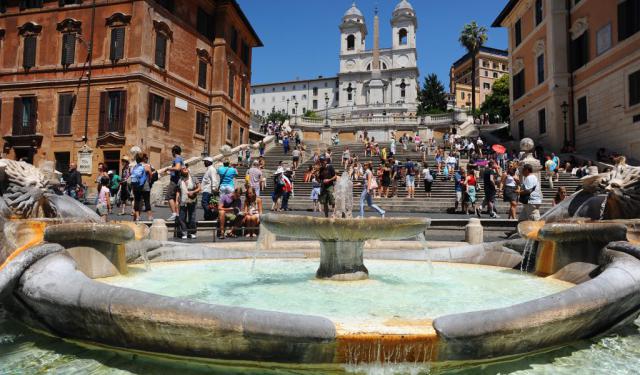
Rome Introduction Walking Tour II
Rome, the Eternal City, carries a legacy shaped by centuries of resilience, transformation, and cultural flourishing. The fall of the Roman Empire in 476 AD marked the end of an era, plunging Western Europe into the dark Middle Ages. Yet, even amid the disarray, Rome endured as a beacon of unity, largely due to its status as the center of Catholicism. The papacy wielded spiritual influence,... view more
Tour Duration: 2 Hour(s)
Travel Distance: 3.4 Km or 2.1 Miles
Tour Duration: 2 Hour(s)
Travel Distance: 3.4 Km or 2.1 Miles
Useful Travel Guides for Planning Your Trip
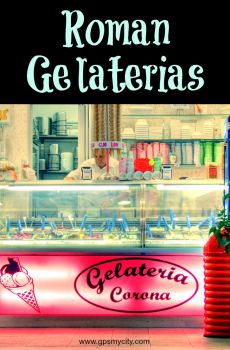
17 Best Gelaterias in Rome Italy
For ice cream lovers and dabblers this guide is a treasure chest of Rome’s best gelato shops. There are gelaterias everywhere. Many visitors to Rome only have a few days to explore the city. You owe it to yourself to make the most of your time and find the gelato locals eat. Often the authentic...
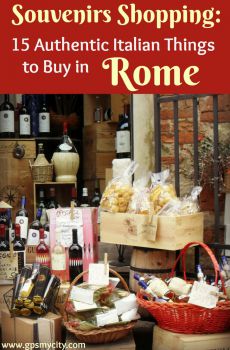
Souvenirs Shopping: 15 Authentic Italian Things To Buy in Rome
Rome is the Eternal City and, as such, the list of gift options available here is countless. Whether it's something edible, drinkable, wearable or pleasing to the eye that you want - you will find it all here in abundance. However, if time or budget is the factor, perhaps you might want to...
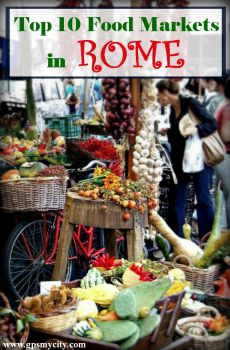
10 Best Food Markets in Rome Italy
Of all the things Italy is most famous for (cars, music, fashion, movies, etc.), food is, undoubtedly, top of the list. Rome may well not be the whole Italy, but no Italy is whole without Rome... And the Romans, much as all their fellow-Italians, like it "fresco", hence the abundance of...