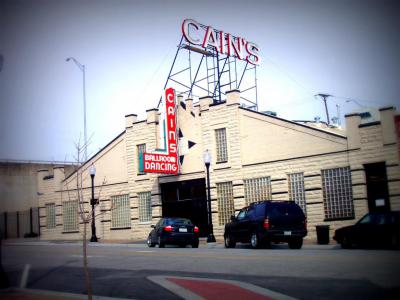


Cain's Ballroom, Tulsa
Cain’s Ballroom in Tulsa is one of the most storied music venues in the United States. Built in 1924 as a garage for local figure W. Tate Brady’s automobiles, the space was transformed in 1930 by Madison W. “Daddy” Cain into a dance hall, launching its new life as Cain’s Dance Academy. What began as a dime-a-dance venue soon became a cradle of musical innovation-and a place where the floor bounces with history.
The spring-loaded maple dance floor, still intact today, was the stage-both literal and cultural-for the rise of Western swing in the 1930s and '40s. Cain’s earned its legendary nickname, “The Carnegie Hall of Western Swing,” thanks largely to Bob Wills and the Texas Playboys, who broadcast live shows from the venue and helped shape a hybrid genre that fused country, big band jazz, blues, boogie, and even rhumba. From 1935 to 1942, Cain’s was their home base, and the legacy of those performances still echoes in the room.
Cain’s remained a crucial part of American music through the decades. In the 1970s, it became a regular stage for Leon Russell and his band under the ownership of Larry Shaeffer. Then came punk: on January 11, 1978, the Sex Pistols played one of only seven U.S. shows here during their infamous North American tour. After their performance, Sid Vicious punched a hole in the green room wall-today, that wall fragment is preserved and on display inside the venue like a holy relic of rock rebellion.
Decorated with photos of legends like Ernest Tubb, Hank Williams, and Kay Starr, and topped off with a disco ball and neon star, Cain’s Ballroom is equal parts honky-tonk time capsule and rock 'n’ roll sanctuary. In 2021, Pollstar ranked it #13 worldwide in club venue ticket sales-proof that nearly a century on, Cain’s is still dancing to its rhythm.
The spring-loaded maple dance floor, still intact today, was the stage-both literal and cultural-for the rise of Western swing in the 1930s and '40s. Cain’s earned its legendary nickname, “The Carnegie Hall of Western Swing,” thanks largely to Bob Wills and the Texas Playboys, who broadcast live shows from the venue and helped shape a hybrid genre that fused country, big band jazz, blues, boogie, and even rhumba. From 1935 to 1942, Cain’s was their home base, and the legacy of those performances still echoes in the room.
Cain’s remained a crucial part of American music through the decades. In the 1970s, it became a regular stage for Leon Russell and his band under the ownership of Larry Shaeffer. Then came punk: on January 11, 1978, the Sex Pistols played one of only seven U.S. shows here during their infamous North American tour. After their performance, Sid Vicious punched a hole in the green room wall-today, that wall fragment is preserved and on display inside the venue like a holy relic of rock rebellion.
Decorated with photos of legends like Ernest Tubb, Hank Williams, and Kay Starr, and topped off with a disco ball and neon star, Cain’s Ballroom is equal parts honky-tonk time capsule and rock 'n’ roll sanctuary. In 2021, Pollstar ranked it #13 worldwide in club venue ticket sales-proof that nearly a century on, Cain’s is still dancing to its rhythm.
Want to visit this sight? Check out these Self-Guided Walking Tours in Tulsa. Alternatively, you can download the mobile app "GPSmyCity: Walks in 1K+ Cities" from Apple App Store or Google Play Store. The app turns your mobile device to a personal tour guide and it works offline, so no data plan is needed when traveling abroad.
Download The GPSmyCity App



Cain's Ballroom on Map
Sight Name: Cain's Ballroom
Sight Location: Tulsa, USA (See walking tours in Tulsa)
Sight Type: Attraction/Landmark
Sight Location: Tulsa, USA (See walking tours in Tulsa)
Sight Type: Attraction/Landmark
Nearby Sights
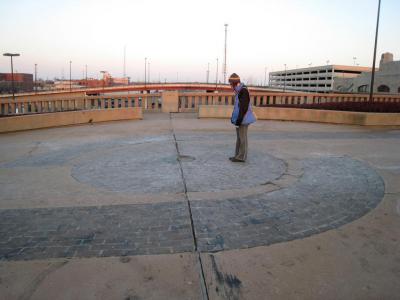
Walking Tours in Tulsa, Oklahoma

Create Your Own Walk in Tulsa
Creating your own self-guided walk in Tulsa is easy and fun. Choose the city attractions that you want to see and a walk route map will be created just for you. You can even set your hotel as the start point of the walk.
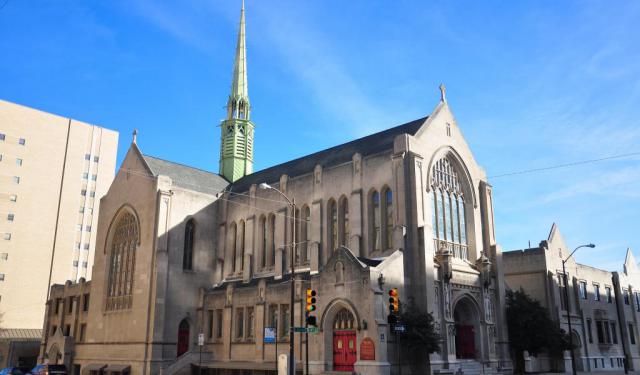
Tulsa's Historical Churches Tour
Tulsa, Oklahoma is home to an array of remarkable churches, cathedrals, chapels, and other religious sites collectively reflecting the city's diverse religious heritage. A good number of these sanctuaries are located downtown. By far more than just places of worship, they are also architectural marvels and cultural landmarks.
Boston Avenue United Methodist Church, with its striking Art... view more
Tour Duration: 1 Hour(s)
Travel Distance: 1.6 Km or 1 Miles
Boston Avenue United Methodist Church, with its striking Art... view more
Tour Duration: 1 Hour(s)
Travel Distance: 1.6 Km or 1 Miles
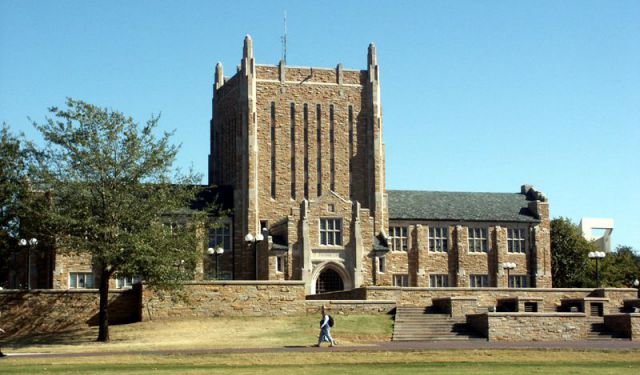
University of Tulsa Walking Tour
Located on the historic U.S. Route 66, America's "Mother Road", the University of Tulsa campus centers on a wide, grassy, quad-like space, known as Dietler Commons. Formerly called "The U", it is found not far from the downtown area and is dominated by English Gothic architecture.
At the top of Deitler Commons sits one of the campus' most notable landmarks, the... view more
Tour Duration: 1 Hour(s)
Travel Distance: 1.3 Km or 0.8 Miles
At the top of Deitler Commons sits one of the campus' most notable landmarks, the... view more
Tour Duration: 1 Hour(s)
Travel Distance: 1.3 Km or 0.8 Miles
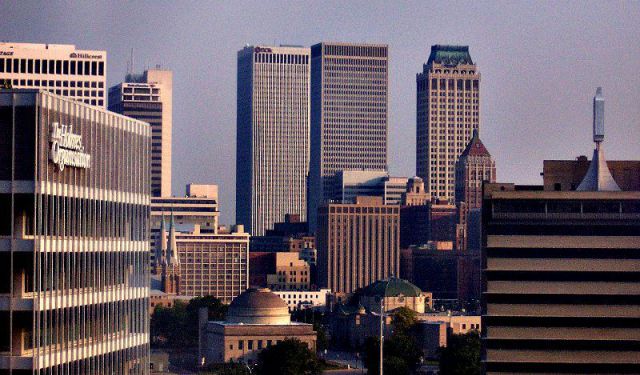
Tulsa Downtown Walking Tour
Straddling the Arkansas River in the U.S. state of Oklahoma, the city of Tulsa is deeply rooted in the Native American history and, more recently, in the oil industry too.
The area of modern Tulsa is considered an Indian Territory, and has been formally settled by Native Americans since 1836. The tribesmen named their settlement Tallasi, which means "old town" in the Creek language,... view more
Tour Duration: 2 Hour(s)
Travel Distance: 2.9 Km or 1.8 Miles
The area of modern Tulsa is considered an Indian Territory, and has been formally settled by Native Americans since 1836. The tribesmen named their settlement Tallasi, which means "old town" in the Creek language,... view more
Tour Duration: 2 Hour(s)
Travel Distance: 2.9 Km or 1.8 Miles