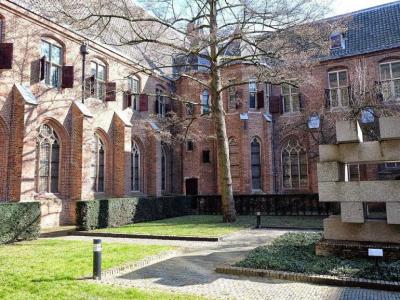


Catharijneconvent Museum (Catherine Convent Museum), Utrecht
Housed in a former convent, Saint Catherine Convent Museum in Utrecht is the leading institution for the history and art of Christianity in the Netherlands. Its collection spans over a millennium, covering religious and devotional objects from the Middle Ages to the present day. More than just an exhibition space, the museum offers a deep dive into Christian heritage through paintings, sculptures, manuscripts, metalwork, textiles, and even everyday items such as prayer beads and Nativity scenes.
Among the museum’s treasures are Maarten de Vos’s dramatic Moses Showing the Ten Commandments (1575) and Geertgen tot Sint Jans’s evocative Man of Sorrows (1485-94). The museum also holds some of the oldest surviving manuscripts in the region, dating back to the tenth and eleventh centuries. A striking bust of a woman by the mysterious “Master of the Utrecht Stone Woman’s Head” (c. 1520) remains an enigmatic highlight of its sculpture collection.
The museum’s textile collection includes richly embroidered vestments from the Grote Kerk of Hoorn, crafted after designs by Jacob Cornelisz. Van Oostsanen in the early sixteenth century. One of its most debated relics, the Lebuinus Chalice, was once revered as a possession of Saint Lebuinus. Later research, however, revealed that the chalice dates from the ninth century-after the saint’s death-and belongs stylistically to the era of Charlemagne, reflecting the emperor’s ambition to align his realm with the legacy of Ancient Rome.
Beyond its tangible artifacts, Saint Catherine Convent Museum also curates a collection of oral histories and personal recollections, offering perspectives on faith and religious practice that transcend material culture. Whether through medieval craftsmanship or contemporary storytelling, the museum presents an evolving narrative of Christianity’s role in Dutch history and identity.
Among the museum’s treasures are Maarten de Vos’s dramatic Moses Showing the Ten Commandments (1575) and Geertgen tot Sint Jans’s evocative Man of Sorrows (1485-94). The museum also holds some of the oldest surviving manuscripts in the region, dating back to the tenth and eleventh centuries. A striking bust of a woman by the mysterious “Master of the Utrecht Stone Woman’s Head” (c. 1520) remains an enigmatic highlight of its sculpture collection.
The museum’s textile collection includes richly embroidered vestments from the Grote Kerk of Hoorn, crafted after designs by Jacob Cornelisz. Van Oostsanen in the early sixteenth century. One of its most debated relics, the Lebuinus Chalice, was once revered as a possession of Saint Lebuinus. Later research, however, revealed that the chalice dates from the ninth century-after the saint’s death-and belongs stylistically to the era of Charlemagne, reflecting the emperor’s ambition to align his realm with the legacy of Ancient Rome.
Beyond its tangible artifacts, Saint Catherine Convent Museum also curates a collection of oral histories and personal recollections, offering perspectives on faith and religious practice that transcend material culture. Whether through medieval craftsmanship or contemporary storytelling, the museum presents an evolving narrative of Christianity’s role in Dutch history and identity.
Want to visit this sight? Check out these Self-Guided Walking Tours in Utrecht. Alternatively, you can download the mobile app "GPSmyCity: Walks in 1K+ Cities" from Apple App Store or Google Play Store. The app turns your mobile device to a personal tour guide and it works offline, so no data plan is needed when traveling abroad.
Download The GPSmyCity App



Catharijneconvent Museum (Catherine Convent Museum) on Map
Sight Name: Catharijneconvent Museum (Catherine Convent Museum)
Sight Location: Utrecht, Netherlands (See walking tours in Utrecht)
Sight Type: Museum/Gallery
Sight Location: Utrecht, Netherlands (See walking tours in Utrecht)
Sight Type: Museum/Gallery
Nearby Sights



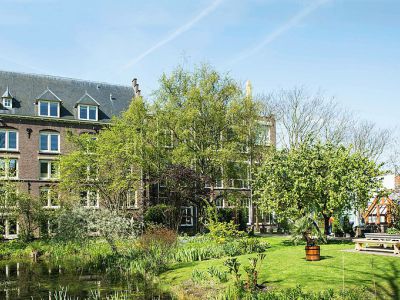
Walking Tours in Utrecht, Netherlands

Create Your Own Walk in Utrecht
Creating your own self-guided walk in Utrecht is easy and fun. Choose the city attractions that you want to see and a walk route map will be created just for you. You can even set your hotel as the start point of the walk.
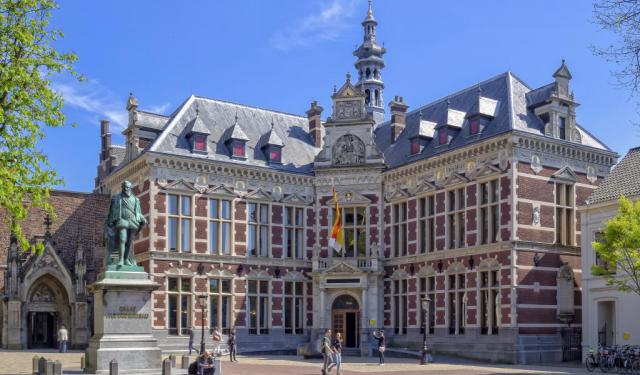
Utrecht's Historical Buildings Walking Tour
Originally founded by the Romans, and once the most important city in the Netherlands, Utrecht boasts a generous share of historically significant structures. The collection of its architectural masterpieces, one of the richest in the country, dates back to the early Middle Ages.
The amazingly well-preserved pieces of historic architecture in Utrecht showcase the trends and movements throughout... view more
Tour Duration: 2 Hours
Travel Distance: 3.8 Km or 2.4 Miles
The amazingly well-preserved pieces of historic architecture in Utrecht showcase the trends and movements throughout... view more
Tour Duration: 2 Hours
Travel Distance: 3.8 Km or 2.4 Miles

A Walking Guide To Utrecht's Medieval Old Town
The earliest settlers to the area now called Utrecht likely arrived millennia ago during the Stone Age. While there are also signs of inhabitation during the Bronze Age, scholars today credit the Romans with building what became the town.
They set up a castellum around the year 50 AD, a fort right at a crossing point on the river Rhine. The fortress marked Rome's northernmost point in... view more
Tour Duration: 1 Hour
Travel Distance: 1.6 Km or 1 Miles
They set up a castellum around the year 50 AD, a fort right at a crossing point on the river Rhine. The fortress marked Rome's northernmost point in... view more
Tour Duration: 1 Hour
Travel Distance: 1.6 Km or 1 Miles
City Walks Overview
