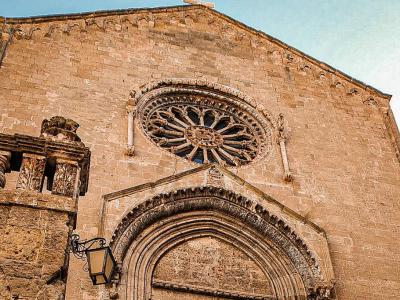


Chiesa di San Domenico Maggiore (Church of San Domenico Maggiore), Taranto
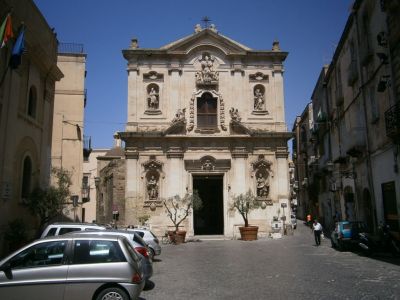
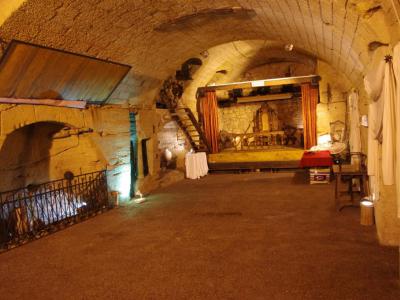
The church of San Domenico is a Romanesque - Gothic style church that stands on the western front of the historic center of Taranto, whose construction was completed around 1360. The nickname "Maggiore" with which it was identified in the only monograph published today on the complex is actually inaccurate, being known in the sources as a title attributed to the current Sanctuary of the Madonna della Salute or Monteoliveto, in the period in which the Dominicans moved there from the post-Napoleonic Restoration to 1866. On the Borgo stood a Greek temple from the archaic period, rebuilt in the classical era (5th century BC), on whose remains the Benedictine abbey of San Pietro Imperiale was built, probably during the 11th century. The complex was granted for consideration by the Benedictines to the Dominicans in the 14th century. As evidenced by a Latin inscription in the coat of arms of the entrance portal, the current building was completed around 1360 maintaining the title of San Pietro Imperiale. The coat of arms featuring the ox is associated with the arms of the Taurisano family, whose main exponents were buried in the Cathedral. The Dominican fathers settled there in the first half of the fourteenth century, the date of registration in the archives of the order is 1349. The main entrance can be reached via a baroque staircase built in the center of the facade towards the end of the 18th century, when the San Domenico slope was created to connect Via Duomo with the lower part of the island. The convent of San Domenico was built during the 14th century approximately fifty years after the Church of San Domenico Maggiore. Previously, the presence of the monastery of S. Pietro Imperiale was attested and the subsequent presence of that of the Benedictines of Montecassino under the concession of Robert Guiscard. During the 19th century, the building became the headquarters of the Command of the Royal Financial Police and the Sub-Directorate of the Military Engineers of the Royal Army. The cloister, a fundamental part of the entire construction, has predominantly eighteenth-century features as it is the result of changes and expansions following the foundation of the convent. It has an irregular plan with arms with cross vaults and columns with carparo capitals with leaf motifs. On the eastern part there are pictorial testimonies of a religious nature. During excavations during the 1990s, traces of occupation of the site emerged dating back to the Neolithic period starting from the 6th millennium BC. The settlement was connected with those of the Scoglio del Tonno and Saturo area and presents traces of Mycenaean occupation. Of a later age (10th-8th century BC) are the remains of the Iapygian settlement which was later ousted by the Spartan colony of Taras. Also relevant are the remains of a temple located on the acropolis of the Greek city corresponding, precisely, to the area of the church and convent of the same name. The remains from the Roman period can only be identified in two inscribed fragments which were then reused during the 14th century in the reconstruction of the façade.
More than a church, S. Domenico Maggiore is a summary of the history of Taranto in the form of architecture. In the northern part of the old city, it has a beautiful Gothic facade unusually raised compared to the level of via Duomo, so much so that it requires a double flight of stairs for access. The latter was built in Baroque style in the 18th century, the period in which the building was remodeled. The foundation of the church, linked to a Dominican convent, dates back to 1302: it was decided to build it to replace an older Benedictine church, S. Pietro Imperiale (therefore some still call it that), which in turn was built on a Magno-Greek temple. The altars of the chapels inside are also due to the Baroque renovation. One of these houses the wooden statue of the Virgin of Sorrows, which is solemnly carried in procession on the night of Holy Thursday, in one of the most evocative moments of Holy Week in Taranto.
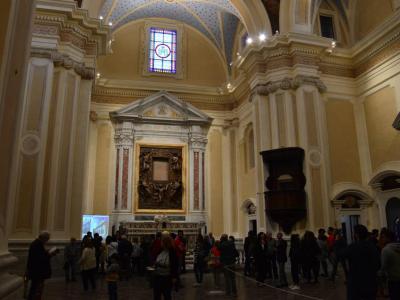
The church of San Domenico in Taranto, formerly the church of San Pietro Imperiale, as evidenced by a Latin inscription in the coat of arms of the entrance portal, was built around 1360 in the historic center of the city. The Dominican fathers settled there in the first half of the fourteenth century, the date of registration in the archives of the order is 1349. The complex was then granted for a fee by the Benedictines to the Dominicans in the fourteenth century. During the 16th and 17th centuries, three confraternities were established: the Royal Archconfraternity of Maria Santissima del Rosario, the Confraternity of the Most Holy Name of Jesus, better known as "of the Most Holy Name of God " and the brotherhood of San Domenico in Soriano, who erected three altars in the chapels of the left nave in the church. ***PH***
More than a church, S. Domenico Maggiore is a summary of the history of Taranto in the form of architecture. In the northern part of the old city, it has a beautiful Gothic facade unusually raised compared to the level of via Duomo, so much so that it requires a double flight of stairs for access. The latter was built in Baroque style in the 18th century, the period in which the building was remodeled. The foundation of the church, linked to a Dominican convent, dates back to 1302: it was decided to build it to replace an older Benedictine church, S. Pietro Imperiale (therefore some still call it that), which in turn was built on a Magno-Greek temple. The altars of the chapels inside are also due to the Baroque renovation. One of these houses the wooden statue of the Virgin of Sorrows, which is solemnly carried in procession on the night of Holy Thursday, in one of the most evocative moments of Holy Week in Taranto.
The church of San Domenico in Taranto, formerly the church of San Pietro Imperiale, as evidenced by a Latin inscription in the coat of arms of the entrance portal, was built around 1360 in the historic center of the city. The Dominican fathers settled there in the first half of the fourteenth century, the date of registration in the archives of the order is 1349. The complex was then granted for a fee by the Benedictines to the Dominicans in the fourteenth century. During the 16th and 17th centuries, three confraternities were established: the Royal Archconfraternity of Maria Santissima del Rosario, the Confraternity of the Most Holy Name of Jesus, better known as "of the Most Holy Name of God " and the brotherhood of San Domenico in Soriano, who erected three altars in the chapels of the left nave in the church. ***PH***
Want to visit this sight? Check out these Self-Guided Walking Tours in Taranto. Alternatively, you can download the mobile app "GPSmyCity: Walks in 1K+ Cities" from Apple App Store or Google Play Store. The app turns your mobile device to a personal tour guide and it works offline, so no data plan is needed when traveling abroad.
Download The GPSmyCity App



Chiesa di San Domenico Maggiore (Church of San Domenico Maggiore) on Map
Sight Name: Chiesa di San Domenico Maggiore (Church of San Domenico Maggiore)
Sight Location: Taranto, Italy (See walking tours in Taranto)
Sight Type: Religious
Sight Location: Taranto, Italy (See walking tours in Taranto)
Sight Type: Religious
Nearby Sights


Walking Tours in Taranto, Italy

Create Your Own Walk in Taranto
Creating your own self-guided walk in Taranto is easy and fun. Choose the city attractions that you want to see and a walk route map will be created just for you. You can even set your hotel as the start point of the walk.
Taranto Introduction Walking Tour
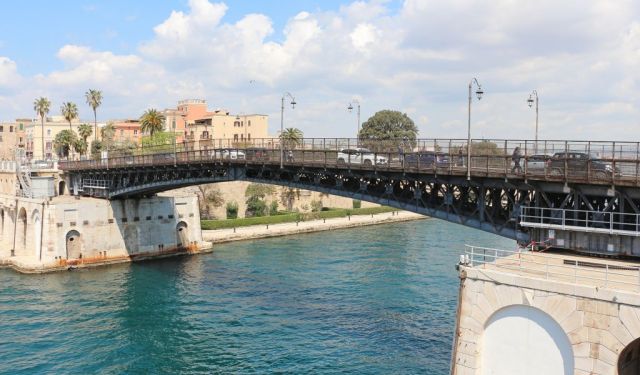
Taranto, the famed “city of the two seas,” sparkles on the Ionian coast of Puglia, framed by the glistening bays of Mar Grande and Mar Piccolo. This isn’t just a pretty port town-it’s a place where history, culture, and postcard-perfect views meet head-on. With its prime Mediterranean location, Taranto has been a hot spot for everyone from ancient Greeks to Roman generals, Byzantine... view more
Tour Duration: 2 Hours
Travel Distance: 2.9 Km or 1.8 Miles
Tour Duration: 2 Hours
Travel Distance: 2.9 Km or 1.8 Miles
City Walks Overview
