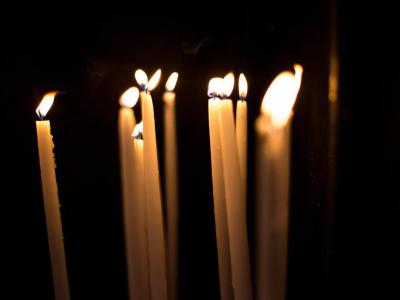
Chiesa di Santa Maria dell'Orazione e Morte (Church of Saint Mary of Prayer and Death), Civitavecchia
From Piazza Leandra, crossing the Archetto, pass by Piazza Aurelio Saffi and reach the Church of Saint Mary of the Prayer, formerly Rotonda del Suffragio but commonly known as Church of the Death. The Church of the Death is absolutely the oldest church in Civitavecchia and if you are walking among the characteristic tiny streets of the old town, it is worth a visit. Built in 1685, the church is bound to the birth and work of the Confraternity of Death and Prayer, constituted in the second half of the sixteenth century to give adequate burial to the corpses abandoned outside the city walls or dispersed in the sea.
The Church is a true architectural jewel , with a structural layout typical of the Baroque churches of the second half of the 17th century. Completely restored in 1702, it also withstood the bombings of the Second World War. The building has a central plan with a Greek cross and a large elliptical room that recalls the shape of a skull. At the end of the room there are three chapels: the chapel of the High Altar , the chapel of the SS. Crucifix and the chapel of the Blessed Benedict and Anna. Furthermore, four symmetrical doors lead respectively to four other chapels: the Guglielmini chapel (dedicated to the Blessed Virgin of the Seven Sorrows), the chapel of San Michele (which served as an Oratory), the sacristy and the parish office. In 1698 the church was equipped with a baroque style bell tower, surmounted by a very particular bulb-shaped dome. Inside the Church of Death it is possible to admire works of art of great value. Among these are the frescoes of the famous Knight Giuseppe Errante of Trapani such as the "Madonna with Child" and others that decorate the interior of the dome and two famous wooden statues , representing the Crucified Jesus and the Risen Jesus. Above the entrance is the organ protected by a balustrade obtained from the stern part of the Galera San Pietro , flagship of the Papal State, which fought victoriously in the famous battle of Lepanto in 1571, where the Muslim fleets of the Ottoman Empire clashed with the Christian ones of the Holy League. Since 2012 the building has undergone an intense restoration work , which among other things has brought to light the beauty of the current altarpiece " The Madonna in Glory with the Child and the Souls of Purgatory" and of the Guglielmini Chapel , dedicated to the Madonna dei Sette Dolori. The restoration is currently also involving the frescoes of the apse dome and the two lateral domes.
Santa Maria dell'Orazione, better known as the Church of Death, is the oldest church in Civitavecchia: history, art and tradition in the historic center. The Church of Death is by far the oldest in all of Civitavecchia and if you are walking through the characteristic streets of the historic center it is worth a visit. Built in 1685, the church is linked to the birth and work of the Confraternity of Death and Prayer, established in the second half of the 16th century to give worthy burial and suffrage to corpses abandoned outside the city walls or lost at sea. The Church is a true architectural jewel, with a structural layout typical of the baroque churches of the second half of the 17th century. Completely restored in 1702, it also withstood the bombings of the Second World War. The building has a central plan with a Greek cross and a large elliptical room that recalls the shape of a skull. At the end of the room there are three chapels: the Chapel of the High Altar, the Chapel of the SS. Crucifix and the Chapel of the Blessed Benedict and Anna. Furthermore, four symmetrical doors lead respectively to four other chapels: the Guglielmi chapel (dedicated to the Blessed Virgin of the Seven Sorrows), the chapel of San Michele (which served as an Oratory), the sacristy and the parish office. In 1698 the church was equipped with a baroque style bell tower, surmounted by a very particular bulb-shaped dome. Inside the Church of Death it is possible to admire works of art of great value. Among these are the frescoes of the famous Knight Giuseppe Errante of Trapani such as the "Madonna with Child" and others that decorate the interior of the dome and two famous wooden statues , representing the Crucified Jesus and the Risen Jesus. ***PH***
The Church is a true architectural jewel , with a structural layout typical of the Baroque churches of the second half of the 17th century. Completely restored in 1702, it also withstood the bombings of the Second World War. The building has a central plan with a Greek cross and a large elliptical room that recalls the shape of a skull. At the end of the room there are three chapels: the chapel of the High Altar , the chapel of the SS. Crucifix and the chapel of the Blessed Benedict and Anna. Furthermore, four symmetrical doors lead respectively to four other chapels: the Guglielmini chapel (dedicated to the Blessed Virgin of the Seven Sorrows), the chapel of San Michele (which served as an Oratory), the sacristy and the parish office. In 1698 the church was equipped with a baroque style bell tower, surmounted by a very particular bulb-shaped dome. Inside the Church of Death it is possible to admire works of art of great value. Among these are the frescoes of the famous Knight Giuseppe Errante of Trapani such as the "Madonna with Child" and others that decorate the interior of the dome and two famous wooden statues , representing the Crucified Jesus and the Risen Jesus. Above the entrance is the organ protected by a balustrade obtained from the stern part of the Galera San Pietro , flagship of the Papal State, which fought victoriously in the famous battle of Lepanto in 1571, where the Muslim fleets of the Ottoman Empire clashed with the Christian ones of the Holy League. Since 2012 the building has undergone an intense restoration work , which among other things has brought to light the beauty of the current altarpiece " The Madonna in Glory with the Child and the Souls of Purgatory" and of the Guglielmini Chapel , dedicated to the Madonna dei Sette Dolori. The restoration is currently also involving the frescoes of the apse dome and the two lateral domes.
Santa Maria dell'Orazione, better known as the Church of Death, is the oldest church in Civitavecchia: history, art and tradition in the historic center. The Church of Death is by far the oldest in all of Civitavecchia and if you are walking through the characteristic streets of the historic center it is worth a visit. Built in 1685, the church is linked to the birth and work of the Confraternity of Death and Prayer, established in the second half of the 16th century to give worthy burial and suffrage to corpses abandoned outside the city walls or lost at sea. The Church is a true architectural jewel, with a structural layout typical of the baroque churches of the second half of the 17th century. Completely restored in 1702, it also withstood the bombings of the Second World War. The building has a central plan with a Greek cross and a large elliptical room that recalls the shape of a skull. At the end of the room there are three chapels: the Chapel of the High Altar, the Chapel of the SS. Crucifix and the Chapel of the Blessed Benedict and Anna. Furthermore, four symmetrical doors lead respectively to four other chapels: the Guglielmi chapel (dedicated to the Blessed Virgin of the Seven Sorrows), the chapel of San Michele (which served as an Oratory), the sacristy and the parish office. In 1698 the church was equipped with a baroque style bell tower, surmounted by a very particular bulb-shaped dome. Inside the Church of Death it is possible to admire works of art of great value. Among these are the frescoes of the famous Knight Giuseppe Errante of Trapani such as the "Madonna with Child" and others that decorate the interior of the dome and two famous wooden statues , representing the Crucified Jesus and the Risen Jesus. ***PH***
Chiesa di Santa Maria dell'Orazione e Morte (Church of Saint Mary of Prayer and Death) on Map
Sight Name: Chiesa di Santa Maria dell'Orazione e Morte (Church of Saint Mary of Prayer and Death)
Sight Location: Civitavecchia, Italy (See walking tours in Civitavecchia)
Sight Type: Religious
Sight Location: Civitavecchia, Italy (See walking tours in Civitavecchia)
Sight Type: Religious
Nearby Sights


Walking Tours in Civitavecchia, Italy

Create Your Own Walk in Civitavecchia
Creating your own self-guided walk in Civitavecchia is easy and fun. Choose the city attractions that you want to see and a walk route map will be created just for you. You can even set your hotel as the start point of the walk.
Civitavecchia Introduction Walking Tour
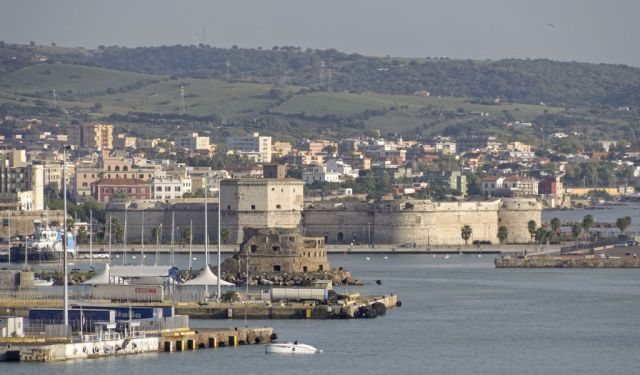
Civitavecchia, meaning "ancient town," is a major port on the Tyrrhenian Sea that historically served as Rome’s maritime gateway. Founded by the Etruscans, it was later developed by Roman Emperor Trajan in the 2nd century and was originally known as Centum Cellae or “Hundred Cells.” The latter name was probably due to the many vaulted "cells" forming the harbor wall, some... view more
Tour Duration: 2 Hours
Travel Distance: 2.2 Km or 1.4 Miles
Tour Duration: 2 Hours
Travel Distance: 2.2 Km or 1.4 Miles