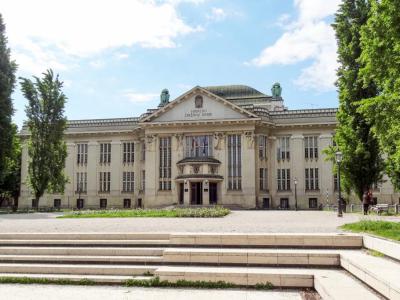


Croatian State Archives, Zagreb
The Croatian State Archives in Zagreb is both a central institution for preserving the country’s documentary heritage and one of the most distinctive buildings in the Lower Town. Its origins date back to 1643, when the Croatian Parliament instructed treasurer Ivan Zakmardi to compile and safeguard legal documents, leading to the creation of an early archival system.
Over time, this evolved into the national archive, holding materials that trace the political, administrative, and cultural history of Croatia. In 1744, Ladislaus Kiraly became the first official archivist, and by 1763, the growing collection had been relocated to Saint Mark’s Square before finding its permanent home.
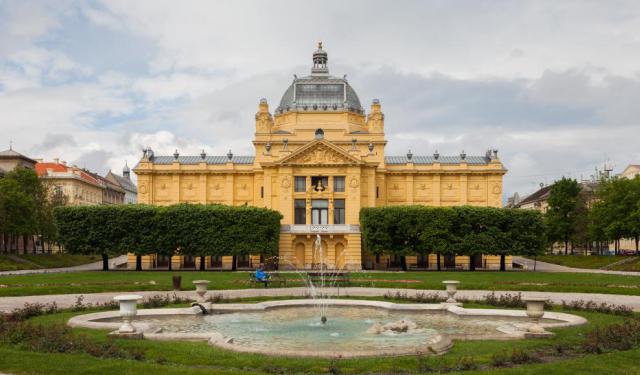
Today, the archives are housed in an imposing building on Marulić Square, completed in 1913 and recognized as a notable example of Art Nouveau architecture. Considered one of Zagreb’s architectural highlights, the structure features a carefully designed exterior set within a landscaped park. To find the first notable highlight, look up at the four corners of the roof; you can see symbolic owl sculptures, each carrying a globe representing various sciences. This architectural detail is complemented by the monument to Marko Marulić, the father of Croatian literature, by Ivan Meštrović, prominently positioned in front of the main entrance.
Inside, the building reveals a richly decorated interior, with a grand lobby and atrium adorned with mosaics, intricate ironwork, leaded glass, and polished marble. These spaces often host temporary exhibitions.
The central highlight, the Great Reading Room, is located on the first floor of the building. To find it, follow the grand marble staircase upward; once inside, look for the original 1913 custom-designed desks, the massive chandeliers, and the monumental paintings by Vlaho Bukovac and other Croatian masters. This room, with its high ceilings and refined decorative details, is among the most impressive interiors in the city.
While the written collections primarily serve researchers, the building itself draws visitors through its architectural quality and artistic detail, offering insight into both Croatia’s institutional history and early 20th-century design. Visitors should note that because the building is an active research facility, access to the Great Reading Room may be limited during quiet study hours, so checking the guided tour schedule ahead of time is recommended.
Over time, this evolved into the national archive, holding materials that trace the political, administrative, and cultural history of Croatia. In 1744, Ladislaus Kiraly became the first official archivist, and by 1763, the growing collection had been relocated to Saint Mark’s Square before finding its permanent home.
Today, the archives are housed in an imposing building on Marulić Square, completed in 1913 and recognized as a notable example of Art Nouveau architecture. Considered one of Zagreb’s architectural highlights, the structure features a carefully designed exterior set within a landscaped park. To find the first notable highlight, look up at the four corners of the roof; you can see symbolic owl sculptures, each carrying a globe representing various sciences. This architectural detail is complemented by the monument to Marko Marulić, the father of Croatian literature, by Ivan Meštrović, prominently positioned in front of the main entrance.
Inside, the building reveals a richly decorated interior, with a grand lobby and atrium adorned with mosaics, intricate ironwork, leaded glass, and polished marble. These spaces often host temporary exhibitions.
The central highlight, the Great Reading Room, is located on the first floor of the building. To find it, follow the grand marble staircase upward; once inside, look for the original 1913 custom-designed desks, the massive chandeliers, and the monumental paintings by Vlaho Bukovac and other Croatian masters. This room, with its high ceilings and refined decorative details, is among the most impressive interiors in the city.
While the written collections primarily serve researchers, the building itself draws visitors through its architectural quality and artistic detail, offering insight into both Croatia’s institutional history and early 20th-century design. Visitors should note that because the building is an active research facility, access to the Great Reading Room may be limited during quiet study hours, so checking the guided tour schedule ahead of time is recommended.
Want to visit this sight? Check out these Self-Guided Walking Tours in Zagreb. Alternatively, you can download the mobile app "GPSmyCity: Walks in 1K+ Cities" from Apple App Store or Google Play Store. The app turns your mobile device to a personal tour guide and it works offline, so no data plan is needed when traveling abroad.
Download The GPSmyCity App



Croatian State Archives on Map
Sight Name: Croatian State Archives
Sight Location: Zagreb, Croatia (See walking tours in Zagreb)
Sight Type: Attraction/Landmark
Guide(s) Containing This Sight:
Sight Location: Zagreb, Croatia (See walking tours in Zagreb)
Sight Type: Attraction/Landmark
Guide(s) Containing This Sight:
Nearby Sights


Walking Tours in Zagreb, Croatia

Create Your Own Walk in Zagreb
Creating your own self-guided walk in Zagreb is easy and fun. Choose the city attractions that you want to see and a walk route map will be created just for you. You can even set your hotel as the start point of the walk.
Zagreb Upper Town Walking Tour
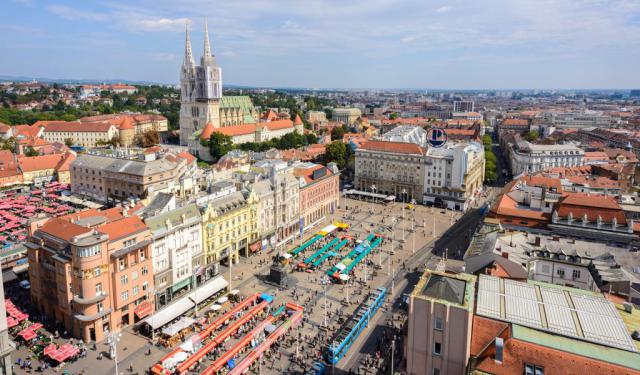
Zagreb’s Upper Town forms the historic core of the city, rising on a hill above the modern lower districts. The name reflects its elevated position, distinguishing it from Lower Town, which developed later on the plains below. The wider area, however, has much older roots: nearby stood Andautonia, a Roman settlement that points to early habitation in the region. The name “Zagreb” itself... view more
Tour Duration: 1 Hour
Travel Distance: 1.8 Km or 1.1 Miles
Tour Duration: 1 Hour
Travel Distance: 1.8 Km or 1.1 Miles
Zagreb Lower Town Walking Tour
Zagreb’s Lower Town forms one of the two main districts in the historic heart of the Croatian capital, alongside the Upper Town. As its name suggests, it lies below the older hilltop settlements of Gradec and Kaptol. While those medieval centers developed organically on elevated ground, the Lower Town is the more modern of the two, shaped through deliberate urban planning during the late 19th... view more
Tour Duration: 2 Hours
Travel Distance: 2.5 Km or 1.6 Miles
Tour Duration: 2 Hours
Travel Distance: 2.5 Km or 1.6 Miles