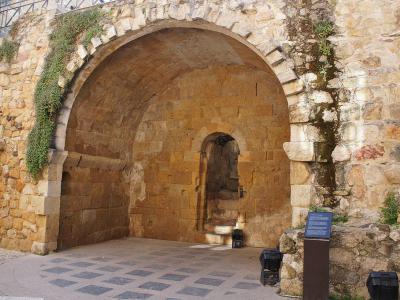


Cueva de Salamanca (Salamanca Cave), Salamanca
The Salamanca Cave is the atmospheric remains of the crypt from the long-vanished Church of Saint Cyprian. While the church itself has disappeared, the vaulted chamber survives and invites curious explorers to uncover its enigmatic past. Today, the Salamanca Cave is part of an archaeological site open to the public.
This crypt is most famous for its dark legend: according to tradition, the Devil-often disguised as a sacristan-taught classes in black magic here to seven students for seven years. At the end of their studies, one unlucky pupil was destined to stay behind with the Devil as payment. The most enduring tale features the legendary Marquis of Villena, who managed to escape-but supposedly lost his shadow in the process, marking him as forever linked to the supernatural.
The legend’s appeal endures in literature and folklore. The writer Miguel de Cervantes wove a playful version of the myth into his short interlude “The Cave of Salamanca” from 1615, and later writers such as Juan Ruiz de Alarcón reworked the tale from other perspectives, even questioning its malign origins. Moreover, the cave’s mystical reputation crossed the Atlantic: in parts of Latin America, “salamanca” refers to a cave or place where witchcraft gatherings occur.
This crypt is most famous for its dark legend: according to tradition, the Devil-often disguised as a sacristan-taught classes in black magic here to seven students for seven years. At the end of their studies, one unlucky pupil was destined to stay behind with the Devil as payment. The most enduring tale features the legendary Marquis of Villena, who managed to escape-but supposedly lost his shadow in the process, marking him as forever linked to the supernatural.
The legend’s appeal endures in literature and folklore. The writer Miguel de Cervantes wove a playful version of the myth into his short interlude “The Cave of Salamanca” from 1615, and later writers such as Juan Ruiz de Alarcón reworked the tale from other perspectives, even questioning its malign origins. Moreover, the cave’s mystical reputation crossed the Atlantic: in parts of Latin America, “salamanca” refers to a cave or place where witchcraft gatherings occur.
Want to visit this sight? Check out these Self-Guided Walking Tours in Salamanca. Alternatively, you can download the mobile app "GPSmyCity: Walks in 1K+ Cities" from Apple App Store or Google Play Store. The app turns your mobile device to a personal tour guide and it works offline, so no data plan is needed when traveling abroad.
Download The GPSmyCity App



Cueva de Salamanca (Salamanca Cave) on Map
Sight Name: Cueva de Salamanca (Salamanca Cave)
Sight Location: Salamanca, Spain (See walking tours in Salamanca)
Sight Type: Attraction/Landmark
Sight Location: Salamanca, Spain (See walking tours in Salamanca)
Sight Type: Attraction/Landmark
Nearby Sights
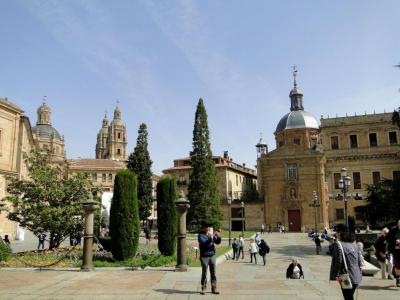
Walking Tours in Salamanca, Spain

Create Your Own Walk in Salamanca
Creating your own self-guided walk in Salamanca is easy and fun. Choose the city attractions that you want to see and a walk route map will be created just for you. You can even set your hotel as the start point of the walk.
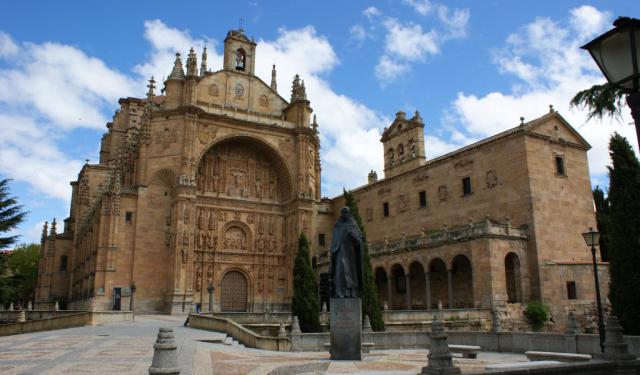
Salamanca's Historical Buildings Walking Tour
Salamanca - one of Spain’s most delightful and intriguing destinations - is a treasure trove of architectural marvels. The abundance of well-preserved, centuries-old wonders of construction tucked away in the labyrinth of narrow lanes in this prestigious university city is truly awe-inspiring. A true feast for the eyes, they are so impressive that the entire historic center of Salamanca was... view more
Tour Duration: 2 Hours
Travel Distance: 2.3 Km or 1.4 Miles
Tour Duration: 2 Hours
Travel Distance: 2.3 Km or 1.4 Miles
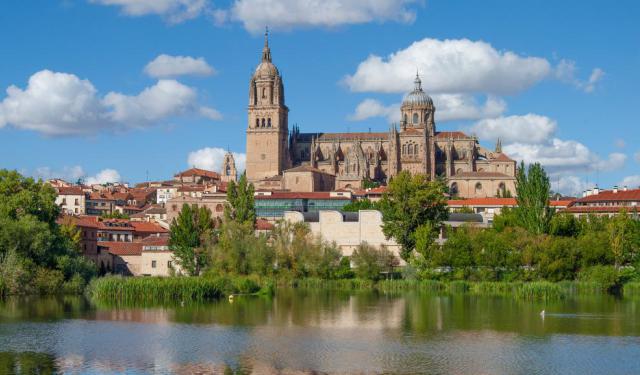
Salamanca Introduction Walking Tour
Usually, frogs inhabit marshy lands, not the sun-baked plains of central Spain. Yet Salamanca is the exception. The small stone frog adorning the façade of the University of Salamanca keeps a watchful eye over visitors. Local legend says that if you find the frog among the carvings, fate will one day bring you back to the city.
The name Salamanca is rooted in antiquity. One theory links it to... view more
Tour Duration: 1 Hour
Travel Distance: 1.6 Km or 1 Miles
The name Salamanca is rooted in antiquity. One theory links it to... view more
Tour Duration: 1 Hour
Travel Distance: 1.6 Km or 1 Miles