

Detroit Observatory, Ann Arbor
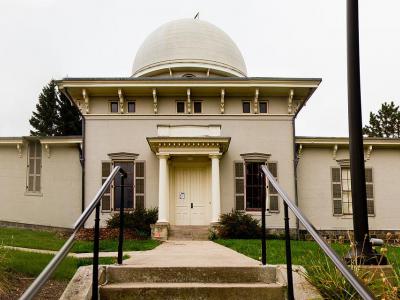
The Detroit Observatory presents an intersection of history, architecture, and astronomy. Constructed between 1853 and 1854 in a blend of Greek Revival and Italianate styles, it was the University of Michigan’s first scientific research facility and remains one of the oldest structures of its kind in the United States. The layout features a two-story central section topped with a rotating wooden-and-canvas dome that originally housed the Henry Fitz Jr. refracting telescope-at the time the third-largest in the world-flanked by wings designed for a meridian circle and a scientific library.
Under the leadership of University President Henry Tappan and its first director, Franz Brünnow, the observatory became a prominent center for astronomical study in the United States. Brünnow introduced systematic German training methods, which influenced a generation of American astronomers, including Asaph Hall and James Craig Watson. Watson, who later succeeded Brünnow, made substantial contributions to the field, including the discovery of 22 asteroids, reinforcing the observatory’s academic importance.
Following a period of decline and near-demolition in the mid-20th century, the observatory received historic designation in 1958 and was added to the National Register of Historic Places in 1973. Restoration efforts in the late 1990s preserved the structure, and in 2022, it reopened with a new, accessibility-focused addition. Today, the facility operates in partnership with the Bentley Historical Library and hosts educational programs, public lectures, and astronomy events.
Visitors may explore the refurbished interior and observe the original Fitz telescope during open hours, or attend evening programs focused on celestial phenomena and historical context.
Under the leadership of University President Henry Tappan and its first director, Franz Brünnow, the observatory became a prominent center for astronomical study in the United States. Brünnow introduced systematic German training methods, which influenced a generation of American astronomers, including Asaph Hall and James Craig Watson. Watson, who later succeeded Brünnow, made substantial contributions to the field, including the discovery of 22 asteroids, reinforcing the observatory’s academic importance.
Following a period of decline and near-demolition in the mid-20th century, the observatory received historic designation in 1958 and was added to the National Register of Historic Places in 1973. Restoration efforts in the late 1990s preserved the structure, and in 2022, it reopened with a new, accessibility-focused addition. Today, the facility operates in partnership with the Bentley Historical Library and hosts educational programs, public lectures, and astronomy events.
Visitors may explore the refurbished interior and observe the original Fitz telescope during open hours, or attend evening programs focused on celestial phenomena and historical context.
Want to visit this sight? Check out these Self-Guided Walking Tours in Ann Arbor. Alternatively, you can download the mobile app "GPSmyCity: Walks in 1K+ Cities" from Apple App Store or Google Play Store. The app turns your mobile device to a personal tour guide and it works offline, so no data plan is needed when traveling abroad.
Download The GPSmyCity App



Detroit Observatory on Map
Sight Name: Detroit Observatory
Sight Location: Ann Arbor, USA (See walking tours in Ann Arbor)
Sight Type: Attraction/Landmark
Sight Location: Ann Arbor, USA (See walking tours in Ann Arbor)
Sight Type: Attraction/Landmark
Nearby Sights
Walking Tours in Ann Arbor, Michigan

Create Your Own Walk in Ann Arbor
Creating your own self-guided walk in Ann Arbor is easy and fun. Choose the city attractions that you want to see and a walk route map will be created just for you. You can even set your hotel as the start point of the walk.
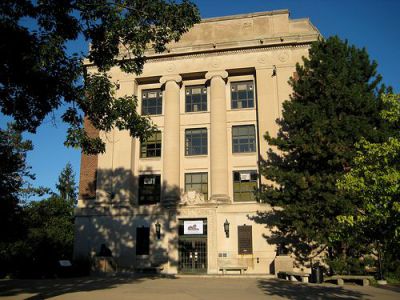
Ann Arbor's Historical Buildings
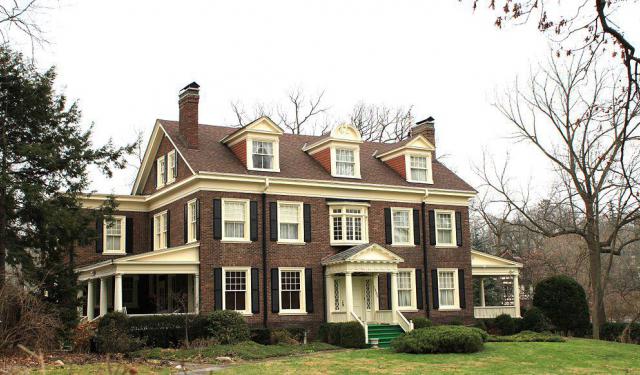
Founded in the 1820s and centered on the University of Michigan, the city of Ann Arbor boasts hundreds of splendid buildings, many of which are included in the National Register. The U-M campus itself was registered as Historic District in 1978.
The abundance of down-home charm, especially in the historic district, is richly complemented by plethora of time-tested architectural landmarks in... view more
Tour Duration: 2 Hour(s)
Travel Distance: 2.7 Km or 1.7 Miles
The abundance of down-home charm, especially in the historic district, is richly complemented by plethora of time-tested architectural landmarks in... view more
Tour Duration: 2 Hour(s)
Travel Distance: 2.7 Km or 1.7 Miles
University of Michigan Walking Tour
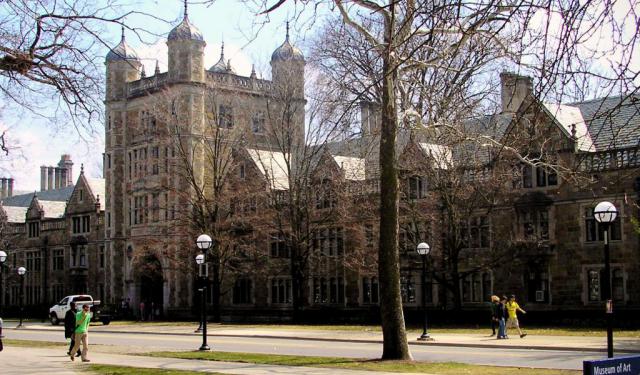
Ann Arbor is a home to the sprawling University of Michigan – one of America’s best public educational institutions, attracting top students and faculty from all over the world.
Founded in 1817 in Detroit as the University of Michigania, 20 years before the territory became a state, this university is Michigan's oldest. The school was moved to Ann Arbor in 1837. Among its alumni there... view more
Tour Duration: 3 Hour(s)
Travel Distance: 3.6 Km or 2.2 Miles
Founded in 1817 in Detroit as the University of Michigania, 20 years before the territory became a state, this university is Michigan's oldest. The school was moved to Ann Arbor in 1837. Among its alumni there... view more
Tour Duration: 3 Hour(s)
Travel Distance: 3.6 Km or 2.2 Miles
Ann Arbor Introduction Walking Tour
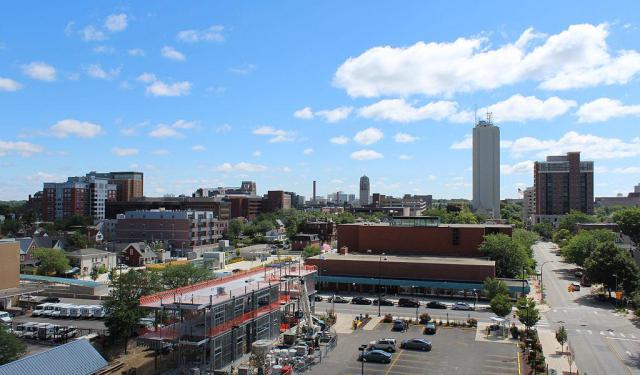
A western exurb of Detroit, the charming green college town of Ann Arbor possesses a unique charm and down-home atmosphere – a combination of big-city amenities and a small-town vibe.
It started off as a small strip of land registered in 1825 as "Annarbour", named after the wives of its co-founders, both called Ann, and the stands of bur oak trees. Following the move of the... view more
Tour Duration: 2 Hour(s)
Travel Distance: 3.0 Km or 1.9 Miles
It started off as a small strip of land registered in 1825 as "Annarbour", named after the wives of its co-founders, both called Ann, and the stands of bur oak trees. Following the move of the... view more
Tour Duration: 2 Hour(s)
Travel Distance: 3.0 Km or 1.9 Miles