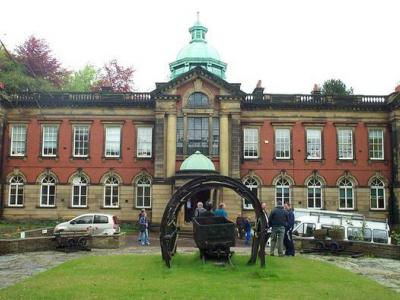


Durham Miners' Hall, Durham
Durham Miners’ Hall, commonly known as Redhills, was built as the headquarters of the Durham Miners’ Association and stands as a lasting symbol of the North East’s coalfield communities. Designed by H. T. Gradon in the Edwardian Baroque style, it opened in 1915, replacing the former Miners’ Hall on North Road. Its red-brick façade and imposing entrance reflect the history within-stories of solidarity, culture, and the everyday lives that helped shape the county for more than a century.
Inside, the star attraction is the celebrated “Pitman’s Parliament,” a wood-panelled council chamber where elected pit delegates once gathered to debate pay, welfare, and safety. The horseshoe seating and gallery create an intimate, almost theatrical space, and the hall is rich with craftsmanship-carved details, banners, and stained glass that honour colliery lodges and their brass bands. Even if you’re new to mining history, the building makes it easy to connect the politics of work with the culture of music, sport, and community that flourished around it.
Today, Redhills hosts guided tours, exhibitions, and events that bring that heritage to life. Volunteers and staff share engaging stories of the Big Meeting (the Durham Miners’ Gala), the growth of welfare halls and libraries, and the families who turned a dangerous industry into a resilient community. Check ahead for opening times and special programs; tours often include access to spaces not usually open to the public.
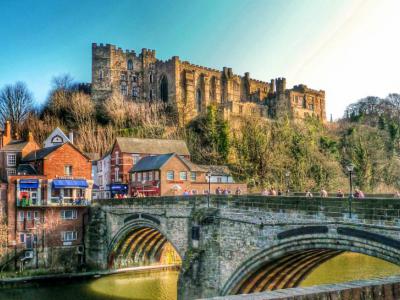
Combine your visit with a walk along the River Wear to Durham Cathedral and Castle, and you’ll have a day that pairs world-class medieval architecture with an essential chapter of modern social history. For many visitors, Redhills is a highlight: a beautiful civic building with a human heartbeat, where the region’s past still speaks clearly to the present.
Inside, the star attraction is the celebrated “Pitman’s Parliament,” a wood-panelled council chamber where elected pit delegates once gathered to debate pay, welfare, and safety. The horseshoe seating and gallery create an intimate, almost theatrical space, and the hall is rich with craftsmanship-carved details, banners, and stained glass that honour colliery lodges and their brass bands. Even if you’re new to mining history, the building makes it easy to connect the politics of work with the culture of music, sport, and community that flourished around it.
Today, Redhills hosts guided tours, exhibitions, and events that bring that heritage to life. Volunteers and staff share engaging stories of the Big Meeting (the Durham Miners’ Gala), the growth of welfare halls and libraries, and the families who turned a dangerous industry into a resilient community. Check ahead for opening times and special programs; tours often include access to spaces not usually open to the public.
Combine your visit with a walk along the River Wear to Durham Cathedral and Castle, and you’ll have a day that pairs world-class medieval architecture with an essential chapter of modern social history. For many visitors, Redhills is a highlight: a beautiful civic building with a human heartbeat, where the region’s past still speaks clearly to the present.
Want to visit this sight? Check out these Self-Guided Walking Tours in Durham. Alternatively, you can download the mobile app "GPSmyCity: Walks in 1K+ Cities" from Apple App Store or Google Play Store. The app turns your mobile device to a personal tour guide and it works offline, so no data plan is needed when traveling abroad.
Download The GPSmyCity App



Durham Miners' Hall on Map
Sight Name: Durham Miners' Hall
Sight Location: Durham, England (See walking tours in Durham)
Sight Type: Attraction/Landmark
Sight Location: Durham, England (See walking tours in Durham)
Sight Type: Attraction/Landmark
Nearby Sights
Walking Tours in Durham, England

Create Your Own Walk in Durham
Creating your own self-guided walk in Durham is easy and fun. Choose the city attractions that you want to see and a walk route map will be created just for you. You can even set your hotel as the start point of the walk.
Durham Introduction Walking Tour
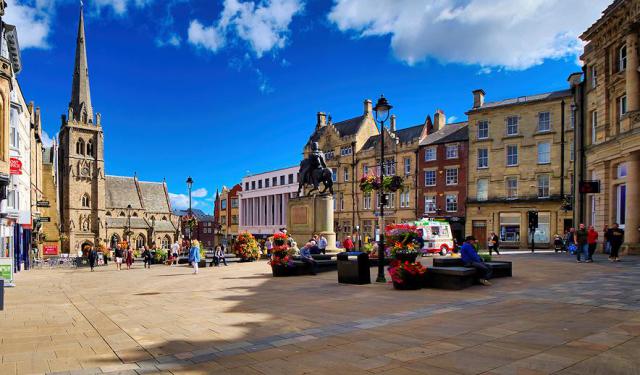
According to the legend, it all started with a missing cow. Back in 995, a group of monks fleeing Viking raiders were hauling around the remains of Saint Cuthbert when their saintly cargo decided to stop moving. No matter how hard they tried, the bier wouldn’t budge-until a milkmaid chasing her lost dun cow wandered past. ("Dun" is a dull shade of brownish grey. ) The monks took the... view more
Tour Duration: 2 Hours
Travel Distance: 2.6 Km or 1.6 Miles
Tour Duration: 2 Hours
Travel Distance: 2.6 Km or 1.6 Miles
City Walks Overview
