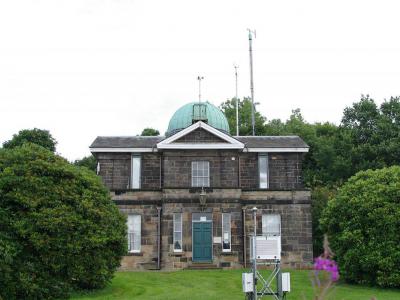


Durham University Observatory, Durham
Tucked away on Potters Bank, the Durham University Observatory is a Grade II-listed gem that blends scientific heritage with handsome 19th-century architecture. Designed by Anthony Salvin and begun in 1839, the building was completed in 1841 with its telescope installed the following year-part of the university’s early push into astronomy and weather science. An obelisk set due north in nearby Saint Leonard’s School grounds, added in 1850, helped observers keep their instrument precisely aligned.
Although the site started life as both an astronomical and meteorological observatory (the latter vital for correcting star observations), its focus moved wholly to weather recording in 1937. That pivot produced one of Britain’s most valuable climate archives: after Oxford and Armagh, Durham holds the third-longest unbroken meteorological record in the UK, with observations stretching back to 23 July 1843. The continuity owes much to generations of dedicated staff and a smooth handover from manual readings-kept up until 1999-to a modern Met Office automatic weather station. The observatory is also recognised internationally as a World Meteorological Organization Centennial Observing Station.
For visitors, the appeal lies in standing at a working landmark where Victorian science still informs how we understand today’s climate. While access is limited-this is an active recording site rather than a public attraction-the exterior and setting reward a brief detour from the city centre, especially for those exploring Durham Cathedral’s precincts and the surrounding colleges. If you’re curious to learn more, the university’s “Durham Weather” pages and recent studies draw on the observatory’s data to tell the story of local weather and climate since the 1840s.
Although the site started life as both an astronomical and meteorological observatory (the latter vital for correcting star observations), its focus moved wholly to weather recording in 1937. That pivot produced one of Britain’s most valuable climate archives: after Oxford and Armagh, Durham holds the third-longest unbroken meteorological record in the UK, with observations stretching back to 23 July 1843. The continuity owes much to generations of dedicated staff and a smooth handover from manual readings-kept up until 1999-to a modern Met Office automatic weather station. The observatory is also recognised internationally as a World Meteorological Organization Centennial Observing Station.
For visitors, the appeal lies in standing at a working landmark where Victorian science still informs how we understand today’s climate. While access is limited-this is an active recording site rather than a public attraction-the exterior and setting reward a brief detour from the city centre, especially for those exploring Durham Cathedral’s precincts and the surrounding colleges. If you’re curious to learn more, the university’s “Durham Weather” pages and recent studies draw on the observatory’s data to tell the story of local weather and climate since the 1840s.
Want to visit this sight? Check out these Self-Guided Walking Tours in Durham. Alternatively, you can download the mobile app "GPSmyCity: Walks in 1K+ Cities" from Apple App Store or Google Play Store. The app turns your mobile device to a personal tour guide and it works offline, so no data plan is needed when traveling abroad.
Download The GPSmyCity App



Durham University Observatory on Map
Sight Name: Durham University Observatory
Sight Location: Durham, England (See walking tours in Durham)
Sight Type: Attraction/Landmark
Sight Location: Durham, England (See walking tours in Durham)
Sight Type: Attraction/Landmark
Nearby Sights
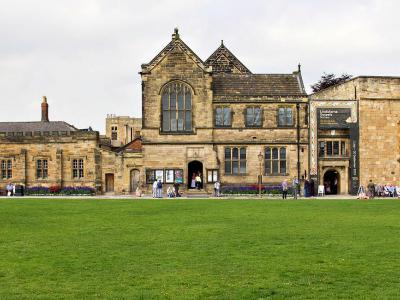
Walking Tours in Durham, England

Create Your Own Walk in Durham
Creating your own self-guided walk in Durham is easy and fun. Choose the city attractions that you want to see and a walk route map will be created just for you. You can even set your hotel as the start point of the walk.
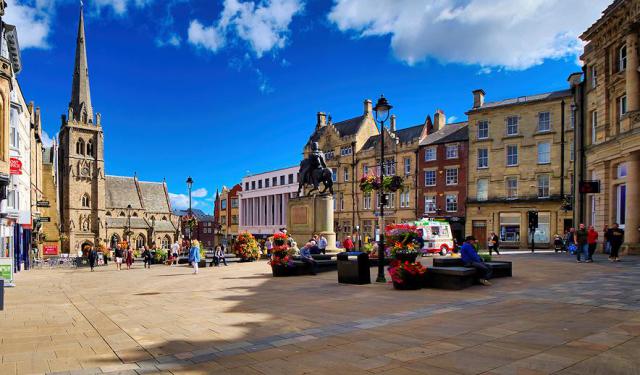
Durham Introduction Walking Tour
According to the legend, it all started with a missing cow. Back in 995, a group of monks fleeing Viking raiders were hauling around the remains of Saint Cuthbert when their saintly cargo decided to stop moving. No matter how hard they tried, the bier wouldn’t budge-until a milkmaid chasing her lost dun cow wandered past. ("Dun" is a dull shade of brownish grey. ) The monks took the... view more
Tour Duration: 2 Hours
Travel Distance: 2.6 Km or 1.6 Miles
Tour Duration: 2 Hours
Travel Distance: 2.6 Km or 1.6 Miles
City Walks Overview
