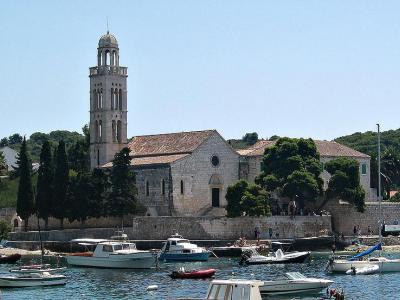


Franciscan Monastery, Hvar
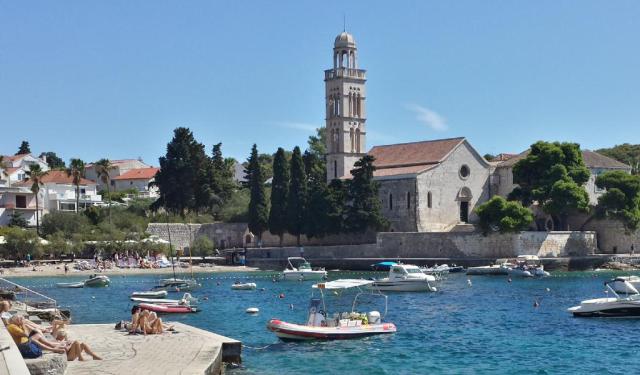
Constructed in the 15th century, the Franciscan Monastery in Hvar boasts an elegant bell tower, a later addition from the 16th century. The tower was crafted by a renowned family of stonemasons hailing from the nearby island of Korčula, showcasing their expert craftsmanship and mastery of stonework.
One of the monastery's architectural highlights is its Renaissance cloister, a tranquil and contemplative space that leads to a refectory filled with a captivating array of treasures. Among the monastery's prized possessions are lace, coins, nautical charts, and invaluable documents, including an edition of Ptolemy's Atlas that was meticulously printed in 1524. These relics provide visitors with a window into the cultural and historical significance of this sacred place.
As you step inside the monastery, your gaze will inevitably be drawn to one of its most exceptional and arresting features, "The Last Supper." This remarkable artwork, measuring an impressive 8 meters by 2.5 meters, was masterfully created by the Venetian artist Matteo Ingoli at the close of the 16th century. Its intricate details and emotive portrayal of this biblical scene leave a lasting impression on all who have the privilege to behold it.
Connected to the monastery is the adjacent church, devoted to Our Lady of Mercy, which houses an array of exquisite paintings. Notably, visitors can admire three polyptychs created by Francesco da Santacroce in 1583. These polyptychs represent the pinnacle of this accomplished artist's work, showcasing his artistic genius and dedication to his craft.
One of the monastery's architectural highlights is its Renaissance cloister, a tranquil and contemplative space that leads to a refectory filled with a captivating array of treasures. Among the monastery's prized possessions are lace, coins, nautical charts, and invaluable documents, including an edition of Ptolemy's Atlas that was meticulously printed in 1524. These relics provide visitors with a window into the cultural and historical significance of this sacred place.
As you step inside the monastery, your gaze will inevitably be drawn to one of its most exceptional and arresting features, "The Last Supper." This remarkable artwork, measuring an impressive 8 meters by 2.5 meters, was masterfully created by the Venetian artist Matteo Ingoli at the close of the 16th century. Its intricate details and emotive portrayal of this biblical scene leave a lasting impression on all who have the privilege to behold it.
Connected to the monastery is the adjacent church, devoted to Our Lady of Mercy, which houses an array of exquisite paintings. Notably, visitors can admire three polyptychs created by Francesco da Santacroce in 1583. These polyptychs represent the pinnacle of this accomplished artist's work, showcasing his artistic genius and dedication to his craft.
Want to visit this sight? Check out these Self-Guided Walking Tours in Hvar. Alternatively, you can download the mobile app "GPSmyCity: Walks in 1K+ Cities" from Apple App Store or Google Play Store. The app turns your mobile device to a personal tour guide and it works offline, so no data plan is needed when traveling abroad.
Download The GPSmyCity App



Franciscan Monastery on Map
Sight Name: Franciscan Monastery
Sight Location: Hvar, Croatia (See walking tours in Hvar)
Sight Type: Religious
Sight Location: Hvar, Croatia (See walking tours in Hvar)
Sight Type: Religious
Nearby Sights


Walking Tours in Hvar, Croatia

Create Your Own Walk in Hvar
Creating your own self-guided walk in Hvar is easy and fun. Choose the city attractions that you want to see and a walk route map will be created just for you. You can even set your hotel as the start point of the walk.
Hvar Introduction Walking Tour
The biggest settlement on the Croatian island of the same name, Hvar is affectionately referred to as “Croatian Madeira”. The town boasts more than 2724 hours of sunshine per year, which is more than anywhere else in the country, plus a millennia-long history to boot.
Originally settled by Illyrians, it evolved from a small bay with a hill fort to a Greek colony, Pharos, in 384 BC. Romans... view more
Tour Duration: 1 Hour
Travel Distance: 2 Km or 1.2 Miles
Originally settled by Illyrians, it evolved from a small bay with a hill fort to a Greek colony, Pharos, in 384 BC. Romans... view more
Tour Duration: 1 Hour
Travel Distance: 2 Km or 1.2 Miles
City Walks Overview
