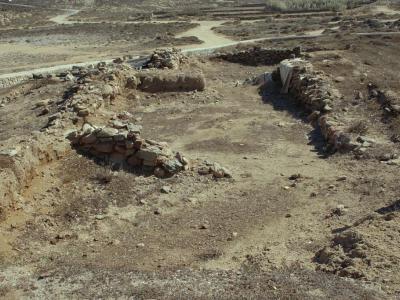


Ftelia Archeological Site, Mykonos
Perched just above the quiet shoreline of Ftelia Beach, the Ftelia Archaeological Site offers a glimpse into life on Mykonos long before the island became a modern travel destination. Dating back to the Neolithic period-around the 5th millennium BCE-it’s considered one of the oldest known settlements in the Cyclades. Excavations that began in 2000 have revealed multiple occupation layers, including structures and tools that speak to a self-sufficient, sea-connected community. According to legend, the site is also believed to be the burial place of Ajax the Locrian, a warrior from Homer’s Iliad.
The most prominent structure uncovered is the Megaron, a large rectangular building situated on a hill and oriented north to south. Its stone walls still rise about 1.4 meters high and are thought to have played a central role in the settlement’s social or religious life. Archaeologists also found layers of pottery-from plain early vases to later painted and decorated vessels-alongside obsidian tools likely used for fishing, hunting, and basic defense. Although time has eroded much of the site, three of its four structural layers remain visible.
The Ftelia site spans a little over an acre, and while modest in size, it delivers outsized historical value. The worn stones and fragments evoke a time when this hillside buzzed with daily life-crafting, cooking, and ceremony.
Before leaving the area, visitors can step down to Ftelia Beach for a contrasting experience: quiet waves, soft sand, and a moment to reflect on how far back Mykonos's story really goes.
The most prominent structure uncovered is the Megaron, a large rectangular building situated on a hill and oriented north to south. Its stone walls still rise about 1.4 meters high and are thought to have played a central role in the settlement’s social or religious life. Archaeologists also found layers of pottery-from plain early vases to later painted and decorated vessels-alongside obsidian tools likely used for fishing, hunting, and basic defense. Although time has eroded much of the site, three of its four structural layers remain visible.
The Ftelia site spans a little over an acre, and while modest in size, it delivers outsized historical value. The worn stones and fragments evoke a time when this hillside buzzed with daily life-crafting, cooking, and ceremony.
Before leaving the area, visitors can step down to Ftelia Beach for a contrasting experience: quiet waves, soft sand, and a moment to reflect on how far back Mykonos's story really goes.
Want to visit this sight? Check out these Self-Guided Walking Tours in Mykonos. Alternatively, you can download the mobile app "GPSmyCity: Walks in 1K+ Cities" from Apple App Store or Google Play Store. The app turns your mobile device to a personal tour guide and it works offline, so no data plan is needed when traveling abroad.
Download The GPSmyCity App



Ftelia Archeological Site on Map
Sight Name: Ftelia Archeological Site
Sight Location: Mykonos, Greece (See walking tours in Mykonos)
Sight Type: Park/Outdoor
Sight Location: Mykonos, Greece (See walking tours in Mykonos)
Sight Type: Park/Outdoor
Nearby Sights
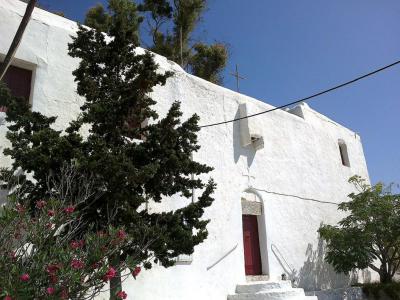

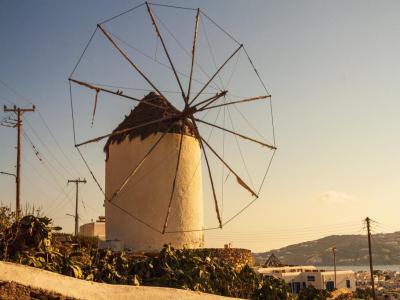
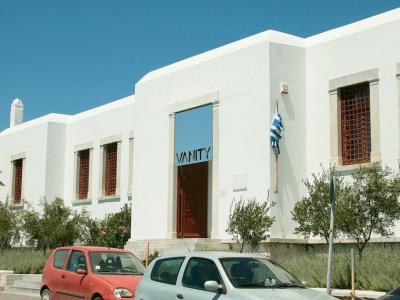
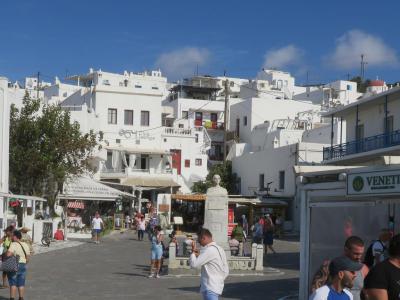

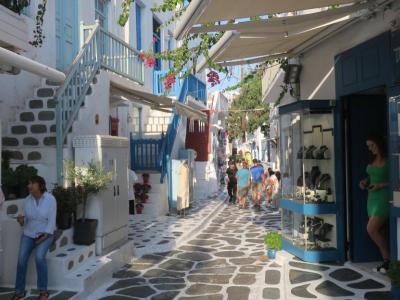
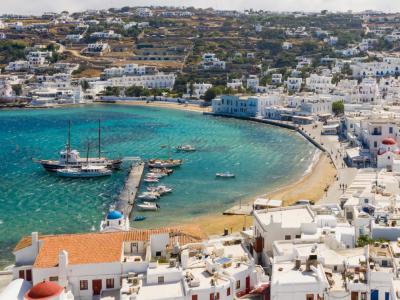
Old Port (must see)
Walking Tours in Mykonos, Greece

Create Your Own Walk in Mykonos
Creating your own self-guided walk in Mykonos is easy and fun. Choose the city attractions that you want to see and a walk route map will be created just for you. You can even set your hotel as the start point of the walk.

Mykonos Introduction Walking Tour
Welcome to Mykonos-a Cycladic island where mythology, marble, and mojitos live in perfect harmony. Sure, it’s known today for its beaches and nightlife, but scratch the surface and you’ll find a past that’s been busy for over 3,000 years. According to ancient tales, Mykonos was named after Mykons, a grandson of Apollo. Legend says Hercules once battled giants here-and tossed a few across the... view more
Tour Duration: 1 Hour
Travel Distance: 1.5 Km or 0.9 Miles
Tour Duration: 1 Hour
Travel Distance: 1.5 Km or 0.9 Miles
City Walks Overview
