

Gratz Park Historic District, Lexington
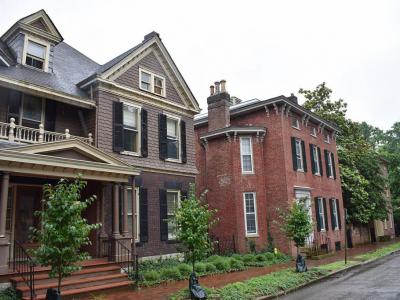
Lexington's Gratz Park Historic District is a picturesque enclave just north of downtown, where tranquil green spaces meet grand early-American architecture. The park itself-originally dedicated as Centennial Park in 1876 and renamed later for Benjamin Gratz, a prominent hemp merchant-offers a relaxing sanctuary amid brick walkways, leafy shade, and the charming “Fountain of Youth,” built to honor local author James Lane Allen. This natural oasis provides respite from city life and a scenic backdrop for strolls.
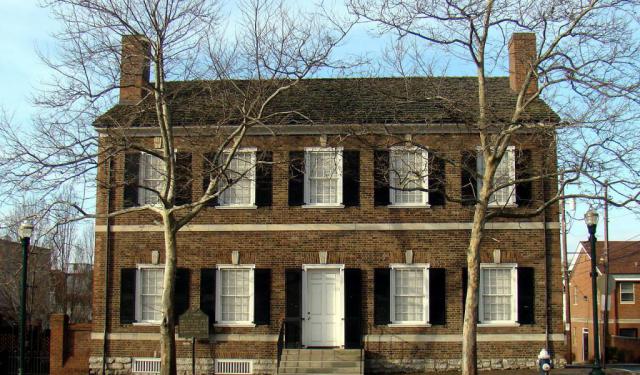
The district’s integrity is remarkably intact, featuring some of Lexington’s finest Greek Revival, Italianate, and Federal-style homes, many built in the early 1800s. Key highlights include the Hunt–Morgan House, constructed in 1814 for John Wesley Hunt, the first millionaire west of the Alleghenies. Now a museum, its elegant interiors tell tales of notable locals, including Nobel laureate Thomas Hunt Morgan. Nearby, the Bodley‑Bullock House offers a window into early Lexington life, with period furnishings and guided tours delving into the War of 1812 era.
At the park’s southern edge stands the historic Carnegie Library, constructed in 1906 in Classical‑Revival style. Once the city's public library, today it houses the Carnegie Center for Literacy and Learning, nurturing the community through arts and writers’ programs. Also visible from the park is Christ Church Cathedral, along with other architecturally significant residences, offering a blend of visual and spiritual heritage.
Gratz Park became Lexington's first local historic district in 1958 and was listed on the National Register in 1973. Its preservation tale speaks to civic pride: residents rallied in the 1950s to save the Hunt–Morgan House and the park itself from demolition, sparking a broader preservation movement. Today, it stands as a well-preserved time capsule, ideal for visitors seeking history, culture, and a peaceful stroll in the heart of Kentucky’s Horse Capital.
The district’s integrity is remarkably intact, featuring some of Lexington’s finest Greek Revival, Italianate, and Federal-style homes, many built in the early 1800s. Key highlights include the Hunt–Morgan House, constructed in 1814 for John Wesley Hunt, the first millionaire west of the Alleghenies. Now a museum, its elegant interiors tell tales of notable locals, including Nobel laureate Thomas Hunt Morgan. Nearby, the Bodley‑Bullock House offers a window into early Lexington life, with period furnishings and guided tours delving into the War of 1812 era.
At the park’s southern edge stands the historic Carnegie Library, constructed in 1906 in Classical‑Revival style. Once the city's public library, today it houses the Carnegie Center for Literacy and Learning, nurturing the community through arts and writers’ programs. Also visible from the park is Christ Church Cathedral, along with other architecturally significant residences, offering a blend of visual and spiritual heritage.
Gratz Park became Lexington's first local historic district in 1958 and was listed on the National Register in 1973. Its preservation tale speaks to civic pride: residents rallied in the 1950s to save the Hunt–Morgan House and the park itself from demolition, sparking a broader preservation movement. Today, it stands as a well-preserved time capsule, ideal for visitors seeking history, culture, and a peaceful stroll in the heart of Kentucky’s Horse Capital.
Want to visit this sight? Check out these Self-Guided Walking Tours in Lexington. Alternatively, you can download the mobile app "GPSmyCity: Walks in 1K+ Cities" from Apple App Store or Google Play Store. The app turns your mobile device to a personal tour guide and it works offline, so no data plan is needed when traveling abroad.
Download The GPSmyCity App



Gratz Park Historic District on Map
Sight Name: Gratz Park Historic District
Sight Location: Lexington, USA (See walking tours in Lexington)
Sight Type: Attraction/Landmark
Sight Location: Lexington, USA (See walking tours in Lexington)
Sight Type: Attraction/Landmark
Nearby Sights





Walking Tours in Lexington, Kentucky

Create Your Own Walk in Lexington
Creating your own self-guided walk in Lexington is easy and fun. Choose the city attractions that you want to see and a walk route map will be created just for you. You can even set your hotel as the start point of the walk.
Historical Buildings
Historical buildings in Lexington, Kentucky, serve as time capsules, reflecting the architectural and cultural history of the region. A good number of these structures are listed in the National Register of Historic Places, each having its own story to tell. Let's explore a few notable structures that have made significant architectural contributions to the cityscape of Lexington.
The... view more
Tour Duration: 1 Hour(s)
Travel Distance: 2.4 Km or 1.5 Miles
The... view more
Tour Duration: 1 Hour(s)
Travel Distance: 2.4 Km or 1.5 Miles

Lexington Introduction Walking Tour
Lexington is Kentucky's second-largest city and the Fayette County seat. The city is most famous for the Thoroughbred racing industry but has so much to offer besides attractions related to racing. This city dates back to 1782 when Kentucky was still part of the Commonwealth of Virginia and was settled by frontiersmen under the leadership of William McConnell.
During the 19th century, the... view more
Tour Duration: 2 Hour(s)
Travel Distance: 4.3 Km or 2.7 Miles
During the 19th century, the... view more
Tour Duration: 2 Hour(s)
Travel Distance: 4.3 Km or 2.7 Miles