

Grotto of the Seven Sleepers, Ephesus
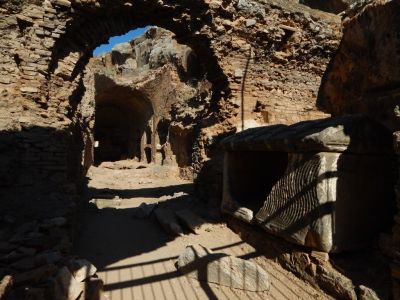
The Grotto of the Seven Sleepers, located near Ephesus on the slopes of Pion Mountain, is a remarkable historical and religious site closely tied to a legend cherished in both Christian and Islamic traditions. The site, a Byzantine necropolis with dozens of rock-cut tombs, is traditionally believed to be the place where seven young Christian men sought refuge from religious persecution during the reign of Roman Emperor Decius (249–251 AD). Instead of renouncing their faith, the youths hid in a mountain cave, where they fell into a miraculous sleep. When the cave was unsealed during the reign of Theodosius II over two centuries later, they awoke-believing they had only slept a day-only to discover that Christianity had become the empire's dominant religion.
The legend tells of the astonishment of one of the youths when he entered Ephesus and found crosses adorning buildings. His use of ancient coins soon led to a dramatic encounter with city officials and the local bishop, confirming the miracle. This story gave rise to the identification of the grotto in Ephesus as the original cave of the Seven Sleepers. Over time, the site gained sacred status, drawing pilgrims who wished to be buried near the holy youths. Numerous graves, catacombs, and rock-cut tombs from the 5th and 6th centuries were built in and around the cave, turning the area into a large necropolis.
The Islamic version of the story, referenced in the Qur’an (Sura 18:9–26), shares many elements with the Christian tale but leaves the exact number of sleepers to divine knowledge and includes a loyal dog guarding the entrance. Though the Qur’an does not identify a specific location, the grotto near Ephesus is one of several places believed to be the setting of the event, alongside sites in Jordan, Tunisia, and even China. In Ephesus, the cave was once transformed into a rock-carved church with an apse, vaulted niches, and inscriptions honoring the Seven Sleepers. Although largely in ruins today, it still retains architectural remnants and hundreds of ancient burials.
Among the most fascinating discoveries at the site is a collection of terracotta oil lamps from the 4th and 5th centuries AD. These lamps, many adorned with Christian symbols and scenes from both biblical and everyday life, also feature images from the pagan world-depicting Hercules, Zeus, and Aphrodite. This blend of imagery raises questions about the coexistence of religious traditions in late antique Ephesus. Though the grotto is usually fenced and locked, visitors may occasionally find a local guardian to open it-or explore it with a bit of adventurous spirit. After visiting, many enjoy relaxing nearby with traditional Turkish gözleme and ayran at a rustic, carpet-lined eatery close to the cave.
The legend tells of the astonishment of one of the youths when he entered Ephesus and found crosses adorning buildings. His use of ancient coins soon led to a dramatic encounter with city officials and the local bishop, confirming the miracle. This story gave rise to the identification of the grotto in Ephesus as the original cave of the Seven Sleepers. Over time, the site gained sacred status, drawing pilgrims who wished to be buried near the holy youths. Numerous graves, catacombs, and rock-cut tombs from the 5th and 6th centuries were built in and around the cave, turning the area into a large necropolis.
The Islamic version of the story, referenced in the Qur’an (Sura 18:9–26), shares many elements with the Christian tale but leaves the exact number of sleepers to divine knowledge and includes a loyal dog guarding the entrance. Though the Qur’an does not identify a specific location, the grotto near Ephesus is one of several places believed to be the setting of the event, alongside sites in Jordan, Tunisia, and even China. In Ephesus, the cave was once transformed into a rock-carved church with an apse, vaulted niches, and inscriptions honoring the Seven Sleepers. Although largely in ruins today, it still retains architectural remnants and hundreds of ancient burials.
Among the most fascinating discoveries at the site is a collection of terracotta oil lamps from the 4th and 5th centuries AD. These lamps, many adorned with Christian symbols and scenes from both biblical and everyday life, also feature images from the pagan world-depicting Hercules, Zeus, and Aphrodite. This blend of imagery raises questions about the coexistence of religious traditions in late antique Ephesus. Though the grotto is usually fenced and locked, visitors may occasionally find a local guardian to open it-or explore it with a bit of adventurous spirit. After visiting, many enjoy relaxing nearby with traditional Turkish gözleme and ayran at a rustic, carpet-lined eatery close to the cave.
Want to visit this sight? Check out these Self-Guided Walking Tours in Ephesus. Alternatively, you can download the mobile app "GPSmyCity: Walks in 1K+ Cities" from Apple App Store or Google Play Store. The app turns your mobile device to a personal tour guide and it works offline, so no data plan is needed when traveling abroad.
Download The GPSmyCity App



Grotto of the Seven Sleepers on Map
Sight Name: Grotto of the Seven Sleepers
Sight Location: Ephesus, Turkey (See walking tours in Ephesus)
Sight Type: Attraction/Landmark
Sight Location: Ephesus, Turkey (See walking tours in Ephesus)
Sight Type: Attraction/Landmark
Nearby Sights
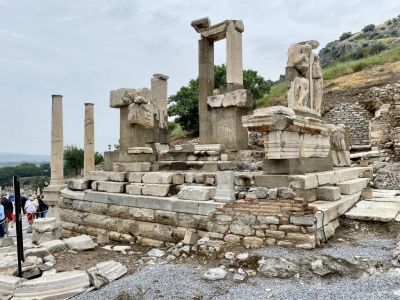
Walking Tours in Ephesus, Turkey

Create Your Own Walk in Ephesus
Creating your own self-guided walk in Ephesus is easy and fun. Choose the city attractions that you want to see and a walk route map will be created just for you. You can even set your hotel as the start point of the walk.
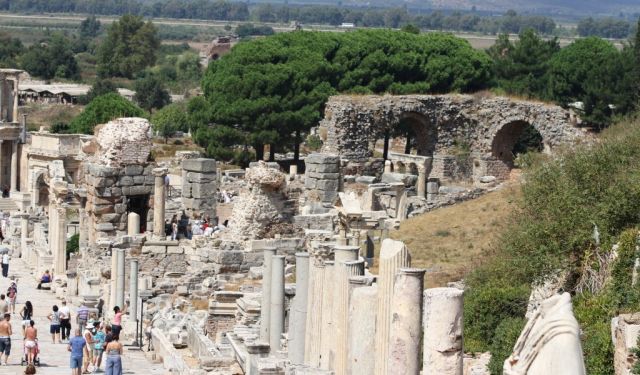
Ephesus Introduction Walking Tour
Ancient Greek poet Antipater of Sidon exclaimed that Babylon and the tomb of Mausolus paled in comparison with the Temple of Artemis. The temple is undoubtedly a highlight, as it is one of the Seven Wonders of the Ancient World. However, Ephesus has much more to offer. The city was one of the great urban centers of the ancient Mediterranean, with a history stretching back to the second millennium... view more
Tour Duration: 2 Hour(s)
Travel Distance: 1.0 Km or 0.6 Miles
Tour Duration: 2 Hour(s)
Travel Distance: 1.0 Km or 0.6 Miles
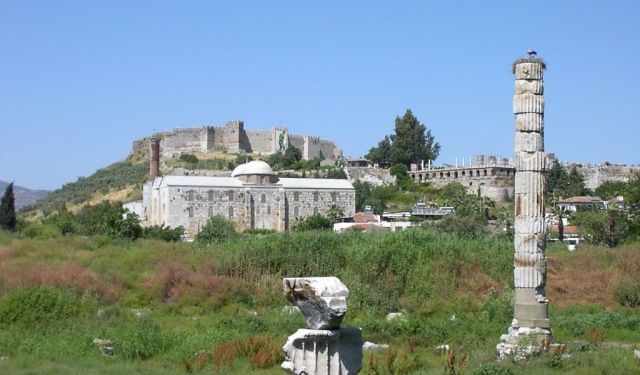
Selcuk Introduction Walking Tour
The name Selçuk comes from the Seljuk Turks, who settled in the area in the 12th century AD after centuries of shifting empires in western Anatolia. But the story of this small town stretches back much further, into the heart of the ancient world. Long before the Seljuks left their mark, the land around it was dominated by Ephesus, one of the great cities of antiquity and a vital hub of the Greek... view more
Tour Duration: 2 Hour(s)
Travel Distance: 3.3 Km or 2.1 Miles
Tour Duration: 2 Hour(s)
Travel Distance: 3.3 Km or 2.1 Miles