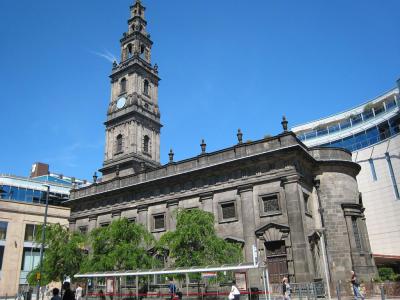


Holy Trinity Church, Leeds
The Holy Trinity Church on Boar Lane in Leeds is a Church of England place of worship with a rather unusual feature: an outrageous steeple resembling a fully extended telescope standing on its face. The church itself was completed in 1727, but its present steeple didn't appear until 1839. And the story of how it got there is quite an interesting one.
The project had two designers - William Halfpenny and William Etty - none of whom had a steeple in mind. In fact, the two had rather different ideas as to what should go on top. Halfpenny proposed a square colonnade crowned by an obelisk tapering into a spire. In his turn, Etty, whose design was ultimately chosen for the building, didn't aspire to a spire at all! Eventually, someone added a wooden one, but that didn't end well. In 1839, the wind blew the spire down.
That same year, architect Robert Dennis Chantrell came to the rescue with the tall stone steeple we see today. Rising in three progressively smaller stages, topped by a similarly tiered spire, it's certainly hard to miss.
Inside, things are considerably more restrained. The church has a simple rectangular layout, with Corinthian columns lining the sides. But there's one particularly interesting detail above the altar: a gilded carving of a pelican feeding her chicks.
According to an old Christian legend, a mother pelican would tear open her breast to feed her hungry young with her own blood. It's a rather gruesome image of maternal devotion, but one with a deeper religious meaning. The pelican became a symbol of Christ's sacrifice for humanity, making this unusual decoration much more than just an ornamental bird.
Want to visit this sight? Check out these Self-Guided Walking Tours in Leeds. Alternatively, you can download the mobile app "GPSmyCity: Walks in 1K+ Cities" from Apple App Store or Google Play Store. The app turns your mobile device to a personal tour guide and it works offline, so no data plan is needed when traveling abroad.
Download The GPSmyCity App



Holy Trinity Church on Map
Sight Name: Holy Trinity Church
Sight Location: Leeds, England (See walking tours in Leeds)
Sight Type: Religious
Guide(s) Containing This Sight:
Sight Location: Leeds, England (See walking tours in Leeds)
Sight Type: Religious
Guide(s) Containing This Sight:
Nearby Sights

Walking Tours in Leeds, England
Create Your Own Walk in Leeds
Creating your own self-guided walk in Leeds is easy and fun. Choose the city attractions that you want to see and a walk route map will be created just for you. You can even set your hotel as the start point of the walk.
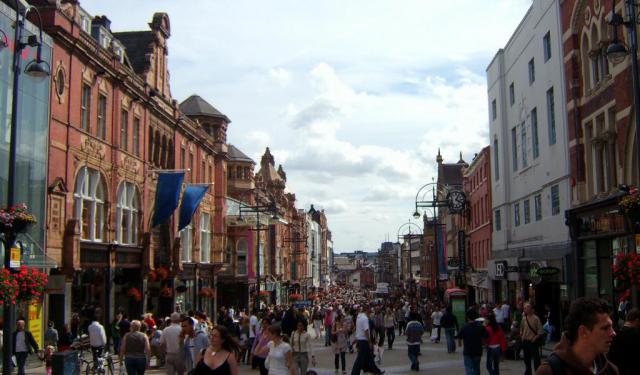
A Walking Guide To Leeds City Center
Leeds has come a long way from its beginnings as a small settlement beside the River Aire. Its name is possibly rooted in the ancient Brythonic word "Ladenses," which means "folks of the rapid river." In the 5th century, the area formed part of the kingdom of Elmet, and the 8th-century scholar, the Venerable Bede, referred to it as “Loidis.” Over time, the name evolved into... view more
Tour Duration: 2 Hours
Travel Distance: 2.7 Km or 1.7 Miles
Tour Duration: 2 Hours
Travel Distance: 2.7 Km or 1.7 Miles
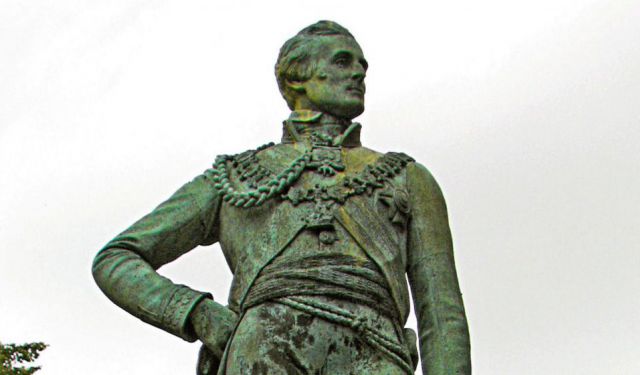
Discover Leeds' Historical Sculptures on Foot
In Leeds, statues adorn various corners, reflecting historical figures and cultural symbols. Some of them are hundreds of years old but still in remarkable condition.
One notable sculpture is that of Robert Peel, commemorating the 19th-century Prime Minister and founder of Britain's modern police force.
On the opposite side of the nearby Woodhouse Moor Park stands the regal Statue of... view more
Tour Duration: 2 Hours
Travel Distance: 3.2 Km or 2 Miles
One notable sculpture is that of Robert Peel, commemorating the 19th-century Prime Minister and founder of Britain's modern police force.
On the opposite side of the nearby Woodhouse Moor Park stands the regal Statue of... view more
Tour Duration: 2 Hours
Travel Distance: 3.2 Km or 2 Miles
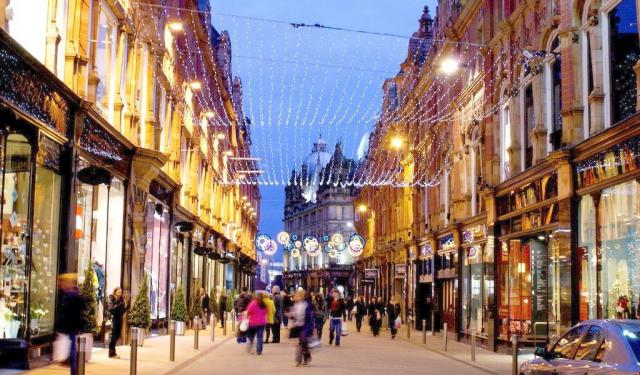
Explore Leeds' Historical Shopping Venues on Foot
Leeds is a shopaholic’s paradise and a true world of retail scaled down to the size of a downtown area. Compactly located within walking distance from each other, the city's best boutiques are never far away from an eager shopper.
Here, the biggest brands and small independents are housed in some of the city’s most iconic buildings. Among them is the historic Kirkgate Market, the... view more
Tour Duration: 1 Hour
Travel Distance: 1.2 Km or 0.7 Miles
Here, the biggest brands and small independents are housed in some of the city’s most iconic buildings. Among them is the historic Kirkgate Market, the... view more
Tour Duration: 1 Hour
Travel Distance: 1.2 Km or 0.7 Miles
City Walks Overview
