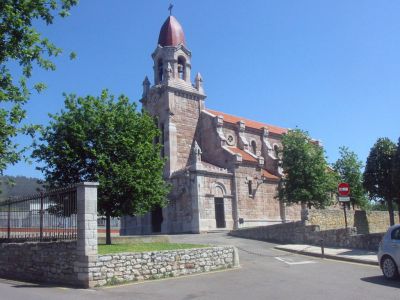


Iglesia San Pedro de Los Arcos (Church of Saint Peter of the Arches), Oviedo
The Church of Saint Peter of the Arches is a captivating stop for any visitor interested in local history, architecture, and Asturian heritage. This Neo‑Romanesque church, completed in 1910, was designed by the notable architect Luis Bellido, who later created Oviedo’s grand Church of Saint John the Royal. Perched atop a gentle rise known as the Hill of Saint Peter, the site has been a place of Christian worship since at least the Visigothic era, likely between the 5th and 7th centuries.
Over the centuries, the church evolved from a modest rural chapel-once called Saint Peter of the Hill-to its 18th-century identity Saint Peter of the Pillars, named after a nearby and once-impressive 41‑arch aqueduct supplying water to Oviedo, before being renamed again due to that structure’s demolition. Civic pride and local memory remain deeply tied to that lost aqueduct, and the church itself now preserves both architectural beauty and symbolic weight.
Architecturally, the current building reflects Bellido’s skillful blend of tradition and revival. Its sturdy stone façade, bold arches, and tall bell tower draw the eye upward-the hallmark of Neo‑Romanesque style-while its proportions evoke both solidity and solemnity. Inside, visitors will find a serene nave, lit through simple windows, with a sense of grounded spirituality characteristic of early 20th‑century revival church design.
The church’s history also marks Oviedo’s darker moments. During the Revolution of October 1934, it suffered considerable damage-shells remain embedded in its south wall as silent reminders-and parish archives were lost in the flames. It was also near here, in the surrounding area, where Aida Lafuente, a young revolutionary activist, lost her life.
Over the centuries, the church evolved from a modest rural chapel-once called Saint Peter of the Hill-to its 18th-century identity Saint Peter of the Pillars, named after a nearby and once-impressive 41‑arch aqueduct supplying water to Oviedo, before being renamed again due to that structure’s demolition. Civic pride and local memory remain deeply tied to that lost aqueduct, and the church itself now preserves both architectural beauty and symbolic weight.
Architecturally, the current building reflects Bellido’s skillful blend of tradition and revival. Its sturdy stone façade, bold arches, and tall bell tower draw the eye upward-the hallmark of Neo‑Romanesque style-while its proportions evoke both solidity and solemnity. Inside, visitors will find a serene nave, lit through simple windows, with a sense of grounded spirituality characteristic of early 20th‑century revival church design.
The church’s history also marks Oviedo’s darker moments. During the Revolution of October 1934, it suffered considerable damage-shells remain embedded in its south wall as silent reminders-and parish archives were lost in the flames. It was also near here, in the surrounding area, where Aida Lafuente, a young revolutionary activist, lost her life.
Want to visit this sight? Check out these Self-Guided Walking Tours in Oviedo. Alternatively, you can download the mobile app "GPSmyCity: Walks in 1K+ Cities" from Apple App Store or Google Play Store. The app turns your mobile device to a personal tour guide and it works offline, so no data plan is needed when traveling abroad.
Download The GPSmyCity App



Iglesia San Pedro de Los Arcos (Church of Saint Peter of the Arches) on Map
Sight Name: Iglesia San Pedro de Los Arcos (Church of Saint Peter of the Arches)
Sight Location: Oviedo, Spain (See walking tours in Oviedo)
Sight Type: Religious
Sight Location: Oviedo, Spain (See walking tours in Oviedo)
Sight Type: Religious
Walking Tours in Oviedo, Spain

Create Your Own Walk in Oviedo
Creating your own self-guided walk in Oviedo is easy and fun. Choose the city attractions that you want to see and a walk route map will be created just for you. You can even set your hotel as the start point of the walk.
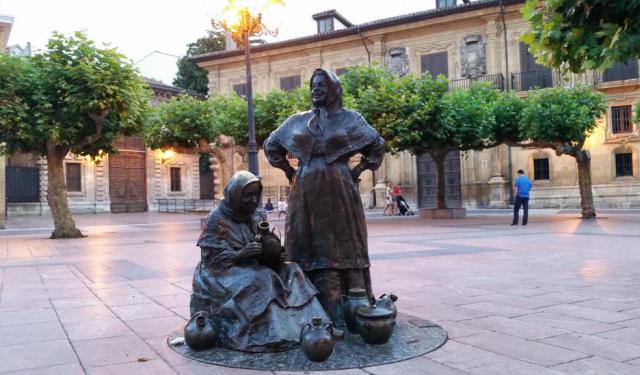
Oviedo Public Art Walking Tour
Public art adds a great deal of vibrancy and character to the cityscape of Oviedo, Spain, reflecting, among other things, its contemporary spirit. From the bustling Plaza Trascorrales to the serene Plaza Porlier De Oviedo, numerous sculptures have long become an integral part of the neighborhood, captivating passers-by in their numbers.
In Plaza Trascorrales, sculptures like The Fishwife and... view more
Tour Duration: 3 Hour(s)
Travel Distance: 3.0 Km or 1.9 Miles
In Plaza Trascorrales, sculptures like The Fishwife and... view more
Tour Duration: 3 Hour(s)
Travel Distance: 3.0 Km or 1.9 Miles
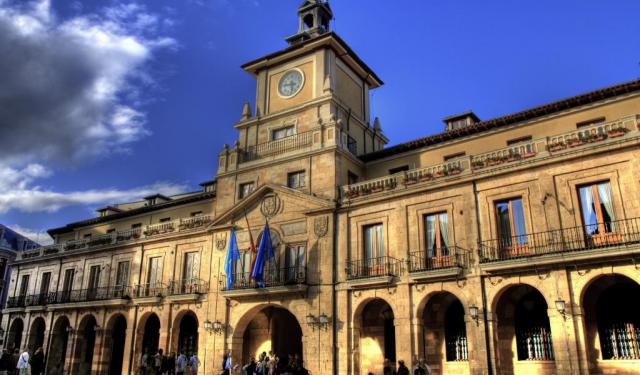
Oviedo Historic Architecture
The north Spanish region of Asturias and particularly its capital city, Oviedo, have long been noted for their unique architecture. The medieval part of town, whose ancient walls are still largely intact, contains some truly priceless relics. Among them is a well called La Foncalada, a fascinating example of an effective hydraulic system, dating back to the first half of the 9th century, based on... view more
Tour Duration: 2 Hour(s)
Travel Distance: 2.7 Km or 1.7 Miles
Tour Duration: 2 Hour(s)
Travel Distance: 2.7 Km or 1.7 Miles
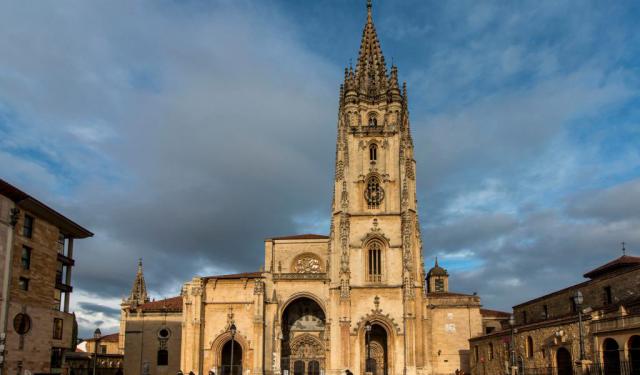
Oviedo Introduction Walking Tour
The Kingdom of Asturias began in 720, with the Visigothic revolt against Muslim rule led by the nobleman Pelagius. At that time, the city of Oviedo did not exist. Two monks, Maximo and Fromestano, founded the city in 761. They built a small church for Saint Vincent on a bare hillside, and from this seed, Oviedo grew.
After Pelagius died in 737, King Alfonso I founded a dynasty in Oviedo that... view more
Tour Duration: 1 Hour(s)
Travel Distance: 1.8 Km or 1.1 Miles
After Pelagius died in 737, King Alfonso I founded a dynasty in Oviedo that... view more
Tour Duration: 1 Hour(s)
Travel Distance: 1.8 Km or 1.1 Miles